• Home
  • Completed Costumes/Impressions
  • Emma and Her Dresses
  • Free Patterns and Instructions

Kitty Calash

~ Confessions of a Known Bonnet-Wearer

Kitty Calash

Author Archives: kittycalash

Linings, perhaps not Silver

17 Monday Dec 2012

Posted by kittycalash in Clothing, History, Museums

≈ 1 Comment

Tags

Clothing, Costume, fashion, history, museum collections, Museums, Research, resources, sewing

MMA, 2011.104a–c, Silk & linen suit, 1780-1790

MMA, 2011.104a–c, Silk & linen suit, 1780-1790

The house is cleaned up for Christmas, which means all the sewing things have been put away, which is rather sad. Cassandra is banished to the basement, fabric stashed and stacked. It’s only ten days: better if I don’t count all that lost time when I could be pleating! Better to finish up some portable plain sewing, like shift and shirt.

On Friday, I spent part of the morning in the Cave of Wonders known as Textile Storage with a historical costume expert who specializes in men’s clothing. He had already promised to leave and sworn not move in before I opened the door, and that was probably a good thing. But I got a chance to ask some questions and here are the answers.

The frock coat tail linings of calendered linen: Nancy wanted to know if they didn’t stick to men’s breeches, linen catching on broadcloth, in the plainer suits. No, my source says, because the linings were slick. That was the point of the glazing. When it was new and fresh, it was much slicker than it is now. After 220+ years, slickness will fade. Calendered fabric has been pressed and heated, and that process makes it slick. If you’ve ever pressed a wool dress with too hot an iron, you might have achieved a glossy, slick finish that you weren’t expecting. Calendering is similar, but on purpose.

Incroyable-No3-detAnd then there’s padding. Sabine made an amazingly beautiful jacket based on an original. The lining is really interesting, because it is padded. Well, that padding is about style. In the plate at left, the shoulder line of the jacket is high, and the collar rises up as well. The chest is rounded, as we can see along the side. The way to achieve that look is through tailoring, including the use of padding.

The militia jackets in the collection at work include one with some pretty intense (several inches thick) padding in the front. That was for line, not repelling bullets, or even so much for warmth. The padding we find in men’s and women’s tailored clothes is about style, and maintaining a line. You’ll see this often in women’s riding habits or “Amazones.”

V&A T.158-1962

V&A T.158-1962

V&A, T.158-1962, overview

On pages 160-161 of Nineteenth-Century Fashion in Detail, there are two examples of padding used to shape garments. The first is a riding habit, seen here in detail and in overview. (Click for the record & larger views.) The padding here has been used to create the smooth, conical silhouette.
Share this:

  • Share on Facebook (Opens in new window) Facebook
  • Share on Pinterest (Opens in new window) Pinterest
  • Email a link to a friend (Opens in new window) Email
  • Share on X (Opens in new window) X
Like Loading...

Sweet Little Dresses

16 Sunday Dec 2012

Posted by kittycalash in Clothing, History

≈ Comments Off on Sweet Little Dresses

Tags

bellville sassoon, Clothing, david sassoon, fashion, living history, Museums, style

Bellville Sassoon rang no bells for me, being American. So I did the google and ended up at the V&A, of course. They have a Bellville Sassoon evening gown, which is a lovely column of froth and beads, but not my taste.

V&A T.17-2007

V&A T.17-2007

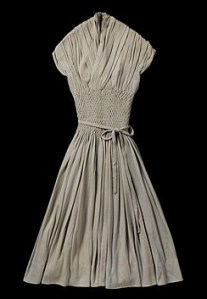
This led me to gifts from David Sassoon,including this miniature dress, a quarter-scale couture reproduction of a Jean Dessès dress.

Whoa. That’s really interesting!

There’s a Madame Grès as well, and the V&A catalog record notes:

“These scaled copies use the same fabrics and show the superb craftsmanship as their full size equivalents. The V & A have four of these miniature dresses which the donor acquired from the archive of the wholesale house of Dorville. Wholesalers would buy the copyrights to couture dresses so that they could sell modified ready-to-wear copies. It is thought that these quarter-scale dresses were sold alongside the patterns to show how the dress looked when made up.” Ever see the Newman-Woodwar movie A New Kind of Love?

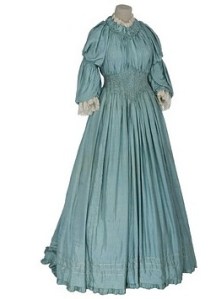
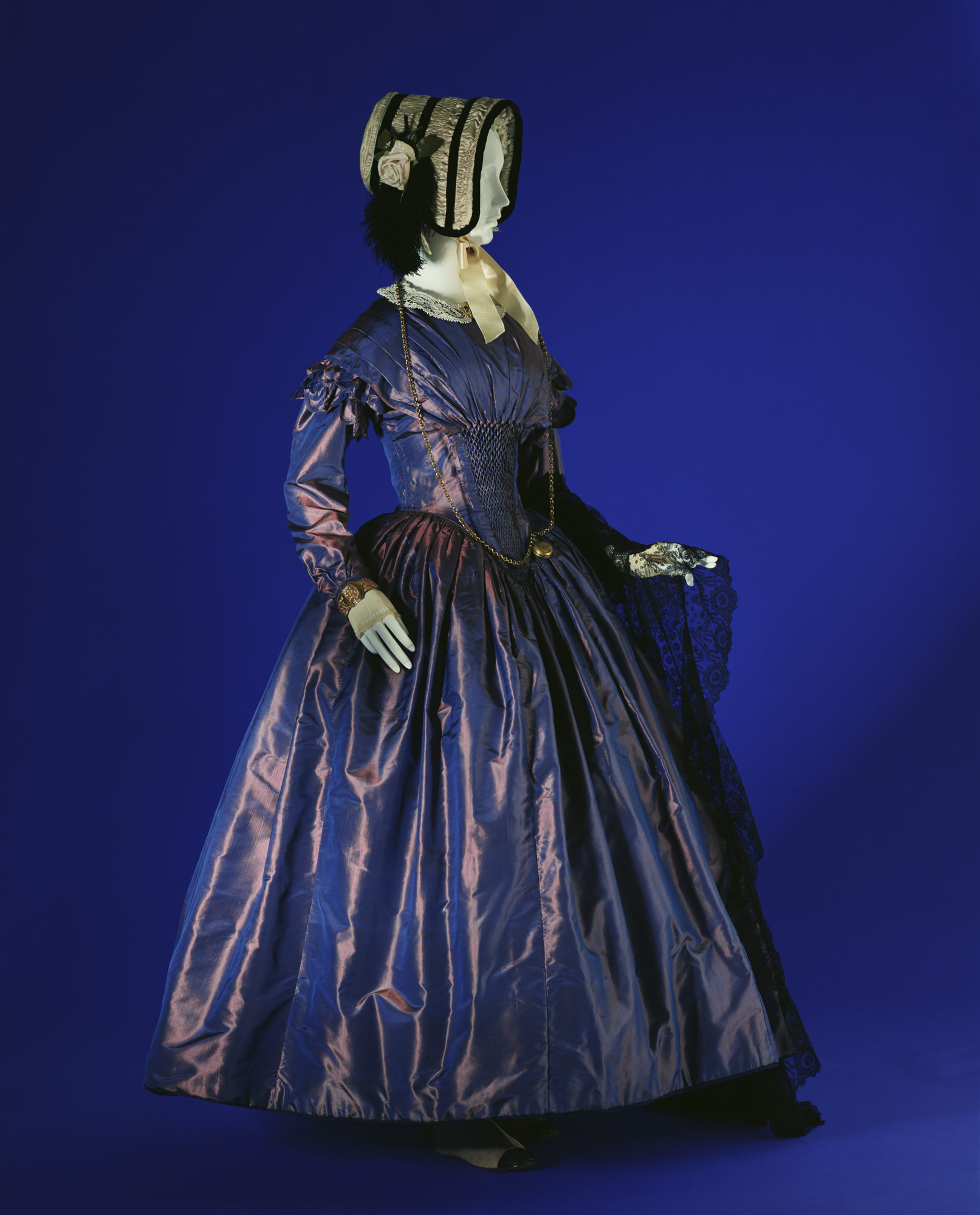
What I love about the the Dessès dress is how much it reminds me of these dresses:

KCI 1845 English Day Dress

KCI 1845 English Day Dress

V&A ca. 1895 T.17-1985

V&A ca. 1895 T.17-1985

That’s one of the fun things about fashion, and about history. Details emerge and re-emerge in style and design (yes, historicism) and connect our present with the past. Museums strive to do that every day, but fashion can do it on the street and in your closet. That’s another kind of living history.

Share this:

  • Share on Facebook (Opens in new window) Facebook
  • Share on Pinterest (Opens in new window) Pinterest
  • Email a link to a friend (Opens in new window) Email
  • Share on X (Opens in new window) X
Like Loading...

LBJ Had a Question

15 Saturday Dec 2012

Posted by kittycalash in History

≈ Comments Off on LBJ Had a Question

Tags

history, LBJ, lyndon baines johnson

Swearing in of LBJ as President

In 1963, Lyndon Baines Johnson was inaugurated as president on a hot, over-crowded airplane on the tarmac at Love Field outside Dallas. He had spent the years since JFK’s inauguration in 1961 becoming increasingly irrelevant, unnecessary, and humiliated. All the power that LBJ had built up first in the house and then in the senate–the place where he became the master of power, process, and of men–all that power was gone.

The Treatment: LBJ & Chicago’s Mayor Daley

He knew what lurked in the hearts of men, and knew how to use it or to buy it. He knew how to get things done, good and ill. It was Robert Caro’s recent book, The Passage of Power, that fully explained to me how kickbacks work. LBJ didn’t get rich by working hard in the conventional way. And yet: he never forgot Cotulla, Texas. Never forget the road gang, never forgot working hard with his (admittedly enormous) hands.

LBJ and MLK at signing, Voting Rights Act, 8-6-1965

LBJ and MLK at signing, Voting Rights Act, 8-6-1965

With the benefit of hindsight, does LBJ become clearer? We can never forgive him Vietnam, but we can remember the 1964 Civil Rights Act, the Voting Rights Act of 1965, and the Great Society. Johnson’s hero was FDR, his model the New Deal. In late 1963, when an ally told him that the fight for civil rights was a lost cause, Johnson had a rebuttal, according to Robert Caro.

“Well, what the hell’s the presidency for?”

Johnson, not elected to the office he now held, and with another election about to swing into gear, asked that question. What was the presidency for, but to fight for lost causes, noble causes. Why else would you work so hard to build political capital, but to spend it?

What the hell’s the presidency for, but to fight for what a nation, or a nation’s most vulnerable people, need?

LBJ was corrupt, profane, adulterous, and coarse. I can’t say what he would have done in the political climate today, but the question he asked is worth asking today.

All images from the Lyndon Baines Johnson Presidential Library‘s photo archive.

Share this:

  • Share on Facebook (Opens in new window) Facebook
  • Share on Pinterest (Opens in new window) Pinterest
  • Email a link to a friend (Opens in new window) Email
  • Share on X (Opens in new window) X
Like Loading...

Night Lights and a Book

14 Friday Dec 2012

Posted by kittycalash in Clothing, History

≈ Comments Off on Night Lights and a Book

Tags

blurry photos, books, bookstores, Clothing, Costume, dress, fashion, Providence, Rhode Island, work

DSCN3605Last night, I went to a meeting downtown for my boss, and chose to walk instead of drive. I took some blurry photos along the way as evening became night and the city became more and more like Busy Town. The skill level of local drivers is not too different from Richard Scarry’s drivers…and the hills and the way the houses stack up, and the way we recognize or know each other here reminds me of Scarry’s books.
Walking back to the museum, I stopped at one of my favorite bookstores, where the selection runs from the perverse to the erudite.  I picked up many books and limited myself to three, including Very Vintage. (Did I mention Symposium’s remainder table pricing? Ah, yes: that’s why three books were possible.)
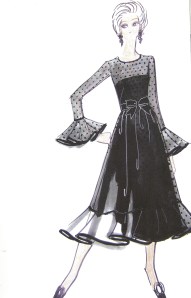
The text could have been edited a little more carefully and I am a fan of the endnote (not present here). But there are excellent photos I have not seen before and diagrams patterning garments. Now you see why I bought this: where else will I find diagrams of aTeddy Boy Jacket and a 1960s Bellville Sassoon-inspired evening dress?
dress2dress

Share this:

  • Share on Facebook (Opens in new window) Facebook
  • Share on Pinterest (Opens in new window) Pinterest
  • Email a link to a friend (Opens in new window) Email
  • Share on X (Opens in new window) X
Like Loading...

Those English Gowns…

13 Thursday Dec 2012

Posted by kittycalash in Clothing, Museums, Uncategorized

≈ 1 Comment

Tags

18th century, Clothing, Costume, exhibits, fashion, Making Things, museum collections, Museums, open robe, Research, resources, Victoria and Albert Museum

GMFS2At the V&A, a fun interactive exhibit on 18th century costume allows you to turn the costumes around and zoom in for a better view.

V&A Screenshot

V&A Screenshot

My favorite, because I need to start making something like this, is the Gown made from a Shawl, about 1797.
There’s a good description of the gown, and you can always search the collections for the catalogue record and more non-turnable images. This is a good thing because the 3-D image player requires Flash, so it doesn’t work on an iPad.

I found the viewer helpful in understanding the sleeve-collar relationship, which was confusing to me with the contrasting colors. The description in the catalog record helps, too:

“An open robe with a medium high waist, the material stitch is pleated down the back, and then flowing into the skirt. The sleeves are of white satin, trumpet shaped, with a short green silk oversleeve. The oversleeve is bound with cream ribbon, and the undersleeve at the wrist where it fastens with three pearl buttons, with metal shanks, has a narrow green ribbon turn back cuff. There is a shaped falling collar of green silk bound with white, and a green ribbon binds the front of the gown. The bodice is lined with linen, and extends in front to cover the bust. The sleeves are lined with white linen.”

Fairfax House

Fairfax House

The oversleeve makes me think of this Fairfax House dress. I’ve not been able to find a larger image so I can’t get “close enough” to determine how it all goes together. Time to collect images of extant examples and fashion plates in a Pinterest board, and start comparing them. And time to think about whether or not this is a style seen in New England…and time to get ready for work.

Share this:

  • Share on Facebook (Opens in new window) Facebook
  • Share on Pinterest (Opens in new window) Pinterest
  • Email a link to a friend (Opens in new window) Email
  • Share on X (Opens in new window) X
Like Loading...
← Older posts
Newer posts →

Archives

wordpress statistics

Creative Commons License
Kitty Calash blog by Kirsten Hammerstrom is licensed under a Creative Commons Attribution-NonCommercial-ShareAlike 4.0 International License.

Website Built with WordPress.com.

  • Subscribe Subscribed
    • Kitty Calash
    • Join 621 other subscribers
    • Already have a WordPress.com account? Log in now.
    • Kitty Calash
    • Subscribe Subscribed
    • Sign up
    • Log in
    • Report this content
    • View site in Reader
    • Manage subscriptions
    • Collapse this bar
 

Loading Comments...
 

    %d