• Home
  • Completed Costumes/Impressions
  • Emma and Her Dresses
  • Free Patterns and Instructions

Kitty Calash

~ Confessions of a Known Bonnet-Wearer

Kitty Calash

Category Archives: Clothing

Whimsical Wednesday: Shoes.

25 Wednesday Jan 2017

Posted by kittycalash in Clothing, Making Things, Reenacting

≈ 1 Comment

Tags

19th century clothing, authenticity, Clothing, common dress, sewing, shoes

If you are a historic costumer, living history interpreter or enactor and tell me you don’t have a problem with shoes, and I will laugh at you. Even if you don’t have way too many shoes, chances are good you look at them in museum collections, even if you don’t order them. Shoes are basic to any impression.

I have history with shoes, myself. Not only have my feet always been generously proportioned, but my Grandmother possessed a singular fondness for, and an expansive collection of, shoes.

Shoes. Slippers.
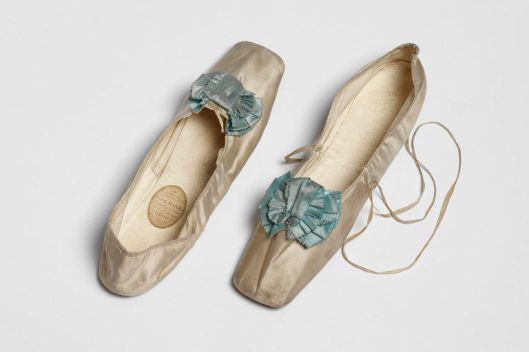
Pair of slippers. 1825-1849. Paul Hase, Paris. V&A 1153&A-1901

Pair of slippers. 1825-1849. Paul Hase, Paris. V&A
1153&A-1901

Call them what you will, when you hanker to dance, you need them. So, I find myself in the happily distracting position of needing (wanting) dance slippers for April. I thought my search might be fruitless, what with my pedal extremities, but reader: I was delighted and surprised. dscn4592

Yes: they fit! Now the tricky bit is to dye and decorate these slippers to achieve maximum eye-watering potential. There’s a length of silk headed my way that should provide plenty of inspiration.

For tamer times, classic black will always do. Whilst replacing my worn-out sneakers, I came upon a pair of slippers that seemed ready for alteration, so I bought them as a backup, in case the Brontes didn’t fit.
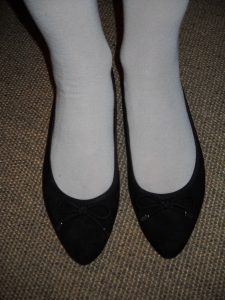
dscn4595

They were inexpensive enough that I didn’t mind taking them apart for modifications.

dscn4601
dscn4605

A grosgrain rosette and ribbon ties later, these will do well enough to extend the life of my irreplaceable Robert Land slippers. I looked at shoes last night, and drew inspiration from some examples through the first half of the 19th century. With the pointy toe, these clearly skew first decade of the 19th century, which is just right for most of what I do. The Brontes will work for later impressions– and I have those as well. All in all, a pleasant mid-week distraction.

Pair of women's shoes, 1801. Gift of Fred Taggart, 1986.31.1a-b. RIHS

Pair of women’s shoes, 1801. Gift of Fred Taggart, 1986.31.1a-b. RIHS

Women's slippers, 1790-1810. American. MFA Boston. 99.664.12a-b
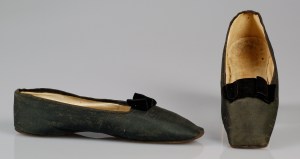
Women’s slippers, 1790-1810. American. MFA Boston. 99.664.12a-b

Slippers, 1835-1850. American, wool, silk. Metropolitan Museum of Art. 66-20-1a-b
Slippers, 1835-1850. American, wool, silk. Metropolitan Museum of Art. 66-20-1a-b

Share this:

  • Share on Facebook (Opens in new window) Facebook
  • Share on Pinterest (Opens in new window) Pinterest
  • Email a link to a friend (Opens in new window) Email
  • Share on X (Opens in new window) X
Like Loading...

Fitful Friday: Art Still Has Truth

20 Friday Jan 2017

Posted by kittycalash in Clothing, Fail, Frivolous Friday, Historical Sew Fortnightly, Making Things, personal, Philosophy

≈ 7 Comments

Tags

empathy, fortitude, interpretation, living history, Making Things, projects, sewing

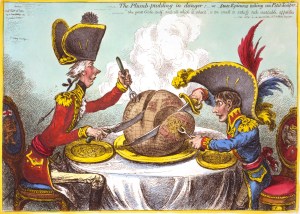
Pitt and Napoleon carve up the world.

Pitt and Napoleon carve up the world.

It’s been one of those weeks, hasn’t it? Up and down, emotionally, as we all prepare for change. Whig or Tory, these are turbulent times.

I’ve been surprised by recent fabric arrivals in the mail, disappointed when I waited a day too long to register for a dance, and now I’m at loose ends. What comes next?

dscn4579
dscn4588

Last weekend I cut out a black wool Spencer to line in lettuce green silk because why not? And teeny tiny backstitches later, I have one sleeve finished. Focus is hard to come by of late.

I meant to join the Historical Sew Monthly to give my sewing life some structure, and I still can, though I cannot seem to settle down. Clearly, I have Firsts & Lasts that could be made (not always in the time remaining, mind you, so I would have to choose wisely).Re-Make, Re-Use, Re-Fashion? Probably much there as well– at least if one counts the quilted petticoat worn at Princeton, which was remade and altered from its original form.

Red. I do love red.
Red. I do love red.
Delicious wool, tasty price.

July: Fashion Plate, could become the shawl gown I’ve dreamt of for years, since, as you can see above, I’ve found one that might work, lured by a fair price on a sizable piece of wool– but wherever shall I wear it? Why can I not get past utility? The Dreamstress’ Kashmiri shawl gown and her research are there to emulate, and explain.

Oh, I have projects and events to research and plan, housework to complete, and plans to execute. But they all seem abstract and unreal at the moment when we hang on the pivot point between the future and the past. It’s been a strange year in many ways and places, and constructive projects help focus.

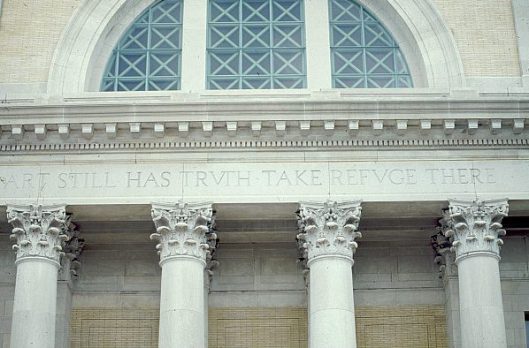
Art Still Has Truth Take Refuge There

Art Still Has Truth Take Refuge There

Long ago, in the first turbulent times I was old enough to understand, I lived in St. Louis. Then, as now, I think the Art Museum’s motto holds, and reminds those of us who work in or appreciate sometimes frivolous-seeming fields and hobbies that all our actions have meaning. I’ve thought for a long time about the utility of sewing historic clothing, cataloging objects, and running around recreating the past.

Getting outside one’s own experience is incredibly hard; it’s hard to have an open heart, and to encourage openness to others. But that’s one of the most important roles museums and libraries play: we help people develop imagination and empathy. I know it’s part of why I do the work I do. I like to think that ultimately, helping illuminate the complexity of the past will help us all understand the present and make a better future.

Share this:

  • Share on Facebook (Opens in new window) Facebook
  • Share on Pinterest (Opens in new window) Pinterest
  • Email a link to a friend (Opens in new window) Email
  • Share on X (Opens in new window) X
Like Loading...

My Life as a Chair, or, Warm in Winter

11 Wednesday Jan 2017

Posted by kittycalash in Clothing, History, Living History, Making Things

≈ 6 Comments

Tags

18th century clothing, common dress, fashion, interpretation, living history, quilted petticoat, Reenacting, sewing, winter

Can I get an “Aw, yiss” for being warm outdoors?

img_8826

After the aftermath. Photo by Drunk Tailor.

They may not be the most accurate <cough>machinestitchedoffabolt<cough> quilted petticoat and waistcoat, but they sure do make a difference.

These aren’t exactly base layers– a white wool flannel shift would not be amiss–but the quilted layers make a big difference to a day in the cold. When I added up the layers, I came to 8 without counting accessories like neck handkerchiefs and stockings:

  • Shift
  • Stays
  • Waistcoat
  • Lightweight Wool Petticoat
  • Heavy Wool Petticoat
  • Quilted Petticoat
  • Gown and Stomacher
  • Cloak
The underneaths. Photo thanks to Drunk Tailor.
The insides.
The insides.

It isn’t always pretty, but in cold, wet weather, function trumps fashion (not that I’m not pretty pleased with this upholstery). The waistcoat ties on, so you have some adjustment should your weight or shape fluctuate. The petticoat, in this case, works like every other petticoat, with the sole exception of a short pocket slit on one side due to operator impatience (this was finished just a few days before it needed to be packed for Princeton).

img_8823

Thanks to Drunk Tailor for more patience.

The quilted fabric (originally intended, I am sure, for a bedspread) is lined with a plain weave wool for extra insulation and body; the waist band is bound with wool tape, as is the hem. Down in the basement, there’s a camblet- wool batting- linen lining sandwich on a frame, ready for quilting, if I only I would drag it up stairs and start, and I know it would be both more insulating and more accurate.

Does it all fit? Well…pretty much! An open robe with stomacher makes it easier to fit all these layer underneath, and, happily, I don’t have the best sense of my own size, so my clothes tend to be a little bigger than they must be. Fortunately, historical clothing generally involves adjustable closures that make fluctuations and layering easy to accommodate.

After Anna B’s and Anna K’s comments on the overview of the event, I was reminded that these are the confessions of a known bonnet-wearer, and I will humiliate self for history, so in case you are wondering: no, I didn’t wear drawers of any kind, or leggings, or long underwear. A pair of silk stockings under a pair of wool stockings kept my lower extremities warm, but my nethers were sometimes chilly, in a highly specific, localized, but small way. I think this may be where the wool shift comes in– or one that fits a bit better than my current garment, which is a tad too large.

On the porch at Morven, a range of head coverings. Photo by Matt White

On the porch at Morven, a range of head coverings. Photo courtesy Matt White

When it comes to ears, you can see that we adopted a range of solutions. Ear-covering caps under bonnets, under straw hats, and under kerchiefs, were worn by some. At far left, my cap perched on top of my head, so I tied my bonnet on with a kerchief and pulled my hood over all of that. Mistress V (at far right) wore a cap, a kerchief and a hat (which was summarily removed in the afternoon, by Mistress S at her left). Mistress F, holding the cream colored blanket with a wide black stripe, wore a wool hood over a cap and under her straw hat. Wear enough layers– and the right layers, meaning mostly wool and silk– and you will be warm, perhaps even sweaty if you’re active. Still, I might trade in my “Hobo Woman of Princeton” look for a quilted silk hood if the right one came along.

Share this:

  • Share on Facebook (Opens in new window) Facebook
  • Share on Pinterest (Opens in new window) Pinterest
  • Email a link to a friend (Opens in new window) Email
  • Share on X (Opens in new window) X
Like Loading...

Make Mine Menswear: The finished banyan

28 Wednesday Dec 2016

Posted by kittycalash in Clothing, Living History, Making Things, Reenacting

≈ 2 Comments

Tags

18th century clothing, banyan, cotton print, menswear, patterns, sewing, stripes

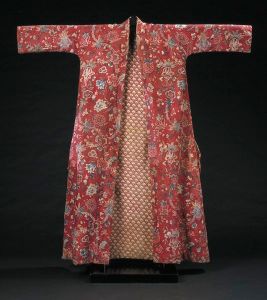
Banyan, 1750-1775. T.215-1992, V&A Museum

Banyan, 1750-1775.
T.215-1992, V&A Museum

Banyan or wrapping gown, either will do to wear as the year winds down. This project took longer than I wanted it to, mostly because I have a tendency to take on too many things at once and promptly get sick. I like to think of this ability as a gift.

In any case, this is a simple garment to make, made more fun by piecing– it’s the challenge that keeps you awake, when the majority of the work is in teeny-tiny back stitches.

I measured the subject and made up my own pattern, using the chintz banyan in Fitting and Proper and this one at the V&A as models.

img_6554

Patterning is a simple thing, really. Maybe too simple. Measure the gentleman’s chest, bicep circumference and arm length, neck, and back length. With those, you know how wide to made the body, the center back length you need to achieve, how wide to cut the neck hole, and how wide and how long the sleeves need to be. Really, not that hard.

You can use a diagram like this to start you off. I did wing the bottom width, guessing at the angle to give the garment a fullness similar to the chintz at the V&A.

Pieced more than once.
A lining in two colorways.

I didn’t have quite enough fabric to accommodate the recipient’s full height, nor could I get enough of the red print lining material; I had to piece both the stripes and the lining.  Trying to match up the stripes was remarkably satisfying, both when I succeeded and when I was  little off. Life Goal: Dizzying, please.

Again with the two color lining.

Again with the two color lining.

It contrasted well with a blue woven coverlet, making a nice bright note as the rooms were prepped for What Cheer Day. This was the effect I had hoped to achieve waaay back in April when I failed to finish anything I wanted for the After Dark program thanks to a bout of strep throat.

By October, though, I was able to finish the entire item and make a matching cap, allowing Billie Bowen to recuperate in style from an evening at the Cold Meat Club.

Next up, using this as the base pattern: a wool bedgown, lined in wool, and pieced. More mis-matched stripes, please!

Share this:

  • Share on Facebook (Opens in new window) Facebook
  • Share on Pinterest (Opens in new window) Pinterest
  • Email a link to a friend (Opens in new window) Email
  • Share on X (Opens in new window) X
Like Loading...

Mrs Pabodie, I presume?

16 Wednesday Nov 2016

Posted by kittycalash in Clothing, History, Living History, Museums, Pabodie Project

≈ 1 Comment

Tags

18th century clothes, 18th century clothing, 19th century clothing, dress, fashion, Federal style, interpretation, Research, Rhode Island Historical Society

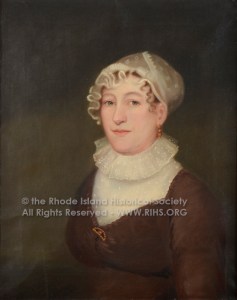
Mrs William (Jane) Pabodie. oil on canvas, 1813. RIHS 1970.60.2

Mrs William (Jane) Pabodie. oil on canvas, 1813. RIHS 1970.60.2

Remember Mrs Pabodie? She appeared a week ago today in Providence after an intense sewing effort left your author with numb fingers. The process was as straightforward as these things ever are, manipulating fabrics to do your bidding once you think you have the right materials.

It took more rounds of white muslins from Burnley and Trowbridge than I care to count, and a variety of book muslins from Wm Booth Draper, just for the chemisette and cap. The laces came from Farmhouse Fabrics in the most expensive small package I’ve yet ordered that did not contain antique jewelry.

Mrs Pabodie attempts to remember when she was born (1771). Photo by J. D. Kay

Mrs Pabodie attempts to remember when she was born (1771). Photo by J. D. Kay

The gown is a wool and silk blend remnant from Wm Booth Draper, just enough to make a gown (even at my height) though I admit the front hem will need some piecing or a ruffle to give it the proper length. Still, the thing more or less works, though as I compare the details to the original painting, I admit we’re still in beta.

Impressed from Newport-- or nearly so-- Low Spark makes his Providence debut. Photo by J.D. Kay
Impressed from Newport– or nearly so– Low Spark makes his Providence debut. Photo by J.D. Kay
Reverend Hitchcock, hoping against hope that the tailor will one day finish his fine silk waistcoat. Photo by J. D. Kay
Sissieretta Jones extols the beauties of Paris-- and pearls. Photo by J. D. Kay
Sissieretta Jones extols the beauties of Paris– and pearls. Photo by J. D. Kay

I was joined by three friends from different eras (because you know me: if it’s not didactic, we’re not doing it): a sailor who on the run from a Newport press gang in 1765; Reverend Enos Hitchcock of the Beneficient Congregational Church in 1785; and Sissieretta Jones, soprano of Providence, around 1880. Each of the characters described their lives and their clothing, and I will admit that the Annual Meeting audience may not have been fully prepared for some of what they heard– I’m not certain they had ever considered how apt “balancing a sheep on my head” might be in describing Reverend Hitchcock’s wig.

Mrs Pabodie points out East Side landmarks to a visitor examining the theatre curtain backdrop painted around 1810. Photo by J. D. Kay

Mrs Pabodie points out East Side landmarks to a visitor examining the theatre curtain backdrop painted around 1810. Photo by J. D. Kay

In the end, they were entertained, and may even have learned something, as we celebrated 2016’s interpretive theme, Fashioning Rhode Island.

Share this:

  • Share on Facebook (Opens in new window) Facebook
  • Share on Pinterest (Opens in new window) Pinterest
  • Email a link to a friend (Opens in new window) Email
  • Share on X (Opens in new window) X
Like Loading...
← Older posts
Newer posts →

Archives

wordpress statistics

Creative Commons License
Kitty Calash blog by Kirsten Hammerstrom is licensed under a Creative Commons Attribution-NonCommercial-ShareAlike 4.0 International License.

Website Built with WordPress.com.

  • Subscribe Subscribed
    • Kitty Calash
    • Join 621 other subscribers
    • Already have a WordPress.com account? Log in now.
    • Kitty Calash
    • Subscribe Subscribed
    • Sign up
    • Log in
    • Report this content
    • View site in Reader
    • Manage subscriptions
    • Collapse this bar
 

Loading Comments...
 

    %d