Veterans and Votes

Tags

, ,

20121127-080442.jpg
On Wednesday last, I met with two fantastic colleagues, one from my own house, and the other from the local living history farm/museum. We went over topics and themes and ideas about history, and we tried to stay focused…but it was hard, because really, all three of us think the 18th century is hot stuff, and the thing we most want to share with the rest of the world.

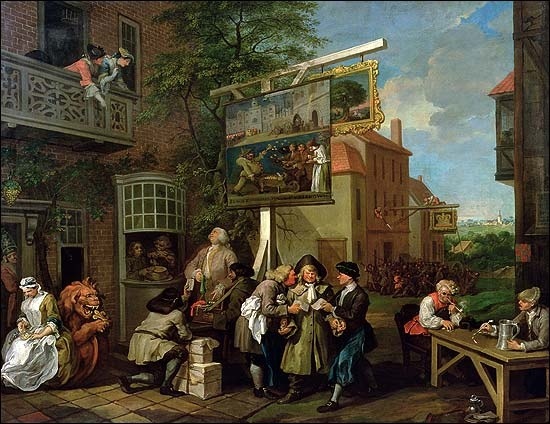
At one point, our farm based colleague reminded us that his people (tenant farmers) would not have been able to vote. And I realized, as the conversation quickly hopped to the westward migration of Rhode Islanders–some to take occupation and ownership of Western Reserve lands given as bounty for Revolutionary War service–that there were plenty of men who served in the Continental Army who, at war’s end could not vote.

Let that one sink in for a moment: in Rhode Island, only property owners could vote. A man who served with the Rhode Island Regiments who did not own property fought, in some cases for eight years, but at war’s end, could not vote. They could not participate in the democracy they might have sacrificed not only time and profit but their own bodies to achieve.

One man, one vote was not the law in Rhode Island until after the Dorr Rebellion of 1841, when white male property owners AND men who could pay a $1 poll tax were granted suffrage.

Universal suffrage rights aside, what did voting mean to the men who fought in the Revolutionary War? How did the people of the late 18th century understand their rights, and they role in democracy? It was far different from what we take for granted in America now, which is different from how democracy was understood just 100 years ago.

Again, we could delve into how Senators were formerly not chosen by popular vote or argue about the electoral college, but what I wonder now, as I ponder the men who portray Rev War units, is to what degree those men understand how very different the men of the past were from the men they are today. It is not just breeches and “Good Days” that make us different. The way we think– how we see the world and how we see ourselves– is fundamentally different.

I Love a Man in a Uniform

Tags

, , , , , ,

Maybe it’s about the musket?

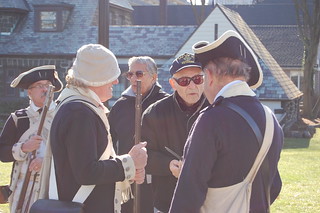
But that’s not my man, that’s Brian. Nice uniform, though, right? Blue broadcloth with white facings and pewter buttons, a cap with a red cockade, fitted white overalls: what’s not to like? (Making one, that’s what, and one is in my future.)

After getting Mr S’s workman’s jacket to the brink of buttons and buttonholes, we looked at it and said, “It’s so…plain. Where are the contrast facings? The tape and the lace? Should it be so much, well, one color?” Peacocks suddenly made sense.

It’s not about the musket. It’s about the buttons. And the breeches.

I spend my 18th century time with men in uniforms, and I forget the role of line, fit, and color in determining style. I see it in paintings, and in lovely coats in museums, but one thing we don’t have a lot of are paintings of middling and lower men who look stylish. Of course not! They couldn’t afford paintings, and style–refinement at least–was associated with class and gentility. There was a coded language, and clothes said a lot about the wearer.

So what did uniforms say about men, and how much could civilians, especially women, read the symbols? Hessians, with their tall brass hats, and grenadiers, with bearskins, are dressed not just to impress, but to overwhelm, visually. At Fort Lee last year, my mother was distinctly impressed by, and a little frighted of, the Hessians and Jaegers: the uniforms worked as intended.

Facings and frocks: Rhode Island stands out

Light Infantry troops wanted to set themselves apart, and used their cut-down caps and short jackets to achieve immediate visual distinction.

Working men used what they had: checkered or printed handkerchiefs, patterned waistcoats, and better buttons were some of the ways they dressed up their clothes. I know brass buttons will be in my sewing box soon, the sooner the better, say the men I sew for.

Waistcoat Weekend

Tags

, ,

My clothes are finished, and there was just enough left from a petticoat to cut the fronts, welts, facings and collar of a waistcoat for the Young Mr. It will have to be backed with the grey broadcloth of his father’s coat, which was brought to the brink of buttonholes Sunday evening.

Tonight, trousers to cut out, and a progress check-in for Mr S’s waistcoat. Menswear has such different construction techniques, stay tape and diagonal basting, such structure! I was better at those techniques 20 years ago, and now I don’t know what I’ve done with the books on couture techniques.

It’s a great quantity of buttonholes, really, so better not to count (24 + 18 + 10= 52) on the way to the 1,000 that Henry Cooke prescribes for proficiency. Will I ever get there? I will at least get better at them, or so I hope. When these garments are done, I think I will have done 100 in the past 12 months.

No progress photos: just newly acquired mirrors (drive across CT and back as fast as you can!),  hung in place.

The Wind From the Hudson

Tags

, , , , ,

Looking East from Fort Lee Historic Park

The cold on the Palisades was not as bitter this past weekend as it was last year; there must have been at least an 8 degree (F) difference. There was a rumour of 37F/2C but I think it was about 45-50F (7-10C). Where there was sun, it was quite pleasant, as the wind was gentle.

So what did we wear? Mr S and the Young Mr had long underwear under their uniforms (white so it would not show under the overalls), and long stockings, too; the Young Mr has a wool waistcoat, and is still so wiggly that I don’t know how much he feels the cold yet.

Layers are your friend

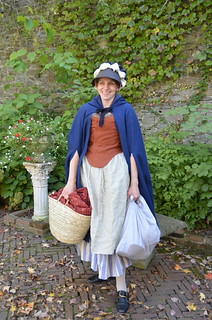
I wore my 1780s wool jacket, two linen petticoats and a wool petticoat, my still-unfaced cloak, and wool stockings, and was comfortable enough at nooning to take off my cloak. It’s a long cloak, based on one in the collection at work, but blue broadcloth and not drab (the extant cloak is drab, but both drab or dun and blue appear in RI runaway ads).

So what’s the key to keeping warm? Then, as now, (or now dressing as then) it does seem to be layers. The wool petticoat makes an effective barrier against cold, and the wool jacket is warm. I tried patterning mitts, but my hands are so large relative to my wrists that I tore the muslins at the thumb or had very baggy wrists.

These chintz mitts from the Met (C.I.39.13.185a–d) seem to have a similar tendency to width at the wrist, and might work better than the pair I was following from Costume Close Up. It was late and I was tired, so a fresh start might work to keep my hands warm.

Post-war women with long sleeves would have been able to avoid that chill wind on the forearms, and I look forward to wearing my new long-sleeved wool dress.

Fort Lee Surrealism

Tags

, , , , , ,

Surreal: that was the word for the morning at Monument Park. The RI Reg’t walked over the park instead of parading with the troops, because one of our members has not been well, and did not think he could keep up with the parade. It was odd to follow the reenactors in 18th century clothing under power lines and past high rise apartment buildings shouldering out old frame homes, but the surrealism really kicked in at the park.

Describing sniper fire in WWII to salsa music

There it became multi-sensory when the ceremony’s organizers turned on the music. It wasn’t exactly merengue, and it wasn’t exactly salsa…then the soundtrack switched to updated Big Band hits and finally landed on a strange, over-the-top, quasi-operatic version of “Battle Hymn of the Republic.”

So when you look at the photos on flickr, play some salsa or an album you might have ordered at 2 AM from a TV ad, and think about standing in 40F/4C weather eavesdropping on politicians talking about inching closer to universal health, and the lessons of Hurricane Sandy for high-rise dwellers, while squeezing up next to you for a photo op.

Later, at Fort Lee Historic Park, the artillery demonstration was loud and satisfying, but we got behind schedule and to the oddness of the morning was added rushing. It was capped off at the end by the order to fix bayonets, which led to bayonets being caught in branches.

Bayonets fixed, Capt. Becker takes measure of the trees

Finally, for me, the day nearly foundered when I pulled my phone out of pocket at the end of the event to check the time, and saw my boss had been texting me all afternoon over a non-crisis. Part of why I love re-enacting and living history so much is that it takes me so far away from myself and from my daily existence. It’s related (slightly) to my work, but to be so far away in place and time and effort is a delight. I can’t just throw the phone away or not take it along: I am supposed to be on call, all the time…but it’s history, not a hospital, and if budgets change, so should expectations.