• Home
  • Completed Costumes/Impressions
  • Emma and Her Dresses
  • Free Patterns and Instructions

Kitty Calash

~ Confessions of a Known Bonnet-Wearer

Kitty Calash

Tag Archives: CoBloWriMo

I Fall to Pieces: Extant Garment Fragments

03 Thursday Aug 2017

Posted by kittycalash in Clothing, History, material culture, Museums, Research

≈ 1 Comment

Tags

18th century clothes, CoBloWriMo, fashion, Federal New England Fashion, Rhode Island history, Sally Brown Herreshoff, style
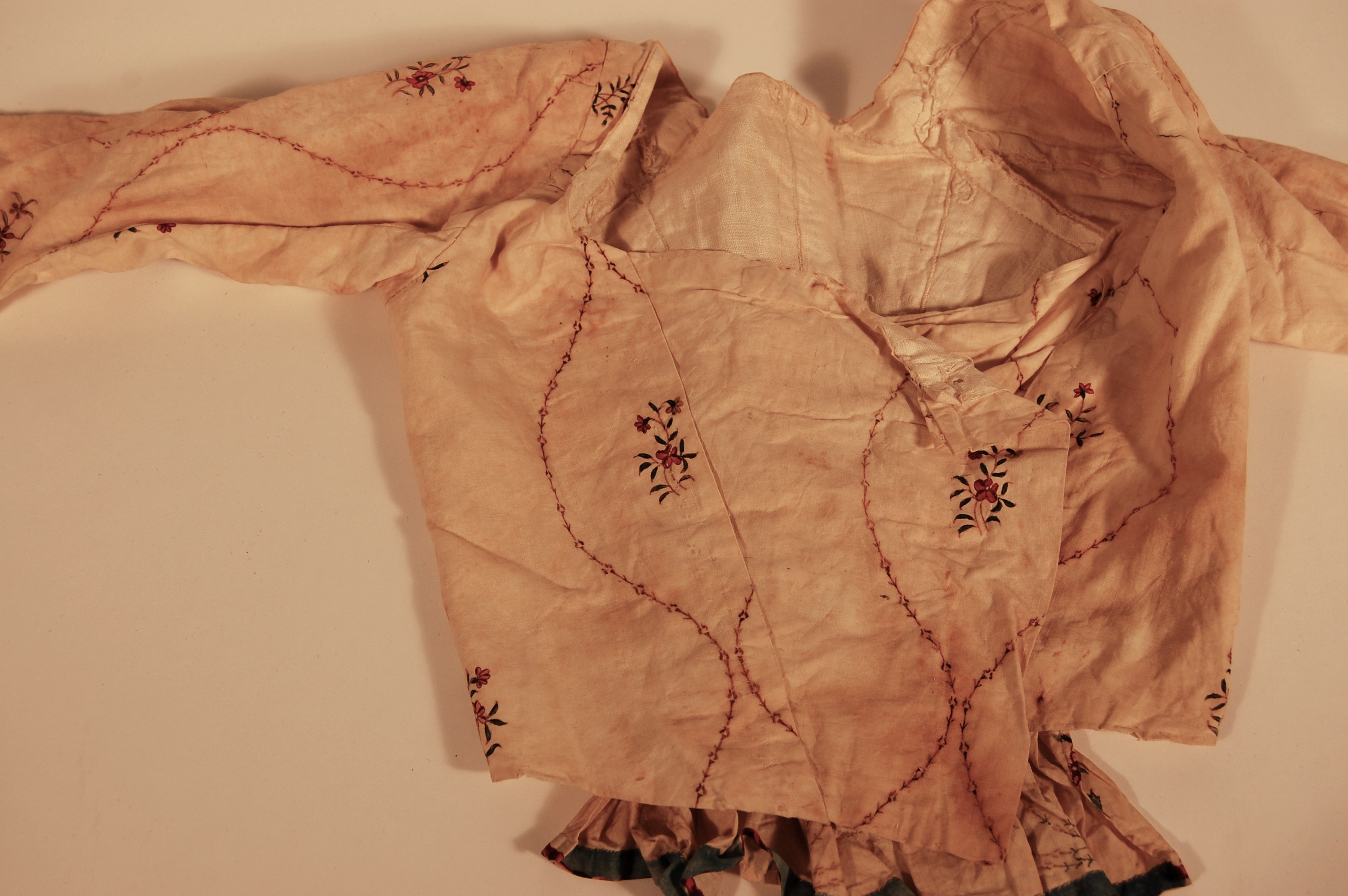
Bodice, painted Indian cotton, 1780-1795 RIHS 1990.36.27

Bodice, painted Indian cotton, 1780-1795
RIHS 1990.36.27

Once upon a time, not very long ago, when I worked in a historic house museum, I was asked to present at a conference in Worcester. I chose to talk about these fragments, and I still like to think about them. The delicate fabric was saved as a pair of sleeves, a bodice with a tiny peplum, a skirt.
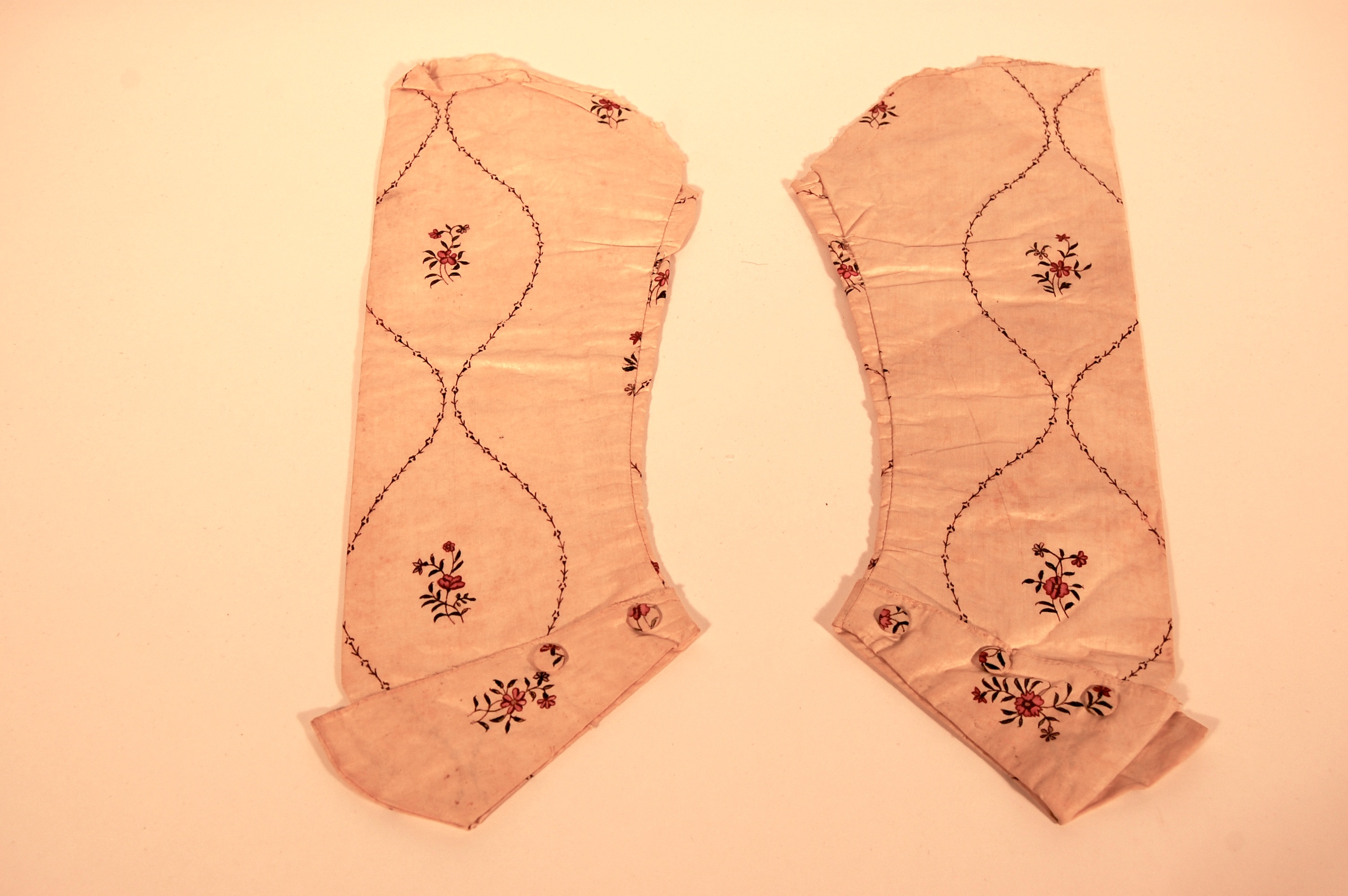
Sleeves, removed from bodice 1990.36.27. RIHS 1990.36.25A-B

Sleeves, removed from bodice 1990.36.27.
RIHS 1990.36.25A-B

The pieces appear to have been part of a pieced-back closed-front gown with a matching petticoat circa 1785. I think someone decided (quite rightly) that the style was too passé for 1795, and altered the gown significantly.

Not only is there evidence of new sleeves being fitted into the gown’s armscyes, we have the sleeves-that-used-to-be. And my dear! No one is wearing sleeves like that this season!

I find these garments in limbo really fascinating. Was that bodice finished and worn with a matching petticoat? (Yes, there’s a panel of that left, too; what a lovely hem!)
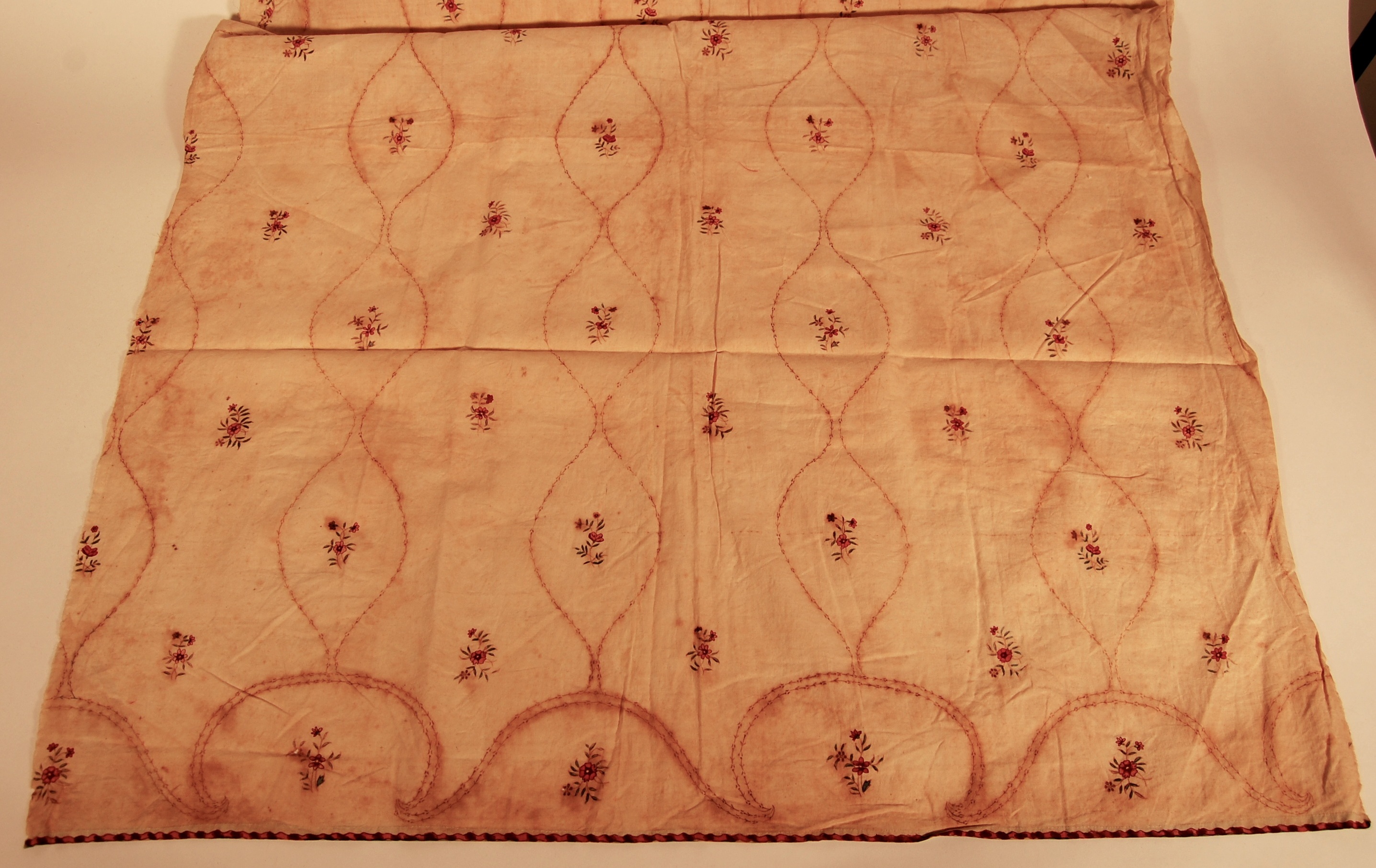
Skirt panel, painted Indian cotton. RIHS 1990.36.33

Skirt panel, painted Indian cotton.
RIHS 1990.36.33

Who wore the gown? Was it Sally Brown, born in 1773? And did she alter it, or did her sister’s mantua maker, Nancy Smith? We can only guess at this point, as so many documents remain in private hands. The alterations are not as finely done as the original gown, so I think there are two hands at work here– whose were those hands? There’s always more to think about and learn.

In case you’re wondering, thanks to the Met, we can see what the gown probably looked like in its first incarnation, and then what the alterations were meant to achieve. (Link to the gown on the left; link to the gown on the right.)

Robe a l'anglaise, 1785-1795 MMA 2009.300.647
Robe a l’anglaise, 1785-1795 MMA 2009.300.647
Gown and petticoat, 1790-1794 MMA C.I.45.6a,b

Share this:

  • Share on Facebook (Opens in new window) Facebook
  • Share on Pinterest (Opens in new window) Pinterest
  • Email a link to a friend (Opens in new window) Email
  • Share on X (Opens in new window) X
Like Loading...

Au courant? Un canezou

02 Wednesday Aug 2017

Posted by kittycalash in Clothing, Living History, Research

≈ 5 Comments

Tags

19th century, 19th century clothing, CoBloWriMo, fashion, fashion plates, Federal style, living history, Salem Maritime Festival

Collier de Lapis. Canezou a Manche[?]

This.

Because, August (or Aôut). The Salem Maritime Festival is nearly upon us, so there’s a flurry of bonnet and accessory and other making happening chez Calash as there usually is in summer. It’s one of my favorite things to do, and this year I was asked if the millinery setup could be more of a demonstration.

That’s a kind of relief, actually, as it allows me to bring bonnets from multiple years in a variety of levels of completion, which allows me the luxury of talking about evolving styles and a variety of construction methods. Whether or not I’ll manage a drawn bonnet is still up in the air; it’s a lot of hand sewing for someone with carpal tunnel.*

Because any trip to Salem affords me the opportunity to join the mercantile class, I like to take the opportunity to make something new and non-working class when I go up there. This year, I was taken with the canezou. What’s a milliner to do, but stay as up-to-date as possible? What the heck is a canezou?

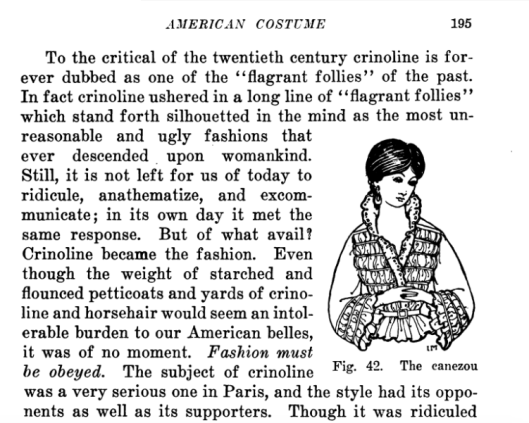
Well….roughly, from the French and English costume history books, the canezou is a short, Spencer-like garment, often in white, lightweight cotton, worn over another garment. The canezou seen here clearly has sleeves, and the plate is dated 1811, giving the lie to the wikipedia’s assertion that it’s circa 1835. (The later evolutions have become more scarf or fichu-like, but are again worn over other gowns- though apparently it enjoys a brief time as the cambric blouse worn with a riding habit. And then there’s another definition, by another fashion historian, in which the canezou is described as being like a man’s shirt.

Well, that’s all cleared up then….

With this information in hand, and the fashion plate before me, I perused the contents of the Strategic Fabric Reserve, and lit upon those popular Ikea curtains which have appeared here before as a gown and as a petticoat and now as a canezou.

I modified a Spencer pattern for the base lining of white cotton, and then draped, stroke gathered, and stitched the curtain fabric to form the floofy bodice. The lace on the cap sleeves is reclaimed from a late 19th century negligee lurking in Drunk Tailor’s collection of usable old fabrics, while the lace at the bottom was reclaimed from an antique petticoat before I picked it up in Sturbridge, MA a few years ago.

To complete this, a bodiced petticoat with an embroidered hem (machine embroidered, of fabric I may have picked up from a remnant table in Pawtucket, RI), a pair of trimmed shoes, a necklace (here of sapphire blue stones, unless I can teach myself hand-knotting by Friday), and a bonnet of blue and white check silk that arrived just in time from India. Five new items in two or three weeks: the price of fashion is slightly mad.

*Hand-sewing everything has, at last, caught up with me. I find soaking my hands in cold water helpful, as well as sleeping in those super attractive hand braces. Imma need some surgery, but for now, braces, Aspercreme, and ice water must do.

Share this:

  • Share on Facebook (Opens in new window) Facebook
  • Share on Pinterest (Opens in new window) Pinterest
  • Email a link to a friend (Opens in new window) Email
  • Share on X (Opens in new window) X
Like Loading...

An Introduction, or Re-Introduction, of Sorts

01 Tuesday Aug 2017

Posted by kittycalash in personal

≈ 2 Comments

Tags

authenticity, CoBloWriMo, interpretation, introduction, writing

No, I won’t say how many cups I’ve had.

What is this thing, and who am I?

It’s Costume Blog Writing Month (inspired by NaNoWriMo), and I’m Kitty Calash. I used to post much more frequently, but life caught up: I moved, which meant I didn’t sew at all for over a month* and thus didn’t have much to write about, since this isn’t a packing and moving blog.

But even before that, posting had slowed as I began to wonder why I wrote, and why I sewed. Costume Blog Writing Month, with its 31 flavors of posts, is a chance to reacquire the writing habit, and to think again about what I do, and why– and thus proved irresistible.

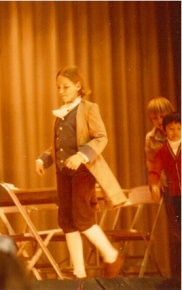
I’m a curator in search of a collection, a fugitive from architecture school, a compulsive editor, and a cat wrangler. I started sewing as a child with help from my mother and grandmother** who made clothes for me and my favorite doll, Moira. Although I graduated from two art schools, my interest in history is deep: I craved china dolls, collected antique quilts and tools, and insisted my bicentennial Samuel Adams costume have functioning knee bands– and yet, it’s taken me years to admit I’m “detail oriented.”


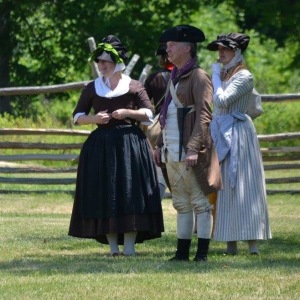
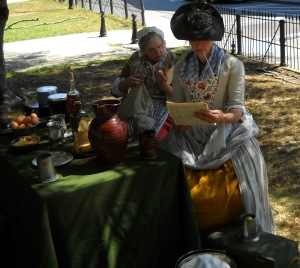
Some days Drunk Tailor asks me if I really enjoy sewing– my face betrays my frustration, and I do not play poker–but I get both distraction and satisfaction from it. Most of what I make I wear at living history events, so I hand-sew everything I can. I fall into the “progressive” reenactor/enactor/costumed interpreter camp, and strive for authenticity and accuracy in what I make, how I wear it, and what I do.

I’ve come to realize that I’m chasing art: my thesis work looked at what it means to be an American. What does “America” look like, what does the myth of America and our founding story mean? How do we portray it? Yes: I costume and organize events in pursuit of an experience for myself and participants that helps explain this nation, and how it came to be the way it is.

Not every post gets into this kind of theorizing— really, most don’t– but at core, my costume pursuits do chase the myth of an American Dream as I try to understand the people of the past, how they thought, what they made and wore, and how the past continues to inform the present.***

*During this time, I lost the distinctive callouses that will help a detective identify me as a seamstress when my murdered corpse is found in a Paris hotel doorway in the Georges Simenon novel I write in my head. I watch a lot of murder mysteries while I sew.

**Elsa turns up here from time to time; she was a style maven, the doyenne of design in a small Southern Tier town, who, for 50 years, ran the shop that dressed the maidens and matrons of the nearly best classes in a community of striving Swedes aching to assimilate.

*** And that, friends, is what working in history museums for two and half decades will get you: your own personal mission and an empty bank account.

Share this:

  • Share on Facebook (Opens in new window) Facebook
  • Share on Pinterest (Opens in new window) Pinterest
  • Email a link to a friend (Opens in new window) Email
  • Share on X (Opens in new window) X
Like Loading...
Newer posts →

Archives

wordpress statistics

Creative Commons License
Kitty Calash blog by Kirsten Hammerstrom is licensed under a Creative Commons Attribution-NonCommercial-ShareAlike 4.0 International License.

Website Built with WordPress.com.

  • Subscribe Subscribed
    • Kitty Calash
    • Join 621 other subscribers
    • Already have a WordPress.com account? Log in now.
    • Kitty Calash
    • Subscribe Subscribed
    • Sign up
    • Log in
    • Report this content
    • View site in Reader
    • Manage subscriptions
    • Collapse this bar
 

Loading Comments...
 

    %d