• Home
  • Completed Costumes/Impressions
  • Emma and Her Dresses
  • Free Patterns and Instructions

Kitty Calash

~ Confessions of a Known Bonnet-Wearer

Kitty Calash

Author Archives: kittycalash

Smelling the Past

19 Wednesday Sep 2012

Posted by kittycalash in History

≈ 4 Comments

Tags

history, memory, smell

20120919-053844.jpg
What did it smell like? I think that’s something many of us would like to know about the past. We can, with some hard work and luck, know what it felt like (clothes, furniture, household furnishings can be touched with an appointment in some museums). We can know what the food tasted like–and last weekend’s event at Coggeshall provided excellent examples of that, since we ate meals based on traditional receipts and made with vegetables and meat grown on the farm. Musicians play period music on period instruments, deportment books, plays, and letters give us insight into how things sounded.

But what did it smell like? That seems more elusive, but just as important. Smell is critical to forming memories, and recent research has highlighted links between odors/scents and the formation of memories, especially episodic and emotional memories, and summarized well here and here. So knowing what the past smelled like–and that is a crazy big generalization–would help us understand the way people experienced their lives and formed memories, like Proust and his madeleines.

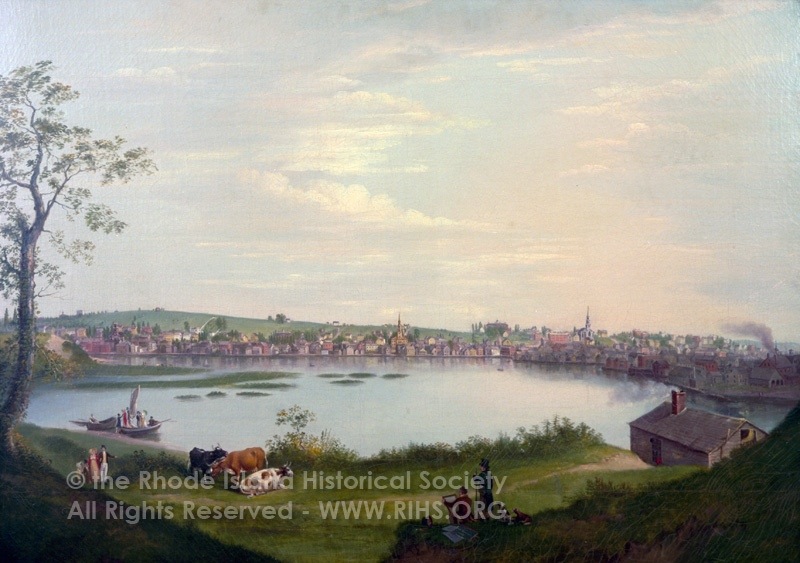
But it’s easy, you say, the past smelled of horse dung, urine, and wood smoke, and to a degree it did. But yesterday, sitting on the hill of the John Brown House watching weather slowly come in from up the Bay, I thought of the smells of Providence. The lawn smelled of dry mowed grass, because it had been mowed in the sun on Monday. The wind smelled of fish and salt water as it whipped up off Narragansett Bay, and I thought of the smell of the shift, apron and shirt washed at the farm on Saturday, and realized we forget the smell of laundry.

When we unpack from an event, the house smells different: things reek of wood smoke, sweat, and black powder, and sometimes rain. The smoke smells a little different each time, depending on the wood we burn. But the things from the farm smelled really different, and it was the laundry. It smelled of fat.

Basic soap is made of fat rendered with wood ash and lye, though fancy soaps used olive oil instead of animal fat. So my laundry smelled of the soap that was used, just as it does today, but this soap had both a softer and a stronger odor. That is, there wasn’t the bite of chemical backlash you get with some detergents, but one shirt, one shift, and one apron, folded, created a marked island of scent in the corner of the room.

If I had been sitting in mowed grass on the slope of Power Street 213 years ago, I would have smelled my self (wood smoke, laundry soap, sweat), the grass, and the fishy wet wind from the Bay in addition to whatever was rotting in the midden or festering the street where the horses had been. Spices and oranges on the docks might add to the wind from the Bay, and I like to think that all together, in the 18th century, Providence smelled like possibility.

Share this:

  • Share on Facebook (Opens in new window) Facebook
  • Share on Pinterest (Opens in new window) Pinterest
  • Email a link to a friend (Opens in new window) Email
  • Share on X (Opens in new window) X
Like Loading...

Just Keep Stitching

18 Tuesday Sep 2012

Posted by kittycalash in Events, History, Museums

≈ Comments Off on Just Keep Stitching

Tags

Clothing, Events, Making Things, Research, sewing

It is going to take a long time to finish, and longer because I’m doing it alone, have little room for the frame in our apartment, and have a family to sew garments for. But if I just keep stitching, it will get done.

The photo is from Sunday at Coggeshall Farm, and gives an idea of the set up. The frame worked well, though the pegs did fall out in the drier weather. No wobbles, though. It’s a little tricky to stitch from different angles and to maneuver around, but I’m accustomed to lap quilting even large pieces. This needs a frame, so I’ll just adapt.

The sandwich is comprised of a linen backing, wool batting, and a plain-weave silk and wool top. I’m quilting with some silk twist from Wm Booth Draper that matches pretty well. This is a compromise, given that I can no longer buy tabby and calamanco, or fine plain weave wool. The wool (calamanco/tabby) originals in the RIHS Collection are lined with wool, not linen (the silk petticoat that belonged to the Browns is lined in a fine white linen plain weave), but I could not find materials that satisfied my requirements for weave, sheen, color or fibre. The compromises I made I will have to live with—one hopes without recriminations—but they are balanced by the panels I stitched at about 13 to 13.5 inch intervals to match the dimensions of the originals. I’ve also laid the petticoat out in the same proportions as the originals.

Now all I have to do is keep stitching…

Share this:

  • Share on Facebook (Opens in new window) Facebook
  • Share on Pinterest (Opens in new window) Pinterest
  • Email a link to a friend (Opens in new window) Email
  • Share on X (Opens in new window) X
Like Loading...

The Public: Not Quite the Enemy

17 Monday Sep 2012

Posted by kittycalash in Events, History, Museums, Reenacting

≈ 9 Comments

Tags

Events, exhibits, The Public

Ah, the public. We’re not really much without them—we need an audience, don’t we? Living history practitioners/costumed interpreters/re-enactors are all looking for an audience. We like to tell people about the past, so we need the public. Sometimes, though, the public is a trifle confounding.

In one weekend, I heard or heard about the following questions or comments:

Are you Jane Austen? (This from a 10-year-old girl in a grocery store, so it’s actually score one to the girl for knowing Jane and getting the dress period right, and one to Dana, who answered with grace.)

Look, it’s the Pilgrims!

Gosh they must have been hot back then. I guess they had to adapt, but they must have been awfully hot, even if they didn’t know any better.

Why is it like it used to be in here? (My favorite!)

Did children chase chickens back then?

What are you chopping all that wood for?

Oh, look, the fire’s on!

I thought you’d all look pretty like the ladies on British TV. [i]

There was also a group that trouped in and just stared. Stared. Hard. I couldn’t manage to say anything, though Vicky and Johanna did an excellent job explaining what we were doing. By the time it was my turn, they’d stared in silence for several long minutes and it was just too weird to say anything.

So, what to do? Not much, I think, but to join and support your local history organization to encourage history education for all. And for those of us on the receiving end? Take a break, eat a snack, stay fresh, and park the snark. Wait until the tour has left the building to react.

I had only one not-great experience. A child came behind my quilting frame, popped on my bonnet, and left the room while I asked several times, “May I have my bonnet back, please?” Her mother turned to me and said, “We thought this was interactive!” Well, yes, but that is my personal bonnet. So the lesson for me is hide my bonnet better, and for the public? It never hurts to ask if you can try on the item sitting next to the interpreter, or to touch the things they’re clearly working with. And never touch an interpreter or re-enactor unless invited to. Yes, it has happened.

Manners transcend centuries: please and thank you always work.


[i] This is similar to what a guide at work said the first time I did a program in period dress, wearing a linen gown. “I guess they were more comely at Colonial Williamsburg than in New England.” I am not a fancy lady. But not comely? Well, maybe I’m built for speed.

Share this:

  • Share on Facebook (Opens in new window) Facebook
  • Share on Pinterest (Opens in new window) Pinterest
  • Email a link to a friend (Opens in new window) Email
  • Share on X (Opens in new window) X
Like Loading...

What Table Manners?

16 Sunday Sep 2012

Posted by kittycalash in Events, Food, History, Reenacting

≈ 3 Comments

Tags

authenticity, Events, food, Reenacting, Rhode Island, weekend

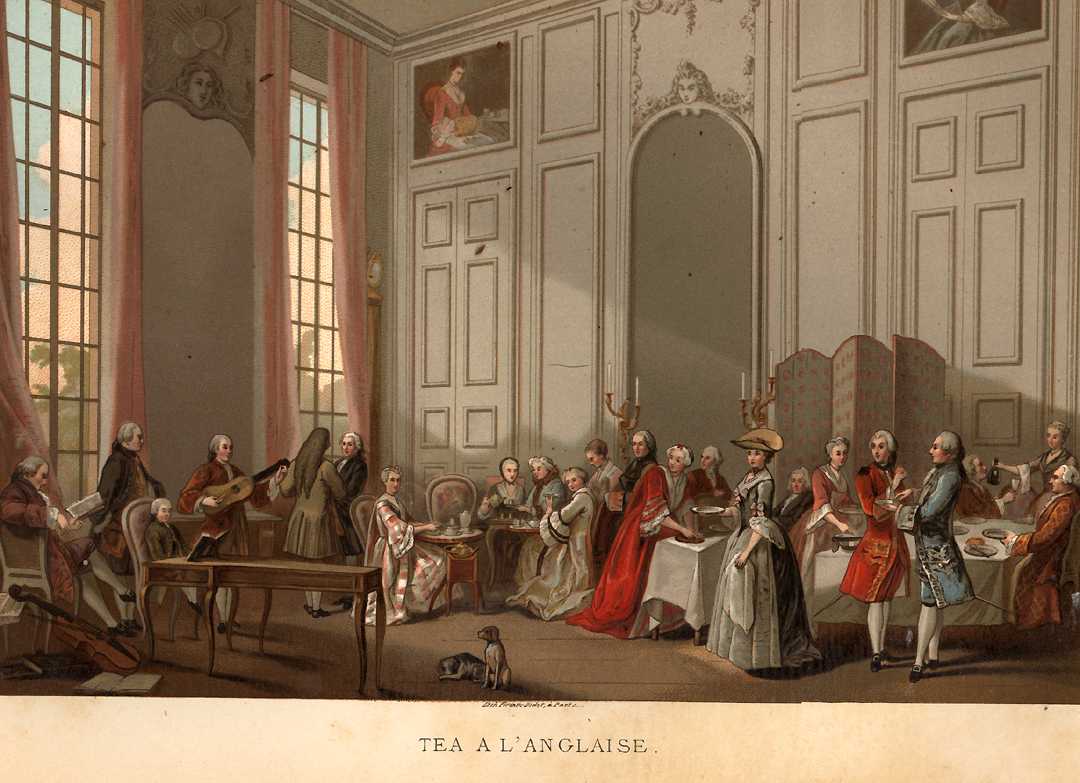
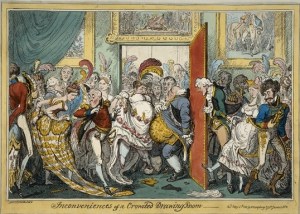
When you think of 18th century dining, which image comes to mind, tea on the left, or the sea captains to the right?

While I did not carouse with sea captains this weekend, at dinner today, I found myself deeply envious of someone’s skill in eating from a knife. I shoveled food onto my spoon yesterday with abandon. I coveted the last three pieces of quince tart today despite knowing that one of those pieces was for my husband. And I am not ashamed. Ok, not too ashamed.

The best part of living history is always what you learn, and I feel a separate blog post should deal with “the public, god love ’em.” What I learned this weekend was less about quilting and more about living old school. Ok, and maybe more about the public’s…breadth….than depth…

The most instructive thing was about being hungry and thirsty. Thirsty as in my lips are dry and I know I need to drink, which means being past thirsty and at dehydrated. Yesterday I went all day without peeing and that’s not right. Both yesterday and today I left the farm hungry, not because there was not food but because I ate mindful of leaving enough for those eating after me. The goose pie was delicious and seriously worth eating standing up in the kitchen. I’d fight for that pie.

Eating boiled dinner (ham, parsnips, carrots and turnips) along with a pudding, with 18th century utensils was challenging. Two-tine forks have great sticking ability but not much carrying ability.  Spoons are your friend. Knives may be better as trowels than cutting implements. No one really cares about your manners, they are too hungry to notice. Boiled pudding is this season’s smash hit.

Coggeshall Farm uses Amelia Simmon’s American Cookery, which I started reading last week. It is full of useful receipts based on American ingredients and I recommend it. Here is the receipt for the fantastic, sliceable pudding we had today:

A boiled Flour Pudding_.
One quart milk, 9 eggs, 7 spoons flour, a little salt, put into a
strong cloth and boiled three quarters of an hour.

There were hot words about those “7 spoons” from the kitchen staff and to be honest, I did not quiz them fully on the size of the spoons they used. But whatever magic they worked, it was truly delicious with and without the molasses cream sauce. Sliced and eaten with spoon or fingers (I snitched some later in the kitchen), it a consistency of solidity like the best parts of a Swedish rice pudding, though smooth.

It is hard to countenance how hungry people must have been much of the time in the past. More than the extreme hunger of the soldiers (like Greenman and Plumb Martin), I think common people experienced days of lacking, and accepted them, with the seasons. Food was not constant, but in flux, and even at harvest, I think, or hope, that one was mindful of the needs of others.

For more on seasonality and 18th century ways of thinking or seeing, read Circles and Lines: The Shape of Life in Early America. That’s what I’m going to pretend to do while I fall asleep.

Share this:

  • Share on Facebook (Opens in new window) Facebook
  • Share on Pinterest (Opens in new window) Pinterest
  • Email a link to a friend (Opens in new window) Email
  • Share on X (Opens in new window) X
Like Loading...

Black Bonnet Miscellany

14 Friday Sep 2012

Posted by kittycalash in Clothing, Making Things

≈ Comments Off on Black Bonnet Miscellany

Tags

Clothing, Costumes, exhibits, patterns, sewing

Lot 102
AMERICAN OR ENGLISH SCHOOL LATE 18TH / EARLY 19TH CENTURY
LADY IN BLACK BONNET
In the original giltwood frames and glass, on original wood backing.
Pastel on paper
22 by 18 inches

The Sotheby’s Americana catalog arrived at work, and I had a pleasant walk browsing the sale lots as I walked from one building to another. This lovely lady is offered with her mate, a gentleman in a blue coat with brass buttons. They’re of a school of portraits made as the centuries turned, pastels rather than oils, less expensive and perhaps easier to drag about for an itinerant artist. She’s lovely, in her frothy white ruff, with that well-made bonnet. That’s a bonnet I’d like to try making…eventually.

For now, the most brilliant thing I can recommend is Hallie Larkin’s blog post on 18th century buttonholes. Needless to say, I have not been doing them right. Read, learn, and look forward to better buttonholes. Brilliant. Did I mention brilliant? The photos from Neal Hurst at B&T are especially helpful, and honestly, I am so glad I didn’t tackle the green coat’s buttonholes yet. Or a spencer. See? Value in procrastination, distraction, or whatever you want to call it. Better buttonholes…it’s like salvation!

More on the quilting process later, when I manage to download the photos I took of the stencil process, and when I take some of the sandwich and frame situation. And then there’s more documentation…along with a couple of meetings, mailing my mother’s birthday package, I forgot breakfast, and pitching the boiler repair to my boss–and finishing the new cap I started. And this is an easy day!

Share this:

  • Share on Facebook (Opens in new window) Facebook
  • Share on Pinterest (Opens in new window) Pinterest
  • Email a link to a friend (Opens in new window) Email
  • Share on X (Opens in new window) X
Like Loading...
← Older posts
Newer posts →

Archives

wordpress statistics

Creative Commons License
Kitty Calash blog by Kirsten Hammerstrom is licensed under a Creative Commons Attribution-NonCommercial-ShareAlike 4.0 International License.

Website Built with WordPress.com.

  • Subscribe Subscribed
    • Kitty Calash
    • Join 621 other subscribers
    • Already have a WordPress.com account? Log in now.
    • Kitty Calash
    • Subscribe Subscribed
    • Sign up
    • Log in
    • Report this content
    • View site in Reader
    • Manage subscriptions
    • Collapse this bar
 

Loading Comments...
 

    %d