• Home
  • Completed Costumes/Impressions
  • Emma and Her Dresses
  • Free Patterns and Instructions

Kitty Calash

~ Confessions of a Known Bonnet-Wearer

Kitty Calash

Category Archives: Events

Can’t talk, sewing.

21 Thursday Mar 2013

Posted by kittycalash in Clothing, Events, Living History, Reenacting

≈ Comments Off on Can’t talk, sewing.

Tags

18th century clothes, Battle Road 2013, Clothing, common dress, Reenacting, Revolutionary War, sewing, weekend
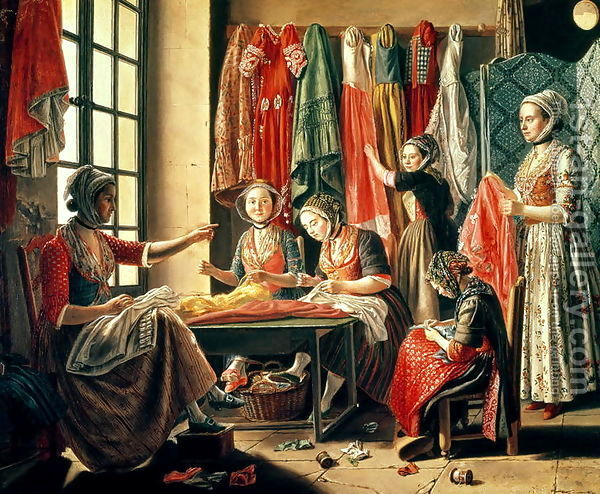
Raspal,_Antoine_-_The_Couturiers_workshop_-_1760

I wish I had this workshop to help me! Instead, I have the “assistant” who tends to howl and a room full of garments to finish and alter. The skirts of the brown gown are done and want only tape at the hems, so I can, in theory, move onward to sleeves. I’ll have to scrap plans for an HSF petticoat this weekend, as I have really fallen behind.
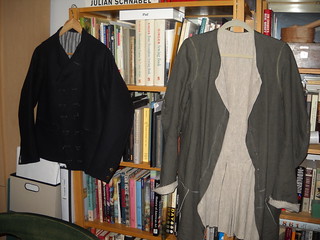
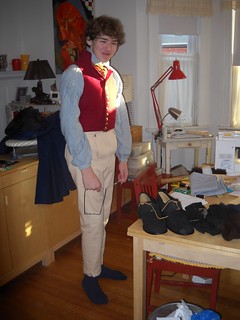
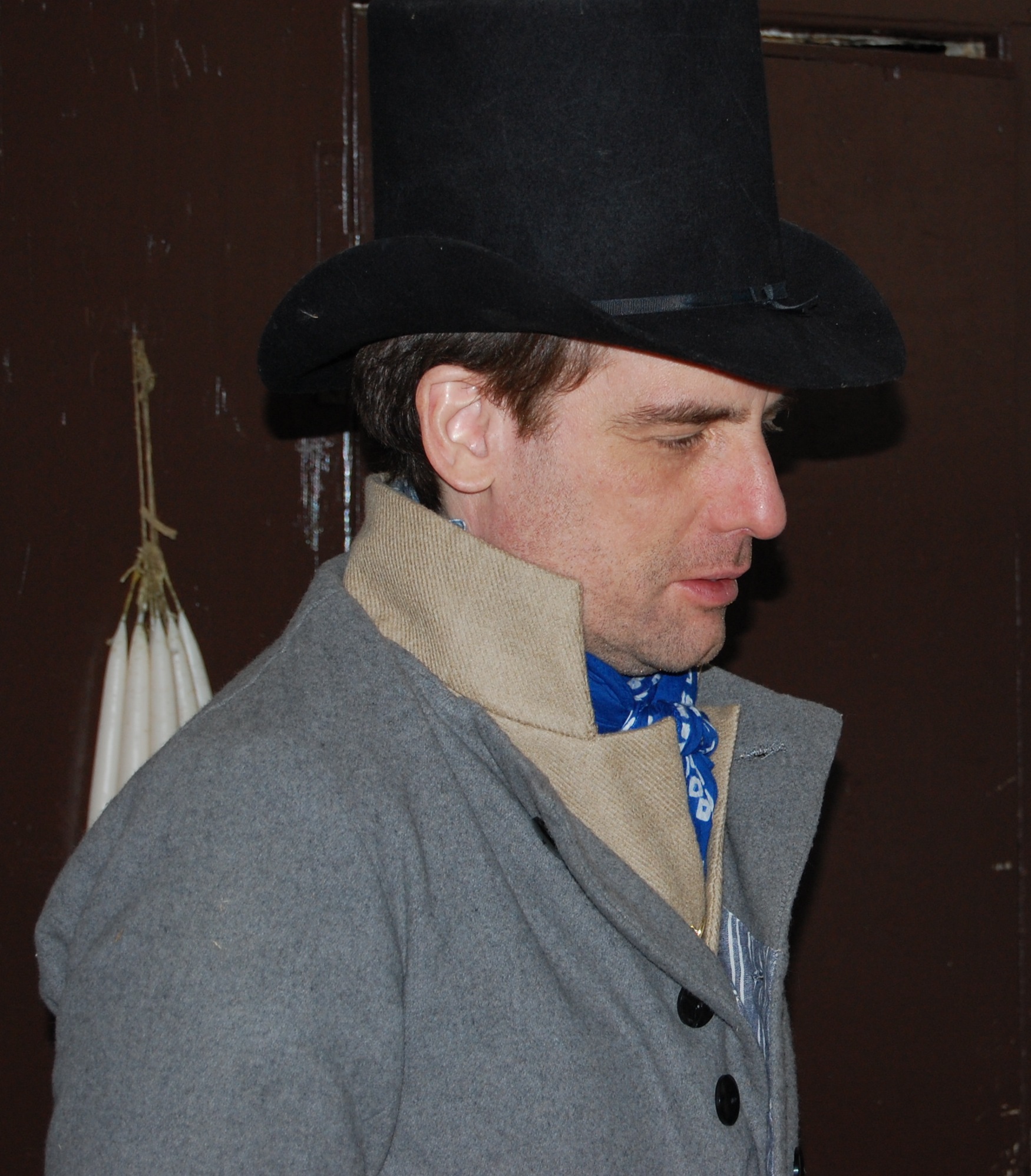
Menswear, to finish and to alter

Battle Road inspection/walk through is Saturday, and second hand reports of the reactions to letters received have me thinking about authenticity, standards, and communication. Last Saturday, I went to see Sew18thCentury and had a lovely time. Not only did we have a delicious late lunch and tea, an interesting chat about ideas and sewing and all sorts of things, I also got to get outta town on my own. (For growing up in a city, I am very happy to spend time in open spaces with grass, trees, and cows.)

I mentioned to Sew18thCentury that we’d wrestled with Fort Ti and chosen not to go because we did not, in our estimation, meet standards, and she was surprised that we didn’t. In truth, we did not. The guys clothes weren’t right, and I know our blankets aren’t right…heck, our tent’s not right.

What makes it all worse is that I know these things aren’t right. So I’ve tracked down blankets and just need to order them, and the tent–well, not this year, but maybe next, I can get around to sewing a linen bell-back tent. Mr S has learned back-stitching and whip stitching this week, so in a year we could tackle a tent together. It’s a process, and this year, unless there was a miracle of increased speed in sewing, I still wouldn’t go to Fort Ti in September.

But what about Battle Road? This inspection is not just for safety, it’s also for dress and appearance. This has thrown me into a tizzy: the jacket’s not done and the coat’s not altered. If the guys don’t pass inspection, they can’t be part of Battle Road, and I’ll feel bad that I didn’t put alterations first. But realistically, I can’t imagine getting their things done by Saturday morning. At least the coat will have the alteration marks made by the master… the road to hell may be paved with good intentions, but the road to Battle Road is paved with pins and linen thread.
Share this:

  • Share on Facebook (Opens in new window) Facebook
  • Share on Pinterest (Opens in new window) Pinterest
  • Email a link to a friend (Opens in new window) Email
  • Share on X (Opens in new window) X
Like Loading...

Choosing a Gown

19 Tuesday Mar 2013

Posted by kittycalash in Clothing, Events, History, Living History, Making Things

≈ 1 Comment

Tags

18th century, 18th century clothes, authenticity, Battle Road 2013, Clothing, common dress, Costume, fashion, history, living history, Research, Revolutionary War

Here’s a good question (I love questions): how do you choose which [historic example] to make?

The answer, as almost always: Research.

I start with a date. For Battle Road, the dress must be typical of New England in April, 1775 and appropriate for my impression or persona.  As I imagine my character from the past, she’s in her 40s, from the upstart town of Providence, married to a tradesman or craftsman. She has one child, and I haven’t thought about whether or not it’s one only or one surviving—too busy chasing the One Child Who Eats Like Ten.

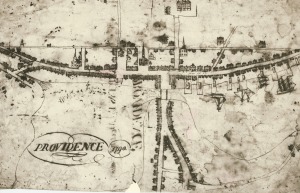
Providence, 1790. John Fitch, RIHS Map #30

Providence, 1790. John Fitch, RIHS Map #30

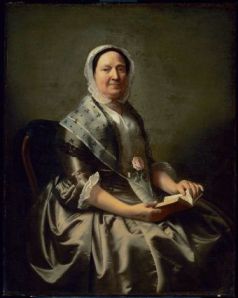
Mrs Nathaniel Ellery, J S Copley, 1765, MFA Boston

Mrs Nathaniel Ellery, 1765, MFA Boston

Living in a port city means my character—we’ll call her Kitty—has access to new goods and ideas, a town where you can buy almost anything, but where staymakers are less common than in Newport.  It’s less refined than Newport, brassier, but competitive and striving and with plenty of money in some hands. Providence is where the Gaspee affair was plotted; in 1790, residents from around the world are recorded here—men from Java, living in Providence—it’s polyglot, mercantile, striving.

Given that Kitty is of the middling sort in a town, she can wear linen and wool and camblet and even some silk. Her clothes will be fashionable but not high style, “a thought behind the current moment,” as Lord Peter says of someone’s hat. What’s the purpose of this brown gown? Everyday wear, that, with accessories, can be dressed up, or dressed down. Eventually, who knows, I might manage a crewel work stomacher and nice linen cuff-ruffles for my shift, though a filthy apron, burned skirt, and a striped rough linen petticoat are more likely…

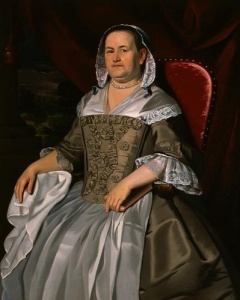
Mrs. James Otis (Mary Allyne Otis). JS Copley, ca. 1760. Wichita Art Museum

Mrs. James Otis ca. 1760. Wichita Art Museum

Making an everyday dress means not copying the silk dress from Williamsburg, and honestly, I couldn’t wear that wedding cake frosting on my chest, nor what Mrs. Otis has on her stomacher. How about that lovely Norwich wool gown? Well…almost. But I can’t sew that well, and haven’t got fabric that lovely, couldn’t afford it now, wouldn’t have had it then. I have brown wool. Have I seen Mrs. John Brown dressed like one of Copley’s women? Perhaps (if you take Copley as evidence, which you must do carefully.) Have I looked at the lovely brown silk satin and thought, I could do that. Possibly.

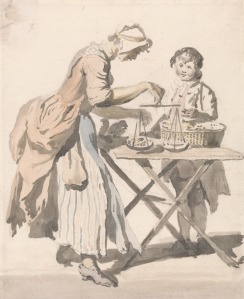
Black Heart Cherries, Paul Sandby, ca. 1759. YCBA B1975.3.206

Black Heart Cherries, Paul Sandby, ca. 1759. YCBA B1975.3.206

What we do know is that in New England, gowns are found more often than any other kind of garment (i.e. short gowns or jackets or riding habits). We know that wool is common, but that linen is found in towns and cities, wool more often in the country, and that the pretty, but expensive, cotton prints are popular. Open robes are more common earlier, and “hatchet” cuffs (pleated tubes) predominate. The style is worn by Copley’s women and Sandby’s girls, and it’s seen in images from 1760 on. That means it’s a good choice for a base style for any class level.

Here’s my process, more or less:

Determine the date, that sets the style.
1775 means stomacher front gown.

Determine the character, that sets the fabric and trims.
Kitty’s New England middling, so she’ll have a wool gown with robings but not trims, a plain stomacher, cuffs and not ruffles, and a matching petticoat.

Determine the event, that sets the accessories.
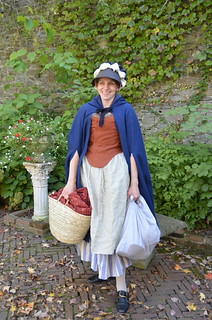
Battle Road is a hard one for me: as a woman, I shouldn’t be there, and as a Rhode Islander, I really shouldn’t be there. (RI militia were stopped at the border by the governor to prevent them joining Massachusetts men after news of the events at Lexington and Concord reached Rhode Island. They did get there eventually and participated in the siege of Boston, but you see what I mean…) So I have to construct a story for how to dress, and the best I can manage is going out, either to a shop or to pay a casual call on family. So what I plan is a matching petticoat, white neck handkerchief, clean check apron, and bonnet over a clean white cap. (This emphasis on clean should remind me to wash and iron a thing or two.)

That’s my story, and I’m stickin’ to it. For now, anyway, till I get a better idea.

Share this:

  • Share on Facebook (Opens in new window) Facebook
  • Share on Pinterest (Opens in new window) Pinterest
  • Email a link to a friend (Opens in new window) Email
  • Share on X (Opens in new window) X
Like Loading...

Women’s Work

22 Tuesday Jan 2013

Posted by kittycalash in Events, History, Living History, Reenacting

≈ 5 Comments

Tags

18th century, Events, interpretation, living history, women's history, work

Cooking. Gets you every time.

Cooking. Gets you every time.

Three holes (at least; there might be four) and mending to do. The patches are cut, but I’m thinking now that a wool apron might be a good thing to have. The other thing I’ve been thinking about is what James Thurber called The War Between Men and Women, and how even in educated, enlightened North America, it plays on. [i]

At living history events or reenactments, the work and activities are divided along gender lines. Participants are supposed to follow “the rules,” which keep women on the observer side of the rope line and the men free to run around with muskets. Women sometimes seem purely decorative at the military events, and the relationships between men and women are curious. There’s the sexism between reenactors, and the sexism of the public, who can often assume women know nothing about what’s happening.  Women should, after all, know their place, just as the men know theirs.  Women can cook and clean up after the men, and the men will do all the talking, even when they’re wrong.[ii]

In a more domestic setting, this same historical dynamic can play out: women cook and serve the meals, wash the dishes, fetch the wood and water, and clean the kitchen, while men muck about outdoors until their tools break. Then they lounge about smoking, drinking, and talking.

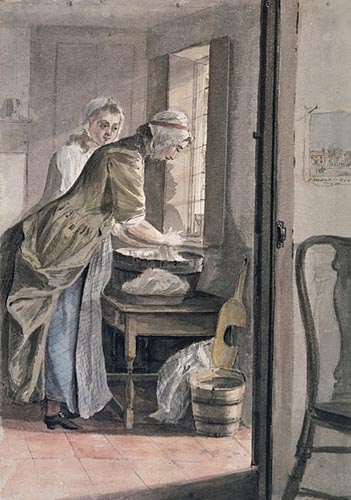
Sandby, Washing at Sandpit Gate, 1765. Royal Collection.

Sandby, Washing at Sandpit Gate, 1765. Royal Collection.

That’s all OK, to a degree.  But we’re not in the 18th century, and the women in the kitchen don’t enjoy washing other people’s dirty dishes as well as all the cooking pots and tools. We had a system on Sunday evening, but I did notice that some men just can’t be the only guy helping: once the other guys leave the room, they’re out, too, with a kind of desperation, even as the light wanes and we need all the help we can get to finish up.

So what to do? Interpreting the 18th century means facing gender roles that most American women today don’t like or embrace. What’s the best way to interpret women’s history and women’s roles in the past to people today?

On Sunday, I left the house to call the guys to the first meal, and a visitor asked if the sheep in the field were part of the site. “Yes,” I said. “ But I don’t know where the sheep are today; I don’t get to leave the house much.” And that is true: aside from fetching water when I didn’t have a man or boy to ask to do it, there was hardly need, reason, or even time, to leave the house.

I think we do a disservice to the visitors to living history sites of all kinds if we don’t find a way to talk about women’s history, and the roles—proscribed or not—that women could take on. At a RevWar encampment, we can talk about the reasons women followed the armies, the kinds of work they did for pay or rations, and what the Revolution meant for women. At the farm and at the manor, I think it’s important to talk about women’s lives in the Early Republic. How this would work at the farm, exactly, I’m not yet certain; at the manor it is easy enough, for the women who lived there were born just before the Revolution. They were well-educated and expected to choose their own husbands. We know who they were; we know less about the women at the farm, though we know about their work.

How we experience that work isn’t really the point, but the chasm between choosing to spend a day never looking beyond the scope of the hearth and having to spend days that way is enormous. It’s a point I want to make,  in a way more sophisticated than “life was hard and greasy.” It’s something to work on.


[i] This is in no way meant to equate the petty first world problems of a bunch of reenactors/living historians with the larger and more brutal problems elsewhere in the world. But relationships can change when situations change…

[ii] Fortunately, the Second Helping Regiment doesn’t work quite this way, and not just because they’re busy chewing whatever has been made for them. Cooking, and the subsequent chewing, can be used strategically.

Share this:

  • Share on Facebook (Opens in new window) Facebook
  • Share on Pinterest (Opens in new window) Pinterest
  • Email a link to a friend (Opens in new window) Email
  • Share on X (Opens in new window) X
Like Loading...

Weekend at the Farm

21 Monday Jan 2013

Posted by kittycalash in Clothing, Events, Living History

≈ 2 Comments

Tags

18th century, Coggeshall Farm Museum, food, Historical Sew Fortnightly, living history, Museums, Rhode Island, weekend

The Young Mr in his new clothes

Fourteen year old boys don’t like to get up early, but we managed to rouse the beast on Saturday, and get him dressed, with only minor hostilities. He’s wearing all new clothes, except for the shirt, which I hope will not have to be replaced before the end of the summer. (I have now guaranteed that his arms will grow several inches in the next week.)

Mr S wore his new waistcoat but it’s hard to see under his jacket. He also got his new hat from Mr B, so he could upgrade from his knitted cap.

New hat, new waistcoat

New hat, new waistcoat

There are more photos here, including a fabulous stuffed leg of lamb. For mid-day Saturday, we ate a meat pie (pork and apples), sugar cakes, coriander biscuits, bread and molasses bread, all brought from home, along with hat from the farm boiled with parsnips, potatoes, carrots and onions and a carrot pudding. We also made a potato-apple-onion pie for the evening meal, though Mr S, the Young Mr and I did not stay. There is a limit to what the child will tolerate.

Sunday, we arrived in time for Mr S to make more fence pegs, while I joined the kitchen to make soup with ham, squash, parsnips, and onions, which we ate with bread and cheese, and the last of the sugar cakes, for lunch. All the while, a leg of lamb was cooking, masterfully prepared by Mrs B, and stuffed with cubed bread, onion, ham, sage and onion. To go with it, we made a rice pudding with apples, wilted greens, salad, squash pudding, and stewed apples. The sauce for the lamb was particularly fine, with drippings, minced onions, what we think was whiskey, butter and cream. I learn so much cooking with Mrs B!

waiting, wanting, hoping

The cats wanted, but were disappointed. They were calmer on Sunday, though extremely attentive kitchen assistants both days. Pity they don’t do dishes. There were plenty to wash. 1799 was definitely greasy. Even the striped cat feels a little greasy, but that could be because he’s handy to wipe your hands on.

Now it’s on to sewing for something else, though whether that will be wool trousers or clothes for Washington’s Birthday, I don’t really know.

Share this:

  • Share on Facebook (Opens in new window) Facebook
  • Share on Pinterest (Opens in new window) Pinterest
  • Email a link to a friend (Opens in new window) Email
  • Share on X (Opens in new window) X
Like Loading...

The Wind From the Hudson

20 Tuesday Nov 2012

Posted by kittycalash in Clothing, Events

≈ 2 Comments

Tags

18th century clothes, Clothing, common dress, Reenacting, Revolutionary War, weather

Looking East from Fort Lee Historic Park

The cold on the Palisades was not as bitter this past weekend as it was last year; there must have been at least an 8 degree (F) difference. There was a rumour of 37F/2C but I think it was about 45-50F (7-10C). Where there was sun, it was quite pleasant, as the wind was gentle.

So what did we wear? Mr S and the Young Mr had long underwear under their uniforms (white so it would not show under the overalls), and long stockings, too; the Young Mr has a wool waistcoat, and is still so wiggly that I don’t know how much he feels the cold yet.

Layers are your friend

I wore my 1780s wool jacket, two linen petticoats and a wool petticoat, my still-unfaced cloak, and wool stockings, and was comfortable enough at nooning to take off my cloak. It’s a long cloak, based on one in the collection at work, but blue broadcloth and not drab (the extant cloak is drab, but both drab or dun and blue appear in RI runaway ads).

So what’s the key to keeping warm? Then, as now, (or now dressing as then) it does seem to be layers. The wool petticoat makes an effective barrier against cold, and the wool jacket is warm. I tried patterning mitts, but my hands are so large relative to my wrists that I tore the muslins at the thumb or had very baggy wrists.

These chintz mitts from the Met (C.I.39.13.185a–d) seem to have a similar tendency to width at the wrist, and might work better than the pair I was following from Costume Close Up. It was late and I was tired, so a fresh start might work to keep my hands warm.

Post-war women with long sleeves would have been able to avoid that chill wind on the forearms, and I look forward to wearing my new long-sleeved wool dress.

Share this:

  • Share on Facebook (Opens in new window) Facebook
  • Share on Pinterest (Opens in new window) Pinterest
  • Email a link to a friend (Opens in new window) Email
  • Share on X (Opens in new window) X
Like Loading...
← Older posts
Newer posts →

Archives

wordpress statistics

Creative Commons License
Kitty Calash blog by Kirsten Hammerstrom is licensed under a Creative Commons Attribution-NonCommercial-ShareAlike 4.0 International License.

Website Built with WordPress.com.

  • Subscribe Subscribed
    • Kitty Calash
    • Join 621 other subscribers
    • Already have a WordPress.com account? Log in now.
    • Kitty Calash
    • Subscribe Subscribed
    • Sign up
    • Log in
    • Report this content
    • View site in Reader
    • Manage subscriptions
    • Collapse this bar
 

Loading Comments...
 

    %d