Change

Tags

, , , ,

my-obama-me_20-12-16-1

Changing seasons, change we can believe in, be the change you want to see in the world.

This dumpster fire of a year is nearly over, and the commonplace is to note how much has changed: that’s our human instinct. But much does not change, most often within ourselves.

It’s our perception or understanding that changes, and, if we are lucky, causes us to act. That’s the mechanism behind the progressive movement in enacting/reenacting/living history. It’s the mechanism behind organizational change, and personal change. Sometimes it’s the sole inspiration to get me to clean my house. Holy cats, that’s a lot of kitty fur! As the sun finally shines in on the rug.

Sometimes we push as hard as we can to make change happen, but lack access to all the levers: then we have to wait. I am waiting now: I have pushed every lever and turned every knob within my reach, and the waiting is agony.

High school seniors applying to college know this feeling: when will I know? People starting new habits wonder, when will I see a difference? As a species, we have trouble with time. But tiny changes and tweaks aggregate, accrue over time like compound interest. We’ll get there.

Think about what you used to know, and what you know now, how you’ve learned more about what (or who) you love, how the way you approach a problem from collar stands to coat names. All those little changes make a difference– all the difference, the only difference.


Dreams of Summer

Tags

, , , ,

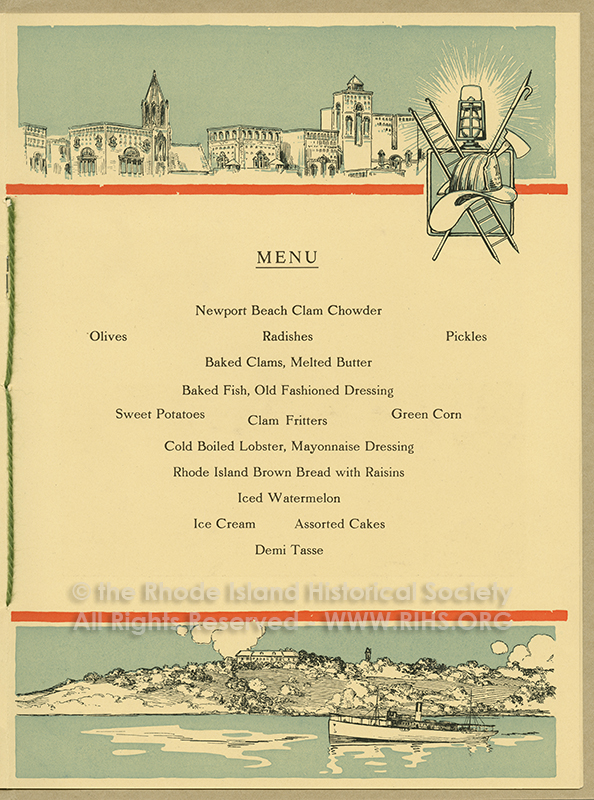
Clambake, International Association of Fire Engineers, 1916. RIHS Graphics Collection G1173

Clambake, International Association of Fire Engineers, 1916. RIHS Graphics Collection G1173

I will visit the beach in Rhode Island any time of year, even to the point of dragging Drunk Tailor there in January (I really like water). But as the wind speeds rise and temperatures drop, I begin to dream of summer, and especially of summer meals.

This 1916 Clambake program and menu is in the RIHS Graphic’s Ephemera Collection, and while not quite Wiener Werkstatte quality, the dramatic graphic style captures the zeitgeist of the early twentieth century.

Menu, International Association of Fire Engineers, 1916. RIHS Graphics Collection G1173

Menu, International Association of Fire Engineers, 1916. RIHS Graphics Collection G1173

Inside, the menu captures the flavors of late summer New England, from the Baked Clams with melted butter to Green Corn, cold Boiled Lobster and Iced Watermelon for dessert. It’s time to start planning Christmas menus (I finally caved and brought in a tree, much to the delight of the feral cat), and fish is always on the list. Our tradition has evolved from the Christmas Eve bouillabaisse of my childhood through salmon with dill to a New York Times fishmonger’s stew. I certainly have the tureen for such a production, but the capacity is large, and with only three adults to eat the stew, I wonder at the sense of making up such quantities.

Tureen in the wild

Tureen in the wild

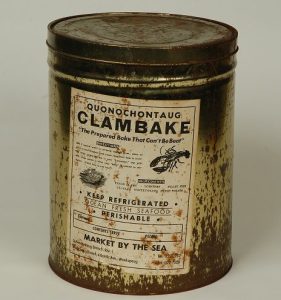
Quonochontaug Clam Bake Can ca. 1970. RIHS Museum Collection.

Quonochontaug Clam Bake Can ca. 1970. RIHS Museum Collection.

I could assemble a clambake for home, and boil it up on the stove in Don Draper’s 1962 kitchen– that’s a more recent tradition than the sand-pit variety– but it seems slightly mad, as all (potentially) good ideas can seem. It’d be July at Christmas, and although I’d miss the smell of the ocean, the cry of the seagulls, and the warmth of the sun on a late summer afternoon, it might be worth the effort.

Sideways Into Immersion

Tags

, , ,


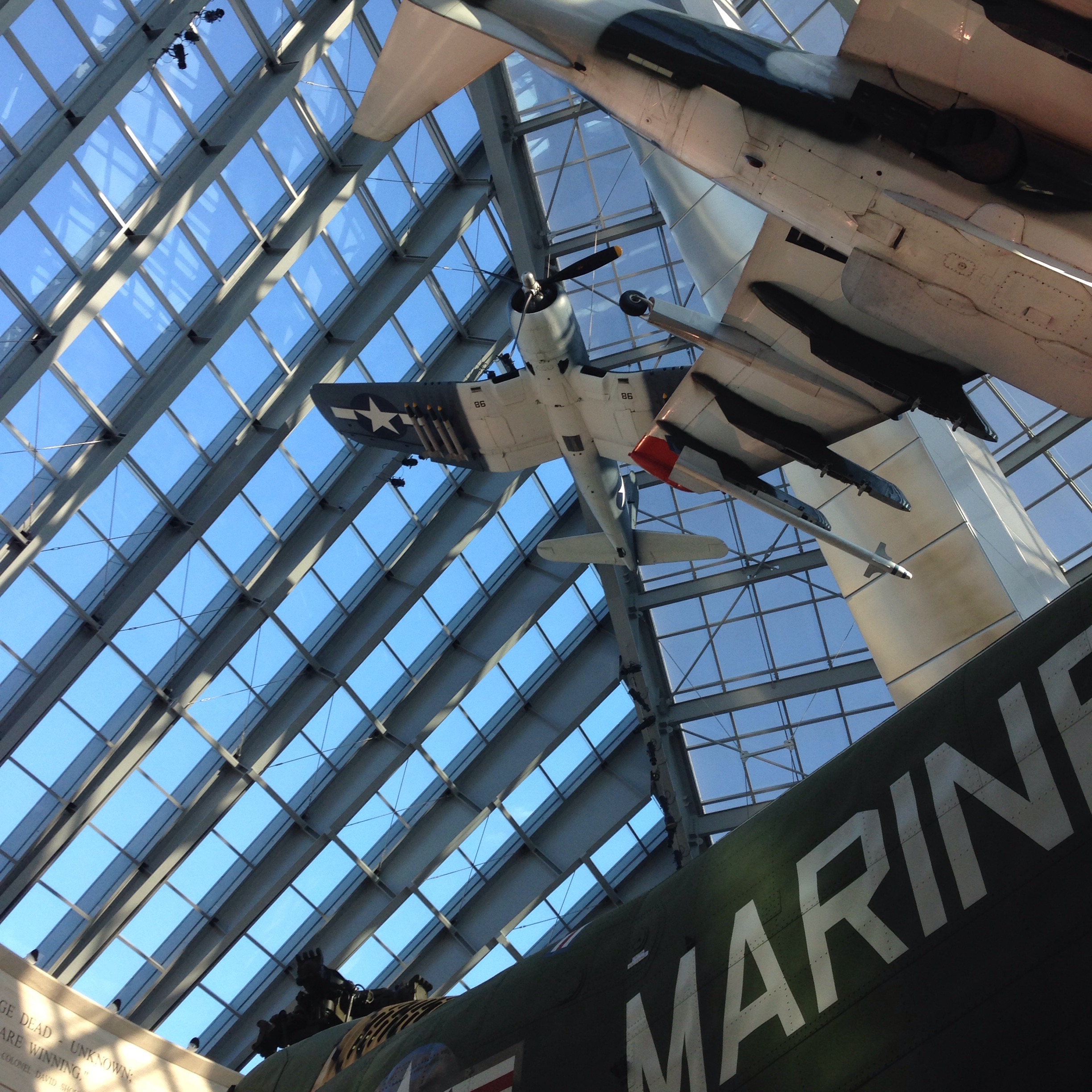
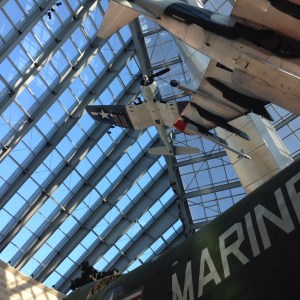
I was recently asked where I found inspiration for my work, and the obvious answer was in my travels, from the arrangement of bannister-back chairs on the wall at the Yale University Art Gallery to men shaving with straight razors on the parade ground at Fort Ticonderoga. There’s a kind of middle-ground answer as well: the National Museum of the Marine Corps.


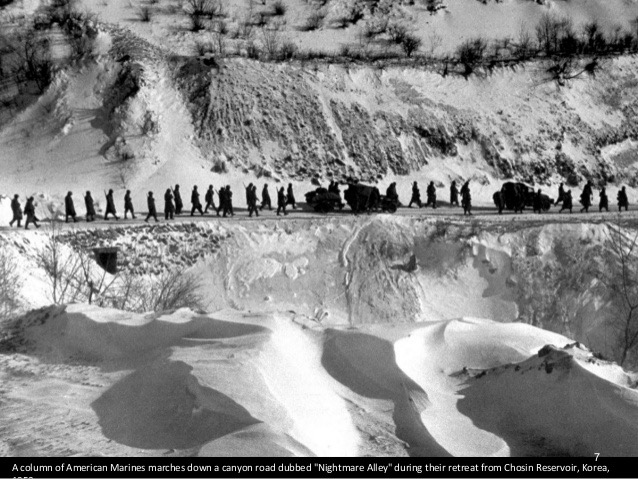
Drunk Tailor took me there almost a year ago, and since What Cheer Day prompted me to think about emotional goals, I’ve wanted to go back. Anna asked about uncomfortable emotions, and while Sharon is absolutely right about the United State Holocaust Memorial Museum being necessary, it was the NMMC’s 20th century displays that came to mind, particularly Chosin and Khe Sanh– Chosin all the more so after watching the American Experience program on the battle of Chosin.


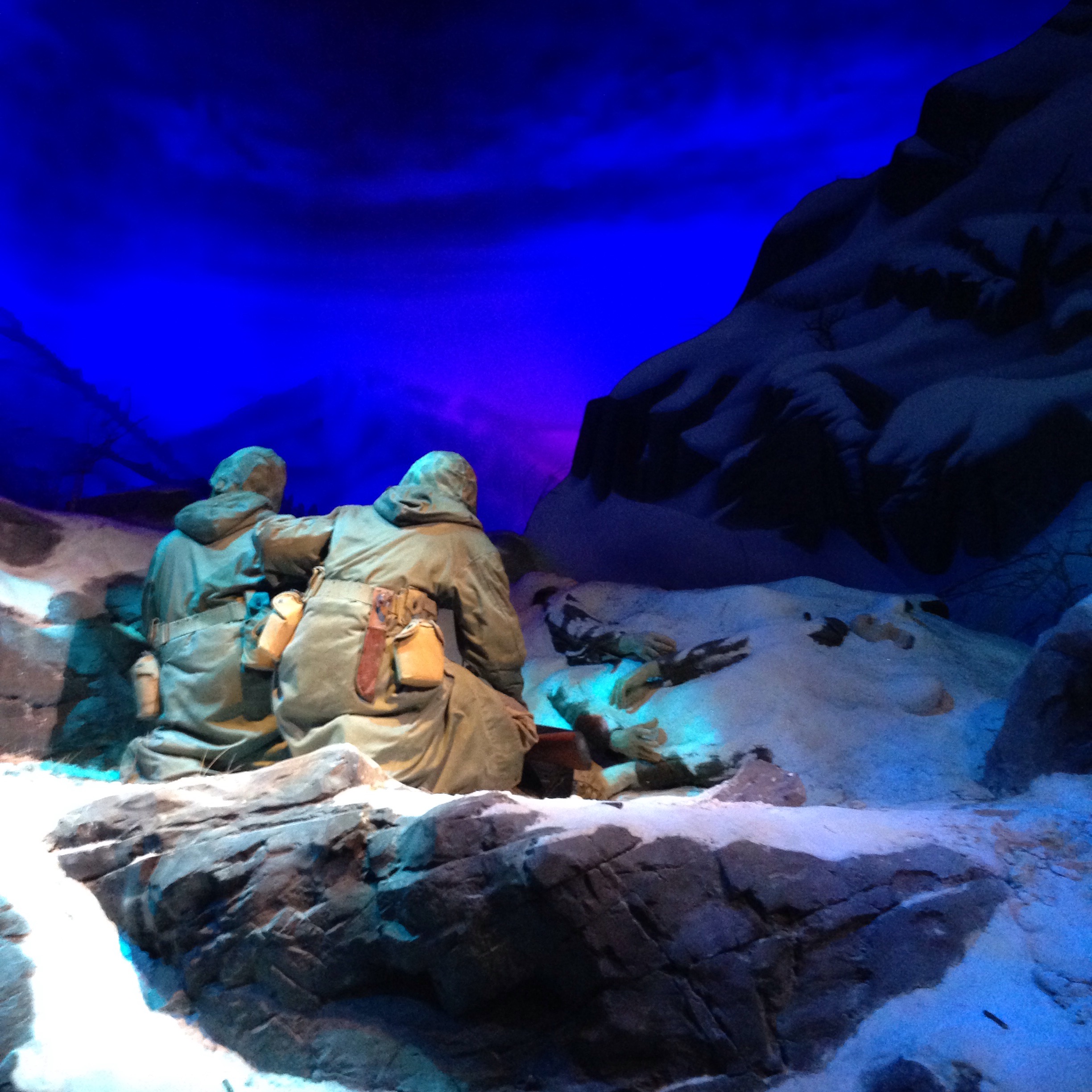
A year ago, the Chosin Reservoir gallery experience resonated with me because it was so well done. Reproductions of David Douglas Duncan photos (he sticks with me because, like Omar Bradley, he came from Missouri) hang on the wall beside two glass doors. To the right, a film runs on a loop, framed by cast resin icicles. Open the doors, and even Drunk Tailor and I are dwarfed by the landscape looming out of the dark. Figures of Marines crouch above us, sheltering behind a snowbank…of dead, frozen Marines. Artillery rounds burst against the dark sky, and I wrap my coat around me because, more than fearful or shocked by the noise and lights, I’m cold. Really cold.

There’s no possible way a gallery –even a Marine Corps Museum gallery– can replicate a fraction of the Chosin experience, but the gallery succeeds in shocking our senses through the simple use of temperature shift, and that is enough to take us out of the everyday. Physical discomfort prompts an emotional shift that allows us to better empathize with, and understand, the experience of the Marine at Chosin. Now, the NMMC and I may have very different takeaways from this gallery: while I absolutely respect and admire the Marine corps (c’mon, I sew OD gowns while binge-watching The Pacific), my instinctive response is No More Wars. That’s a complicated response to have in a military museum, and one I feel more strongly at the NMMC than I have at the West Point Museum.

I attribute these different responses to the greater sophistication of the NMMC compared to the WPM, which presents very standard uniform/flag/weapon/label displays. The NMMC begins that way (the sole “motion” in the earliest galleries is stylized seagulls against a blue sky), and while I love roundabouts and shakos nearly as much as Drunk Tailor, these galleries do not connect us to the history as immediately — as emotionally– as Chosin and Khe Sahn.


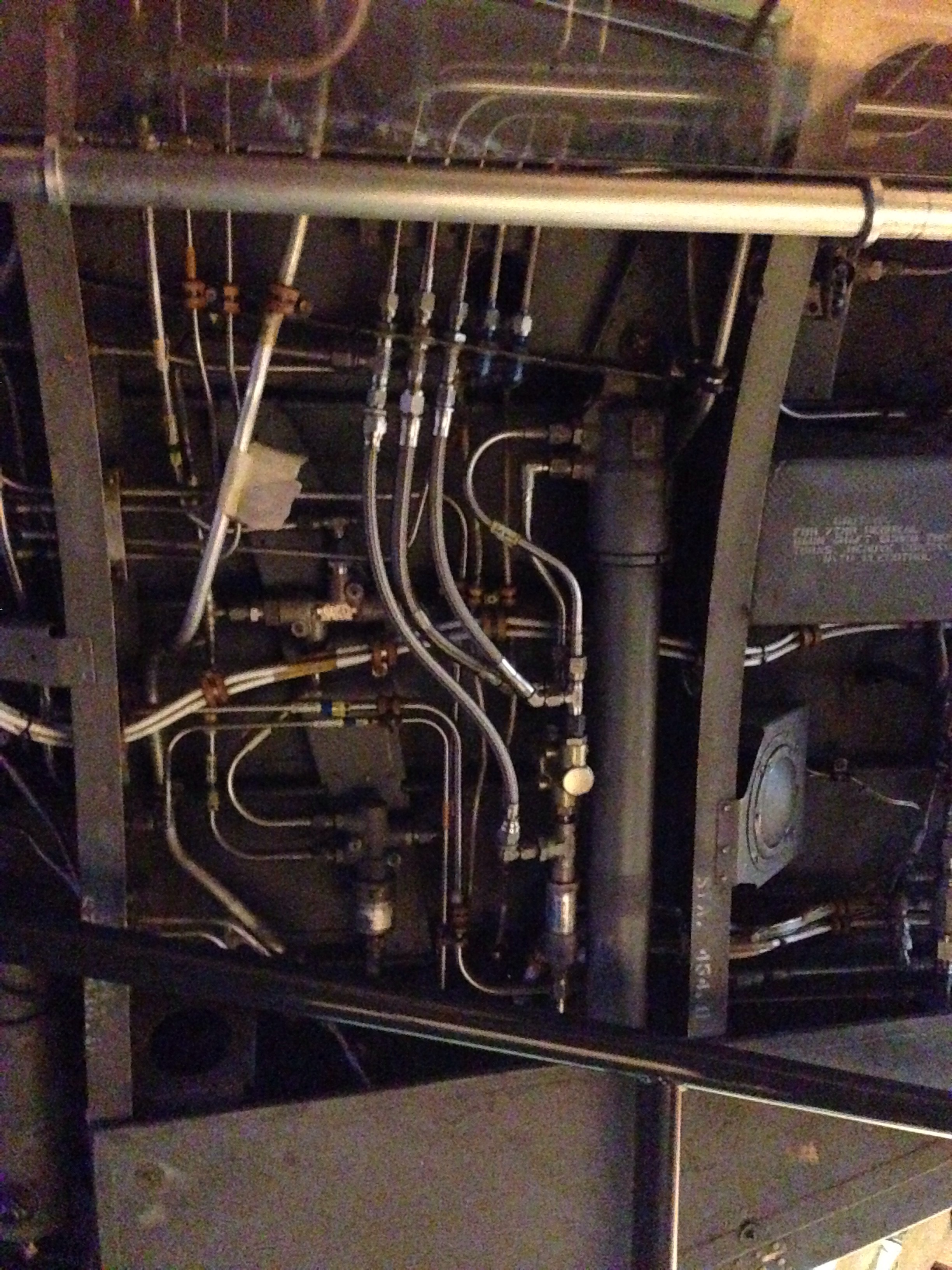
Khe Sahn was slightly disappointing this visit compared to last year. To be sure, the helicopter entrance continues to impress me, but I recall the gallery having higher heat and more rats, as well as louder volume. The temperature contrast was particularly notable against Chosin, and I remember taking my coat off in the Khe Sahn gallery last year. Despite those differences, a toddler entering Khe Sahn promptly turned around to leave. The radio noise was clearer this year, and I suspect that the gallery continues to be fine-tuned, as staff attempt to balance the noise of the siege against the noise of the entrance. This is a place where a faint odor of hydraulic fluid lingers in the helicopter, and probably prompted the emotional response Drunk Tailor observed visiting with veterans.


The bottom line, though, is that mindful use of sensory input in any museum can increase visitors’ emotional connection to, and engagement in, the material presented. Visitors are smart: it won’t take much for them to notice a smell, temperature or sound, so even the most cautious museums can sidle into more sensory engagement.
Frivolous Friday: Fashion Flashback

Tags

, , , , , , , , ,

IMG_6945
I don’t know about you, but the past ten days or so have been surreal in a way that I haven’t experienced in a dozen years or so. Numerous creative folks I know are working hard to find new, engrossing projects and sharing what they find with others. As always, Satchel Paige has excellent advice: Don’t look back, something might be gaining on you.

What project shall I take up again, to distract myself from the shorter days and colder temperatures?

This is actually making reasonable progress, and might even be done by early December.
dscn4571

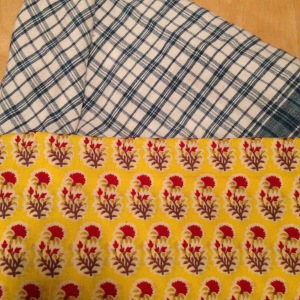
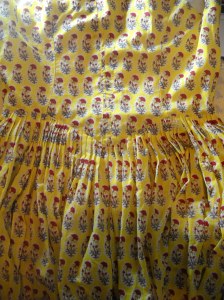
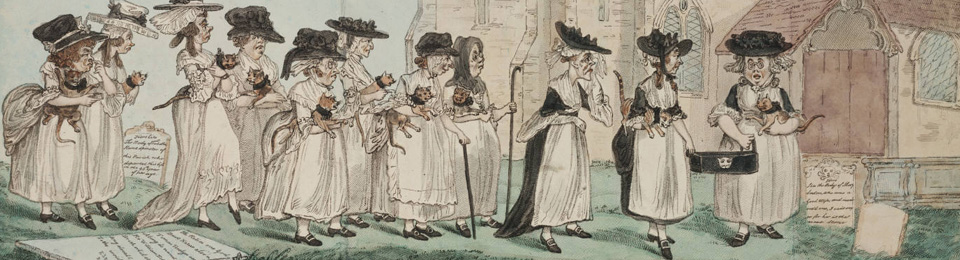
It’s satisfying work, pleating and stitching this lightweight cotton, tiny stitches in white linen thread. I’ve made some modifications to the pattern, but not many, aiming for a 1780-1782 style. Judicious cutting and generous friends will, fingers crossed, even yield a matching petticoat, which is very exciting indeed– and an unusual fashion statement chez Calash. Here, we focus on clash, but the fabric itself takes care of that for me.

Now, if only I had bright red morocco leather shoes to wear with this, that would be a sight indeed.

Mrs Pabodie, I presume?

Tags

, , , , , , , ,

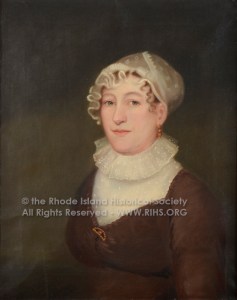
Mrs William (Jane) Pabodie. oil on canvas, 1813. RIHS 1970.60.2

Mrs William (Jane) Pabodie. oil on canvas, 1813. RIHS 1970.60.2

Remember Mrs Pabodie? She appeared a week ago today in Providence after an intense sewing effort left your author with numb fingers. The process was as straightforward as these things ever are, manipulating fabrics to do your bidding once you think you have the right materials.

It took more rounds of white muslins from Burnley and Trowbridge than I care to count, and a variety of book muslins from Wm Booth Draper, just for the chemisette and cap. The laces came from Farmhouse Fabrics in the most expensive small package I’ve yet ordered that did not contain antique jewelry.

Mrs Pabodie attempts to remember when she was born (1771). Photo by J. D. Kay

Mrs Pabodie attempts to remember when she was born (1771). Photo by J. D. Kay

The gown is a wool and silk blend remnant from Wm Booth Draper, just enough to make a gown (even at my height) though I admit the front hem will need some piecing or a ruffle to give it the proper length. Still, the thing more or less works, though as I compare the details to the original painting, I admit we’re still in beta.

I was joined by three friends from different eras (because you know me: if it’s not didactic, we’re not doing it): a sailor who on the run from a Newport press gang in 1765; Reverend Enos Hitchcock of the Beneficient Congregational Church in 1785; and Sissieretta Jones, soprano of Providence, around 1880. Each of the characters described their lives and their clothing, and I will admit that the Annual Meeting audience may not have been fully prepared for some of what they heard– I’m not certain they had ever considered how apt “balancing a sheep on my head” might be in describing Reverend Hitchcock’s wig.

Mrs Pabodie points out East Side landmarks to a visitor examining the theatre curtain backdrop painted around 1810. Photo by J. D. Kay

Mrs Pabodie points out East Side landmarks to a visitor examining the theatre curtain backdrop painted around 1810. Photo by J. D. Kay

In the end, they were entertained, and may even have learned something, as we celebrated 2016’s interpretive theme, Fashioning Rhode Island.