• Home
  • Completed Costumes/Impressions
  • Emma and Her Dresses
  • Free Patterns and Instructions

Kitty Calash

~ Confessions of a Known Bonnet-Wearer

Kitty Calash

Tag Archives: 18th century clothing

Use it Up, Wear it Out, Make it Do

07 Monday Apr 2014

Posted by kittycalash in Clothing, History, Museums, Research

≈ 2 Comments

Tags

18th century clothes, 18th century clothing, alterations, Clothing, dress, fashion, Global Encounters, John Brown House Museum, Metropolitan Museum of Art, Research, Rhode Island, Rhode Island Historical Society, style
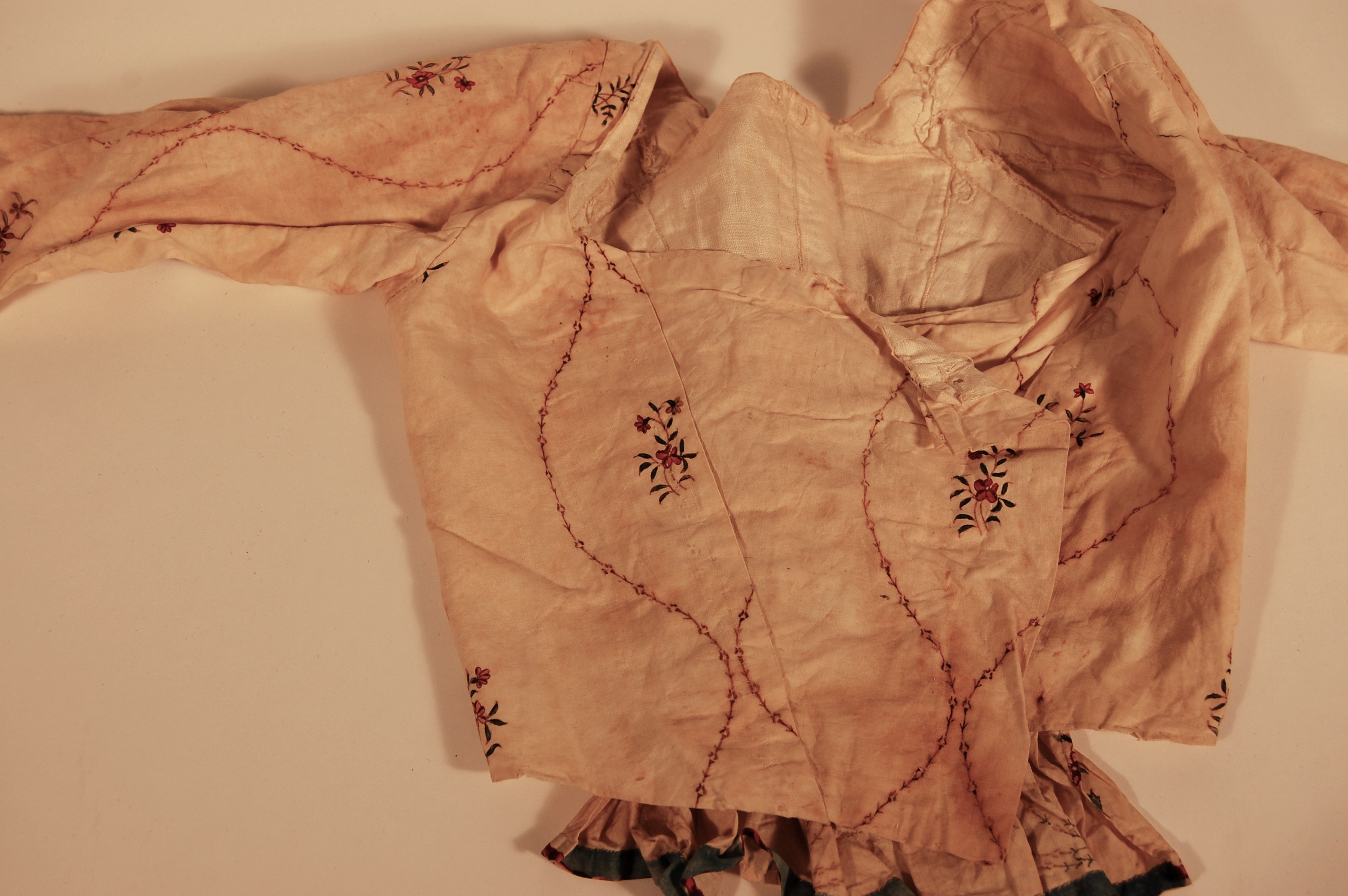
Bodice, painted Indian cotton, 1780-1795 RIHS 1990.36.27

Bodice, painted Indian cotton, 1780-1795
RIHS 1990.36.27

I’ve fallen behind again, as I spent considerable early morning time this past week working on a short presentation for a program in Worcester this past weekend. If you are among the people who do not wake at 4:00 AM panicking about the organization of your thoughts, or whom, exactly, might have worn a heavily-remade bodice, you are lucky indeed.

But I managed to present without falling all over myself, putting out someone’s eye, or causing mayhem and self-embarassment, so, phew! (I do this so much less often than I used to that my anticipatory anxiety is always high.)

Above you can see one of the items I talked about: a re-worked bodice from the collection of the Rhode Island Historical Society.
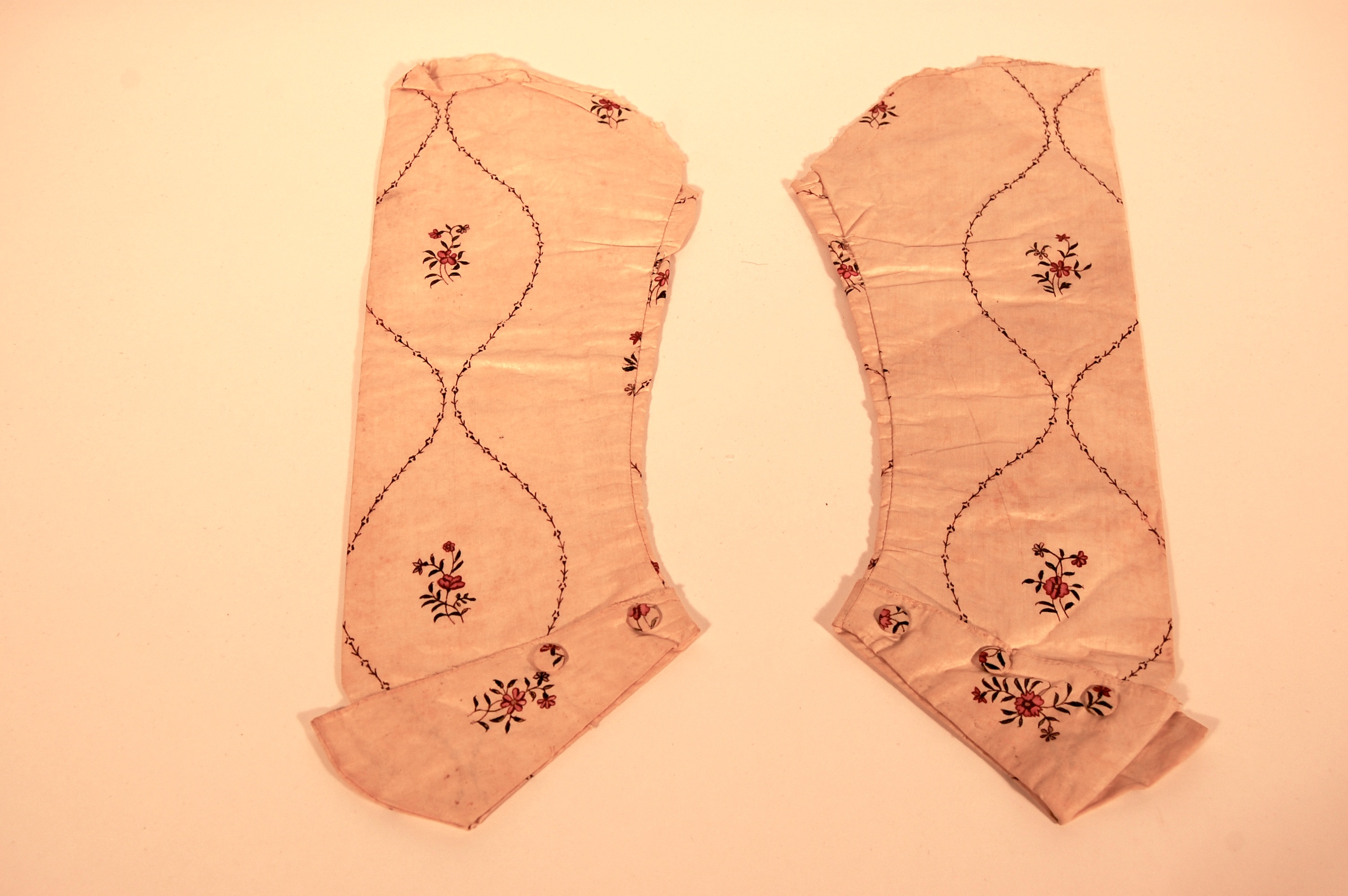
Sleeves, removed from bodice 1990.36.27. RIHS 1990.36.25A-B

Sleeves, removed from bodice 1990.36.27.
RIHS 1990.36.25A-B

I think, once upon a time, that bodice was part of a pieced-back closed-front gown with a matching petticoat.

And then I think someone decided (quite rightly) that the style was too passé for 1795, and altered the gown significantly.

Not only is there evidence of new sleeves being fitted into the gown’s armscyes, we have the sleeves-that-used-to-be. And my dear! No one is wearing sleeves like that this season!

I find these garments in limbo really fascinating. Was that bodice finished and worn with a matching petticoat? (Yes, there’s a panel of that left, too; what a lovely hem!)
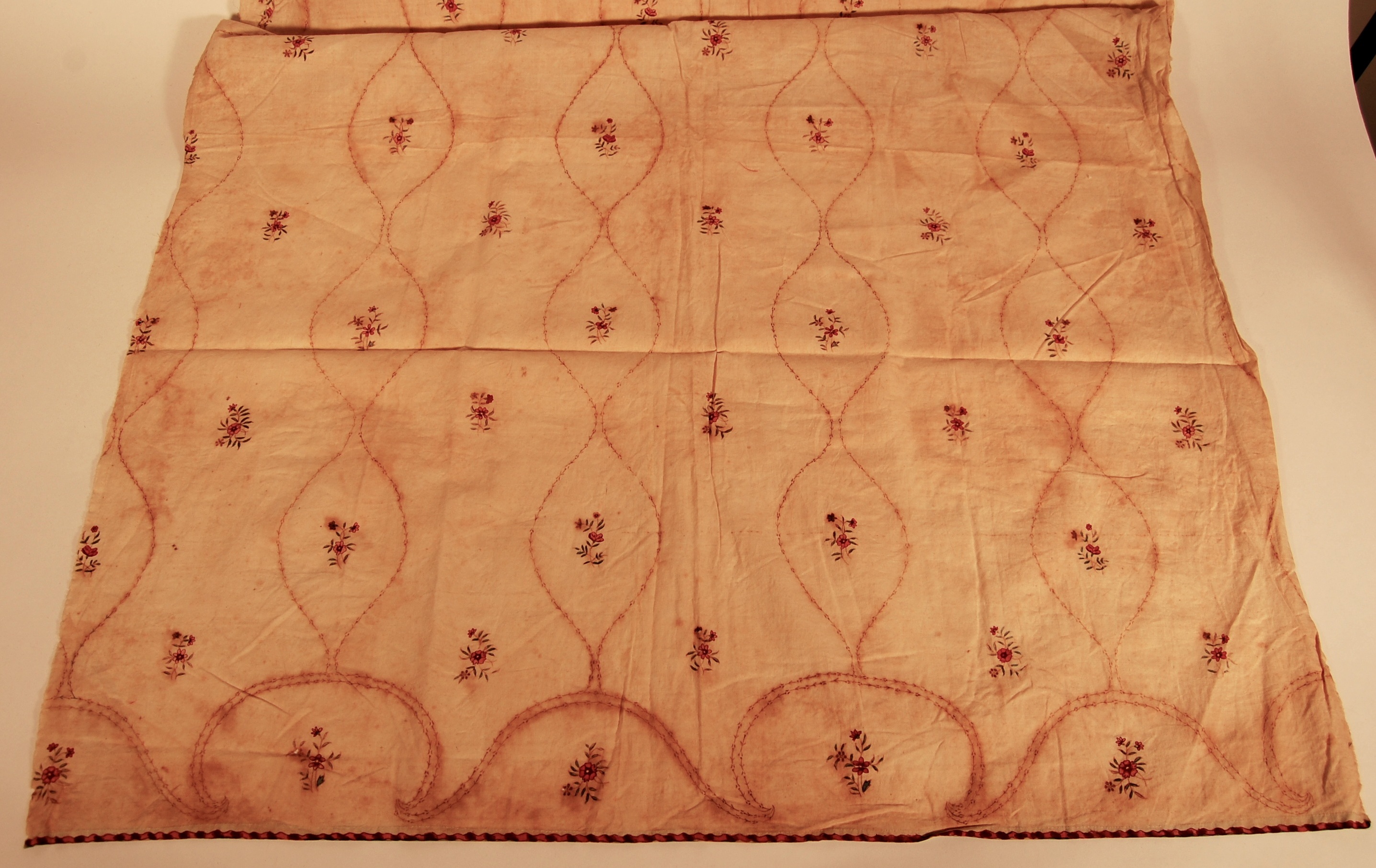
Skirt panel, painted Indian cotton. RIHS 1990.36.33

Skirt panel, painted Indian cotton.
RIHS 1990.36.33

Who wore the gown? Was the woman who wore it originally the same woman who wore it altered? I can only guess at this point, and may never find the smoking diary or mantua-maker’s bill. The alterations are not as finely done as the original gown, so I think there are two hands at work here– whose were those hands? There’s always more to think about and learn.

In case you’re wondering, thanks to the Met, we can see what the gown probably looked like in its first incarnation, and then what the alterations were meant to achieve. (Link to the gown on the left; link to the gown on the right.)

Robe a l'anglaise, 1785-1795 MMA 2009.300.647
Robe a l’anglaise, 1785-1795 MMA 2009.300.647
Gown and petticoat, 1790-1794 MMA C.I.45.6a,b

Share this:

  • Share on Facebook (Opens in new window) Facebook
  • Share on Pinterest (Opens in new window) Pinterest
  • Email a link to a friend (Opens in new window) Email
  • Share on X (Opens in new window) X
Like Loading...

What would you carry?

04 Friday Apr 2014

Posted by kittycalash in Clothing, History, Living History, Research

≈ 3 Comments

Tags

18th century clothes, 18th century clothing, common dress, fashion, pockets, style, women's history

The V&A’s extensive article includes many hints about what might be in woman’s pockets.

Pocket ca. 1784, American cotton, wool Brooklyn Museum Costume Collection at The Metropolitan Museum of Art,  Gift of the Brooklyn Museum, 2009; Bequest of Marie Bernice Bitzer, by exchange, 1996  MMA 2009.300.2241

Pocket
ca. 1784, American
cotton, wool
Brooklyn Museum Costume Collection at The Metropolitan Museum of Art,
Gift of the Brooklyn Museum, 2009; Bequest of Marie Bernice Bitzer, by exchange, 1996
MMA 2009.300.2241

Sharon Burnston, on the Historic New England site, points out that “Pockets thus represent the kind of dilemma that objects of material culture can present to scholars. Much is known about how and when these items were made, but evidence of how they were used remains fragmentary and tantalizing.”

Fragmentary and tantalizing indeed!

Another scholar posits that “Pockets empowered women in many ways: they allowed them to carry possessions around with them for practical and personal uses, and gave them rights of ownership and privacy. I argue that decorative pockets also heightened women’s self-esteem by making them to feel more attractive – and that they esteemed their pockets in return.”

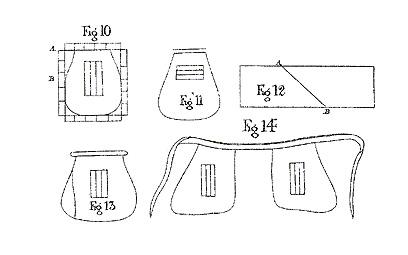
From the Workwoman’s Guide

As we can see from this diagram from the Workwoman’s Guide, pockets could take many shapes, and the extant evidence bears this out. There are oblong pockets, and more rectangular pockets, rounder pockets, longer and shorter and wider pockets. One suited one’s self, and cut one’s pattern to one’s cloth.

The identification of pockets with self, with intimacy and privacy, is explored in Women’s Pockets and the Construction of Privacy in the Long Eighteenth Century, by Ariane Fennetaux.
Fennetaux’ article and the V&A page on pockets were particularly useful in enumerating more specific kinds of items that might be carried in an 18th century woman’s pocket.

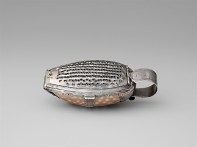
Nutmeg grater ca. 1690, British Cowrie shell, silver Gift of Irwin Untermyer, 1968 MMA 68.141.278

Nutmeg grater
ca. 1690, British
Cowrie shell, silver
Gift of Irwin Untermyer, 1968
MMA 68.141.278

Using cases from the Old Bailey, we can begin to draft possible contents lists.

A pair of silver buttons
A pair of buckles
A pen knife
Thimble
Coins
A silver spoon
A pair of scissors
Keys
Needlecase
Biscuit
Nutmeg and grater
Smelling bottle
An orange or an apple
A pocketbook
Comb
Snuff box
Jewellery
Needlebook
Pocketbook
Paper
Pen or pencil

When Pamela runs away, she takes with her, in her pocket, two handkerchiefs, two caps and five or six shillings.

Of all the listed things, what might Bridget have carried? Some of the things she carried would be needed, but others would be wanted.

Share this:

  • Share on Facebook (Opens in new window) Facebook
  • Share on Pinterest (Opens in new window) Pinterest
  • Email a link to a friend (Opens in new window) Email
  • Share on X (Opens in new window) X
Like Loading...

Pockets of Evidence

02 Wednesday Apr 2014

Posted by kittycalash in Clothing, Reenacting, Research

≈ Comments Off on Pockets of Evidence

Tags

18th century clothes, 18th century clothing, Clothing, common dress, common people, Costume, living history, Metropolitan Museum of Art, Museums, Reenacting, Research, Rhode Island Historical Society, Wintherthur Museum

Or is it evidence of pockets?

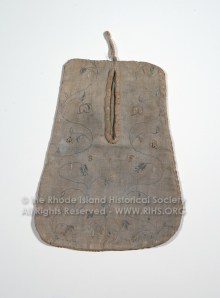
Pocket, 1770-1780 Rhode Island Linen, cotton and silk RIHS 1985.1.9

Pocket, 1770-1780
Rhode Island
Linen, cotton and silk
RIHS 1985.1.9

In any case, I thought it time to upgrade my pockets, since I have given so much attention to the rest of Bridget’s clothing. I have also been talking with a colleague about a pocket game activity, similar to the process I’ve used in thinking about Bridget: what is in your pocket? If I’m going to try that out in public, then I’d like not to be embarrassed about my pockets.

The first pocket I made was based completely on one in the RIHS Collection, and it annoyed the daylights out of me as it had exactly the same loop on top and twisted around under my petticoats, making the opening hard to find. I also realized that it was too small to be really correct for a woman’s pocket: those tend to be larger. Sew 18th Century has a really nice article on pockets here.

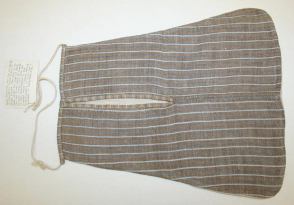
Pocket, 1789 American  linen  Gift of Miss Blanche Vedder-Wood, 1940  MMA Costume Institute C.I.40.159.4

Pocket, 1789
American
linen
Gift of Miss Blanche Vedder-Wood, 1940
MMA Costume Institute C.I.40.159.4

So I made a larger pocket based on this one at the Met, and made of a grey and cream striped linen with the slit bound in red calico. It’s dated to 1789, and technically that’s too late for my uses.

Pocket 1720-1730 block printed cotton and linen

Pocket
England, 1720-1730
Cotton; Linen
Winterthur Museum Collection 1960.0248

But the next one is too early.

Well, it has survived this long, and Wm Booth has that lovely shell print cotton, so what’s a sister to do? Pockets don’t take much fabric, so making a matched pair of printed pockets seems the thing to do.

Now the question is, what should be in those pockets?

Share this:

  • Share on Facebook (Opens in new window) Facebook
  • Share on Pinterest (Opens in new window) Pinterest
  • Email a link to a friend (Opens in new window) Email
  • Share on X (Opens in new window) X
Like Loading...

Mischief Monday

31 Monday Mar 2014

Posted by kittycalash in Events, Living History, personal, Reenacting

≈ Comments Off on Mischief Monday

Tags

10th Massachusetts, 18th century clothes, 18th century clothing, Costume, dress, fashion, George Washington, Grand Ball, living history, Reenacting, sewing, style

The gossip begins...
The gossip begins…
I don't believe a word of it.
I don’t believe a word of it.
No, really?
No, really?
Overcome, at last, by dramatic but hilarious news.

Photos from the George Washington Birth Night Ball are finally available, and presented here for your entertainment. You can read a more comprehensive overview of the event here, on Sew 18th Century’s blog. Bonus: extra pictures!

Share this:

  • Share on Facebook (Opens in new window) Facebook
  • Share on Pinterest (Opens in new window) Pinterest
  • Email a link to a friend (Opens in new window) Email
  • Share on X (Opens in new window) X
Like Loading...

Once Upon A Time…

14 Friday Mar 2014

Posted by kittycalash in Clothing, History, Living History, personal, Philosophy, Reenacting

≈ 2 Comments

Tags

18th century clothes, 18th century clothing, Betsy Ross, Child Guidance Educational Activity, Costume, Costumes, dress, Educational Activity, fashion, interpretation, living history, paper dolls, Reenacting, resources

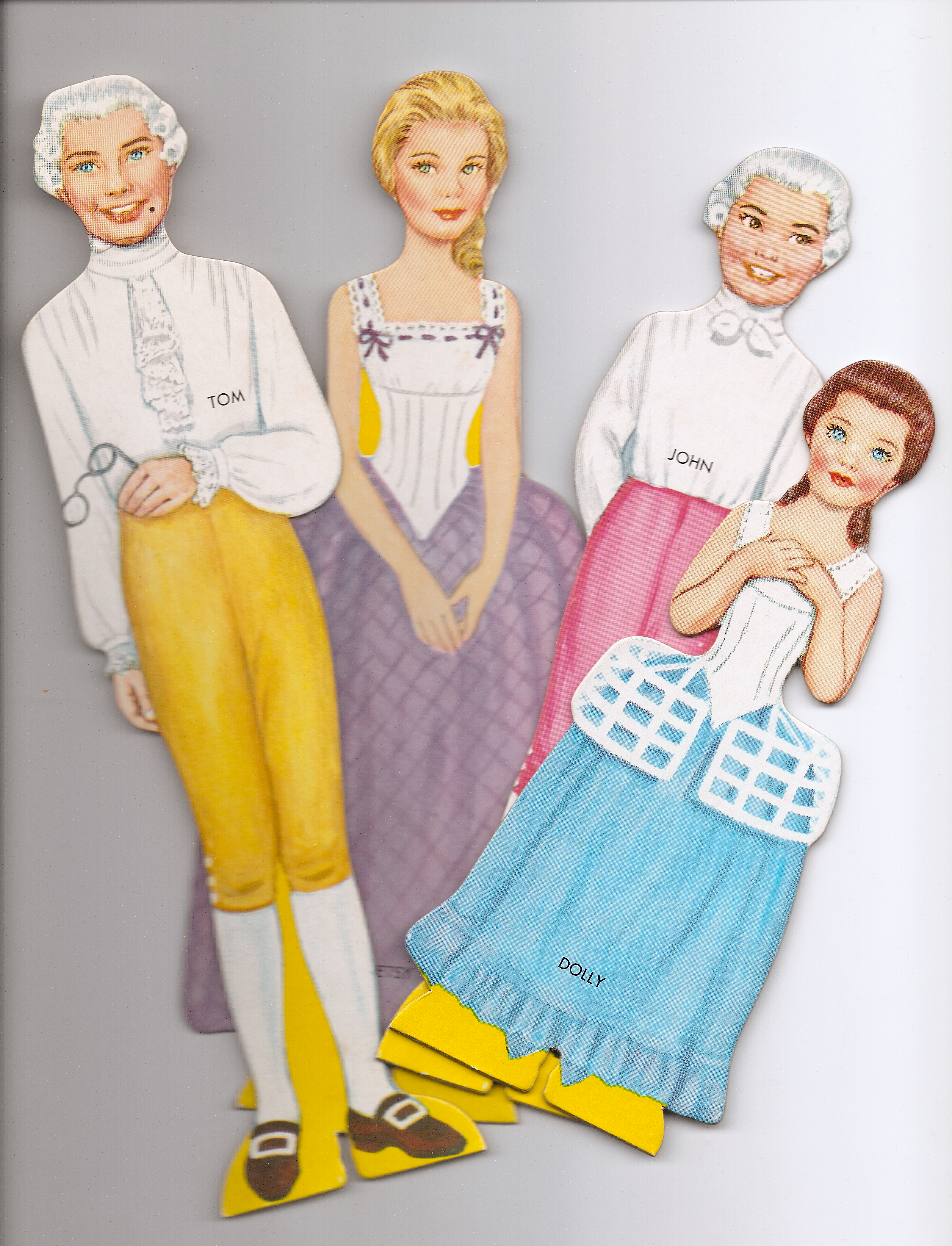
Betsy Ross and friends: A Child Guidance Educational Activity

Betsy Ross and friends: A Child Guidance Educational Activity

This is the third set of these paper dolls (Educational Activity) I have owned. The very first set was given to me by my mother, Lo, at the Dawn of Time, in the Dark Ages known as the 1970s.

I wore them out.

A new set was purchased, probably once again at Marshall Field’s, possibly in the book department. They now reside in an attic outside Philadelphia (how appropriate).

From this Educational Activity flowed many more home-designed outfits and home-made paper dolls of historical and literary origins, which have led to this moment, when I make myself and my family into historical characters, make us outfits, and set us in motion with friends and colleagues in scenes of historical play-acting, by which I mean Educational Activity.

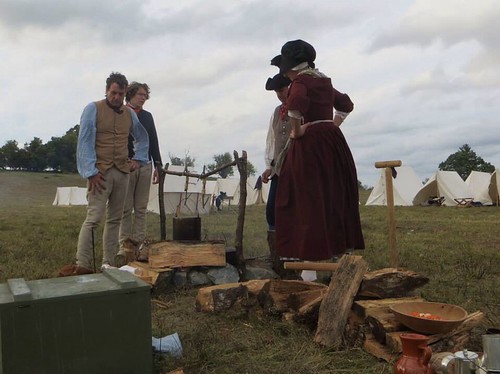
Cooking at Saratoga: very Educational. Photo courtesy D Molly Ross.

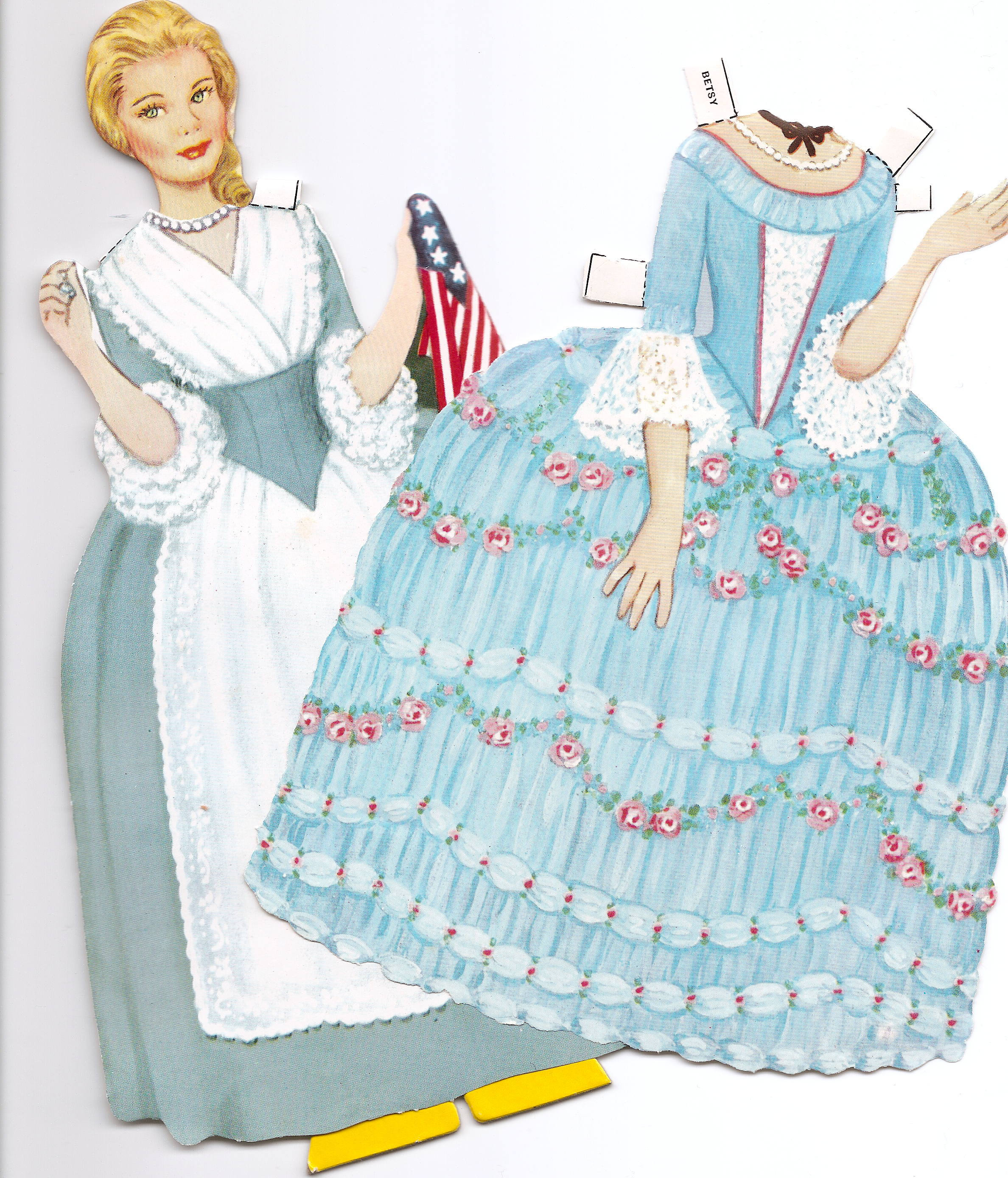
I like to think that the clothing we wear is more correct than the “Authentic Costumes” advertised on Betsy Ross’s box, but there is always more to learn. I am in no way denigrating Betsy Ross, or paper dolls, or suggesting that I see my family, friends and colleagues as paper dolls. But I do know that as long as I have been playing, I’ve been playing history and reading history, and drawing history, and using books and paintings and yes, even paper dolls, to figure out the world present and past.

If January Jones played Betsy Ross...

If January Jones played Betsy Ross…

Even though I always thought I wanted Betsy’s birthday cake gown, the one I really liked was the work gown. The “construction” of her garments confused me even as child: how the heck does that kerchief work? And the bodice front? Never mind, have a slice of dress, I mean cake. (Field’s had a cafeteria that served slices of pink-iced layer cake that I somehow conflated with the paper dolls, thanks to the shopping trips my mother and I made.)

Memory and fact, impression and citation: when we reenact the past as an Educational Activity, we should remember that some will walk away enlightened, and others will walk away thinking about birthday cake. Our job, beyond getting the facts right, is to engage our visitors, to interest them, and to excite their imaginations. What they do from there is up to them, but we will know that we have done our best to present them with a scene that can take them one step closer to being there.

Share this:

  • Share on Facebook (Opens in new window) Facebook
  • Share on Pinterest (Opens in new window) Pinterest
  • Email a link to a friend (Opens in new window) Email
  • Share on X (Opens in new window) X
Like Loading...
← Older posts
Newer posts →

Archives

wordpress statistics

Creative Commons License
Kitty Calash blog by Kirsten Hammerstrom is licensed under a Creative Commons Attribution-NonCommercial-ShareAlike 4.0 International License.

Website Built with WordPress.com.

  • Subscribe Subscribed
    • Kitty Calash
    • Join 621 other subscribers
    • Already have a WordPress.com account? Log in now.
    • Kitty Calash
    • Subscribe Subscribed
    • Sign up
    • Log in
    • Report this content
    • View site in Reader
    • Manage subscriptions
    • Collapse this bar
 

Loading Comments...
 

    %d