• Home
  • Completed Costumes/Impressions
  • Emma and Her Dresses
  • Free Patterns and Instructions

Kitty Calash

~ Confessions of a Known Bonnet-Wearer

Kitty Calash

Tag Archives: 19th century clothing

Becoming an Exhibit Prop

21 Tuesday Mar 2017

Posted by kittycalash in Museums

≈ 5 Comments

Tags

19th century clothing, Clothing, dress, exhibits, fashion, Federal style, Museums, sewing

We all have those Hamlet-like moments, don’t we?
How weary, stale, flat, and unprofitable | Seem to me all the uses of this world!

But in this case, I can attest to being and not merely feeling flat: lo, I am cutout exhibition furniture.

Thanks to Mr B’s casting call on behalf of the New-York Historical Society, a number of friends and acquaintances and I are now part of the scenery of the new exhibition, Saving Washington, up through July 30.

The behind the scenes of being a prop is pretty entertaining.

Mr H
Mr H
Steaming my shawl
Steaming my shawl

The changeable green-red sari gown was made for this photo shoot; we were asked to wear strong colors, and since the exhibit was meant to represent one of Dolley Madison’s “squeezes,” dressing up was in order– and hard for me to do, since most of my gowns are day dresses at best.

I started this November 22, and carried it on airplanes several times.

November 22: the madness begins
Sleeve salvation
Sleeve salvation

The sleeves appeared to be a complete failure at first, until I figured out I could pleat the design to form a smaller, graphic band at the bottom. Sometimes I start without knowing how a thing will turn out…including most days when I get out of bed.

December 9 completion level: wearable.

At least it was finished enough to wear to the photoshoot, and it appeared again, with a real hem and a ribbon to keep it on, in Salem last month. I’m pleased enough with the color, and how well it doesn’t go with most things to call this a success– and finished!

In situ.

Share this:

  • Share on Facebook (Opens in new window) Facebook
  • Share on Pinterest (Opens in new window) Pinterest
  • Email a link to a friend (Opens in new window) Email
  • Share on X (Opens in new window) X
Like Loading...

A Saturday in Salem : Jane Austen Ball

17 Friday Feb 2017

Posted by kittycalash in Clothing, Events, History, personal

≈ 5 Comments

Tags

19th century, 19th century clothing, Costume, dancing, dress, fashion, Federal New England Fashion, Federal style, Salem event

Closure: green silk satin ribbon.

Closure: green silk satin ribbon.

With many thanks to the Quintessential Clothes Pen, I was not dancing with myself Saturday last at the Jane Austen Ball in Salem. I was there on a bit of a whim, knowing that the ball happened in February and looking for something to do on a winter weekend– and, as it happened, I actually had a dress to wear. Of course, it wasn’t finished until Friday night, although I had worn it in December for a photoshoot.

Dressed for the weather: I only seem to wear this pelisse in February.

Dressed for the weather: I only seem to wear this pelisse in February.

In the past year+, I’ve been trying to do more and regret less, which seems a bit contradictory: if you do more, might you regret more of what you do? The trick for me, especially in dealing with my baseline high-anxiety self, is to do more things that seem scary but are actually fun.* That’s how I found myself traveling up to Salem between snowstorms to stay in a tiny little room in a historic hotel. It’s a pretty quick ninety-minute trip on a good day, but I know myself well enough now that staying overnight is the safer, less-stressful option for an excursion like this.

Salem on a snowy Saturday was busy, streets crowded with people as I walked to the old Town Hall, feeling very much like a character in a novel. (Having just finished Remarkable Creatures, the scenes of Elizabeth Philpot walking in alone London came to mind as I did attract some attention in my pelisse and bonnet.)

Old Town Hall, Salem, MA
Rustic Dance After a Sleigh Ride, 1830. William Sidney Mount MFA Boston 48.458

The Town Hall was crowded; I arrived a little late, as dancing was beginning under patient and direct tutelage, so I had the pleasure of watching several dances before I joined in. While not everyone was wearing early-Federal/Regency clothing, the crowd still provided an excellent sense of the social mixing and festivity of a scene from the past.

Unforgivable hotel room selfie to record the dress

Unforgivable hotel room selfie to record the dress

Joining in was even better, to be in the swirl of people and skirts, to pay attention to my feet– my shoes were a little slicker than I would like– and to count the rhythm of the music. While I spent years in ballet class, it is true that those years were surpassed by years in mosh pits and on dance floors of questionable clubs. Country dances made me think of four-dimensional math, with the patterns made by the combinations of active and helper couples, the reversals of direction, and the changing positions of partners: it was like being a living fractal.

*With some exceptions including rollercoasters and sky diving.

Share this:

  • Share on Facebook (Opens in new window) Facebook
  • Share on Pinterest (Opens in new window) Pinterest
  • Email a link to a friend (Opens in new window) Email
  • Share on X (Opens in new window) X
Like Loading...

Whimsical Wednesday: Shoes.

25 Wednesday Jan 2017

Posted by kittycalash in Clothing, Making Things, Reenacting

≈ 1 Comment

Tags

19th century clothing, authenticity, Clothing, common dress, sewing, shoes

If you are a historic costumer, living history interpreter or enactor and tell me you don’t have a problem with shoes, and I will laugh at you. Even if you don’t have way too many shoes, chances are good you look at them in museum collections, even if you don’t order them. Shoes are basic to any impression.

I have history with shoes, myself. Not only have my feet always been generously proportioned, but my Grandmother possessed a singular fondness for, and an expansive collection of, shoes.

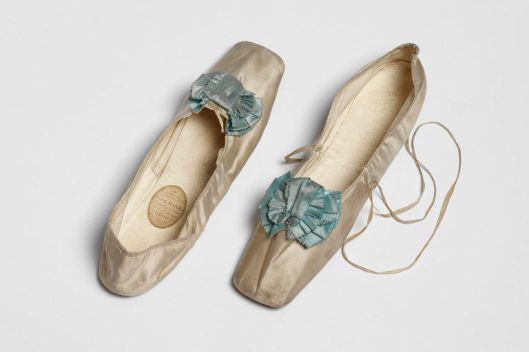
Shoes. Slippers.

Pair of slippers. 1825-1849. Paul Hase, Paris. V&A 1153&A-1901

Pair of slippers. 1825-1849. Paul Hase, Paris. V&A
1153&A-1901

Call them what you will, when you hanker to dance, you need them. So, I find myself in the happily distracting position of needing (wanting) dance slippers for April. I thought my search might be fruitless, what with my pedal extremities, but reader: I was delighted and surprised. dscn4592

Yes: they fit! Now the tricky bit is to dye and decorate these slippers to achieve maximum eye-watering potential. There’s a length of silk headed my way that should provide plenty of inspiration.

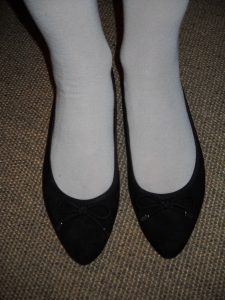
For tamer times, classic black will always do. Whilst replacing my worn-out sneakers, I came upon a pair of slippers that seemed ready for alteration, so I bought them as a backup, in case the Brontes didn’t fit.

dscn4595

They were inexpensive enough that I didn’t mind taking them apart for modifications.

dscn4601
dscn4605

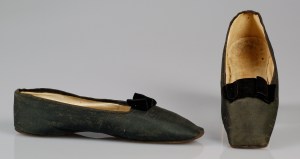
A grosgrain rosette and ribbon ties later, these will do well enough to extend the life of my irreplaceable Robert Land slippers. I looked at shoes last night, and drew inspiration from some examples through the first half of the 19th century. With the pointy toe, these clearly skew first decade of the 19th century, which is just right for most of what I do. The Brontes will work for later impressions– and I have those as well. All in all, a pleasant mid-week distraction.

Pair of women's shoes, 1801. Gift of Fred Taggart, 1986.31.1a-b. RIHS

Pair of women’s shoes, 1801. Gift of Fred Taggart, 1986.31.1a-b. RIHS

Women's slippers, 1790-1810. American. MFA Boston. 99.664.12a-b

Women’s slippers, 1790-1810. American. MFA Boston. 99.664.12a-b

Slippers, 1835-1850. American, wool, silk. Metropolitan Museum of Art. 66-20-1a-b

Slippers, 1835-1850. American, wool, silk. Metropolitan Museum of Art. 66-20-1a-b

Share this:

  • Share on Facebook (Opens in new window) Facebook
  • Share on Pinterest (Opens in new window) Pinterest
  • Email a link to a friend (Opens in new window) Email
  • Share on X (Opens in new window) X
Like Loading...

Mrs Pabodie, I presume?

16 Wednesday Nov 2016

Posted by kittycalash in Clothing, History, Living History, Museums, Pabodie Project

≈ 1 Comment

Tags

18th century clothes, 18th century clothing, 19th century clothing, dress, fashion, Federal style, interpretation, Research, Rhode Island Historical Society

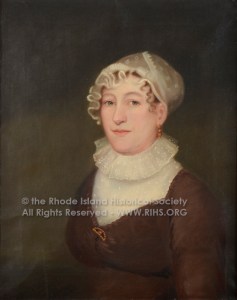
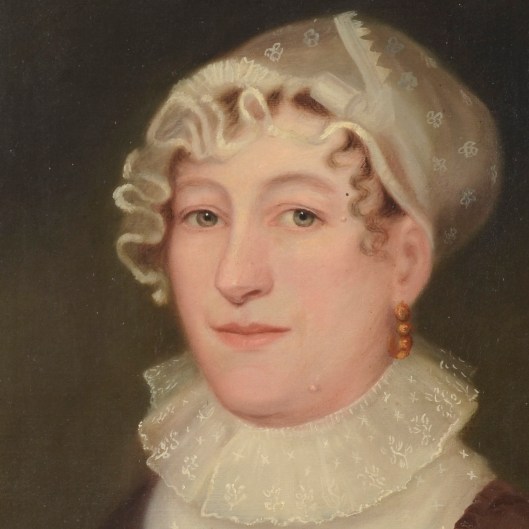
Mrs William (Jane) Pabodie. oil on canvas, 1813. RIHS 1970.60.2

Mrs William (Jane) Pabodie. oil on canvas, 1813. RIHS 1970.60.2

Remember Mrs Pabodie? She appeared a week ago today in Providence after an intense sewing effort left your author with numb fingers. The process was as straightforward as these things ever are, manipulating fabrics to do your bidding once you think you have the right materials.

It took more rounds of white muslins from Burnley and Trowbridge than I care to count, and a variety of book muslins from Wm Booth Draper, just for the chemisette and cap. The laces came from Farmhouse Fabrics in the most expensive small package I’ve yet ordered that did not contain antique jewelry.

Mrs Pabodie attempts to remember when she was born (1771). Photo by J. D. Kay

Mrs Pabodie attempts to remember when she was born (1771). Photo by J. D. Kay

The gown is a wool and silk blend remnant from Wm Booth Draper, just enough to make a gown (even at my height) though I admit the front hem will need some piecing or a ruffle to give it the proper length. Still, the thing more or less works, though as I compare the details to the original painting, I admit we’re still in beta.

Impressed from Newport-- or nearly so-- Low Spark makes his Providence debut. Photo by J.D. Kay
Impressed from Newport– or nearly so– Low Spark makes his Providence debut. Photo by J.D. Kay
Reverend Hitchcock, hoping against hope that the tailor will one day finish his fine silk waistcoat. Photo by J. D. Kay
Sissieretta Jones extols the beauties of Paris-- and pearls. Photo by J. D. Kay
Sissieretta Jones extols the beauties of Paris– and pearls. Photo by J. D. Kay

I was joined by three friends from different eras (because you know me: if it’s not didactic, we’re not doing it): a sailor who on the run from a Newport press gang in 1765; Reverend Enos Hitchcock of the Beneficient Congregational Church in 1785; and Sissieretta Jones, soprano of Providence, around 1880. Each of the characters described their lives and their clothing, and I will admit that the Annual Meeting audience may not have been fully prepared for some of what they heard– I’m not certain they had ever considered how apt “balancing a sheep on my head” might be in describing Reverend Hitchcock’s wig.

Mrs Pabodie points out East Side landmarks to a visitor examining the theatre curtain backdrop painted around 1810. Photo by J. D. Kay

Mrs Pabodie points out East Side landmarks to a visitor examining the theatre curtain backdrop painted around 1810. Photo by J. D. Kay

In the end, they were entertained, and may even have learned something, as we celebrated 2016’s interpretive theme, Fashioning Rhode Island.

Share this:

  • Share on Facebook (Opens in new window) Facebook
  • Share on Pinterest (Opens in new window) Pinterest
  • Email a link to a friend (Opens in new window) Email
  • Share on X (Opens in new window) X
Like Loading...

Frivolous Friday: The Pabodie Project

16 Friday Sep 2016

Posted by kittycalash in Clothing, Events, History, Living History, Making Things, material culture, Pabodie Project

≈ 12 Comments

Tags

19th century clothing, authenticity, fashion, Federal style, interpretation, Jane Pabodie, portraits, Rhode Island, Rhode Island Historical Society

Mrs William (Jane) Pabodie. oil on canvas, 1813. RIHS 1970.60.2

Mrs William (Jane) Pabodie. oil on canvas, 1813. RIHS 1970.60.2

Jane Jewett Pabodie, born around 1771, died 23 March 1846 is buried in Swan Point Cemetery on the Seekonk River in Providence. She was the wife of William Pabodie– which one? Well, it’s hard to tell until I really dig into the genealogy. At the moment I am so besotted with this image that all I can think about is what she’s wearing!

What she’s wearing….about that. I have some work– and some thinking– to do. The cap is slightly confounding. It’s a chance to learn a great deal more about early federal caps, which is good. I don’t understand it, which is unfortunate. The asymmetrical nature of the cap is new to me- or at least I cannot think of another example, so feel free to school me, people. But really: it is asymmetrical! With a ruffle on what is the right side of her head, and a… pinked? Van Dyked? Prairie pointed? band that runs from her left ear around to the back of her right ear? I’m confused. It would make more sense if the cap had slipped, but why would the Pabodies pay for a painting that recorded such a thing?

Honestly, I think the only way to really understand the cap is to make the cap. In muslin first, thankyouverymuch, I’m not that crazy.

Detail, Mrs William Pabodie. Oil on canvas, 1813. RIHS

Detail, Mrs William Pabodie. Oil on canvas, 1813. RIHS

The chemisette is more straightforward, being made of a sheer figured or embroidered cotton with a slightly gathered collar embellished with floral whitework embroidery. That I think can manage, at least in the basic construction (fabric, well, I’m looking).

Of course, why do I feel the need to manage all of this, with a deadline now less than eight weeks away? For a program, of course– I have only to write the copy for it. The idea (for me, anyway) is to replicate a portrait as closely as I can. Now, Mrs Pabodie and I are not exactly the same age, but I think I can pull this off…the cap, more troubling.

It’s an interesting project for me, not so much from the sewing point of view, but from a conceptual standpoint.

How close can I get? What does exactitude mean?

If I want to represent a character, what’s more important: understanding the clothing, or understanding Jane Pabodie? Constrained as I am by modern materials, unable to match these exactly, how do I navigate choices based on suppositions of what an artist meant to represent? Just my kind of conundrum.

Share this:

  • Share on Facebook (Opens in new window) Facebook
  • Share on Pinterest (Opens in new window) Pinterest
  • Email a link to a friend (Opens in new window) Email
  • Share on X (Opens in new window) X
Like Loading...
← Older posts
Newer posts →

Archives

wordpress statistics

Creative Commons License
Kitty Calash blog by Kirsten Hammerstrom is licensed under a Creative Commons Attribution-NonCommercial-ShareAlike 4.0 International License.

Website Built with WordPress.com.

  • Subscribe Subscribed
    • Kitty Calash
    • Join 621 other subscribers
    • Already have a WordPress.com account? Log in now.
    • Kitty Calash
    • Subscribe Subscribed
    • Sign up
    • Log in
    • Report this content
    • View site in Reader
    • Manage subscriptions
    • Collapse this bar
 

Loading Comments...
 

    %d