• Home
  • Completed Costumes/Impressions
  • Emma and Her Dresses
  • Free Patterns and Instructions

Kitty Calash

~ Confessions of a Known Bonnet-Wearer

Kitty Calash

Tag Archives: historic interiors

Glaciers in the House

19 Thursday Mar 2015

Posted by kittycalash in History, Museums

≈ 6 Comments

Tags

historic house museums, historic interiors, history, interpretation, museum practice, Museums

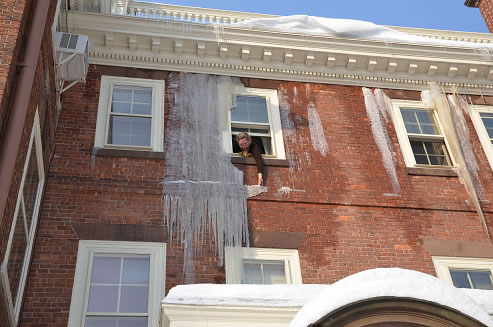
IceDamFeb2015

I don’t mean the ice dams and icicles that plagued the house and streaked the service ell’s windows as they melted: I mean change.

I’m reading The Half Has Never Been Told (it kept selling out, so I only just got a copy), and thinking about the representation of a past that people would rather forget, and sometimes actively deny in the North– and the South, as you will tell from reading African-American History Fail.

Change in historic houses can be glacially-paced, as staff and docents alike resist changes to interpretation. Resistance to change is usually about comfort and confrontation, especially when the change is large.

I get that: Oh no, new stuff to learn. What was wrong with what we did before? But docents and staff get comfortable and loose sight of the context of the content they present. They say some interesting stuff.

Most jaw-dropping of all: Sometimes I like to pretend I’m Mrs Owner of the House. That one was creepy, to me. But it did give me some insight into the “ooh, wish I lived here” backwardly aspirational tour motivation.

How would you feel if living here meant you owned and traded slaves? Defended the slave trade in Congress? If a small girl had the care of your horses? We don’t ask those specific questions, but I think we need to. Slavery is slavery.

In the 1790 census of Rhode Island, there are 948 slaves, representing 1.3% of the population. That would be 13,000 people of Rhode Island’s total population today, less than the city of Central Falls (19,383 in the last census, and one of our smallest towns).

We think it’s a small number, but to those 948 people, being enslaved was everything. I don’t necessarily want to make our visitors feel personal guilt about slavery– that’s up to them–but I do want to them to think about what slavery meant, and what it did, as an economic system.

I want visitors to understand that the beauty of the house they see is built in part on the ugly and forced exploitation of a class of people. If they relate that to the rest of the world they inhabit today, even better. I think we owe at least this much to every site where enslaved people worked or lived.

Share this:

  • Click to share on Facebook (Opens in new window) Facebook
  • Click to share on Pinterest (Opens in new window) Pinterest
  • Click to email a link to a friend (Opens in new window) Email
  • Click to share on X (Opens in new window) X
Like Loading...

Preservation or Petrification?

22 Saturday Nov 2014

Posted by kittycalash in History, Living History, Museums, Philosophy

≈ 5 Comments

Tags

anarchist guide to historic house museums, historic house museums, Historic House Trust of New York, historic houses, historic interiors, interpretation, living history, museum practice, Museums

For almost ten years, I’ve been working on the re-interpretation and re-presentation of the HHM that is part of my employer’s stable of properties. We’ve had mixed results: guides who refuse to look me in the face, guides who quit because a piano got moved, guides who hissed “hedonism!” at the site of a lounging mannequin, and guides who were made incredibly sad by the representation of a sick (dying) child.

James, recovering from a party the night before

James, recovering from a party the night before, angered some guides (2007)

Me, I consider all those things successes.
The people who had to deal directly with that fall out, maybe not so much.

Change is hard and scary, and every one has a different tolerance for risk. As you have probably guessed, mine’s fairly high. I blog, I go out into the world in some pretty funny clothes, and inhabit characters I am not. I expect to fail regularly: it’s a reliable way of learning.

Change is hard to maintain, it’s hard to continually evolve and push an interpretation forward. It takes time, focus, and money; it takes cross-disciplinary collaboration and communication between curators, educators, and docents or guides.

Taking risks in spaces full of very expensive furniture is particularly daunting, but especially rewarding when you see how a house looks, inhabited and, to a degree, used.

Alice receives the mantua maker's letter

They’re sitting in real, accessioned chairs. (2014)

The job of museums is to preserve, but we sometimes seem determined to petrify, to freeze a perfect moment in amber, to freeze our visitors with fear of touching, photographing, asking, and to freeze and understanding, all in a fluid world.

If we reject the beautiful and untouchable past to embrace the messy human past, we can juxtapose the fine mahogany-furnished rooms of the merchant elite with the work to create those rooms and make the picture more whole by including slaves, servants, workmen and tradesmen.

More of us would have been working than lounging

More of us would have been working than lounging (2006)

Most of us would not have lived the way the merchants did: to a degree, our historic house visits are backwardly aspirational, as we wish for nostalgia that is more false than most nostalgia.

I am not advocating favoring the smelly past, or descriptions of unpleasantness, over exultations about carvings and upholstery—except that I am—because I see these pendulum swings as a part of the process of creating more complete and honest representations and recreations of the past, in museums, at historic sites, and in living history presentations.

It’s past time for me to work again on re-imagining the house under my care: I acknowledge that. Synthesizing what I learn in living history with the work I do in museums, and vice-versa, will improve and enhance the public experience of history inside and out.

Share this:

  • Click to share on Facebook (Opens in new window) Facebook
  • Click to share on Pinterest (Opens in new window) Pinterest
  • Click to email a link to a friend (Opens in new window) Email
  • Click to share on X (Opens in new window) X
Like Loading...

Pushing Interpretation Forward

18 Tuesday Nov 2014

Posted by kittycalash in Events, History, Living History, Museums, Philosophy, Reenacting

≈ 7 Comments

Tags

18th century clothes, anarchist guide to historic house museums, authenticity, common people, common soldier, exhibits, first person interpretation, historic interiors, history, interpretation, living history, Reenacting, Revolutionary War

Dare I say progressing?

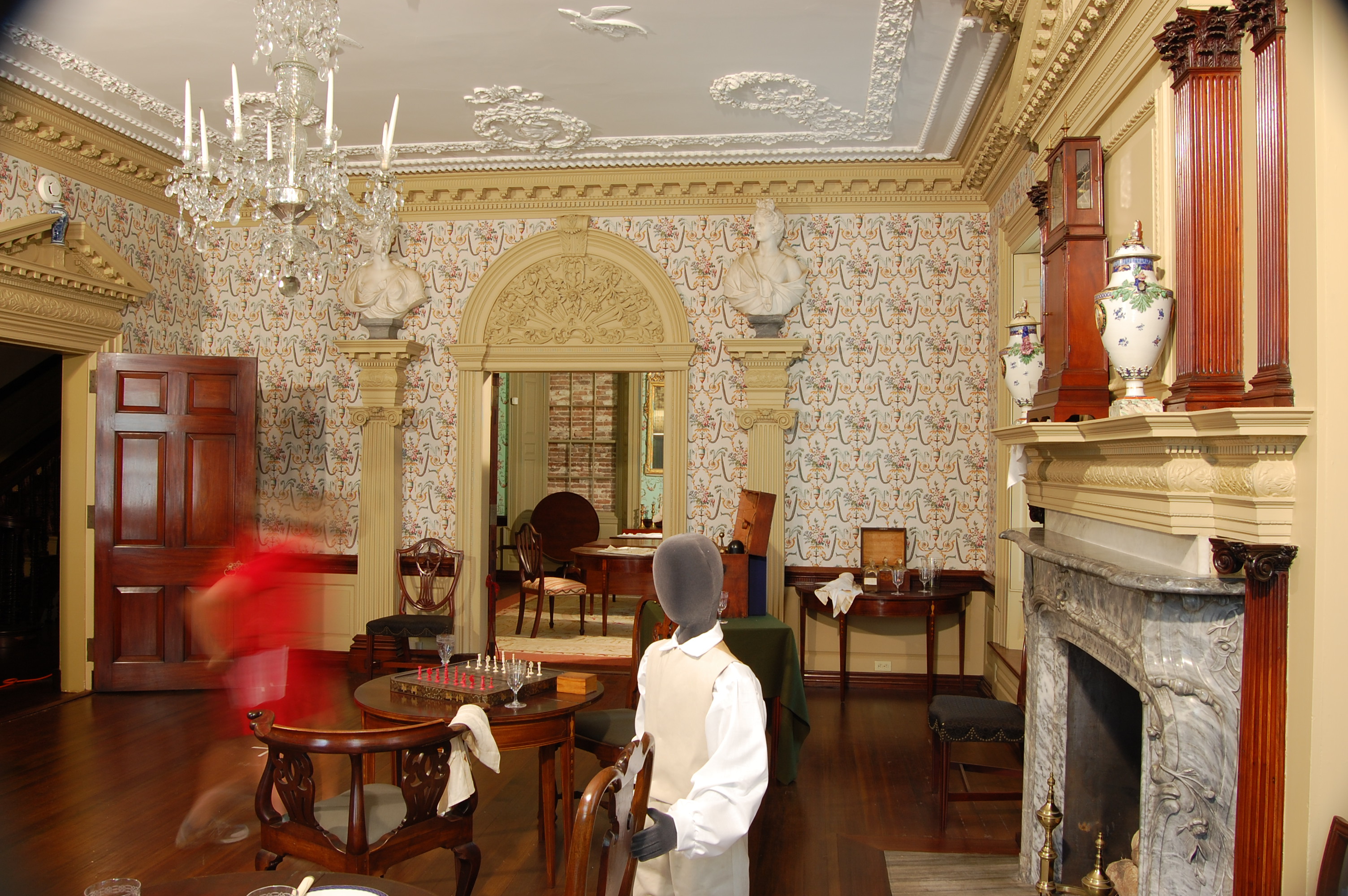
servant mannequin in 18th century room

That’s no ghost, that’s my kid

In the past decade, museums, particularly historic house museums, have been challenged to refresh and reinvent their interpretations and presentations. The most notable challenge has come from the Anarchist Guide to Historic House Museums (AGHHM), and the Historic House Trust of New York’s executive director, Franklin Vagnone.

I re-read a number of Vagnone and Deborah Ryan’s papers recently (including this one), thinking not just about What Cheer Day in a historic house, but about reenacting, living history, and costumed interpretation.

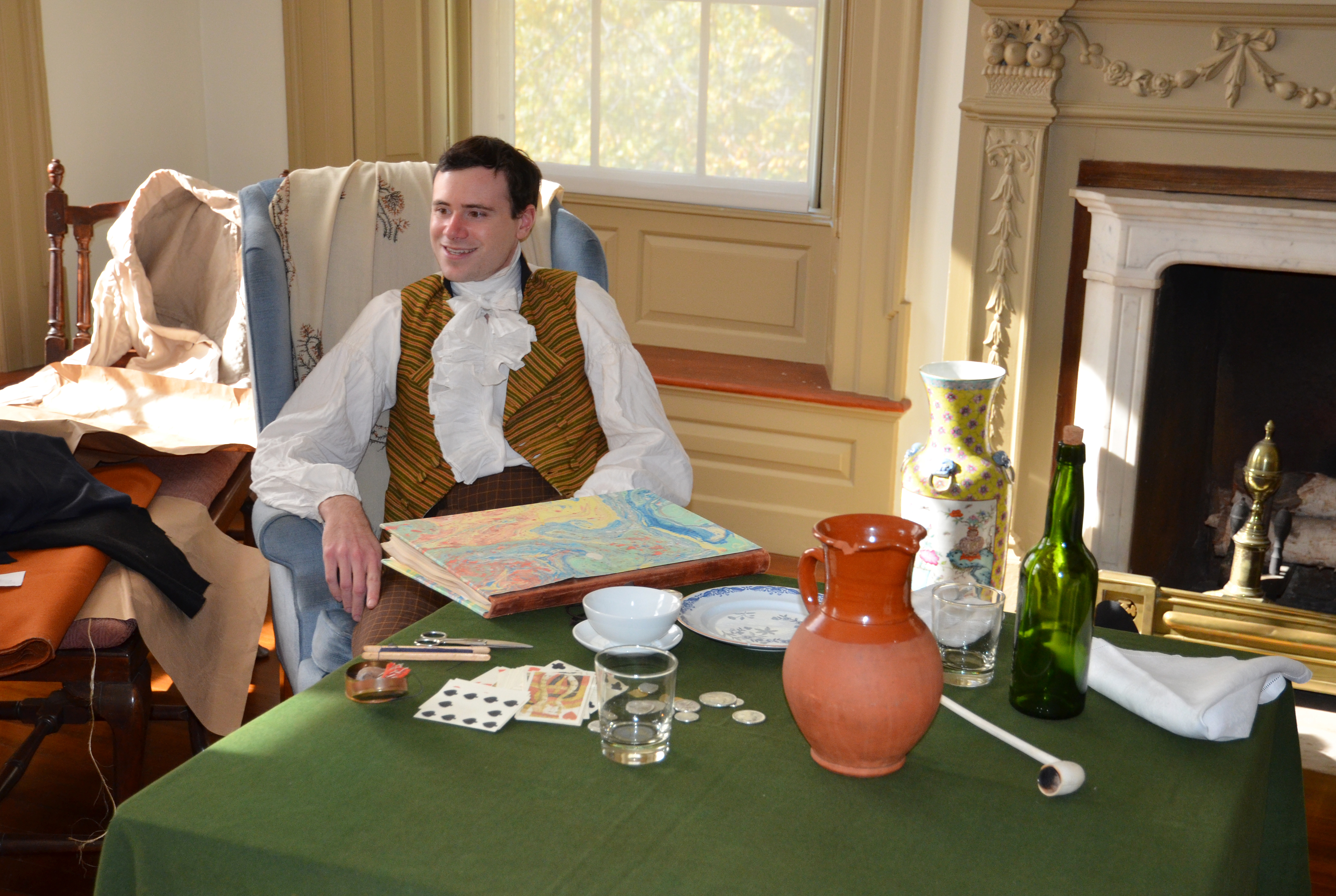
To make a historic house museum (HHM) seem more inhabited and real takes a lot of stuff: clothes, dishes, shoes, stockings, toys— all the stuff that surrounds us now, but correct for the time of the HHM, and arranged in a plausible manner, not like a sitcom set, where chairs before a fireplace face the visitor and not the hearth.

Man with cards, glasses and pipe in 18th century room

Stuff makes a house

To a degree, this is set-dressing, but set-dressing for a still-life, or real life, if the habitation will be by costumed interpreters. It has to be accurate to be authentic, whether it’s a HHM or a living history event that is striving to create a moment, or series of moments, in time– immersive moments.

We cannot step into the past unless we believe the representation we’re seeing, and that’s true no matter where we are: that’s why fabric matters, sewing techniques matter, tent pins and kettles and canteens matter. The world is made up of tiny details that we do actually notice without even knowing it: we see more than we realize, faster than we think. We’ll trip on the different, and stop.

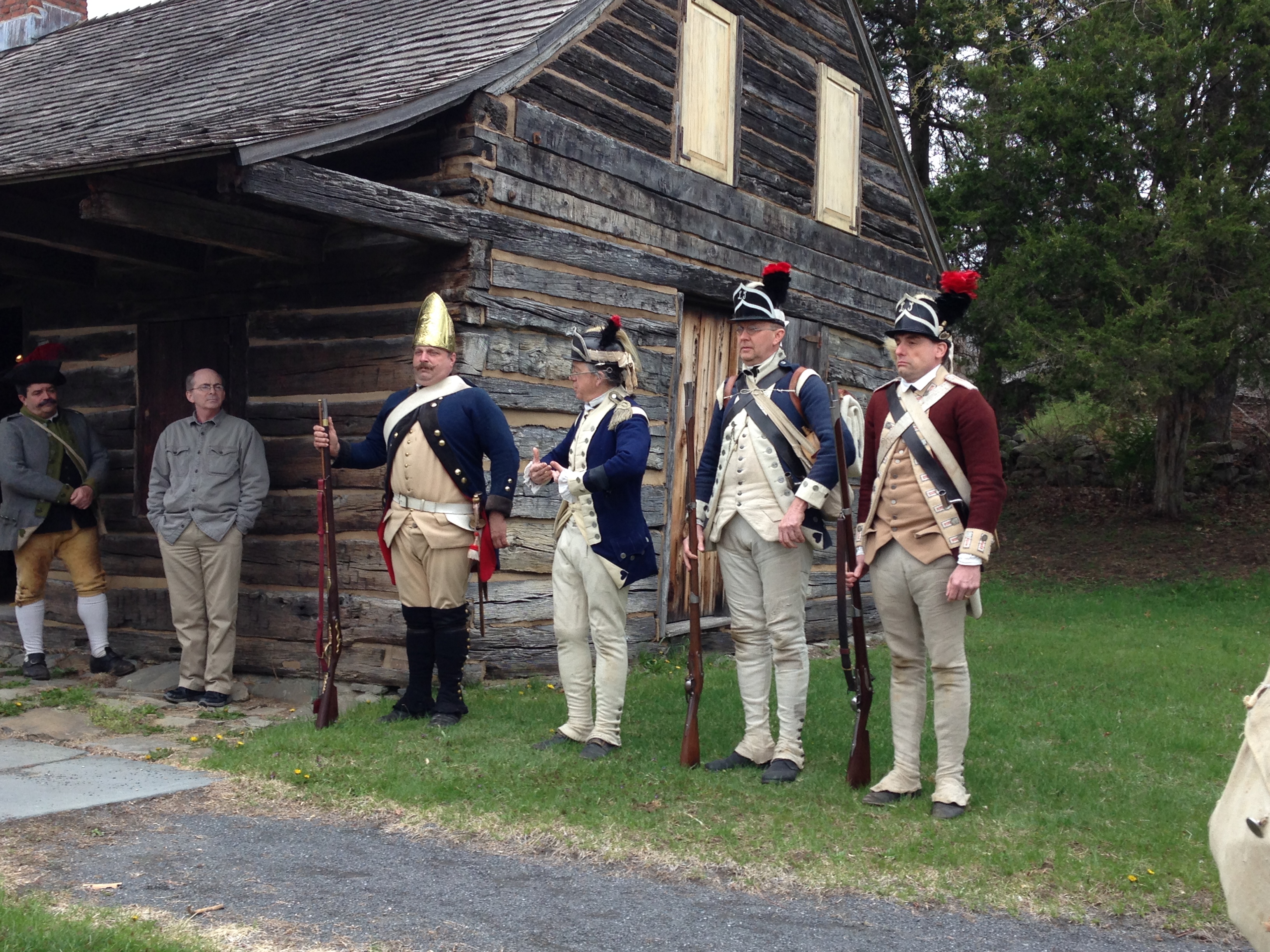
A variety of coats can tell a variety of stories

A variety of coats can tell a variety of stories

But what we want to do, as interpreters, is to have the visitor catch the right difference: not the one about which canteen and why, but the larger interpretive point. In one hypothetical example, wooden canteens are a way to talk about defense contracting and supplying the American army, just as over-dyed captured coats are a way to talk about the American Revolution as an international, and not just a civil, war.

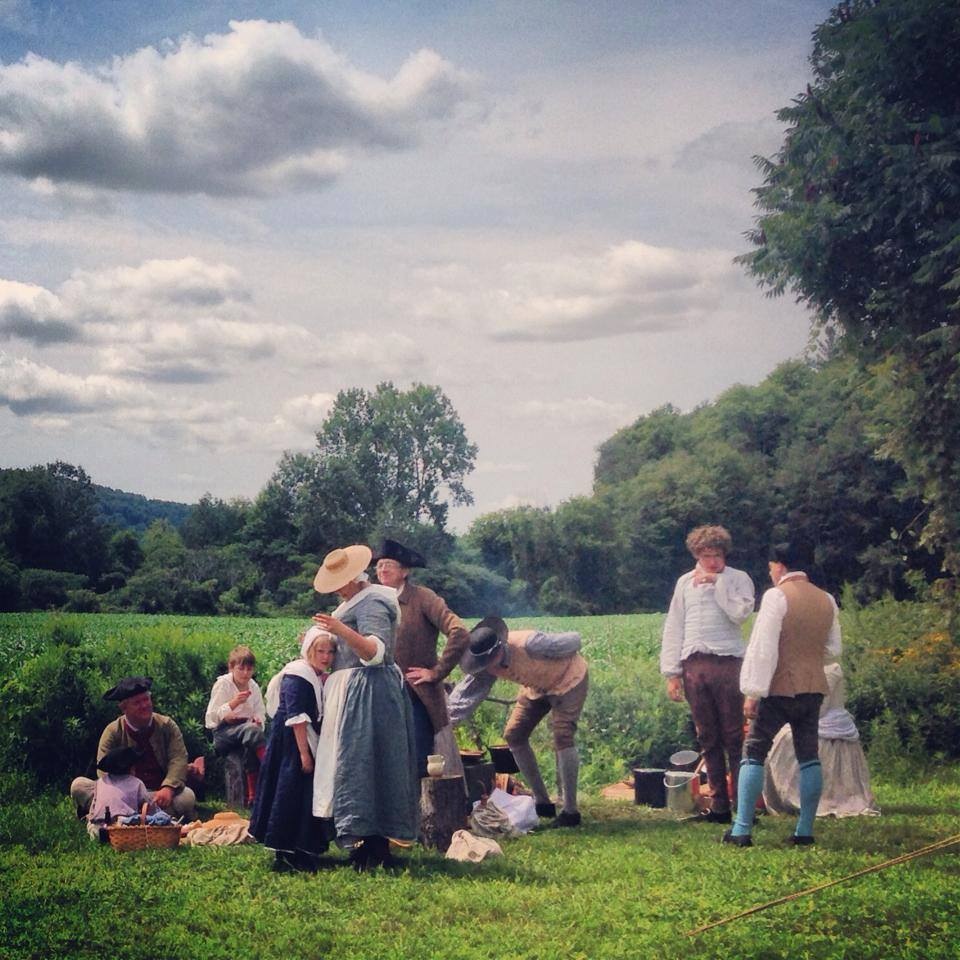
An encampment is, in a way, a neighborhood of HHMs turned inside out, with each regiment a separate family within the larger neighborhood. Each regiment tells a story about itself and its history, and is a lens through which visitors see the larger story.

14999323655_5d9dcf2259_o

That’s why accuracy matters: you don’t want to debunk Ye Olde Colonial craft in camp, or cotton-poly polonaises (poly-naises?) worn by purported women on the ration: you want to focus on the larger interpretive point. When not everyone plays by the same rules, it is better to focus on your own accuracy and authenticity and to ignore Ye Olde Annoyances.

Tell the larger story, the story of your own regiment’s people: that’s your interpretive goal.

Share this:

  • Click to share on Facebook (Opens in new window) Facebook
  • Click to share on Pinterest (Opens in new window) Pinterest
  • Click to email a link to a friend (Opens in new window) Email
  • Click to share on X (Opens in new window) X
Like Loading...

What Cheer Day Review

27 Monday Oct 2014

Posted by kittycalash in Events, History, Living History, Museums, Reenacting

≈ 14 Comments

Tags

Clothing, Costume, historic houses, historic interiors, John Brown House Museum, living history, Providence, Rhode Island Historical Society, What Cheer Day

There will be more, and better, images

Let’s begin with the easy part: pretty pictures of a pretty house. (It’s too easy, right?  More on that later this week.)

There are only a few for now– while our photographer took over 800 images, before he can process and sort them, we have to put the house back together first!

October 25 was a Saturday in 1800, the last Saturday before the first public schools opened in Providence on October 27. Mr Sweet, the tailor’s apprentice, had too much current-day public school homework to join us.

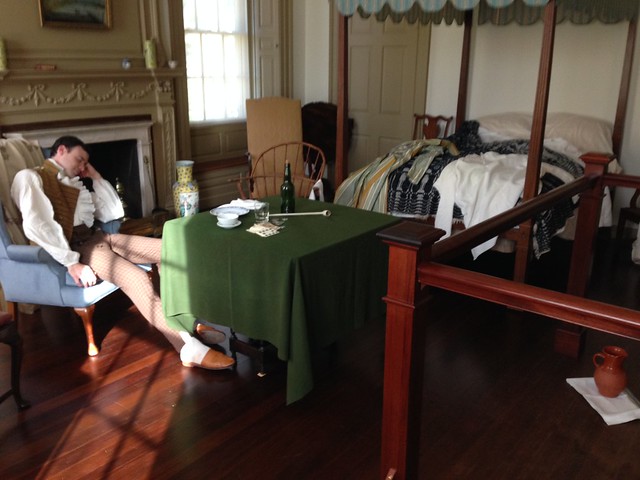
Mr Mason begins his day

It was as well, perhaps, that Mr Sweet did not see the client in his natural environment. His tailor, Mr Taber, arrived with many samples and plates for Mr Mason’s perusal, and the room was in quite a state by the day’s end. I do not know why Mr Mason could not take the short walk to Cheapside, but his custom is so good that the tailor made an exception and came to call.

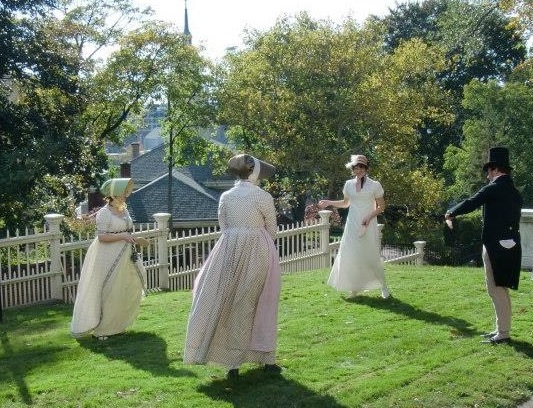
Lawn games

Late in the afternoon, we played battledore and shuttlecock; I was surprised and pleased to see the images and how much like Diana Sperling’s drawings they looked. It was a pleasure to see that we were doing something right, though a cold scoop bonnet was no help in seeing the shuttlecock.

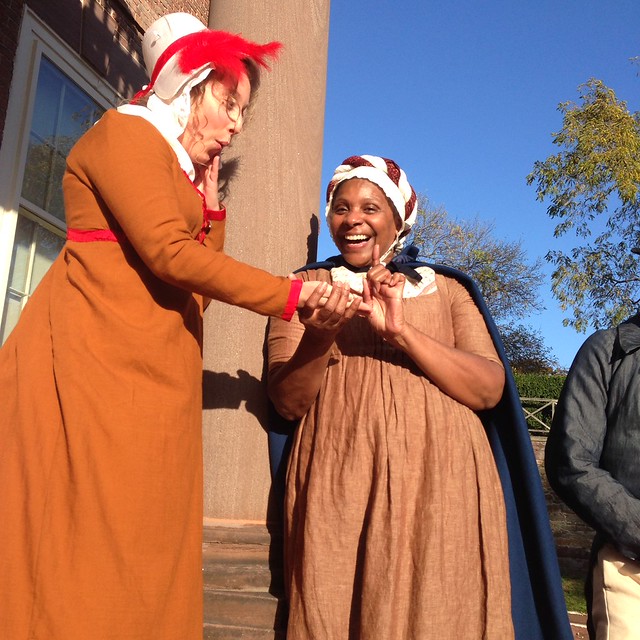
Nancy Smith hears her fortune from Goody Morris

The fortune teller came, much to the consternation of Mrs Brown and her sister. I believe it was the housekeeper who thought she could get away with inviting her friend to the house; in any case, it was foretold that Kitty should have comfort in her life, which was a great relief to someone who had been wearing straight-lasted and very flat shoes for some twelve hours.

Mr Young and Goody Morris

Of late there has been a man hanging about the house; he enjoyed Goody Morris’s conversation as well, though late in the afternoon he caused quite a disturbance with a delivery of wine. We think he had been imbibing from our order, and his behaviour caused our new maid, Eliza, much distress. Mrs Brown was not well pleased at the commotion in her house.

What Cheer Day 2014

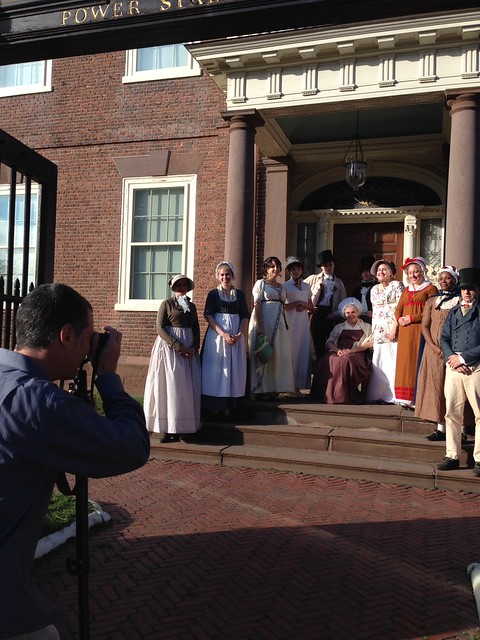
Still, by the end of the day, we were well satisfied with our work, and posed for the passing limner.

Share this:

  • Click to share on Facebook (Opens in new window) Facebook
  • Click to share on Pinterest (Opens in new window) Pinterest
  • Click to email a link to a friend (Opens in new window) Email
  • Click to share on X (Opens in new window) X
Like Loading...

Frivolous Friday: Comforts of a Rumpford

10 Friday Oct 2014

Posted by kittycalash in Frivolous Friday, History, Research

≈ Comments Off on Frivolous Friday: Comforts of a Rumpford

Tags

cats, engravings, furniture, half robes, historic interiors, interpretation, satire, silly cat photos, slipcovers, sofas

A companion pl. to BMSat 9813. A pretty young woman wearing a décolleté négligé, stands with her back to the fire, her gown raised to leave her posterior naked. She holds a book: 'The Monk - a Novel by M' ['G. Lewis', cf. BMSat 9932]; another is open on the floor: 'Œconomy of Love by Dr Arm[strong', 1736]. A cat rolls on its back. On a table are a decanter of 'Creme de Noyau', and an open book: 'The Kisses'. On the mantelpiece are flowers and an ornate clock with embracing cupids. A picture partly covered by a curtain represents Danaë receiving the golden shower. The room, apparently that of a courtesan, is luxuriously furnished. 26 February 1801 Hand-coloured etching, British Museum, 1935,0522.7.12

A companion pl. to BMSat 9813. A pretty young woman wearing a décolleté négligé, stands with her back to the fire, her gown raised to leave her posterior naked. She holds a book: ‘The Monk – a Novel by M’ [‘G. Lewis’, cf. BMSat 9932]; another is open on the floor: ‘Œconomy of Love by Dr Arm[strong’, 1736]. A cat rolls on its back. On a table are a decanter of ‘Creme de Noyau’, and an open book: ‘The Kisses’. On the mantelpiece are flowers and an ornate clock with embracing cupids. A picture partly covered by a curtain represents Danaë receiving the golden shower. The room, apparently that of a courtesan, is luxuriously furnished. 26 February 1801
Hand-coloured etching, British Museum, 1935,0522.7.12

I’ve left that caption intact, though it seems quite long enough for a blog post itself. This image turned up on Twitter (you can follow me there @kittycalash, expect randomness) and delighted me at the end of a long, tough week. I’m particularly taken with the cat, which resonates with an lolcat that floated about the interwebs last winter. The interwebs can be a strange place…

But aside from that silly cat, there are a wealth of details in this image, some of which are explicated in the caption.

What struck me- after the cat– was the slipcover on the sofa. How lame is that– but it’s true. Floral print, I suspect, but possibly woven, it’s loosely draped and long. I’m more familiar with the checked linen slipcovers seen in representation of New England interiors, so the floral really struck me. I suppose those linen checks symbolize all the puritanical uprightness and restraint of early Federal New England dons (if you believe in that kind of thing), while the loose floral print drapery tells you everything you need to know about our Rumpford friend.

We all see what we want to see…cats, slip covers, or courtesans.

Share this:

  • Click to share on Facebook (Opens in new window) Facebook
  • Click to share on Pinterest (Opens in new window) Pinterest
  • Click to email a link to a friend (Opens in new window) Email
  • Click to share on X (Opens in new window) X
Like Loading...
← Older posts
Newer posts →

Archives

wordpress statistics

Creative Commons License
Kitty Calash blog by Kirsten Hammerstrom is licensed under a Creative Commons Attribution-NonCommercial-ShareAlike 4.0 International License.

Website Built with WordPress.com.

  • Subscribe Subscribed
    • Kitty Calash
    • Join 621 other subscribers
    • Already have a WordPress.com account? Log in now.
    • Kitty Calash
    • Subscribe Subscribed
    • Sign up
    • Log in
    • Report this content
    • View site in Reader
    • Manage subscriptions
    • Collapse this bar
 

Loading Comments...
 

    %d