• Home
  • Completed Costumes/Impressions
  • Emma and Her Dresses
  • Free Patterns and Instructions

Kitty Calash

~ Confessions of a Known Bonnet-Wearer

Kitty Calash

Tag Archives: history

Boil and Not Too Much Trouble

19 Tuesday Aug 2014

Posted by kittycalash in Events, Food, Living History, Reenacting, Research

≈ 3 Comments

Tags

10th Massachusetts, authenticity, Bennington, Brigade of the American Revolution, common people, common soldier, cooking, Enos Hitchcock, food, hearth cooking, history, living history, Research

Camp cooking can get old. Stew, sigh. Bread, sigh. Cheese, sigh. Apples, sigh.

Don’t get me wrong: all of the above are delicious today. Historically, New England troops are all about cheese and cider, and have much to say about the quality of beef, but menu can be repetitive and lacking in challenge.

Ever since I had boiled flour pudding at Coggeshall Farm, I’ve wanted to make it since I so much enjoyed the texture.

When I found it mentioned by Enos Hitchcock, I was particularly excited.

1777 May 24
Dined upon flowr puding & Venison Steak.

Flowr puding? I love that guy! But there it is, documented, even if eaten by the officers and not the private soldiers. It’s common enough that I think it likely almost everyone knew how to make it. The trick would have been getting hold of eggs and milk, which is easy enough for me, if not for the soldiers of 1777. Fortunately, as we drove down Cottrell Road headed for home, a flock of Plymouth Rock chickens crossed the road in front of us: there were the eggs, at least in our time.

postcard of kittens eating christmas pudding

Not your chaplain’s pudding.

The method I had tried at home worked: I beat three eggs and four spoons of milk in my tall redware mug, and added the liquid slowly to the flour and salt mixture. The whole mixture went into a cloth bag, which I tied with a string and boiled in the smallest kettle, not want to risk any damage to the beef stew. I’ll test the works at home on my nearest kin and willing victims before I loose it upon a regiment and hungry guests.

Although the pudding was a strange shape, it cooked up quickly in about 45 minutes, had a firm texture and a satisfactory enough flavor. I would have liked it to rise a bit more, which is an argument either for beating the eggs with a fork in the confined cylinder of the cup, or risking the splash of the whisk in a bowl, or, finally, for a smaller whisk.

Still, not too bad for expanding the camp cooking repertoire of Things That Can be Boiled and Eaten.

Share this:

  • Share on Facebook (Opens in new window) Facebook
  • Share on Pinterest (Opens in new window) Pinterest
  • Email a link to a friend (Opens in new window) Email
  • Share on X (Opens in new window) X
Like Loading...

When in Doubt, Bake

14 Thursday Aug 2014

Posted by kittycalash in Food, History, Living History, Reenacting

≈ 3 Comments

Tags

10th Massachusetts, Amelia Simmons, authenticity, Diet Bread, food, history, living history, Making Things, Reenacting, Research, resources

There was a Very Bad Summer when much was awry at work, the flat we were living in was for sale, my father was moving far away, and the Howling Assistant was sick. In response, I baked.

Things are roiling in the world of late, both at work and in the wider world (I am from St. Louis, and cannot ignore the news from Ferguson), and so again, I turned to baking. Eggs, flour, sugar: what could be sweeter?

A friend tried Amelia Simmons‘ Diet bread a few years ago, with limited success, but the simplicity of the receipt has always appealed to me.

recipe for diet bread

Diet Bread

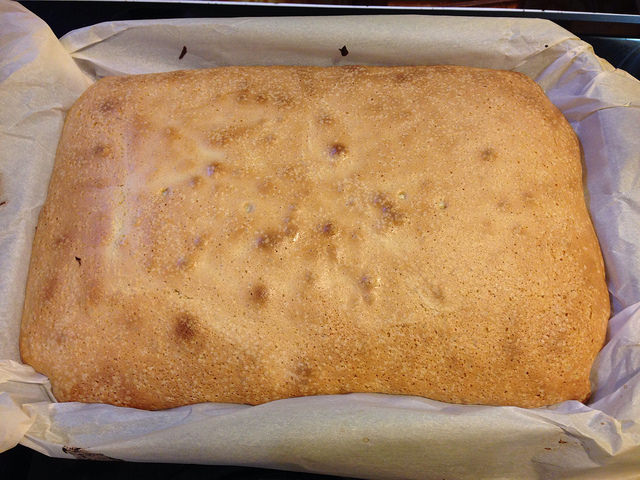
Once again, I risked early morning baking, but I think this has turned out OK. I had to leave for work before it was cool enough to really eat, but a corner was delicious! The intense amount of sugar– a full pound!– was intimidating, the rose water curious when tested, but combined with the cinnamon, seems to have a pleasant and slightly exotic flavour.*

The simplicity of the ingredients was encouraging, but I probably would not have jumped into this had I not found someone else had leaped before me.

Kathleen Gudmundsson on the Historical Cooking Project blog tackled diet bread in May. From her work, I took the tip to use only six eggs.

Following Gudmundsson thoughts at the end of her entry, I beat the egg yolks separately, intending to add the stiff-peaked whites at the end. Half way through adding the flour, the batter became extremely stiff and sticky, and nearly unmanageable, so I beat a whole seventh egg and added that, followed by a little flour and 1/4 of the beaten whites. I alternated flour and egg whites, finishing with egg whites, and found the mixture retained pliability and texture.

Like Gudmundsson, I also lined a glass pan with parchment paper, but my (electric, rental-quality) oven runs a little slow, so baked for 30 minutes at 400F.

diet cake made of sugar, flour and eggs

Diet Cake, from American Cookery by Amelia Simmons.

The results look like hers, and since she thought the cake was as good or better three days after she’d made it, my hopes for an interesting dessert remain intact.

The other, less distracting, project I’ve taken on this week is a set of bags for coffee and food stuffs.

handsewn linen bags in white and check

Linen bags for foodstuffs

After all, there are no ziplock bags or plastic tubs in 1777, and full complement of graduated tin canisters seems unlikely to plummet into my lap anytime soon. The two slender bags are for coffee: tied at the neck, they’ll hold enough for cold coffee and fit the slender tin coffee pot we have, sparing the larger cloths, wrangling grounds, and giving us clear, cold, caffeine. Another is for flour, one could be for oatmeal, another for sugar. In any case, things to eat are getting wrangled in a way that can remain visible in camp.

I know: a trifle mad, but the time I spend now makes living in public so much easier when there’s less to hide. And yes, before you ask: that will be a real fire.

*Fellow eaters, you’ve been warned.

Share this:

  • Share on Facebook (Opens in new window) Facebook
  • Share on Pinterest (Opens in new window) Pinterest
  • Email a link to a friend (Opens in new window) Email
  • Share on X (Opens in new window) X
Like Loading...

Who do you play with?

08 Friday Aug 2014

Posted by kittycalash in Living History, Philosophy, Reenacting

≈ 4 Comments

Tags

authenticity, engagement, history, interpretation, living history, philosophy, Reenacting

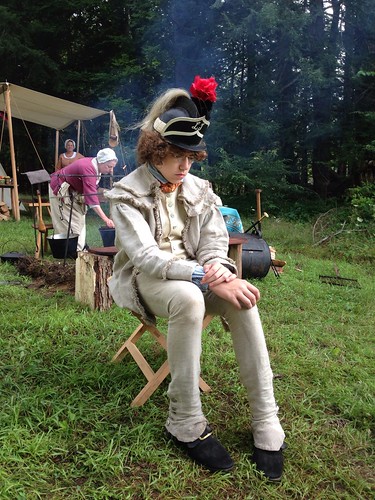
sad light infantry private

Don’t just sit there pouting…

Solving romantic troubles is not my forte, but just as your first crush may not be the person you spend your life with, the first living history/reenactment group may not be your last.

Some folks are serial joiners, just as there are people who engage in a series of medium-term relationships: as long as everybody knows what’s going on, things should be fine and no one will be set anyone else’s goldfish free and leave each other twisting in the wind. But some of us want a long-term home in history: what should we consider?

In no particular order, I offer the follow areas to examine:

Communication Style & Frequency
Surprised to discover members of your group at an event you thought they weren’t attending, so you went with someone else? Find yourself alone at an event that people said they were attending, but dropped at the last moment? Just because all life is like middle school, there’s no need to recreate scenes from Gidget in historic clothing: communicate.

Everyone requires different amounts of information, but after considerable time working, I think it’s hard to over-communicate. Folks, if it’s too many emails, hit the delete key. But if you do not get the basics– a list of events and potential attendees, reminders as the event approaches, coordination of food, canvas and powder supplies– and end up powderless and alone at an event, you may want to reconsider your allegiance.

Level of Activity & Engagement
“It’s just event after event after event,” whined the Young Mr last summer, and I hadn’t even made him march to Fort Ti and sleep under a brush arbor. Some people need to mix primitive camping in funny clothes with a few days at the beach, others spend their entire summers living life as old-school as they can. Some perform the classic turn-your-back maneuver described on Peabody’s Lament (pro tip: don’t do that!) while others actively seek opportunities to engage the public. Some like to be in first person, and others are always and only in third person.
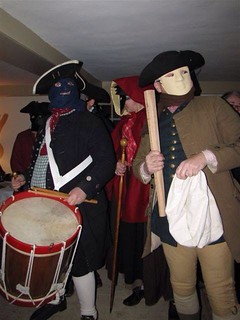
Mummers at Major John Buttrick House

How many activities can you fit into your year?

What’s your preference? If you want to try immersive, first-person interpretations, you need a unit that will support that, and opportunities to try it out. And if you want to go out often, you may need some flexibility in time period and activity.

But even beyond the times when you’re dressed in historic clothing and working with the public, you want to be with a group that includes people who are set a variety of RPMs. If you’re all super-intense original garment/gear/methods copying maniacs, you might not be balanced. As a newcomer, you need an environment that mixes challenges and support– like a good kindergarten.

Authenticity Standards
On that super-intense original garment/gear/methods copying theme, if the group doesn’t manage to meet a certain level of authenticity, or is not striving to improve, and to learn and try new things, is that the right group for you? I find that a curious mind is a necessity, one willing to accept that research advances and what we thought was right in the past may be proven wrong.

The other key here is, how does the group help you meet standards? Are there workshops to help you make up kit or improve what you already have? How deep do the standards go: clothing only, or to camp set up? What about how you cook, what you eat, and what you eat it with?
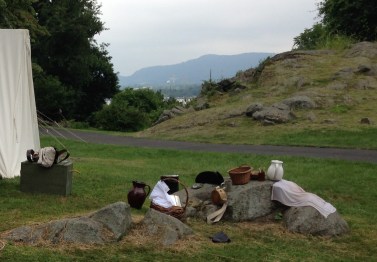
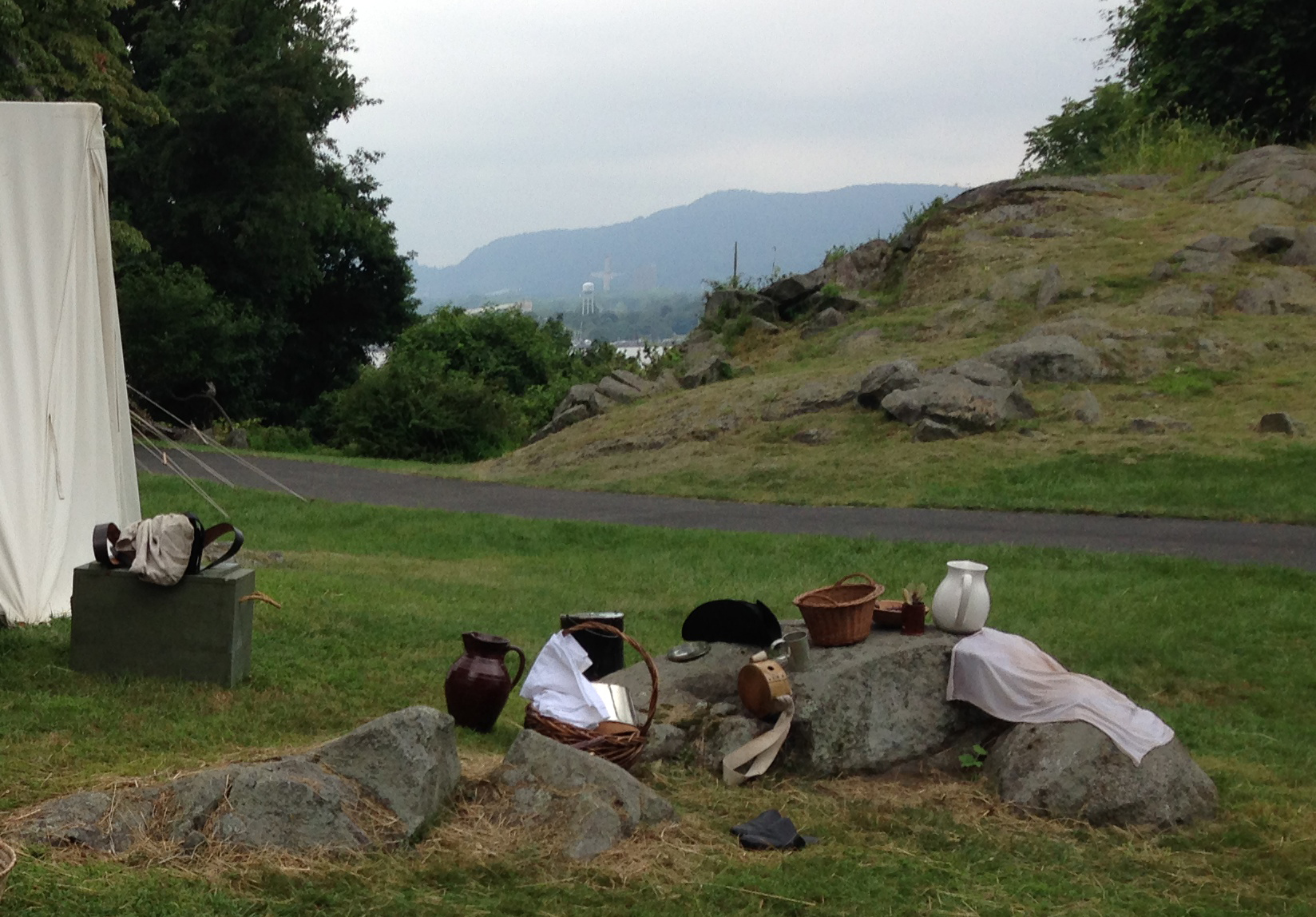
Colonial breakfast on a rock

“Furniture”

Are the compromises people make balanced and understood? My family and I ar among the people who go to events in “wearable but not done” clothes, and that’s OK in our world. While we have period shoes, they are not always perfectly correct: the gents wore buckles in 1812 and the Young Mr definitely doesn’t get a second pair of shoes until we know his feet won’t grow larger than they are now….

Interpretation and Imagination
Did you have one, maybe two, really-really best friends in grade school? Did you play dress-up, imaginative games, engage in narrative play? Did you enjoy the school play (and insist on leading the writing of a research-based script)?If you did, you are probably looking for folks who played the way you did as a child.
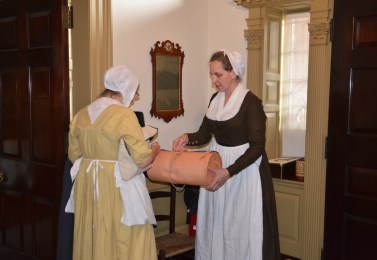
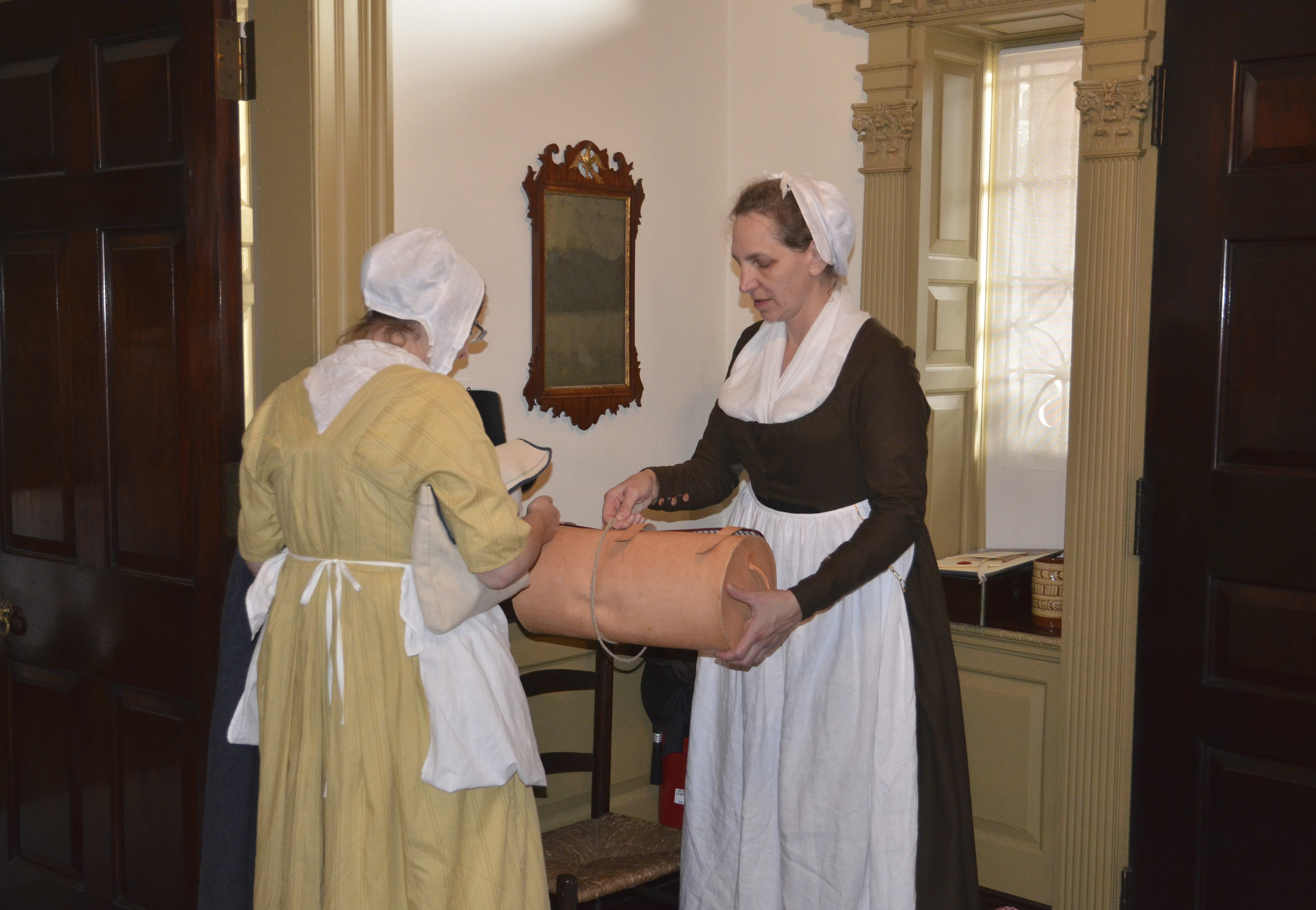
Esther takes Mr Herreshoff's case to his room

What kind of interpretation do you prefer?

Good interpretation requires that someone in the group have an active and vivid imagination, and that people are willing to take risks. Interpretation is a risk: will this portrayal of a captain’s death, a washerwoman’s trial, a wayward apprentice’s punishment, actual work? Do we trust each other enough to slip into new roles?

Trust is key: will the other people in the group bail you out if you freeze, encourage you if you run with an idea, and meet you in the same moment? You will have to spend time with people to find out how well you can all play together but, happily, you will quickly learn if you cannot. If your questions about who you are, why you are in a place, and if you should be wearing a 1781 coat at a 1777 event are rebuffed, you may need to consider other options.

Another time: What are your options?

Share this:

  • Share on Facebook (Opens in new window) Facebook
  • Share on Pinterest (Opens in new window) Pinterest
  • Email a link to a friend (Opens in new window) Email
  • Share on X (Opens in new window) X
Like Loading...

Breaking Up By Letter

09 Wednesday Jul 2014

Posted by kittycalash in Events, Living History, Reenacting

≈ 2 Comments

Tags

10th Massachusetts, 18th century clothing, history, living history, Massachusetts, Revolutionary War

Mr S, always slightly suspicious

Mr S and I joined other members of the 10th Mass and National Park Service staff and volunteers at the North Bridge in Concord, Mass last Saturday for the postponed reading of the Declaration of Independence. It was one of those perfect New England summer days, breezy blue skies and dry wind smelling of grass and flowers: days like that I finally get the Transcendentalists.*

Some of those present in modern and historic clothes alike had never heard or read the Declaration all the way through; it is one of my favorite documents, and not just because I was in a 5th grade play about the document. Questions of slavery and principles aside, the Declaration is a great poem of a break-up letter. It makes poetry of the list of King George III’s crimes and reminds us of the core principles that undergird our government and that began with the Magna Carta, limiting the power of the king.

Governments are instituted among Men, deriving their just powers from the consent of the governed

Leaning against a tree near the North Bridge, you could close your eyes to the shorts and kayaks and baseball caps and listen to a document being read as it would have been 238 years ago, and imagine what it was like to hear this for the first time (at least until the airplane passed overheard).

I have a complicated relationship with patriotism, which makes me a curious candidate for this living history business. But that moment in Concord reminded me of the enthusiasm I had for history as a child, and the passion I had for what educators now call narrative play, and what some of us now grown up call reenacting, and others call historical re/creation.

There is something we can learn, as participants, and that the public can learn, as we go about this business of re-investigating the past, through making clothing and reading and cooking and re-learning historic processes and crafts. We may not always learn what we expect to about the past or about our selves, but if some in the audience enjoyed the smell of grass in the wind, and heard the true poetry of Jefferson’s text, maybe that’s enough to be getting on with. Because for all the questions about how a musket works, the real point of all of these events isn’t the musketry, it’s the history.**

*They clearly did not wake up to the “what the hell’s that smell?” game tidal canals like to start on summer mornings.

** Sorry, lads, but I think it’s true: wars are about words backed by muskets or other weapons.

Share this:

  • Share on Facebook (Opens in new window) Facebook
  • Share on Pinterest (Opens in new window) Pinterest
  • Email a link to a friend (Opens in new window) Email
  • Share on X (Opens in new window) X
Like Loading...

Musical Monday: Chester

16 Monday Jun 2014

Posted by kittycalash in Events, History, Living History, Reenacting

≈ Comments Off on Musical Monday: Chester

Tags

10th Massachusetts, common people, common soldier, history, living history, Reenacting, Revolutionary War, singing

Virtue Rewarded

Virtue Rewarded

Saturday was Flag Day, but you knew that, right? There are a lot of holidays we no longer pay much attention to, from Armed Forces Day (when Mr S and I once hosted a very amazing and lengthy party in an 1870s brick row house in St. Louis) to Arbor Day to Flag Day.

To celebrate the Bicentennial of the Star Spangled Banner, the Paul Revere House asked us (which means Mr HC) to lead the visitors in the national anthem. “Never miss an educational opportunity” could be one of the 10th Massachusetts’ mottoes, so with the regimental colors unfurled, the time was right to lead the assembled company in a rendition of Chester, written in 1770 and perfected in 1778 by William Billings, and the song to which the men are accustomed to march. (It is also the song mostly likely to play accidentally on my phone while it’s in my pocket.)

So here they are, the 10th Massachusetts and Members of the Publick, led in Chester by Mr Cooke.

IMG_1590

IMG_1590


As mentioned elsewhere, it is nearly impossible to read and sing simultaneously. It is also clear that we do not generally sing in our daily lives, or not nearly as often as people did in the past. Most of us think we have awful voices and refuse to sing, though we endure singing in school, or did. It’s an art that we should enjoy more and more often. You don’t have to be Idina Menzel to please the right audience (in my case, some cats).

Share this:

  • Share on Facebook (Opens in new window) Facebook
  • Share on Pinterest (Opens in new window) Pinterest
  • Email a link to a friend (Opens in new window) Email
  • Share on X (Opens in new window) X
Like Loading...
← Older posts
Newer posts →

Archives

wordpress statistics

Creative Commons License
Kitty Calash blog by Kirsten Hammerstrom is licensed under a Creative Commons Attribution-NonCommercial-ShareAlike 4.0 International License.

Website Built with WordPress.com.

  • Subscribe Subscribed
    • Kitty Calash
    • Join 621 other subscribers
    • Already have a WordPress.com account? Log in now.
    • Kitty Calash
    • Subscribe Subscribed
    • Sign up
    • Log in
    • Report this content
    • View site in Reader
    • Manage subscriptions
    • Collapse this bar
 

Loading Comments...
 

    %d