• Home
  • Completed Costumes/Impressions
  • Emma and Her Dresses
  • Free Patterns and Instructions

Kitty Calash

~ Confessions of a Known Bonnet-Wearer

Kitty Calash

Tag Archives: living history

Trigger Warnings

05 Thursday Jan 2017

Posted by kittycalash in Events, History, Living History, Reenacting

≈ Comments Off on Trigger Warnings

Tags

authenticity, common soldier, difficult interpretations, first person interpretation, interpretation, living history, New Jersey, Princeton, Revolutionary War

Reenactors portraying Philadelphia Associators take part in the real time tour of the Battle of Princeton, Princeton, NJ, January 3, 2015. Beverly Schaefer, Times of Trenton

Philadelphia Associators January 3, 2015. Beverly Schaefer, Times of Trenton

It’s upon us, this Princeton event, and Peale’s, too. And the overnight march I missed two years ago. I’m so glad to be part of this, and I’m interested in seeing where it goes from here– partly for me, and partly for the way we do living history. Now, I’ll miss some of what I’d like to see (like Mr. White’s tour of the second battle of Trenton, but when you’re plundering in Princeton, you’re committed.) A formal media release may be downloaded here.

A little more than two years ago I was asked if I wanted to join the Peale’s March to Princeton. I said no, because women couldn’t march and that was the experience I wanted. Someday, I will have the hallucination that allows me to square experiential learning with authenticity, and, at the same time, the world will care about having a women’s Tour de France.

Anyway: there’s a point. This event became a pivot point for me in thinking about accuracy and authenticity of all kinds.

Accurate impressions rendered in a place of shared value will transport you to the past, and give you insights you did not expect. That is the point of these exercises: insight and understanding. It’s how to get high on history.
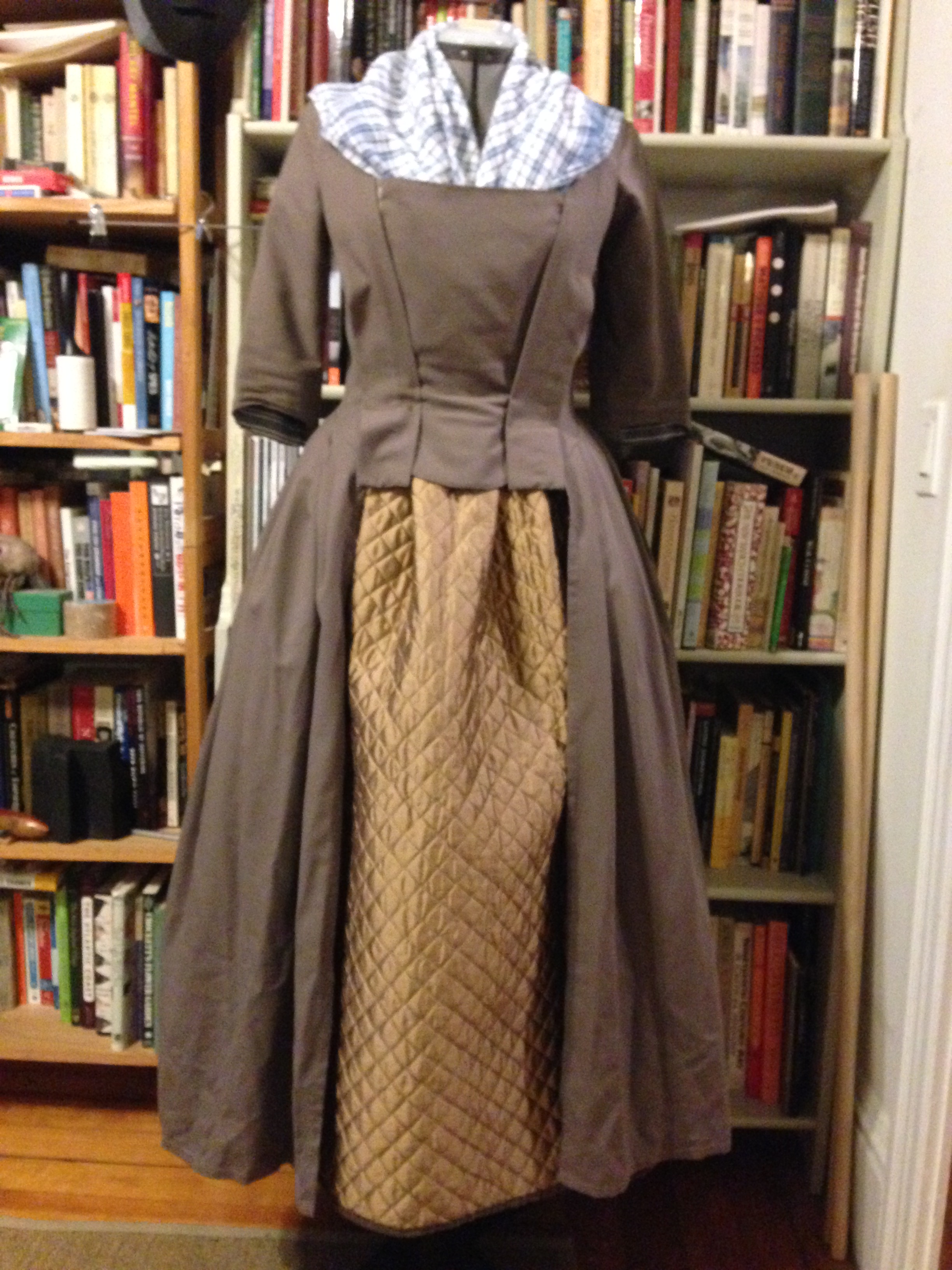
Test run: bedspread petticoat. Girl's gotta keep warm.

Test run: bedspread petticoat. Girl’s gotta keep warm.

In Palmer Square and at Morven, that means stealing (from each other), soldiers arresting Quakers, Loyalists and Whigs insulting each other, arguments about loyalty oaths, and women being attacked. (When you see the grey gown grabbed off the square by the red coat, please know that this is acting.) It means rough justice in a drum head court martial.

Will it work? I think so. Will it change my life, the way not attending two years ago did? That will depend on what I regret.
Share this:

  • Share on Facebook (Opens in new window) Facebook
  • Share on Pinterest (Opens in new window) Pinterest
  • Email a link to a friend (Opens in new window) Email
  • Share on X (Opens in new window) X
Like Loading...

Now Left

13 Sunday Nov 2016

Posted by kittycalash in Events, History, Living History, Museums, Reenacting

≈ Comments Off on Now Left

Tags

authenticity, Fort Ticonderoga, living history, military events, progressive reenacting, Revolutionary War, women's history, women's work

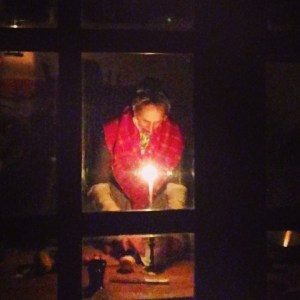
Through the barracks window on Friday night. Photo by Eliza West.

Through the barracks window on Friday night. Photo by Eliza West.

While for some events there are no second chances, Fitzgerald himself knew it wasn’t true that there are no acts in American lives.  And so it is with Fort Ticonderoga, changing hands several times throughout its existence, until British troops, retreating in 1777, did their best to raze the structure.

A day after participating in the “Now Left to their Own Defense” event at the Fort, I feel a bit destroyed myself, in the best possible way. (It isn’t history till it hurts, but sometimes cold nights on straw-filled ticks get into what’s left of my hip bones.)

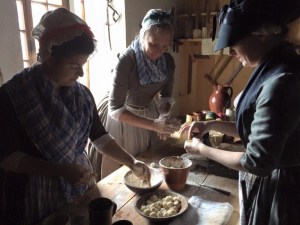
Women at work.

Women at work. Photo by M.S.

Every trip to Ti teaches me something new. This time, against all odds, it was cooking. Against all odds because I usually object to reinforcing gender norms at living history events, particularly in a military setting, when women did not typically cook for mens’ messes. Fort Ti is different: both times I have cooked there, it has been as part of the women’s mess.

img_8435

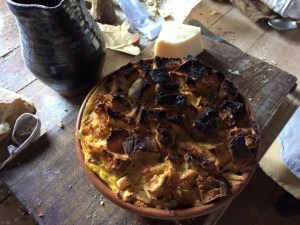
Done! And no, it didn’t taste burnt. Photo by M.S.

This past Saturday, we may have gone a bit overboard, but we justified our efforts with the thought that Loyalist women would not only have used up all the supplies they could (waste not, want not) before retreating, but that they might also have striven for normal activity and to prove their worth to men whose protection they needed.

To that end, we made bread pudding. I’m a fan of Indian pudding and rice pudding, but I’ve never made a bread pudding, despite the similarity of these starch-and-custard concoctions. I like to think that rather than having reached a “throw reason and caution to the winds” point, I have, like any good 18th century cook, become comfortable enough not to rely on measuring cups but rather trust my eye and experience. Enablers help, of course, and I had the pleasure of spending my day with some of my favorites and meeting new ones, too.

Share this:

  • Share on Facebook (Opens in new window) Facebook
  • Share on Pinterest (Opens in new window) Pinterest
  • Email a link to a friend (Opens in new window) Email
  • Share on X (Opens in new window) X
Like Loading...

The Art of Deviance

01 Tuesday Nov 2016

Posted by kittycalash in History, Living History, personal, Philosophy, Reenacting, Research

≈ Comments Off on The Art of Deviance

Tags

18th century clothes, authenticity, common people, difficult interpretations, interpretation, living history, Research

portrait as a process test

portrait as a process test

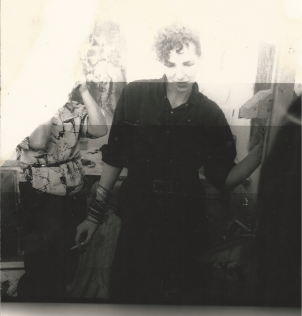
Some regular readers know I was part of Chicago’s punk rock scene in the early 1980s: my first foray into unusual music and natty dressing.* I think that’s me and my keffiyeh at a Naked Raygun show in the Chicago episode of Sonic Highways. But more to the point, I was on the fringes of an underground, taking style tips from obscure English zines, and being told I looked like a whore by a variety of men using Chicago’s public transit system. Judge not lest ye be judged aside, I’m accustomed to occupying uncomfortable spaces by design and by accident. (I wasn’t looking to be called a whore on the Fullerton El platform when I dressed in a below-the-knee vintage skirt and lot of Bakelite jewelry combined with bullet belts and studded leather, but everybody’s a critic when it comes to women’s appearance.)

The Frail Sisters, 1794

The Frail Sisters, 1794

Now that I live in Providence, where indoor prostitution was legal for decades, if not centuries, my interest in gender role non-conformity extends to finding ways to document and represent sex workers in Rhode Island history. The adult section of the now-defunct Providence Phoenix, ‘zines, and diaries help record at least some aspects of this facet of our culture, but how do we represent it, and do it well? Jamie Lee Curtis in Trading Places is not a realistic model.

In discussing this lately, I’ve found consistent themes in representing sex workers in the 18th century: white face powder, rouge, bright clothing, visible stays, friendliness rather than reserve. There are lithographs to guide the portrayal through clothing, and visual tropes that signified a lack of virtue in the 18th century. In considering the local variations on this theme, my thought had been to expand upon the visual imagery by reading the Providence and Newport town papers, and the records of the Colony of Rhode Island, along with the contemporary newspapers.

The Tar's Triumph, or Bawdy-House Battery, print by Charles Mosley, 1749. British Museum 1868,0808.3896

The Tar’s Triumph, or Bawdy-House Battery, print by Charles Mosley, 1749. British Museum 1868,0808.3896

Nothing is likely to be quite as good as the Nort’ Providence chief of police who, in the midst of Tropical Storm Irene, pursued a stripper who took clients on the side when she ran a red light in her SUV. She crashed into a parked car in Pawtucket and abandoned the car, at which point the chief of police searched the vehicle, found her open purse, and stole the cash she’d earned that morning. When questioned later, he was at pains to explain why the money was wet…** in any case, the Providence brothel riot of 1782 aside, I do not expect to find anything quite as lurid.

The Bargain Struck, or Virtue conquer'd by Temptation. Mezzotint, 1773. British Museum 1935,0522.1.130

The Bargain Struck, or Virtue conquer’d by Temptation. Mezzotint, 1773. British Museum 1935,0522.1.130

My sartorial choices for a prostitute would include a rather over-fancy cap with a worn silk ribbon, rouge and a velvet patch, a silk gown stained on the back, silk petticoat stained at the knees, laddered stockings, and heeled shoes tied with silk ribbons, or fastened with paste buckles. If my character worked from a brothel, the dress could be brighter and cleaner, but in either case, neck handkerchiefs would be optional or silk and askew, showing my stays and cleavage.

This is not an easy impression. It’s not just that I do not want to parody an 18th century prostitute, but that I want to honor the memory of these largely forgotten women. They had families– in all likelihood they had children, as we know from the story of Mary Bowen and Eliza Jumel– they had feelings, desires, dreams, felt love and pain. They were likely desperate.

They were human.

We owe them the respect of representing them well– of representing them at all– if we strive to recreate a more complete picture of the past.


*What else is this crazy thing we do?

**You cannot make this stuff up.

Share this:

  • Share on Facebook (Opens in new window) Facebook
  • Share on Pinterest (Opens in new window) Pinterest
  • Email a link to a friend (Opens in new window) Email
  • Share on X (Opens in new window) X
Like Loading...

What Cheer! Week

19 Wednesday Oct 2016

Posted by kittycalash in Events, Living History, Museums

≈ Comments Off on What Cheer! Week

Tags

first person interpretation, interpretation, living history, Museums, Rhode Island Historical Society, Rhode Island history, What Cheer Day

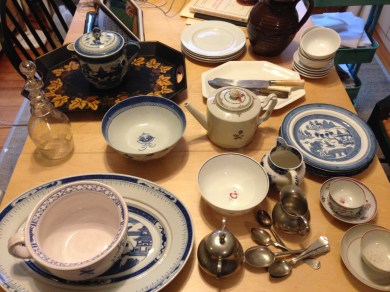
It takes a lot of china to serve a family.

It takes a lot of china to serve a family.

What Cheer! Wednesday: that’s today, with a preview of What Cheer Day itself as props are distributed through the house, the display cases open for viewing and a talk and demonstration of early Federal-era fashion in Rhode Island at 2:30 today. Or not— since we have another program at 4:00. At least I found out before lunchtime.

It’s not the first time I’ve packed a day as full as possible– in fact, I know more is possible, because I’ve done it.

A maid and her mistress

A maid and her mistress

Yesterday, in addition to packing up a small household for use on Saturday, m’colleague and I dressed two mannequins– well, one and a half, since the mistress still needs some work. I don’t know how I forgot the second petticoat when it was right there on my list, but so it goes. Mannequin dressing will finish this morning for this afternoon’s free talk and demonstration.

Saturday, though: that’s the really exciting day, when Alice tries to sneak past her mother after staying out all night at a party. Julia Bowen may not be the good influence we thought she was, if her uncle is anything to judge by.

img_8278

The fun starts at 1:00 PM and runs until 6:00, so we can take advantage of what we learned for After Dark. Extending the life of program research: is there anything better? Maybe a new Spencer, finally completed after more than a year. The weather promises to be chilly enough to make a Spencer necessary, not that I could resist flashing buttons anyway.

Share this:

  • Share on Facebook (Opens in new window) Facebook
  • Share on Pinterest (Opens in new window) Pinterest
  • Email a link to a friend (Opens in new window) Email
  • Share on X (Opens in new window) X
Like Loading...

Shine On

13 Thursday Oct 2016

Posted by kittycalash in Events, Living History, Research

≈ 3 Comments

Tags

18th century, authenticity, cleaning, common people, interpretation, living history, maids, Research, women's history, women's work

dscn4553

It has been quite busy chez Calash, with What Cheer Day a little over a week away, the Warren Commission happening tomorrow, and various and sundry other things to do, like get a Young Giant into college. But results were promised and results you shall have.

Despite my lack of chemistry knowledge, I made and used the pewter-cleaning liquor with some success.

plate
dscn4552

The pewter plate spent some time sitting on its edge in a basin of the liquor, and the line is pretty clearly visible in the first image. The second shows the plate after being cleaned with the liquor and a wool rag. It’s better than it was, but there are still more experiments to do. I’d apply rottenstone, but the container hasn’t made it back to New England yet, the posts being poor and the roads infernal.

different class levels
dscn4564

As the silver bowl demonstrates, rottenstone on its own is remarkably effective at removing polish. It is certainly a fairly readily-available, non-toxic, period method of cleaning metals (andirons and fenders to plates and punch bowls) that can be easil;y employed.

Share this:

  • Share on Facebook (Opens in new window) Facebook
  • Share on Pinterest (Opens in new window) Pinterest
  • Email a link to a friend (Opens in new window) Email
  • Share on X (Opens in new window) X
Like Loading...
← Older posts
Newer posts →

Archives

wordpress statistics

Creative Commons License
Kitty Calash blog by Kirsten Hammerstrom is licensed under a Creative Commons Attribution-NonCommercial-ShareAlike 4.0 International License.

Website Built with WordPress.com.

  • Subscribe Subscribed
    • Kitty Calash
    • Join 621 other subscribers
    • Already have a WordPress.com account? Log in now.
    • Kitty Calash
    • Subscribe Subscribed
    • Sign up
    • Log in
    • Report this content
    • View site in Reader
    • Manage subscriptions
    • Collapse this bar
 

Loading Comments...
 

    %d