• Home
  • Completed Costumes/Impressions
  • Emma and Her Dresses
  • Free Patterns and Instructions

Kitty Calash

~ Confessions of a Known Bonnet-Wearer

Kitty Calash

Tag Archives: material culture

Any Old Epaulet

28 Saturday Jan 2017

Posted by kittycalash in Art Rant, Fail, History, Museums

≈ Comments Off on Any Old Epaulet

Tags

exhibits, interpretation, material culture, Museums, objects

Details: we sweat them in our historical clothing, our impressions, our writing. I try hard to pay attention to them, but in my work, I have a lot of details to manage. Some fall away– I can no longer tell the ranks of men in daguerreotypes immediately, or recognize a Colt revolver at 10 paces, but there was a time when I could. I have managed to retain at least a general understanding of how military units are organized, a general sense of various units from my state in wars before 1939, and the uniforms associated with those units. (And I know which side a man’s coat buttons on.)

What's wrong with this image? Missouri State Guard uniform coat of Col. Austin M. Standish (Confederate). Missouri Historical Society 1916-045-0001

What’s wrong with this image?
Missouri State Guard uniform coat of Col. Austin M. Standish (Confederate). Missouri Historical Society 1916-045-0001

This helps in my work: knowing what HBT is, knowing what various patches signify, knowing how units were structured and the campaigns they were part of helps me be a better cataloger, curator, and exhibit developer. My job is take the details and make them matter by telling stories about the people who wore the HBT or the machinists’ mate patch or carried an ensign or wore an officer’s coat as part of the 14th Rhode Island Heavy Artillery (colored) in the Civil War.
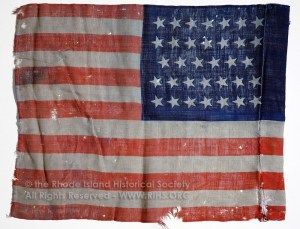
U.S. Flag, regimental. 14th Regiment Rhode Island Heavy Artillery. Belonged to Joseph Carey Whiting, Jr., 1st Lt., Co. B 14th R.I. Heavy Artillery. RIHS 1962.24.1

U.S. Flag, regimental. 14th Regiment Rhode Island Heavy Artillery. Belonged to Joseph Carey Whiting, Jr., 1st Lt., Co. B 14th R.I. Heavy Artillery. RIHS 1962.24.1

People matter more than things, but 154 years later, all we have are things those people owned, used, wore, and carried. The things now represent the people. So when someone working on a exhibit says, “any epaulets will do” while pointing at the shoulder boards on a Lieutenant’s coat, I’m not just taken aback, I’m upset, and reply, “If it’s just for color, you can buy them.” Because “any old epaulet [sic]” being loaned by a museum goes through a laborious process of loan approval, packing, delivery and installation. For that time investment alone, “any old epaulet” should not do: museums are not prop closets.
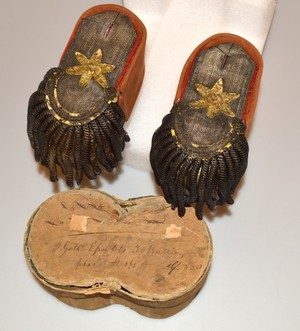
General's Epaulets of William Clark. Missouri Historical Society. 1924-004-0006

General’s Epaulets of William Clark. Missouri Historical Society. 1924-004-0006

I keep saying the same thing, don’t I? There ain’t nothing like the real thing.

We can’t assume that the public doesn’t know or doesn’t care– they often know more than we do, just think of the wildly detailed knowledge some of us have about very particular things– so we owe it to them, and to the people of the past, to use museum objects as more than visual accents.
Share this:

  • Click to share on Facebook (Opens in new window) Facebook
  • Click to share on Pinterest (Opens in new window) Pinterest
  • Click to email a link to a friend (Opens in new window) Email
  • Click to share on X (Opens in new window) X
Like Loading...

Staging Christmas

22 Thursday Dec 2016

Posted by kittycalash in Events, material culture, personal, Philosophy

≈ 2 Comments

Tags

christmas, emotions, interpretation, material culture, personal

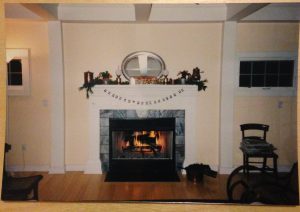
The house on High Street, Noank CT, 2000

The house on High Street, Noank CT, 2000

It’s pretty stagey to begin with, isn’t it? Full of ritual, some so old we don’t know why we still perform them. What I like best is the food, not the cakes and cookies, delicious as they are, but savory meals and the warmth of a full table. Second to that, decorating.

The past year has given me opportunity to reflect on the tasks I love, and why, and the basis for the work I’m passionate about. Curiously, it began in high school, as the props mistress for drama productions, morphed into installations, performance art, and site specific sculpture in college, before metastasizing into exhibition development, installation, and historic house interpretation with a side line in living history because, you know, costumes. Things and I go way back, and thinking about that made getting ready for yet another Christmas more fun.

Providence, 2016

Providence, 2016

Embracing the staginess makes the sometimes uncomfortable family closeness easier; I have proposed celebrating by reenacting a Don Draper Christmas, as long as someone else does the driving. Adding a layer of actual performance somehow made it easier to understand, a phenomenon opposite to what happens when you write a word over and over until it makes no sense. It’s the same distance you feel when you really try to understand someone’s past, and how they think. It’s familiar, but somehow unrecognizable.

This is probably the last Christmas in this apartment, which adds a poignancy to the proceedings, and it’s the first interactions for some participants, so, as with What Cheer Day, I’ve set a stage and we’ll see what happens.

Christmas with Katie, Chicago.

Christmas with Katie the Cat, Chicago, ca 1978

Every year, some things are the same: a balsam fir, candles, apples, cats. The characters and locations ebb and flow, with some consistency. Cats come and go, the boy grows. The love remains the same.

Share this:

  • Click to share on Facebook (Opens in new window) Facebook
  • Click to share on Pinterest (Opens in new window) Pinterest
  • Click to email a link to a friend (Opens in new window) Email
  • Click to share on X (Opens in new window) X
Like Loading...

Museum Fail: Icon, not Replica

21 Wednesday Dec 2016

Posted by kittycalash in Art Rant, Fail, History, material culture, Museums

≈ Comments Off on Museum Fail: Icon, not Replica

Tags

authenticity, collections, difficult interpretations, exhibits, interpretation, material culture, Museums, National Marine Corps Museum, objects

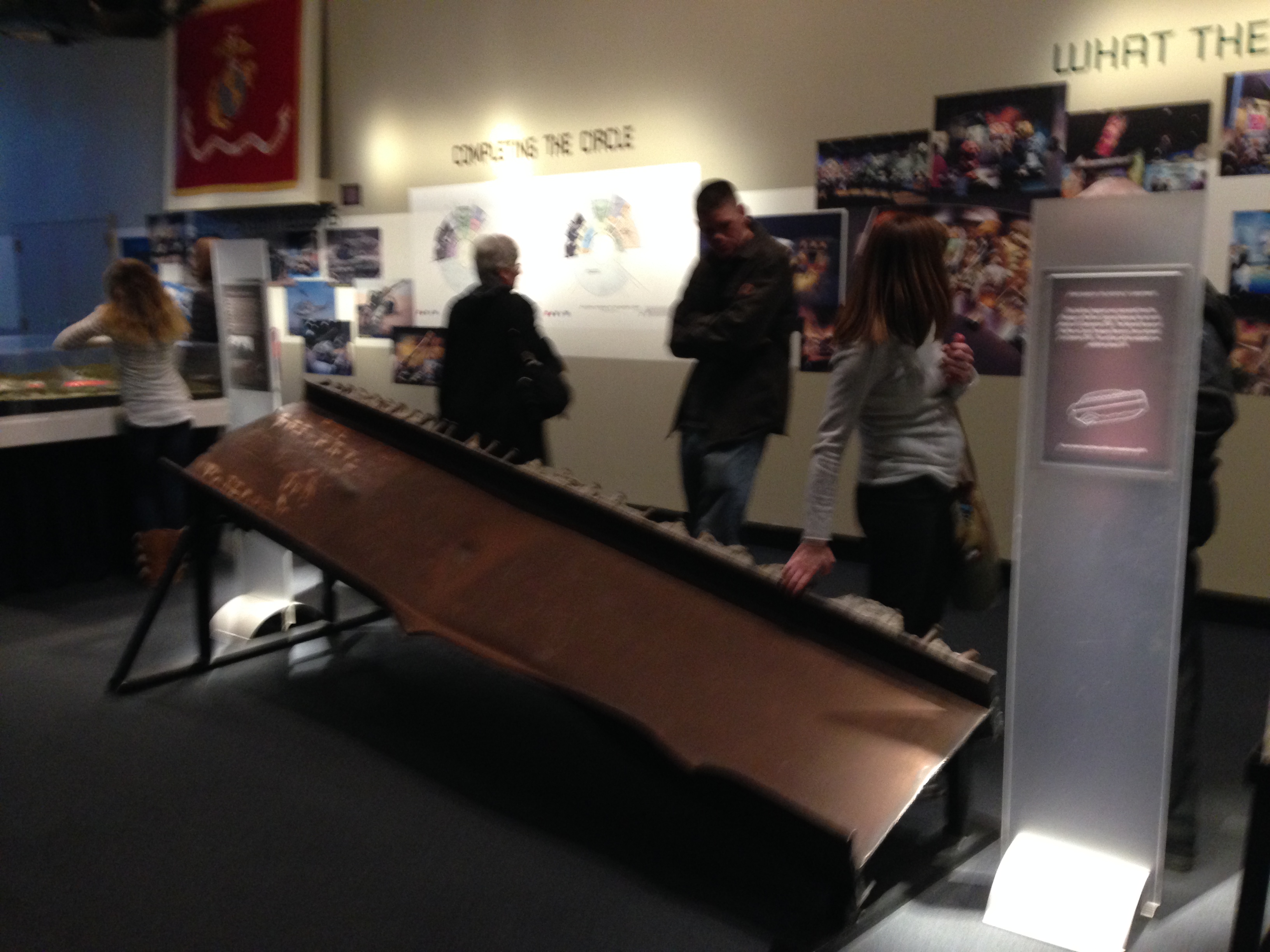
img_8606

What am I?

Do you know what this is? Do you think it’s real? Here’s a clue: it’s a relic of an iconic event in early 21st-century North America.

On the last visit to the National Marine Corps Museum, I watched the tourists circle objects at the end of the traditional galleries and displays, and overheard a woman ask her companions:

What’s this a replica of?

Reader, I cringed– and not for the sentence construction.

What's this a replica of?

What’s this a replica of?

And then I stepped back. I thought that for someone my age it would be obvious. Here, have some additional museum context.
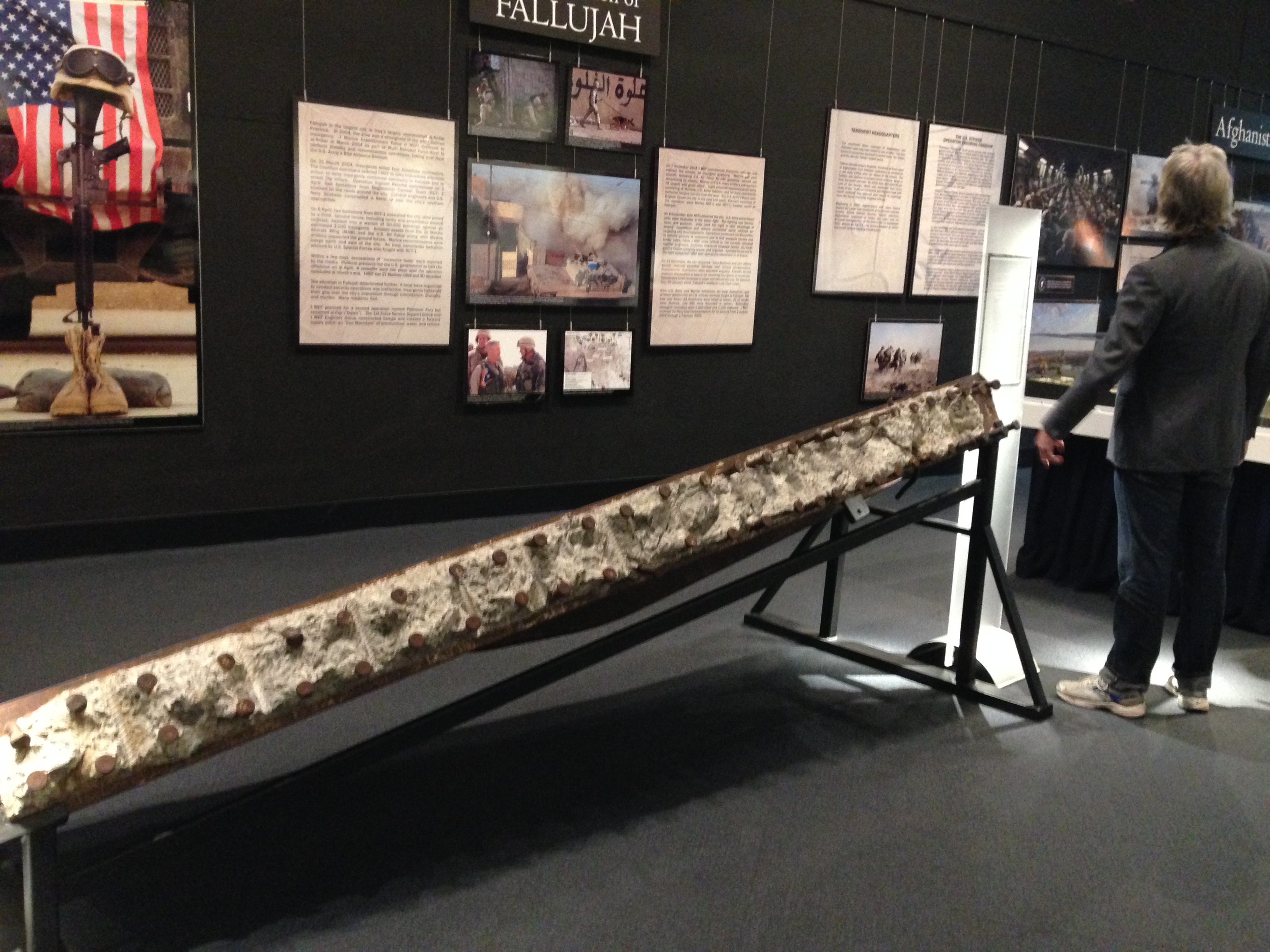
img_8604

In a museum where everything is real, how does a visitor come to ask not only if that World Trade Center steel beam is a replica, but what is it replicating? I’m not sure semiotics can save us here. My first, New York Times-reading, media-soaked, Northeast Corridor response was, How can you miss that? How can you not recognize that, let alone mistake the steel and concrete relic for a replica?

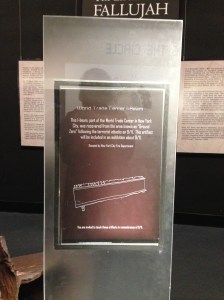
img_8603

Ah, hubris. There is a label, though I have seen better. Would it be more helpful in a larger font, turned perpendicularly to the I-beam? Possibly. But the lesson that’s deeper than label formatting and placement is recognizing how much we take for granted. Our visitors, even those we assume to be educated consumers of media and information, may not share our knowledge base. They may not read objects or images as readily as we think they do; we certainly cannot assume they’re all taking away the same information– and that has nothing to do with education or background.

Everyone truly sees the world differently. How, and what, we choose to put on a label should always be grounded in remembering that we do not all share the same information. Context is critical, and probably would have made these relics more real, and less replica.

Share this:

  • Click to share on Facebook (Opens in new window) Facebook
  • Click to share on Pinterest (Opens in new window) Pinterest
  • Click to email a link to a friend (Opens in new window) Email
  • Click to share on X (Opens in new window) X
Like Loading...

The Landscapes of Things

20 Wednesday Jul 2016

Posted by kittycalash in Collecting, Living History, material culture, personal

≈ Comments Off on The Landscapes of Things

Tags

collecting, collections, history, interpretation, landscape, material culture

Or, you never know where things will end up.

New post, Old post, Cataloger

New post, Old post, Cataloger

You can learn a lot about a place by visiting its antique and junk shops. Here, where the China Trade was A THING, you can practically fall over Chinese export porcelain (and its imitators) of a variety of types every day. It can become a bad habit. You can become an enabler.

IMG_7449

Elsewhere, the objects for sale tell a different story. I’m fond of the haphazard antique malls museum of things world, and while on a tea pot delivery mission to Maryland, went to one in Mount Vernon. It was astonishing.

Mid-century modern furniture, the Arabia Anemone tableware of my childhood, and shelves of geisha dolls, Kabuto, ceramics, and the occasional sword confused me at first until I realized these were probably the jumbled contents of a prior generation of military and civil servants’  homes emptied by their children. The aesthetics were markedly different from what I typically encounter in southeastern New England, where I am accustomed to reading subtle variations between the states I frequent.

14

Local variations occurred in Vermont as well, though the general flavor was more familiar.

16
17

Some things are universal: chaotic piles of partially-identified snapshots can be found anywhere, stacks of pelts and dog-like foxes, not so much. Origins debatable, ethics questionable, the late mammals tempted the tourist trade in St. Johnsbury, where we stopped as we headed south for home.

12

We influence our landscape more than we credit: from changes in the land wrought by farming to climate change to the differences in what we cast off and what we collect, the visible human influence is undeniable. Material culture can be about place as much as it is about thing.

Share this:

  • Click to share on Facebook (Opens in new window) Facebook
  • Click to share on Pinterest (Opens in new window) Pinterest
  • Click to email a link to a friend (Opens in new window) Email
  • Click to share on X (Opens in new window) X
Like Loading...

Smells Like Money: Must be Auction Season

30 Monday Mar 2015

Posted by kittycalash in Art Rant, Collecting, Snark

≈ 3 Comments

Tags

art, auctions, birds, dogs, ducks, material culture, porcelain, snark, Snarky Duck, some snark, Sotheby's, tureen

There’s nothing like a little frivolity to lighten your day when you’ve been pondering some really serious and stomach-churning topics. Hail, then, the arrival of the Sotheby’s catalog and the momentary dropping of all material culture pretenses.

This time, it’s Private Collections.  You say Private Collections, I say Disturbing and Hyper-Overpriced Gift Shop. But what does Snarky Duck say?

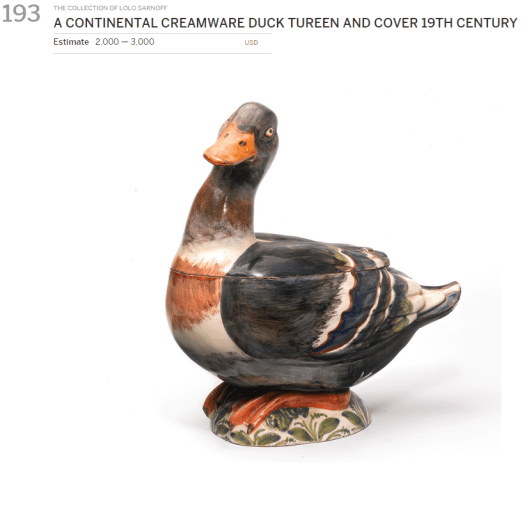
A Continental creamware duck tureen and cover.  Duck ways, no more hot soup, please.

A Continental creamware duck tureen and cover. Duck says, No soup for you.

Poor Strangled Parrot: I don’t think he can say much.

A Holitsch parrot-form jug and cover ca. 1760.

A Holitsch parrot-form jug and cover ca. 1760.

And these guys, described as playful dogs, look more like dyspeptic pugs to me.

A pair of Hochst fayence figures of seated pugs ca 1770.

A pair of Hochst fayence figures of seated pugs ca 1770.

It is amazing what people will make and buy (which delights me), and I’m certain that things I own would astonish and appall someone with different taste. But animal effigies always intrigue me, and (aside from Snarky Duck, our 19th century friend) figures like these could have graced the mantels and tables of the finest homes of the 19th century. It would have been a crowded and raucous world.

Here’s the whole catalog, should you care for some ormolu chairs or Aubusson drapes (which I did not know existed until today).

Share this:

  • Click to share on Facebook (Opens in new window) Facebook
  • Click to share on Pinterest (Opens in new window) Pinterest
  • Click to email a link to a friend (Opens in new window) Email
  • Click to share on X (Opens in new window) X
Like Loading...
← Older posts
Newer posts →

Archives

wordpress statistics

Creative Commons License
Kitty Calash blog by Kirsten Hammerstrom is licensed under a Creative Commons Attribution-NonCommercial-ShareAlike 4.0 International License.

Website Built with WordPress.com.

  • Subscribe Subscribed
    • Kitty Calash
    • Join 621 other subscribers
    • Already have a WordPress.com account? Log in now.
    • Kitty Calash
    • Subscribe Subscribed
    • Sign up
    • Log in
    • Report this content
    • View site in Reader
    • Manage subscriptions
    • Collapse this bar
 

Loading Comments...
 

    %d