• Home
  • Completed Costumes/Impressions
  • Emma and Her Dresses
  • Free Patterns and Instructions

Kitty Calash

~ Confessions of a Known Bonnet-Wearer

Kitty Calash

Category Archives: History

Smell Ya Later

16 Tuesday Jun 2015

Posted by kittycalash in Clothing, Fail, History, Laundry, Living History, Reenacting, Research

≈ 9 Comments

Tags

19th century, 19th century clothing, authenticity, clothes, Clothing, common people, historical clothing, historical myths, historical reenactors, history, interpretation, laundry, smell

Wool on hooks, cat on prowl

Wool on hooks, cat on prowl

One of the most common questions you get when you’re wearing historical clothing is the undying, “Aren’t you hot in those clothes?”

A heavily perspiring visitor wearing practically nothing usually asks this question, and the standard reply is a variation of “Aren’t you hot? In really warm weather, everyone is hot. But natural fibre clothing wicks the moisture from the skin and helps to keep you cool.” My internal response (vocalized only once) is, “Why yes, I am—and thank you for noticing. I work hard for this look.”

The “aren’t you hot” question is often followed by, “Wow, and they didn’t bathe, so everyone really smelled.” You try not to think of that Monty Python sketch about Britain’s deadliest joke program in WWII and move the conversation on to weekly laundering of body linen, multiple shifts, shirts, and under-drawers, and the general hygienic practices of the past.

What struck me after a sticky weekend is how much I noticed the smell of modern people.

two tailors and a tailoress

two tailors and a tailoress

My traveling companions and I bathed on Friday morning, drove for 7+ hours in muggy weather, slept in our clothes, wore wool, cotton and linen in rain and thick humidity, sweated in the tailor’s shop, slept in our clothes again, and spent another warm, close, day in muggy weather, including grave digging and pall bearing. But as feral as my shift may have been on Sunday night, I never smelled us.

Mr H reported that his wool trousers were really stinky in the rain, and I think his white Spencer was well-seasoned even before this weekend, but I didn’t notice anything. Mr S’s soaking greatcoat was whiffy only at extremely close range.

What I did smell were modern perfumes, deodorants, and hair products. Those linger around their wearers and trail behind them, sometimes eye-watering in their intensity. I encountered lingering perfume in a bathroom at the museum, and we were overwhelmed by cologne at diner Monday morning: wow, people must really smell now, of petrochemicals.

more wool

more wool

This is not to say that homeless people and sulky teenagers don’t smell of unwashed bodies and clothes, but people in the past may not have smelled quite as badly as we think. They washed, if not bathed (bathing being full immersion washing) and by changing body linen and airing their clothes, they kept reasonably clean.

There was plenty to whiff in the past: wastes of all kinds, stagnant bodies of water used as dumps, rotting foods and corpses. But I’m not convinced that we haven’t simply exchanged one set of smells for another of different origin and intensity.
Share this:

  • Share on Facebook (Opens in new window) Facebook
  • Share on Pinterest (Opens in new window) Pinterest
  • Email a link to a friend (Opens in new window) Email
  • Share on X (Opens in new window) X
Like Loading...

Frivolous Friday: A Feather Kerfluffle

22 Friday May 2015

Posted by kittycalash in Clothing, Events, Fail, Frivolous Friday, History, Living History, Reenacting, Research, Snark

≈ 3 Comments

Tags

18th century clothing, Costume, interpretation, millinery, Research, some snark

Miss Caroline Vernon by François-Xavier Vispré (c.1730 – London 1790). pastel on paper. ©National Trust Images/John Hammond.

I troll the interwebs in the fishing and not the under-the-bridge sense: there’s a lot to read out there. Still, I’ve kept one eye on the feather-and-flower kerfluffle that erupted in certain circles this week, but have been much more interested in documentation of one kind and another.

Miss Vernon is really my favorite image of feathers on hats, and I wish I could say that a) I have replicated this fabulous creation or b) that I have seen such a thing, but alas! I have not.

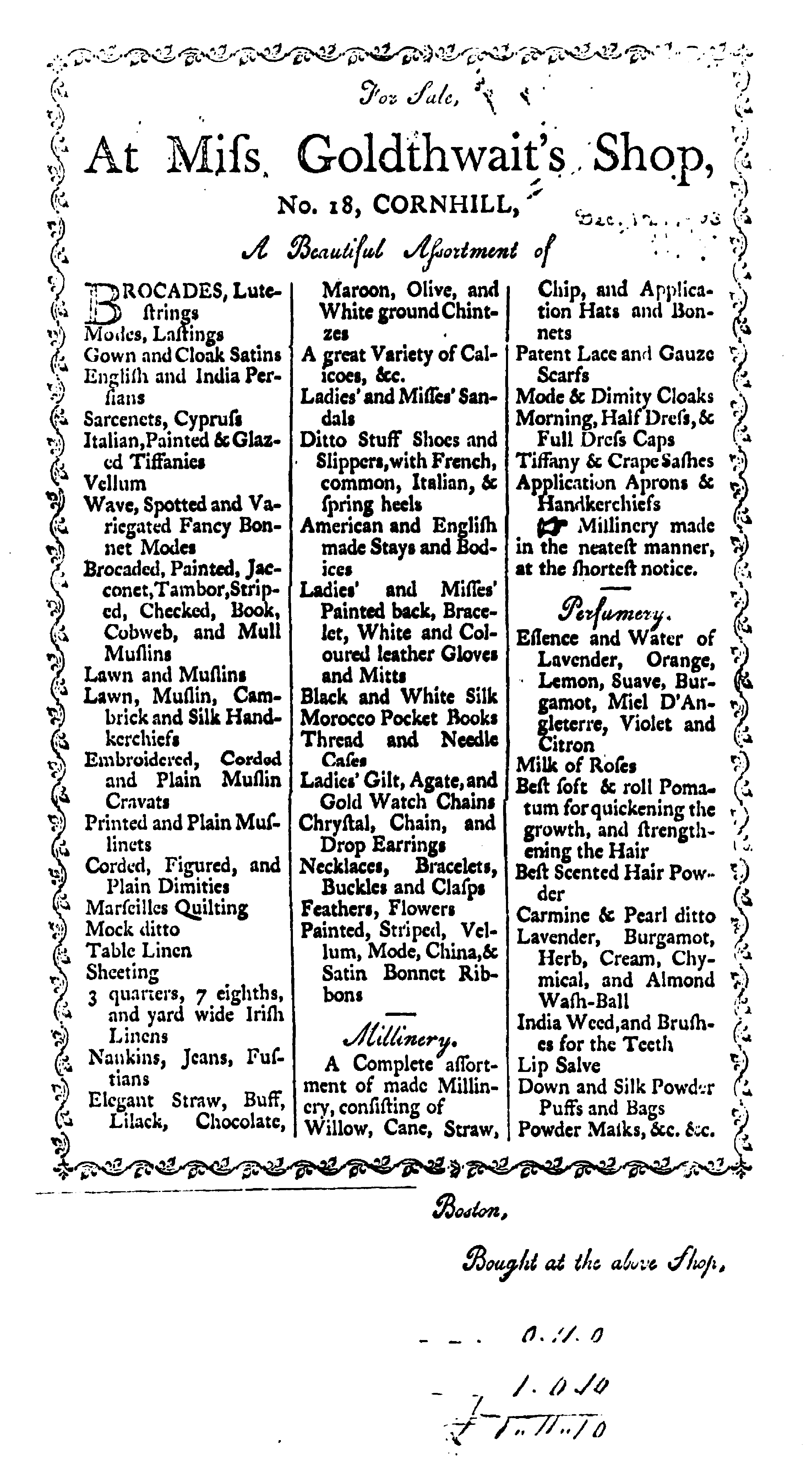
Still, scouring sundry repositories for tayloring manuals (more on that another time), I found this delightful broadside. We can’t use 1782 to document 1780, and no means of using any of these items is mentioned or implied. Still, there they are, those inflammatory terms: Feathers, Flowers.

1782 Broadside. Early American Imprints, Series 1, no. 45771  (filmed)

1782 Broadside. Early American Imprints, Series 1, no. 45771 (filmed)

To paraphrase Max, Let the wild rumpus continue.

Share this:

  • Share on Facebook (Opens in new window) Facebook
  • Share on Pinterest (Opens in new window) Pinterest
  • Email a link to a friend (Opens in new window) Email
  • Share on X (Opens in new window) X
Like Loading...

Can it!

13 Wednesday May 2015

Posted by kittycalash in Food, History, Living History, Research

≈ 3 Comments

Tags

18th century, 19th century, common people, cooking, food, food preservation, Museums, Research, resources

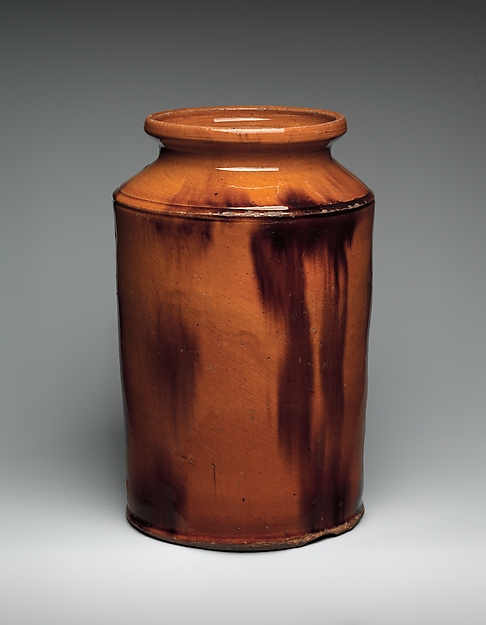
Jar. Paul Cushman, 1805-1833. Stoneware. 20032.475


Or, how do you keep your pickles?

At work, we have found that the road to history is paved with unexpected documents. As often happens, while looking for something completely different, m’colleague and I found two documents that might help illuminate the question of food preservation and storage in the 18th century.

Probate inventories: I read all the way through and had one of those d’oh! moments. Why? Because at the end, there’s all the kitchen stuff. Andirons, warming pans, roasting pans, kettles, firkins, kneading trays, piggins, barrels, casks, bottles. This is the stuff of cooking and keeping food.

There are clues in the receipts (recipes): Amelia Simmons gives a hint in the final instructions “To pickle or make Mangoes of Melons.”

“put all these proportionably into the melons, filling them up with mustard-seeds; then lay them in an earthen pot with the slit upwards, and take one part of mustard and two parts or vinegar, enough to cover them, pouring it upon them scalding hot and keep them close stopped.”

To pickle Barberries ends thusly:

“let it stand to cool and settle, then pour it clear into the glasses; in a little of the pickle, boil a little fennel; when cold, put a little bit at the top of the pot or glass, and cover it close with a bladder or leather.”

Jar, Thomas Commeraw.1797-1819. Stoneware. 18.95.13

To pickle cucumbers:

“put them into jars, stive them down close, and when cold, tie on a bladder and leather.”

To keep Green Peas till Christmas:

“have your bottles ready, fill them, cover the them with mutton suet fat when it is a little soft; fill the necks almost to the top, cork them, tie a bladder and a leather over them and set them in a dry cool place.”

If we tease these apart, we come up with some basics: preservation is done with pickling and “putting up” foodstuffs in pots, jars, bottles, and glasses. These are sealed with bladders, which are tied on; there is a sense in the first receipt that “close stopped” might imply corkage, but the repetition of bladders in the following receipts suggests otherwise for most of these; the entry for Emptins does state “will keep well cork’d in a bottle five or six weeks.”

Covered jar, Connecticut. Earthenware, 1800-1830. 18.27.1a, b

The other key? You’ve probably come across food packages that require storage in a “cool dry place,” and as we have cupboards in our kitchens, or perhaps in our pantries, early cooks also had pantries or butteries (say it but-trees). How’d they do it?

Jar,. Earthenware, 1800-1900. 18.95.11

Jar,. Earthenware, 1800-1900. 18.95.11

The 18th century house was not centrally heated. 18th century Providence residents recorded temperatures of 48 and 58 degrees indoors in the winter, in rooms with fireplaces. An unheated room or cellar would be cool, too; here in the Ocean State, maintaining dry conditions could be the bigger challenge.

What did those jars and pots look like? As you can see in this post, the Met has a few– fortunately, these appealed to collectors and wound up in museums. Closer to home for the original question, the Missouri History Museum has a collection with a number of jars. A cursory look showed dates in the 1830-1860 range, but the shares are consistent with those seen at the Met.

I’m not a food historian, and I don’t pretend to be, but as I think about answering a question, these are the steps I take. Recipes, collections, and then more looking. I just hadn’t remembered that probate inventories would list everything, so one might get a sense of a household’s contents and thus its eating and storage habits.

Share this:

  • Share on Facebook (Opens in new window) Facebook
  • Share on Pinterest (Opens in new window) Pinterest
  • Email a link to a friend (Opens in new window) Email
  • Share on X (Opens in new window) X
Like Loading...

By Jupiter!

24 Friday Apr 2015

Posted by kittycalash in History

≈ 1 Comment

Tags

astronomy, history, Ladd Observatory, personal, Providence, Rhode Island history

Ladd Observatory, 1898, back of the transit room.

Ladd Observatory, 1898, back of the transit room. Brown University image

On Tuesday, after a long hiatus, the local observatory was, at last, able to open to the public. Between the Snow on Monday theme of this winter, and the tendency to clouds and rain in what New England calls Spring, Ladd had been closed, and sending plaintive and apologetic emails, for weeks.

We walked up shortly after the 8:00 PM opening to find long lines, and a crowd as large or larger than the Halloween open house nights, when the staff and students turned the Observatory into a haunted house, neighborhood naughties swiped too much candy, and the roof deck was open for star gazing. Being Tiny Town, the Young Mr’s middle school art teacher was in line ahead of us with her young son and wife. To his credit, he did acknowledge her.

The telescope used by Benjamin West to observe the Transit of Venus, 1769

The telescope used by Benjamin West to observe the Transit of Venus, 1769. Brown University image.

There’s a long history of astronomical observation here, with a street named Transit for the 1769 Transit of Venus, observed by Benjamin West and other local notables.

We were happy to join the queue to look through the much larger telescope to see Jupiter, easily visible now.

It is really is a “wow!” moment, cooler even than the packages that make it here from India and astonish me. All that distance, light. How truly awesome the view through a telescope must have been in the 18th century, when we, collectively, knew less about the world and universe. How awesome it is now, to be able to see a world so far away, and to wonder what it is like.

Share this:

  • Share on Facebook (Opens in new window) Facebook
  • Share on Pinterest (Opens in new window) Pinterest
  • Email a link to a friend (Opens in new window) Email
  • Share on X (Opens in new window) X
Like Loading...

Wolf Whistle

08 Wednesday Apr 2015

Posted by kittycalash in History, Literature, Living History, TV Review

≈ 3 Comments

Tags

Anne Boleyn, art history, authenticity, Hilary Mantel, historic interiors, interpretation, Thomas Cromwell, TV Review, Wolf Hall

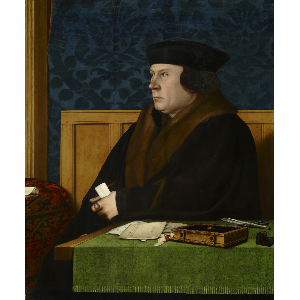
Thomas Cromwell, Hans Holbein the Younger. The Frick Collection,1915.1.76

Thomas Cromwell, Hans Holbein the Younger. The Frick Collection,1915.1.76

At last it has arrived: Wolf Hall. I waited, and did not use a proxy server to watch it early. Just as well that I watch PBS online as I have, thus far, watched the first episode three times.

At last I can understand people’s enthusiasm for historical programs some of us seethe at and cannot watch: my knowledge of the Tudors and their material world is limited enough that I am captivated and not annoyed (except by Anne Boleyn’s wrinkled silk satin bodice, which is striking in its puckers) and I read the books when they came out, and have thus forgotten enough of the details to be merely annoyed and not enraged at changes. (Other, real, critics have caught the language changes in the scene with Wolsey; Mantel is better, of course.)

The third Wolf-watching was with Mr S, who was suitably impressed by the low-light filming. As a former photographer who did a lot of night photography, improper and unbelievable lighting in film does cause an outbreak of caustic commentary. Not this time (he merely noted the fill light on Liz Cromwell’s face in one scene). With 20,000 pounds spent on candles, the BBC did this one right– and lucky for them the advance in camera technology.

But forgot the astronomical cost of all those tapers, that’s not the point: the point is what was believable and how the staging and lighting were used. I believed Wolf Hall all the more because of the low light, indoors and out, matching the time of day. I know how dim it is to light only with candles, and what a pain it is to make them, and how expensive. Light is money, whether you’re paying Ameren, National Grid, or the candlestick maker.

Aside from Hilary Mantel’s brilliant stories and all those candles, what makes this Wolf Hall good television? You know what I’m going to say: the authenticity. No, there are no Tudor accents, late or otherwise; these folks use our vernacular. And excellent arguments can be had about the historical accuracy of Mantel’s characters.

There are other arguments about the material details:

“The dull palette used – presumably in conscious contrast to The Tudors – created an ambience which, at worst, was lacklustre or, at best, homely. And it is that homeliness that concerns me most.

The homely is unthreatening. So, we are invited to view a ‘Tudor world’ as we know it or, rather, as we would like it to be. For instance, I was struck by how classless the society was – social gradation seemed to have disappeared both in the interactions and the interiors. There was little sense (as there is in the novels) of the heavy distaste for a man of such lowly birth as Cromwell’s; there was limited hauteur in a Norfolk or, indeed, the king. Meanwhile, the buildings which were home to Cromwell – still, at this point a lawyer in Wolsey’s service – seemed to lack none of the late-medieval conveniences afforded to the higher born and bettered housed. This is a world which has been domesticated for us so that it is tame, familiar and quintessentially English.”

Anne Boleyn
by Unknown artist
oil on panel, late 16th century (circa 1533-1536)
21 3/8 in. x 16 3/8 in. (543 mm x 416 mm)
Purchased, 1882. NPG 668 [Britain}

I will say that I was struck not just by the cleanliness of everything in an age before detergents (the blacksmith’s yard is remarkably pristine) and the amount of stuff in Cromwell’s house, but also by the softness of class lines. An argument could be made that depicting that much background detail would distract from the larger story, that of Cromwell and Anne and Thomas More, and the dissolution of the Catholic church in England.*

I know Cromwell ended up with riches but on the BBC he seemed to start ahead of where I thought he was at the start of the novel, mercenary and mercantile background aside.

Still: the spirit of the story and of Mantel’s Cromwell seem well-drawn here, and that’s what makes the difference between a series of living Holbeins and a gripping tale. That’s also what makes the difference between museum mannequins and costumed interpreters: emotional authenticity.

No: you cannot get costume and material culture wrong and still claim emotional authenticity as your defense. But the factor that makes a good event or site great is the believability of the characters, and that means more than a lecture on fine details. It means understanding the past, and even admitting what we don’t understand, and seek still to learn.

* Here’s an interesting and tough take on Cromwell’s work destroying the church.

Share this:

  • Share on Facebook (Opens in new window) Facebook
  • Share on Pinterest (Opens in new window) Pinterest
  • Email a link to a friend (Opens in new window) Email
  • Share on X (Opens in new window) X
Like Loading...
← Older posts
Newer posts →

Archives

wordpress statistics

Creative Commons License
Kitty Calash blog by Kirsten Hammerstrom is licensed under a Creative Commons Attribution-NonCommercial-ShareAlike 4.0 International License.

Website Built with WordPress.com.

  • Subscribe Subscribed
    • Kitty Calash
    • Join 621 other subscribers
    • Already have a WordPress.com account? Log in now.
    • Kitty Calash
    • Subscribe Subscribed
    • Sign up
    • Log in
    • Report this content
    • View site in Reader
    • Manage subscriptions
    • Collapse this bar
 

Loading Comments...
 

    %d