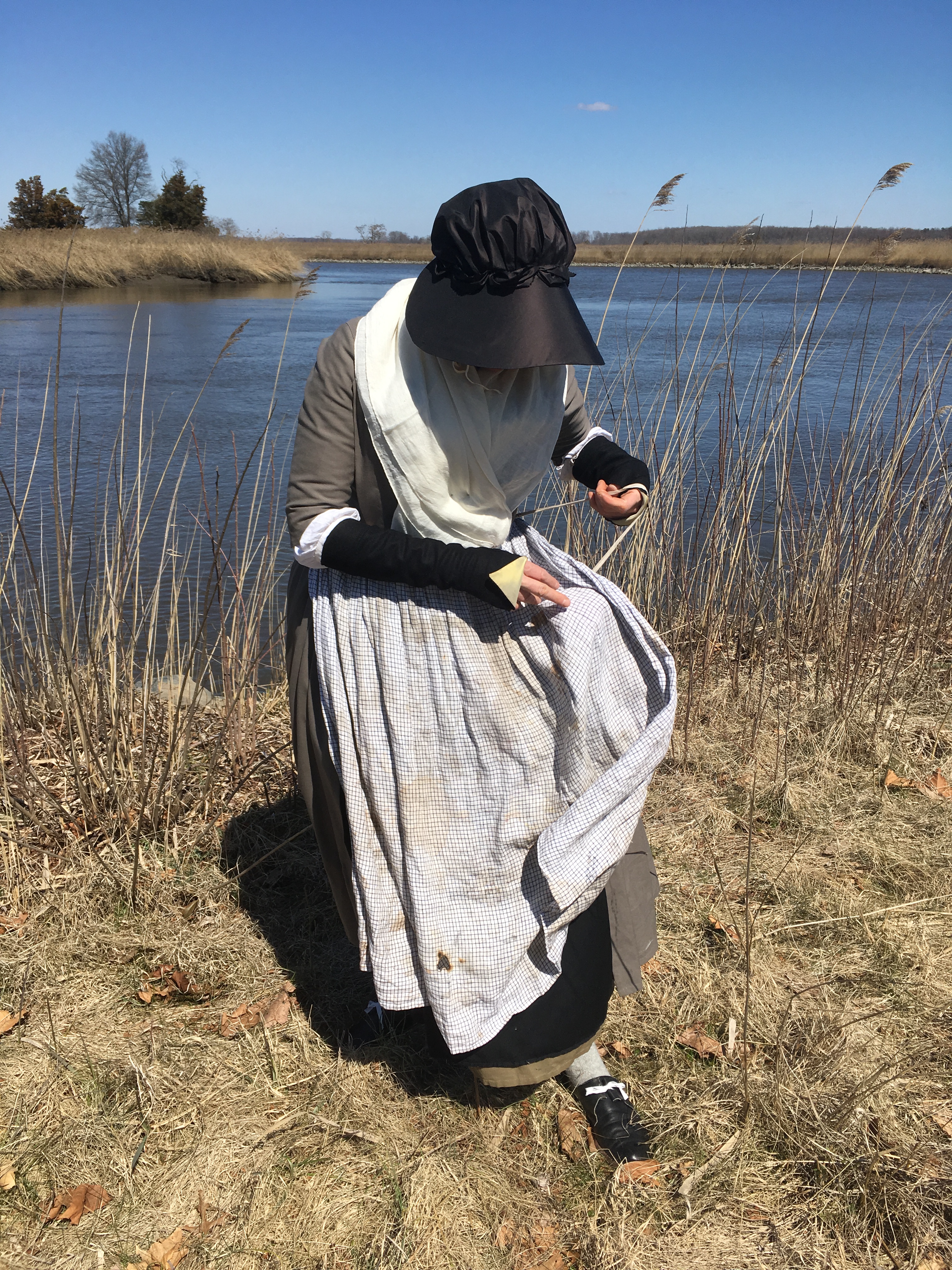
• Home
  • Completed Costumes/Impressions
  • Emma and Her Dresses
  • Free Patterns and Instructions

Kitty Calash

~ Confessions of a Known Bonnet-Wearer

Kitty Calash

Category Archives: Reenacting

In Defense of Bad History

19 Thursday Jul 2018

Posted by kittycalash in Events, Living History, Reenacting

≈ 3 Comments

Tags

cleaning, difficult interpretations, first person interpretation, interpretation, servant girls, servants

A City Shower. Oil on canvas by Edward Penny, 1764. Museum of London

Not inaccurate or badly researched history, of course, but the “Mad, Bad, and Dangerous to Know” kind of history.

Without wading into the murky waters of canceled reenactments (not my time periods– yet!) and the politicization of historical facts, I advocate the recreation of the “bad” people of history. Not the Hitlers and Himmlers and Stalins and Amins, but the everyday bad. The lazy. The feckless. The annoyed. The I’m-just-now-waking-up-to-the-bad-choice-I-made.
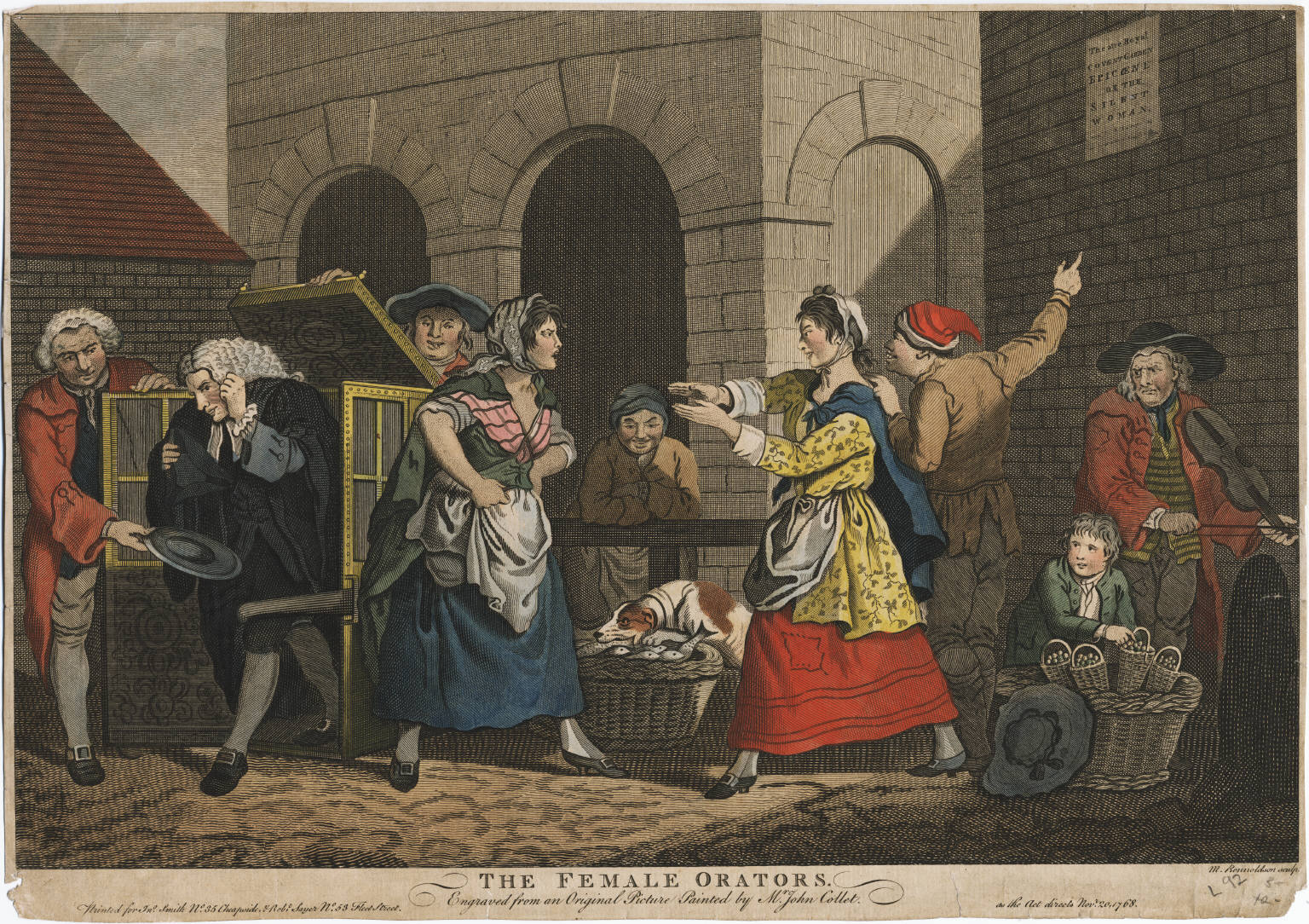
The Female Orators. Printed for Jno. Smith, No. 35 Cheapside, & Robt. Sayer, No. 53 Fleet Street, as the act directs, Novr. 20, 1768.

I think about these people– the ones who slack off while working, the ones who steal shirts, assault officers, throw bones out of barracks doors— periodically, especially when an event is being planned. It’s not that I don’t want to work, mind you: I enjoy working, even the cleaning and scrubbing of history. But it strikes me, especially in summer, that we approach the recreation of history with such excellent intentions. We will Do Our Best. We will Lend A Hand. We will be Always Cheerful.

Why? Why do we not represent the people who shirked? Why do we not represent the people who resented being told what to do, and when? Why do we not take into account our industrialized notions of labor (shifts, clocks, production levels( when we step backwards into a period where there was no factory whistle to set the pace?

painting of a shabbyily dressed family in a decaying room

The Miseries of Idleness. Oil on canvas by George Morland ca 1788. National Gallery of Scotland, NG 1836. Presented by Alexander and Lady Margaret Shaw, later Lord and Lady Craigmyle 1935

Granted, within a military environment, there are rules, regulations, clocks, and enforcers. But I cannot help thinking that the pace of labor, the speed and drive with which people tackled tasks, was different one hundred, two hundred, three hundred, years ago. Of course there were strivers and doers: the American army in the Revolution was populated by adherents to piety and discipline. But it’s clear from the orderly books that there were miscreants and slackers, too.

painting of a well dressed family in a cozy farm house kitchen

The Comforts of Industry. Oil on canvas by George Morland, before 1790. National Gallery of Scotland, NG 1835. Presented by Alexander and Lady Margaret Shaw, later Lord and Lady Craigmyle 1935

And I’m not saying everyone should be a slacker, but you know as well as I do that every workplace today has a slacker or two: the long-term federal employee who watches football at work; the retail clerk whose breaks last a little longer every time; the shelver in the library who catches a nap whilst shelf reading. There are consequences (usually) for those (in)actions, and that’s kind of the point. The slattern and the slacker of history throw into higher relief the purpose of the discipline an army (or housekeeper or master cabinet maker) is trying to maintain. When we all strive to do our best, we lose the depth of interpretation that doing “bad” history can provide.
Share this:

  • Click to share on Facebook (Opens in new window) Facebook
  • Click to share on Pinterest (Opens in new window) Pinterest
  • Click to email a link to a friend (Opens in new window) Email
  • Click to share on X (Opens in new window) X
Like Loading...

Living Deliberately

08 Tuesday May 2018

Posted by kittycalash in Living History, personal, Philosophy, Reenacting

≈ 7 Comments

Tags

domestic life, historic houses, interpretation, living history, personal, philosophy

WCD: The Original

A friend of mine recently wrote about replicating the domestic life of the past (specifically the 18th century) and how much meaning that had for her.

Being so deeply embedded in the rhythms of life there, it became my home in a very real sense that has never left me.

I read that quickly, and what I read was that the place she had spent so much time was home to her because the place never left her– she carried its rhythms and seasons within her. Perhaps that isn’t quite what she meant, but that’s the risk of writing: the reader reads what they need to.

It made me think of home, and of living deliberately, and of a very bad year I had a long time ago, before I even imagined doing living history, when I thought I would spend my life making new things, like cities and buildings. (This makes me think of an album I listened to at the time, More Songs About Buildings and Food, which seemed all the more important because I’d gone to RISD, too.

Food, in a Building, in Rhode Island

The year I turned 25 was particularly bad not because a man broke my heart, though that didn’t help, and not because I had a miscarriage, though that was the catalyst that led to the man breaking my heart, but because the miscarriage shattered my sense of purpose and self. Somehow, everything that I had ever wanted to be — a sculptor, an architect, a writer– was gone, and I didn’t know what to do or how to be. (Read The Year of Magical Thinking if you want a well-written take on this kind of loss.) I didn’t know what to do next, but the man who eventually broke my heart gave me a book to help me figure it out: Chop Wood, Carry Water

Chopping wood.

Two years ago, I wrote a piece called Zen and the Art of Living History, in which I extolled the virtue of the everyday: Embrace the everyday, bring everyone back into history. Since then, I’ve thought more about how history and historic house museums can be a catalyst for change, how domestic sites can create “homes for history,” where we can have the difficult conversations that must be had to make the change I think we need as a nation, and as humans. These changes are happening, slowly, in museums and at historic sites, but even at the personal level, there’s meaning and change to be had through the business of “doing history.”

I suspect that among the reasons people really enjoy immersive, civilian (non-musket) events is because the work brings them into the rhythms of the natural world in a way that industrial life precludes or even prohibits. Consciously or not, interpreting the domestic life of the past forces us into mindfulness, into being as much as or more than doing. That’s the point of “chop wood, carry water:” to live deliberately. To cook without a clock, with only the color of the coals and the smell of the food to guide you; to notice the changing light because, as it fades, you must act to create light; to find the flaws and shifts in a floor as you scrub it, because there’s no machine between you, just your hands and a brush or a mop: all these tasks force you to be in the moment, noticing your environment, noticing yourself. You. A corporeal presence in a material world. How does that feel, moment to moment? Physically, emotionally: the challenge of living in the past is to live an unmediated life.

To go back to basics the way we do with civilian or domestic-site based living history brings us back to our base: we face our physical needs and the challenge of meeting them. We face emotional tests that help us imagine how people in the past endured– I often wonder how everyday people coped with “melancholia,” grief, and disappointment– and help us endure. It brings us home to ourselves, to our individual histories and our shared histories, and that’s what really matters. The connection to the everyday that we experience in a place in time puts us in a continuum with the people of the past, and gives us a place to be, a thing to do, a meaning. And that is what every one of us needs.

Share this:

  • Click to share on Facebook (Opens in new window) Facebook
  • Click to share on Pinterest (Opens in new window) Pinterest
  • Click to email a link to a friend (Opens in new window) Email
  • Click to share on X (Opens in new window) X
Like Loading...

Petty is as Petty Does

20 Friday Apr 2018

Posted by kittycalash in Events, History, Living History, Reenacting

≈ 2 Comments

Tags

common people, common soldier, Fort Dobbs, North Carolina, petty sutler, Provincials, women's work

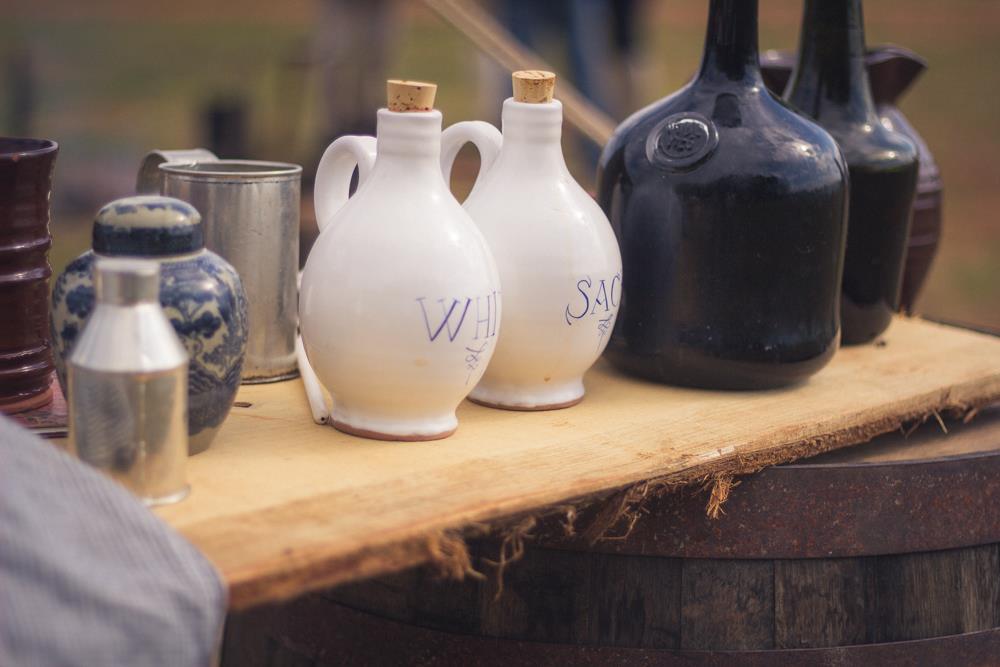
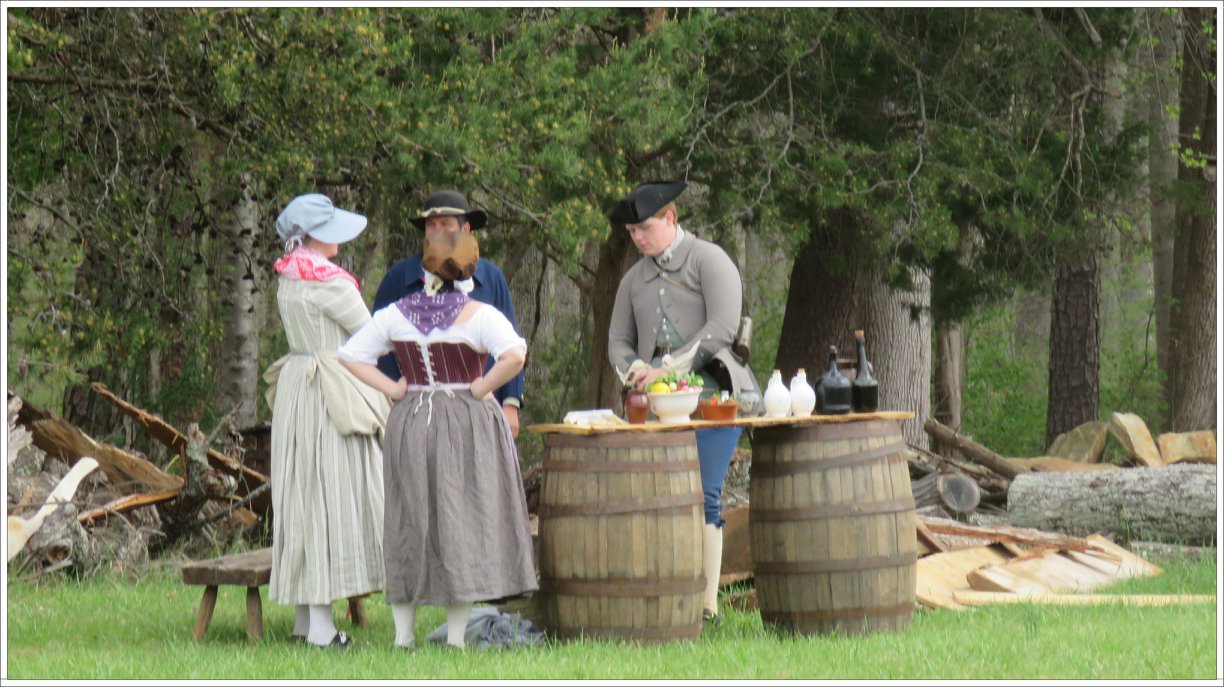
It was a simple set up: two barrels, a board, my frail, and me. (I could really use a wheelbarrow, and a rain deck. At least the rain deck is something I can make myself.) But this was more than adequate to sell luxury goods (rum, whiskey, radishes, and ginger candy) to the soldiers at Fort Dobbs.

I didn’t think it was hot– which may be thanks to that nifty new checked linen shade bonnet– but it was. Have I forgotten how to take care of myself outdoors in warm weather? Perhaps because I’ve spent so much more time lately on winter events, I’ve let the “drink all the water” mantra slide. It’s clearly time to revive the summer skills, with Monmouth not all that far away.

Share this:

  • Click to share on Facebook (Opens in new window) Facebook
  • Click to share on Pinterest (Opens in new window) Pinterest
  • Click to email a link to a friend (Opens in new window) Email
  • Click to share on X (Opens in new window) X
Like Loading...

Mending: Check

18 Wednesday Apr 2018

Posted by kittycalash in Clothing, History, Living History, Reenacting

≈ 4 Comments

Tags

18th century clothes, apron, checks, common dress, Fort Dobbs, linen, mending, North Carolina, War for Empire


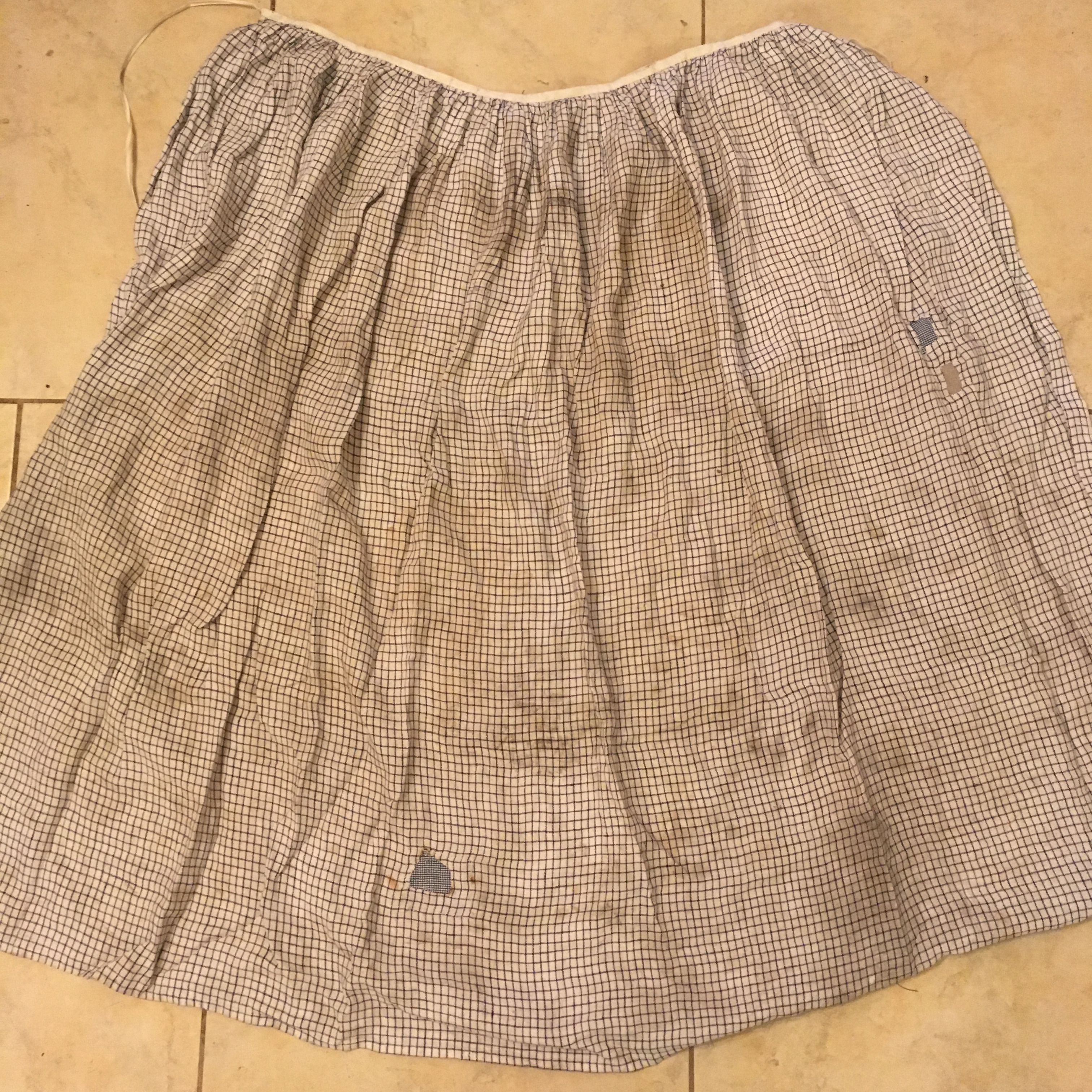
My poor old apron. It’s almost– but not quite– the firstarticle of historical clothing I made. (The first was a shift. Infrastructure and fundamentals, people.) It acquired some new wear (actual holes!) in New Jersey, and required mending.

First, it needed to be washed. I hadn’t taken a objective look at my apron in a while, but after we got home from Salem, I knew I had to mend it, which meant washing.

IMG_3904
IMG_3908

Reader, it smelled.

You get used to smells, and even enjoy them: wet wool, gunpowder, wood smoke. And then there’s tallow. I’ve never gotten used to the smell of tallow, and I don’t remember when this apron encountered hard fat, but the odor is unmistakable.

So is the water.

This past weekend, I had a chance to mend this favorite apron while I peddled luxury goods at Fort Dobbs’ War for Empire event.

IMG_3966
IMG_3967

Although I have a sturdy plain linen apron, I’m fond of checks, and of the hand this apron has achieved after much wearing and some washing.

It will never be really clean again, but for now, the apron is mended and back in rotation.

Share this:

  • Click to share on Facebook (Opens in new window) Facebook
  • Click to share on Pinterest (Opens in new window) Pinterest
  • Click to email a link to a friend (Opens in new window) Email
  • Click to share on X (Opens in new window) X
Like Loading...

Sandby in Salem (New Jersey)

01 Sunday Apr 2018

Posted by kittycalash in Events, History, Living History, Reenacting

≈ 9 Comments

Tags

common people, Hancock House, HM 17th Regiment, interpretation, living history, New Jersey

The Kitchen at Sandpit Gate (detail). Watercolor on paper by Paul Sandby 1754. Royal Collection Trust, RCIN 914331

The best times are always those when we are the least self-conscious– not that we can necessarily choose those times. Often they simply happen to us, but if we are lucky enough, we will notice, or someone else will record those moments for us. Last weekend, without even meaning to, we came as close as I may ever hope to get to recreating Sandby images of the Sandpit Gate kitchen.

Mistress F commanded the kitchen: I served as her reasonably able scullion, and, with assistance from Drunk Tailor and the company of the B’s, we managed to produce enough food for several dozen people.


IMG_3869
IMG_3866

(I baked the pound cake at home, but the egg and onion pies were made on site. I lack historically correct baking apparatus aside from one pie plate.) Cooking in the cabin at Hancock House reminded me of good times long ago— and not so long ago–and how much I enjoyed throwing refuse out a window, and using a soapstone sink. The weekend also brought to mind “show, don’t tell” as it applies to interpretation, and made me think again about how to create more immersive educational experiences for visitors, without becoming ritualistic.

IMG_3873
IMG_3878

There’s not much time to think those esoteric, grad-school-seminar thoughts when you’re in the midst of cooking, and that can actually be a relief. Instead, better to think of the light, and the landscape, and the time remaining until a pie is cooked through.

IMG_3871
At Sandpit Gate circa 1752. Royal Collection Trust, RCIN 914328


The landscape and the light: redemptive, all that space, the blue sky and the grasses. I thought of The Witch of Blackbird Pond, which I haven’t read in decades, for in some ways, the coast of New Jersey resembles the coast of Connecticut. It’s one of the first historical novels I remember reading– it is probably one reason I have ended up doing the work I do, and spending as much time as I did in New England. (You can read it here.) It’s not brilliant literature, and it was nearly two decades old when I read it, but it was certainly memorable.

Photos courtesy of HM 17th Regiment, Al Pochek, and Cape May Wren Photography.

Share this:

  • Click to share on Facebook (Opens in new window) Facebook
  • Click to share on Pinterest (Opens in new window) Pinterest
  • Click to email a link to a friend (Opens in new window) Email
  • Click to share on X (Opens in new window) X
Like Loading...
← Older posts
Newer posts →

Archives

wordpress statistics

Creative Commons License
Kitty Calash blog by Kirsten Hammerstrom is licensed under a Creative Commons Attribution-NonCommercial-ShareAlike 4.0 International License.

Website Built with WordPress.com.

  • Subscribe Subscribed
    • Kitty Calash
    • Join 621 other subscribers
    • Already have a WordPress.com account? Log in now.
    • Kitty Calash
    • Subscribe Subscribed
    • Sign up
    • Log in
    • Report this content
    • View site in Reader
    • Manage subscriptions
    • Collapse this bar
 

Loading Comments...
 

    %d