• Home
  • Completed Costumes/Impressions
  • Emma and Her Dresses
  • Free Patterns and Instructions

Kitty Calash

~ Confessions of a Known Bonnet-Wearer

Kitty Calash

Tag Archives: resources

More historical receipts online

22 Friday Aug 2014

Posted by kittycalash in Food, History, Research

≈ Comments Off on More historical receipts online

Tags

American Antiquarian Society, cooking, hearth cooking, history, New England, recipe, recipes, resources

server

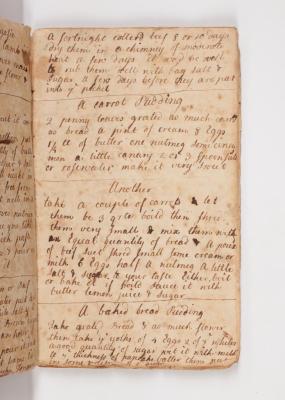
Thanks to the American Antiquarian Society and a grant from the Pine Tree Foundation, you can now access digitized versions of the AAS’s manuscript recipe/receipt/cookery books. Pretty cool, right? Because I know you want to experiment with every variation possible of carrot pudding. (Mr S got a stomachache just now and doesn’t know why…)

I first read about this in a twitter link to the MassLive article, and I’d like to point out up front that you go to the AAS GIGI portal and search in the box for Pine Tree Foundation. That’s the quickest way to access the books. I also searched for cookery or recipe and ended up in some interesting places with carrot pudding recipes.

One of the AAS staff members has been trying out the various recipes, and blogging about them here. There appear to be manuscript books as early as the late 17th or early 18th century, which is very cool (and still about puddings!).


Share this:

  • Share on Facebook (Opens in new window) Facebook
  • Share on Pinterest (Opens in new window) Pinterest
  • Email a link to a friend (Opens in new window) Email
  • Share on X (Opens in new window) X
Like Loading...

When in Doubt, Bake

14 Thursday Aug 2014

Posted by kittycalash in Food, History, Living History, Reenacting

≈ 3 Comments

Tags

10th Massachusetts, Amelia Simmons, authenticity, Diet Bread, food, history, living history, Making Things, Reenacting, Research, resources

There was a Very Bad Summer when much was awry at work, the flat we were living in was for sale, my father was moving far away, and the Howling Assistant was sick. In response, I baked.

Things are roiling in the world of late, both at work and in the wider world (I am from St. Louis, and cannot ignore the news from Ferguson), and so again, I turned to baking. Eggs, flour, sugar: what could be sweeter?

A friend tried Amelia Simmons‘ Diet bread a few years ago, with limited success, but the simplicity of the receipt has always appealed to me.

recipe for diet bread

Diet Bread

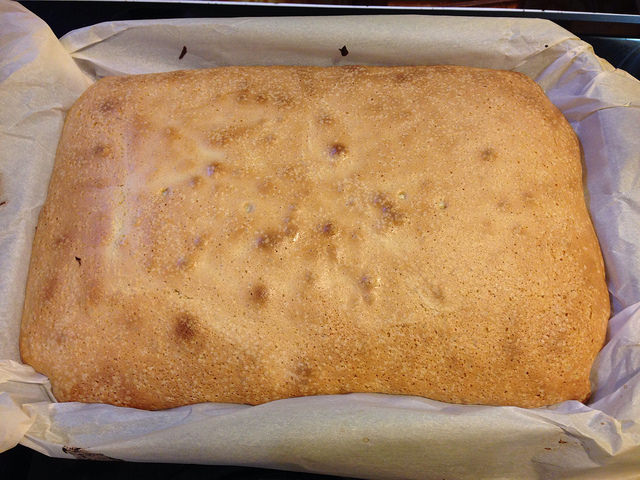
Once again, I risked early morning baking, but I think this has turned out OK. I had to leave for work before it was cool enough to really eat, but a corner was delicious! The intense amount of sugar– a full pound!– was intimidating, the rose water curious when tested, but combined with the cinnamon, seems to have a pleasant and slightly exotic flavour.*

The simplicity of the ingredients was encouraging, but I probably would not have jumped into this had I not found someone else had leaped before me.

Kathleen Gudmundsson on the Historical Cooking Project blog tackled diet bread in May. From her work, I took the tip to use only six eggs.

Following Gudmundsson thoughts at the end of her entry, I beat the egg yolks separately, intending to add the stiff-peaked whites at the end. Half way through adding the flour, the batter became extremely stiff and sticky, and nearly unmanageable, so I beat a whole seventh egg and added that, followed by a little flour and 1/4 of the beaten whites. I alternated flour and egg whites, finishing with egg whites, and found the mixture retained pliability and texture.

Like Gudmundsson, I also lined a glass pan with parchment paper, but my (electric, rental-quality) oven runs a little slow, so baked for 30 minutes at 400F.

diet cake made of sugar, flour and eggs

Diet Cake, from American Cookery by Amelia Simmons.

The results look like hers, and since she thought the cake was as good or better three days after she’d made it, my hopes for an interesting dessert remain intact.

The other, less distracting, project I’ve taken on this week is a set of bags for coffee and food stuffs.

handsewn linen bags in white and check

Linen bags for foodstuffs

After all, there are no ziplock bags or plastic tubs in 1777, and full complement of graduated tin canisters seems unlikely to plummet into my lap anytime soon. The two slender bags are for coffee: tied at the neck, they’ll hold enough for cold coffee and fit the slender tin coffee pot we have, sparing the larger cloths, wrangling grounds, and giving us clear, cold, caffeine. Another is for flour, one could be for oatmeal, another for sugar. In any case, things to eat are getting wrangled in a way that can remain visible in camp.

I know: a trifle mad, but the time I spend now makes living in public so much easier when there’s less to hide. And yes, before you ask: that will be a real fire.

*Fellow eaters, you’ve been warned.

Share this:

  • Share on Facebook (Opens in new window) Facebook
  • Share on Pinterest (Opens in new window) Pinterest
  • Email a link to a friend (Opens in new window) Email
  • Share on X (Opens in new window) X
Like Loading...

Measure for Measure

12 Tuesday Aug 2014

Posted by kittycalash in Fail, Food, History, Living History, Reenacting, Research

≈ 5 Comments

Tags

10th Massachusetts, 18th century, authenticity, common people, cooking, experimental archaeology, food, living history, Research, resources, Revolutionary War

or, a boiled Flour Pudding in two tries.

14699830917_63d67ffee0_b
Tablespoons and Cups

Alone in my Ossining ca. 1962 kitchen, I decided to tackle Amelia Simmons. The first task seemed to be to establish measurements, and then proportions, so I took stock of the tools and containers I would have in a typical camp. Spoon, mug, half-pint: these are plausible items, though we have tin cups that hold exactly 8 ounces, so the measure is unnecessary. The spoon was cast from a 1780 mold, so it seemed like a reasonable place to start for “how much is a spoon?” It will hold exactly one tablespoon if you scrape it flat across or are measuring liquid. Handy to know.

Next, I checked the recipe again.

A boiled Flour Pudding.
One quart milk, 9 eggs, 7 spoons flour, a little salt, put into a strong cloth and boiled three quarters of an hour.

This is not a popular receipt, so you won’t find it on History is Served, nor will you find this version on other popular sites; you can find a boiled pudding with suet, but that’s not what I’m after: I’m after a receipt that starts with a portion of the ration of flour soldiers received, and adds only eggs, milk, and available seasonings.

You have to remember that Simmons corrected the 7 spoons to 9 spoons of flour and increased the boiling time; you also have to remember that eggs were smaller then.
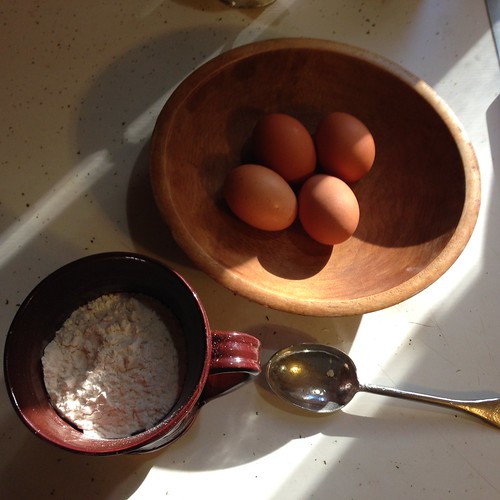
redware mug and wooden bowl with egggs

Halfsies.

I thought I’d try a half receipt first. There are no directions as we think of them– American Cookery sometimes has that “put your lips together and blow” feeling–but this is not too complex. The eggs and milk must be beaten together, and then combined with the flour. For this first attempt, I got it a bit backwards, adding the spices to the eggs, which I beat in the large wooden bowl.

That left me scooping the egg-and-milk with the measure into the flour, which I had in a smaller wooden bowl, remembering too late the method for scones.

egg and flour mixing in wooden bowls

Fuzzy photo, fuzzy logic.

And then it was really too late: I added just too much egg-and-milk, and it became more like batter than dough. This was not correct, and I knew it, but I didn’t dump it and I didn’t add more flour. Now it’s clear that 7:00 AM is not my best time for baking experiments (it was also quite early the day I made gingerbread without any eggs).
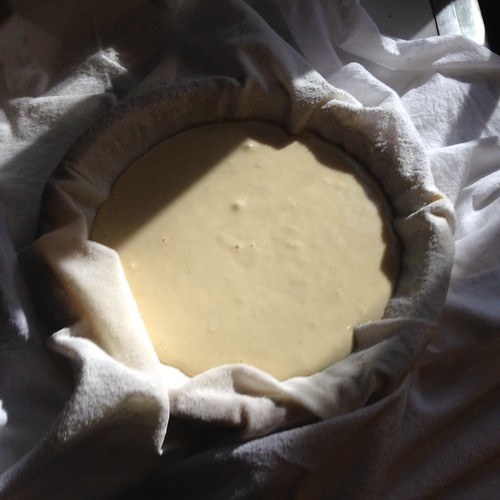
pudding mixture in cloth

Well, it took a decent photo.

I buttered and floured a cloth anyway, and poured the mixture into it. After tying the gathered neck of the cloth with string, I boiled the whole business for 45 minutes.

I did not take a photo of the mess I found when I unwrapped the bag. It wasn’t pretty, and it was clear that while some portions of the pudding were ‘done,’ they constituted about 5% of the whole, which otherwise resembled steaming cottage cheese. Really, truly, awful.

But from time to time I am undeterred by my failures, and instead of consigning the mess to the trash and sticking with store-bought bread*, I rinsed the cloth and regrouped.

This time, I went smaller: 1 cup of flour (about five spoons), two eggs, and a scant two spoons of milk. I also managed to put the flour, salt, and allspice in the regular sized wooden bowl, crack the eggs into the mug and beat them there with the milk. When I mixed the egg-and-milk into the flour, the mixture was far too stiff, so I added more milk, but kept the mixture stiff.
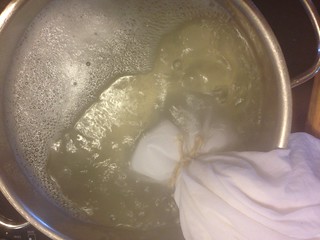
pudding bag in boiling water

Patience is required for pudding

Once more into the buttered cloth, once more into the water, once more boiling for three-quarters of an hour. This time was better, though. The results actually looked and tasted much more like what I’ve had before.
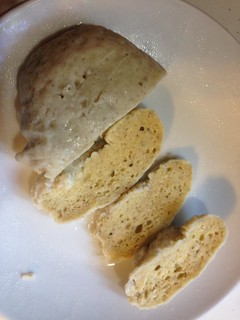
sliced boiled flour pudding

A boiled Flour Pudding

So, where does this leave me? Knowing that I’m the only documented fan of this in the regiment, I’ll stick with the smaller receipt: five spoons flour; two eggs, beaten; and three or four spoons of milk.

My plan is to boil this in whatever stew or stew-like device we have for supper on Saturday, and then eat it sliced with the stew. The plain flour-egg-milk mixture will pick up some of the flavors of the stew (think dumplings), but these could also have been served with a sauce, if made at home.

I’m also going to go back to the Experienced English Housekeeper, and see what she has to say.

* Years in ceramics classes taught me to knead all the air out of plastic material, so my bread tends to be better for building than eating. Even the dog wouldn’t eat the biscuits I made while in grad school…

Share this:

  • Share on Facebook (Opens in new window) Facebook
  • Share on Pinterest (Opens in new window) Pinterest
  • Email a link to a friend (Opens in new window) Email
  • Share on X (Opens in new window) X
Like Loading...

Hand-woven Linens by Subscription

06 Wednesday Aug 2014

Posted by kittycalash in Clothing, Living History, Making Things

≈ 2 Comments

Tags

18th century clothes, authenticity, Costume, dress, fashion, interpretation, Justin Squizzero, living history, Making Things, resources, sewing, style

In the few short years I have been doing costumed interpretation and living history, I have made three shifts and four shirts and am making up a fifth shirt, with a possible sixth needing to be made, as well as four aprons. I’m not crazy, I just sew that way…for three people (one still growing) who dress for the decades between 1763 and 1812.

linen sample

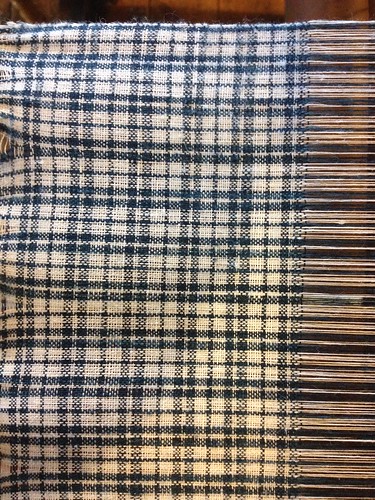
Hand-woven linen: the top edge is the selvedge

There are several annoying factors when sewing historic clothing with modern materials– mostly that the modern materials aren’t quite right, and can be quite wrong. As Sharon Burnston explains on her website, much of this has to do with selvedges— which are not hard, and rarely tucked, now. The other trouble is width: many fabrics now come 54 to 60 inches wide, which means that you have to cut them down when making shift.

There is a solution: hand-woven, period-correct linen, available now by subscription from Justin Squizzero [email to order: justin(dot)levi(at)ymail(dot) com].

Mr Squizzero will weave both plain and check to the width you want: 3/4 (27″), 7/8 (31.5″) and yard (36″) widths, perfectly correct for period clothing.

Hand-woven checked linen

Hand-woven checked linen

The prices are $130/yard for plain bleached, $160/yard for checks– and what checks! Indigo dyed blue and white check in a pattern documented to New England at the turn of the 19th century? Oh, yes, please: I must save my allowance and sew only from my stash.

Although we debated fabric weights this past weekend, here’s what I think, and have found through wearing: shirts for soldiers and artisans– but not the elite–can certainly be made of the white and the check; I would made a shift from the white, but I prefer how my heavier shift body feels and behaves under stays. The check would be ideal, too, for an apron, which would require only one yard.

If you’re wearing a coat made from $120/yard wool dyed with documented colors, shouldn’t you wear the most correct shirt possible underneath? Entirely hand-woven (and hand-dyed in the case of the checks), you’re buying art– but isn’t that what you’re making and creating when you hand-sew your clothes and step into the past?

Share this:

  • Share on Facebook (Opens in new window) Facebook
  • Share on Pinterest (Opens in new window) Pinterest
  • Email a link to a friend (Opens in new window) Email
  • Share on X (Opens in new window) X
Like Loading...

The Taylors’ Instructor

25 Wednesday Jun 2014

Posted by kittycalash in Clothing, History, Living History, Making Things, Reenacting, Research

≈ 4 Comments

Tags

books, Federal style, menswear, Regency, Research, resources, tailcoat

Title page, The Taylors' Instructor

Title page, The Taylors’ Instructor

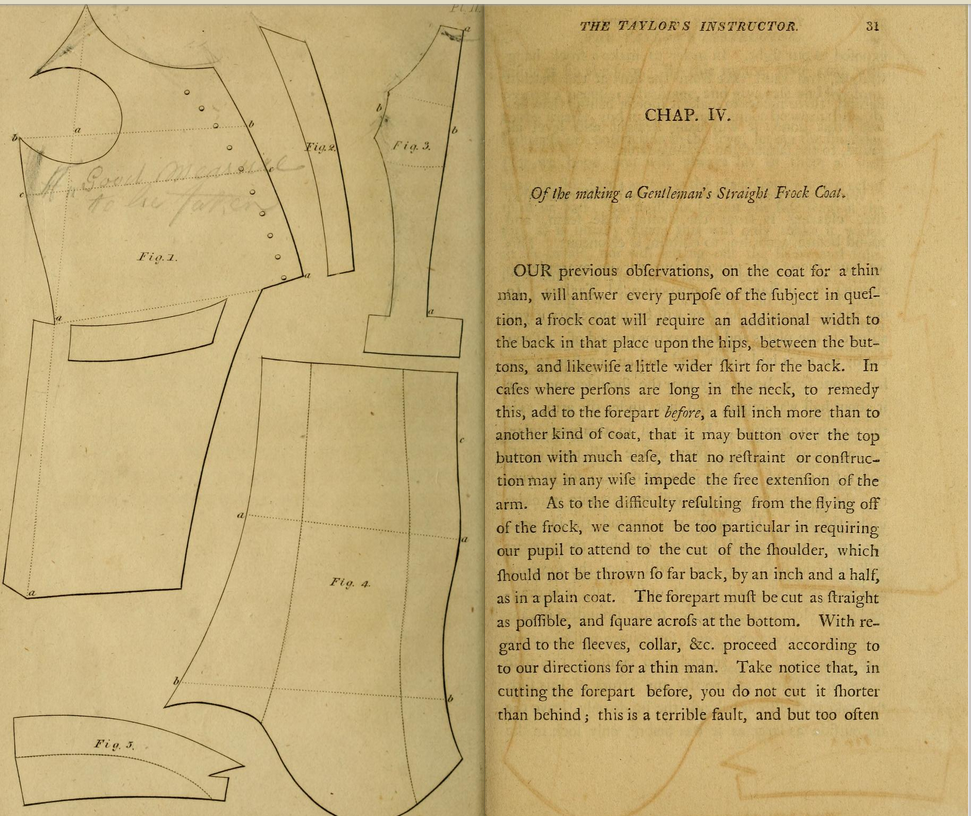
So who else was wondering what Mr Cooke meant by Lapsley and Queen? Wonder no longer, frustrated toile-makers and cuff-detail mavens, it is available on the vast interwebs of knowledge.

Go! Download the PDF and immerse yourself in an 1809 American tailors’ manual published in Philadelphia, with Eight Appropriate Engravings. We may note that there was excited squeaking when I located this, altering my nearest companions to A FIND, and letting them know that yes, I am back, and probably will continue to squeak on and off for some time to come.

From the introduction:

“…there is no situation more awkward than that of a TAYLOR who has cut and mutilated his own or his employer’s Cloth which will frequently be the case when a man has nothing to depend upon but the poor resource of chance or hope, that his clothes will fit.”

The Taylors' Instructor

The Taylors’ Instructor

I can tell from the text on Coats that my subjects will have to be further apprehended and measured, even against their will, but the results will undoubtedly be better than before.

Happy Reading, Historical Sewing Enthusiasts, and a big thank you and hat tip to Henry Cooke for the reference.

Share this:

  • Share on Facebook (Opens in new window) Facebook
  • Share on Pinterest (Opens in new window) Pinterest
  • Email a link to a friend (Opens in new window) Email
  • Share on X (Opens in new window) X
Like Loading...
← Older posts
Newer posts →

Archives

wordpress statistics

Creative Commons License
Kitty Calash blog by Kirsten Hammerstrom is licensed under a Creative Commons Attribution-NonCommercial-ShareAlike 4.0 International License.

Website Built with WordPress.com.

  • Subscribe Subscribed
    • Kitty Calash
    • Join 621 other subscribers
    • Already have a WordPress.com account? Log in now.
    • Kitty Calash
    • Subscribe Subscribed
    • Sign up
    • Log in
    • Report this content
    • View site in Reader
    • Manage subscriptions
    • Collapse this bar
 

Loading Comments...
 

    %d