• Home
  • Completed Costumes/Impressions
  • Emma and Her Dresses
  • Free Patterns and Instructions

Kitty Calash

~ Confessions of a Known Bonnet-Wearer

Kitty Calash

Tag Archives: sewing

Catastrophic Wardrobe Failure

17 Thursday Oct 2013

Posted by kittycalash in 1763 Project, Clothing, Events, Fail

≈ 3 Comments

Tags

18th century, 18th century clothes, Costume, failure, fashion, living history, sewing

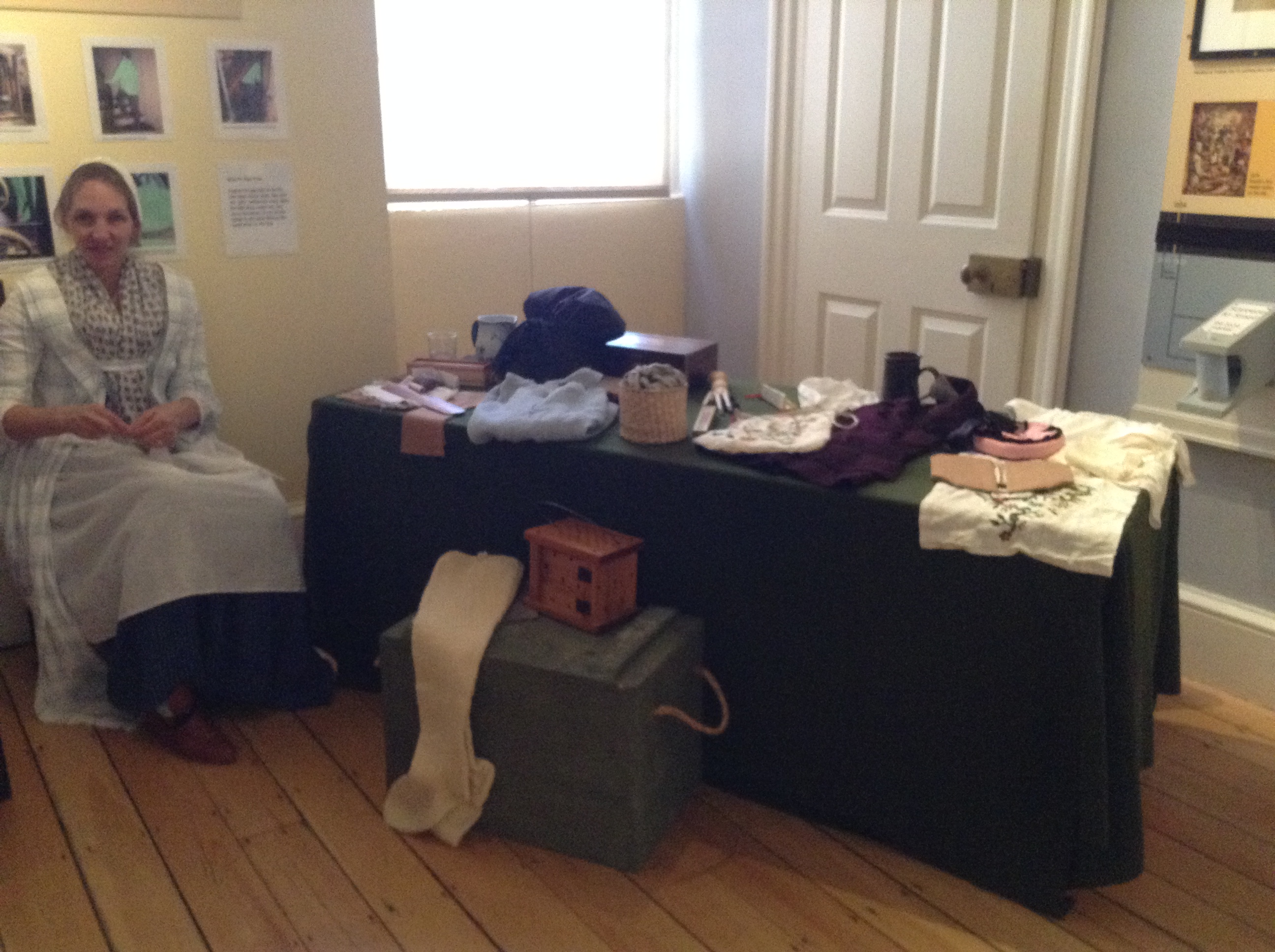
Table at the Bostonian Society, infant stays to the lower right.

Table at the Bostonian Society, infant stays to the lower right. Photo courtesy Sew 18th Century

Several weeks ago now, Sew 18th Century and I went up to Boston to be part of the People of 1763 event at the Bostonian Society. I hope she knows how grateful I was and am to her for her help and thoughtfulness in preparing an excellent table of examples. The infant’s stays were, by far, the most interesting thing people found all day. (While Sew 18th Century ate her lunch, I did hear about how a woman from California was appalled there were not more Boston terriers in Boston, and when I suggested that perhaps the financial district wasn’t where you’d find dogs, in general, but that the Common and the Garden might have more dogs and terriers in particular, I got to see cellphone pictures of her Boston terriers. I’m still intrigued by this conversation.)

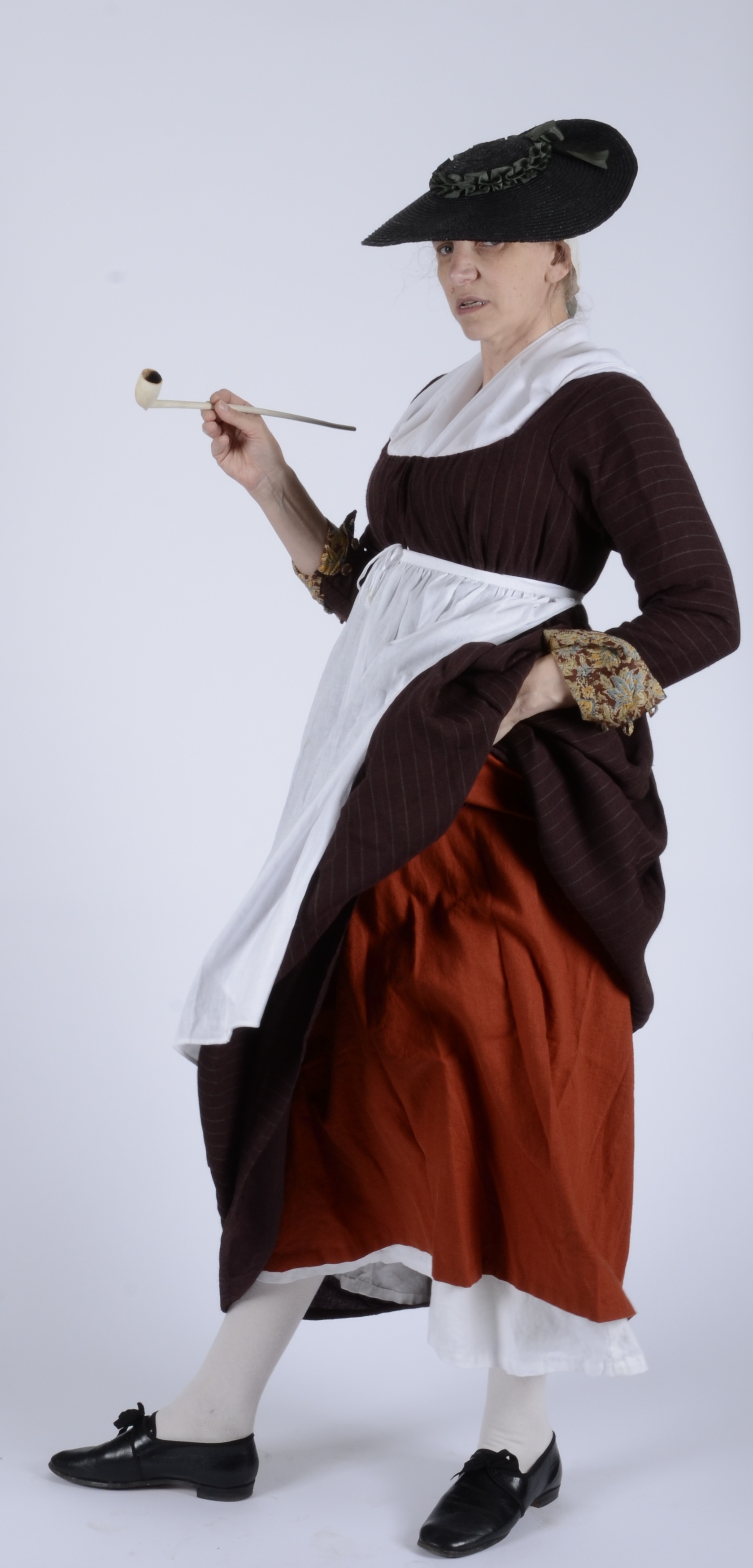
Too big, and destined for re-making

Before total failure. Photo courtesy Sew 18th Century.

But all day I fought with my gown, which proves you should not wear something in public until you have fully tested it at home. Finally, packing out, the fronts and the straps separated with a flourish of leaping pins, and all decorum was lost. I began to wonder about exactly what had prompted earlier male compliments on the gown, especially when I discovered the loose stay lace at the top of my stays…and then found the lace had come untied and was unlacing itself from the bottom up! And of course, while outside looking for my husband (reportedly carried off by bears), my hat and cap blew off, and since the gown was coming undone, they were all the harder to catch, adding to the wardrobe mayhem and my discomfiture.

I have since re-looped and double-knotted the stay lace, so I hope it will not come undone again at the base (and of course I had no bodkin handy that day). But still, there were other, “bigger,” issues, to be explored tomorrow.

Share this:

  • Share on Facebook (Opens in new window) Facebook
  • Share on Pinterest (Opens in new window) Pinterest
  • Email a link to a friend (Opens in new window) Email
  • Share on X (Opens in new window) X
Like Loading...

Missus Smith and Mistuh Mason Stay Up All Night…

03 Thursday Oct 2013

Posted by kittycalash in Clothing, Events, Living History, Museums

≈ 7 Comments

Tags

18th century clothing, John Brown House Museum, Rhode Island, sewing, What Cheer Day

petticoat

… sewin’. Or so they say.

Missus Smith gave up at 12:30 to go to sleep, and got up again just as Mistuh Mason was going to bed.

I find the whole thing suspicious, don’t you?

Share this:

  • Share on Facebook (Opens in new window) Facebook
  • Share on Pinterest (Opens in new window) Pinterest
  • Email a link to a friend (Opens in new window) Email
  • Share on X (Opens in new window) X
Like Loading...

All Over but the Tugging

06 Friday Sep 2013

Posted by kittycalash in Clothing, Events, Living History, Reenacting

≈ 2 Comments

Tags

10th Massachusetts, 18th century clothes, authenticity, Brigade of the American Revolution, common soldier, Costume, living history, Reenacting, Revolutionary War, sewing

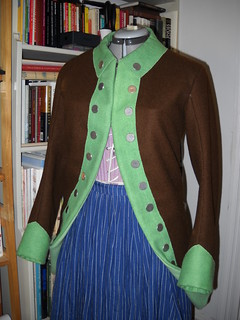
Front view on Cassandra.

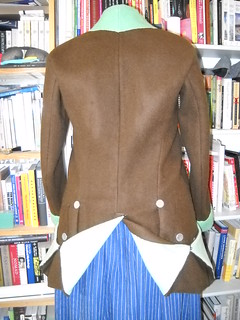
Back view, over petticoats

That’s right, it’s done, in all its brown and green glory, with not one buttonhole in sight.

I imagine Henry Cooke will tug on it, the same way my grandmother used to tug on my clothes, and find the things I need to fix that I can’t even see until he points them out. But that’s OK– what better way to learn?

You can see the progression on the project here, but there’s no tutorial or instruction manual, just visual notes as I went along. It’s Mr Cooke’s pattern and kit.

I think they’ll be glad of wool coats up at Saratoga, and if I didn’t have a new gown and petticoat, and possibly even stays, to make by October 5, I would think hard about making John Buss’s “red Queman’s pattern jacket” and “striped woolen trowsis” for the Young Mr to wear. With luck, he’ll have a borrowed coat to wear; I doubt a hunting frock will be as warm as he’d like by late September. No one, not even Mr Cooke (and I did ask), knows with certainty what a “Queman’s pattern jacket” is, but it might be a short coat or jacket. What I do know is that visions of a short red coat and grey striped trousers dance in my head, and the list of things I want to make just gets longer.

For now, though, this 1777 10th Massachusetts coatee is done, or nearly done, though on Mr S, I predict center back pleat tweaking.

Share this:

  • Share on Facebook (Opens in new window) Facebook
  • Share on Pinterest (Opens in new window) Pinterest
  • Email a link to a friend (Opens in new window) Email
  • Share on X (Opens in new window) X
Like Loading...

Thinking Ralph Earl

29 Thursday Aug 2013

Posted by kittycalash in Clothing, Events, History, Living History, Making Things, Museums, Research

≈ 2 Comments

Tags

18th century clothes, common dress, Costume, fashion, John Brewster Jr, living history, maids, Museums, portraits, Ralph Earl, Rhode Island, sewing, work

Mabel Ruggles Canfield. Oil on canvas by Ralph Earl, 1796. Litchfield Historical Societym 1917-04-4

Mabel Ruggles Canfield. Oil on canvas by Ralph Earl, 1796. Litchfield Historical Society, 1917.4.4

In three weeks, I start a three week cycle of events in different decades: Saratoga in 1777 will be followed by Boston in 1763, followed by Providence in 1800. This causes a kind of temporal whiplash, though I know well enough what I should wear for 1777 and 1763, and Mr S’s brown coat will cut out this week so I can begin to sew on Saturday.

Providence in 1800 worries me more, but last Saturday’s conversation with Sharon helped immensely, especially when she said, Think Ralph Earl. So simple, I was embarrassed not to have remembered one of my favorite painters.

I need to think below Ralph Earl’s sitter’s station, but as Mrs Brown’s housekeeper or bossiest maid, these portraits represent the type of people I see, people who live in Providence but aren’t the Browns. Ralph Earl’s world of Connecticut merchants and ministers is much like the world I would see. How much more cosmopolitan was Providence than Stonington or New London? They’re all ports, and Providence is busier, but I think that Ralph Earl is a safe bet for understanding the visual context of the southern New England in the 1790s and the styles people wore.

It is especially helpful because he painted women of about the right age. Mrs Canfield at the top of te page was born in 1760, so she’s just a little younger than my character.

Oiver Ellsworth and Abigail Wolcott Ellsworth. Oil on canvas by Ralph Earl, 1792. Wadsworth Atheneum, 1903.7

Oiver Ellsworth and Abigail Wolcott Ellsworth. Oil on canvas by Ralph Earl, 1792. Wadsworth Atheneum, 1903.7

Mrs Ellsworth was born in 1756, so she’s a little bit older. Different ages, different styles (yes, styles have also changed between 1792 and 1796). But some constants: long, slim sleeves. White caps and handkerchiefs, layered at the neck. Silk–though that won’t be me–in solid, slightly muted colors.

There’s another Connecticut painter worth looking at: John Brewster, Jr. In this New Republic period, I think it’s really critical to look to American sources for clues to how people projected themselves, how they were seen and wanted to be seen. This is pretty high-falutin’ stuff for a maid, but I’m presuming that I know how to read (because John Brown and his brothers placed an emphasis on education in their own families, and on public education). And if I know how to read, and I work in a house with books and political discussions, chances are good that even in the late 18th century, I have eavesdropped on the discussions and I have read at least the newspapers. I’m living in a certain atmosphere, and how I dress and what I think about will reflect the world around me.
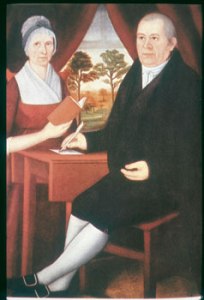
John Brewster and Ruth Avery Brewster. Oil on canvas by JOhn Brewster, Jr. ca. 1795-1800. Old Sturbridge Village.

John Brewster and Ruth Avery Brewster. Oil on canvas by John Brewster, Jr. ca. 1795-1800. Old Sturbridge Village.

Dr. John Brewster, seen here with his second wife, Ruth, descended from William Brewster. His wife, Ruth, is obviously literate. These people are signaling education and sensibility to us: sober, well to do, respectable. Brewster is not as good a painter as Ralph Earl, so fabric is harder to read. What is her gown made of? Could be fine wool, could be silk: hard to tell. But see that little edge of shift peeking below that three-quarter sleeve? That’s old school for 1795. But I like the neckline and the color. Burnley & Trowbridge have a light-weight wool that color…
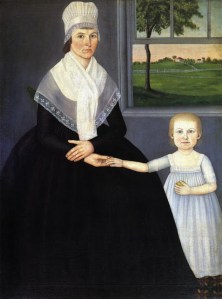
Mother with Son (Lucy Knapp Mygatt and Son, George), 1799. Oil on canvas by John Brewster, Jr. Palmer Museum of Art, Pennsylvania State University

Mother with Son (Lucy Knapp Mygatt and Son, George), 1799. Oil on canvas by John Brewster, Jr. Palmer Museum of Art, Pennsylvania State University

Brewster’s portrait of Lucy Knapp Mygatt and her son, painted in 1799, does, I think, help push the date for the Brewster double portrait earlier: by 1799, the painter in more accomplished and bolder in the full-length portrait. He’s also learned to render fabric somewhat more convincingly.

Long sleeves, white cap and kerchief, high waistline: the styles are consistent, but as you move through the subtleties of class, the expression of the style shifts. Front-closing round gown with a waistline that’s high, but lower than what I’ve made in the past, with long sleeves: settled. Now all I need to decide upon is fabric: probably a lightweight, dark-colored wool, though I haven’t found exactly what I want yet.

Share this:

  • Share on Facebook (Opens in new window) Facebook
  • Share on Pinterest (Opens in new window) Pinterest
  • Email a link to a friend (Opens in new window) Email
  • Share on X (Opens in new window) X
Like Loading...

Poetry in Papers

17 Saturday Aug 2013

Posted by kittycalash in Clothing, Events, Living History, Museums, Reenacting

≈ 2 Comments

Tags

18th century clothes, authenticity, Clothing, common dress, Events, fashion, John Brown House Museum, living history, maids, Museums, Rhode Island, sewing

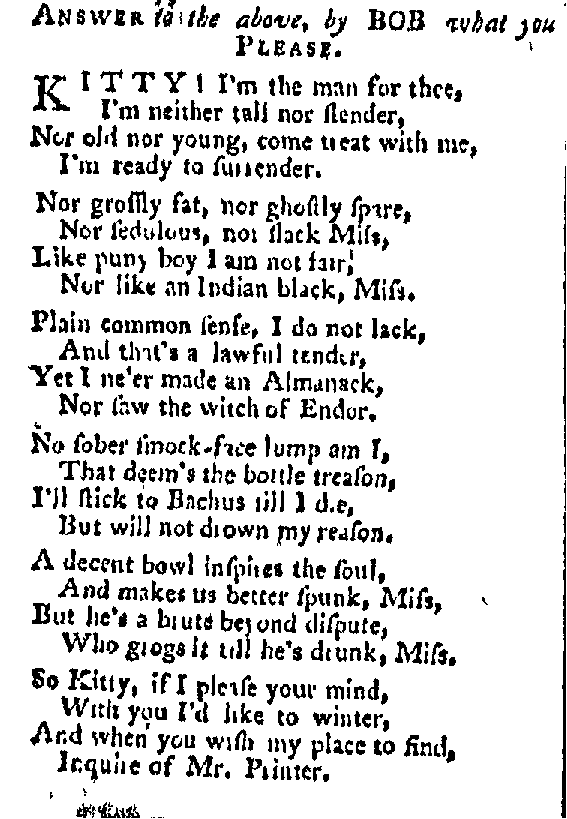
From the Newport Herald, 6/26/1788

From the Newport Herald, 6/26/1788

It’s quite the poem, isn’t it? In October, I’ll be part of an 1800 event at work, and I will be portraying a housemaid, if not quite the housekeeper (we are still trying to sort out the domestic staff; what we can document is far too small a staff for the size of the house).

One of the things I will need is a name, and I thought perhaps I should check my instinct that “Kitty” was an acceptable name for women in the 18th century, and not just for sloops. So to the newspapers I turned, and among listings of the graduates of Philadelphia Seminaries for Girls, and ships cleared through the custom house, I found this poem. It reminded me of Mr S, and I recommend you read it aloud.

The early nineteenth-century maid. By William Brocas (1762-1837), pencil drawing c.1800 (National Library of Ireland)

So, a name: we’ll go with Kitty for now, and I can imagine building a complicated back story that pulls together all of the things I do, from running away outside Philadelphia to encountering soldiers and following them, to ending up a maid in a house in Providence. Except that what I believe about a life like that is this: It would be highly improbable, and I would look wa-a-a-y older than my actual years.

Instead of getting carried away with extreme historical fictions, let’s look at what we can know.

For one thing: clothing. Do you find yourself concerned, ever, that you focus so much upon your historic clothing? Well, you can stop. After a long and excellent conversation this week, think of this: the historical clothing you wear to events of any kind requires a lot of lead time. So you do have to think it through carefully, because every minute will count. It is also a visitor’s first impression of you, from a distance and up close. Getting it right matters, and since that takes so much time, you have to think a lot before you commit scissors to cloth. It does not necessarily mean that you’re a shallow, clothes-obsessed freak. There’s no 18th century mall to go hang out in and watch the leather-breeches boys  posing while they smoke clay pipes.

Benjamin West, Characters in the Streets of London, 1799, YCBA, Paul Mellon Collection, B1977.14.6314

I’ve just about convinced myself that the silhouette we’ve been wearing at the house and formerly at the farm is acceptable. I went looking through the turn-of-the century images I have on Pinterest and I think that a maid would have worn the fashionable silhouette. Another question is age (sigh); all the women in the Benjamin West are younger than I am.

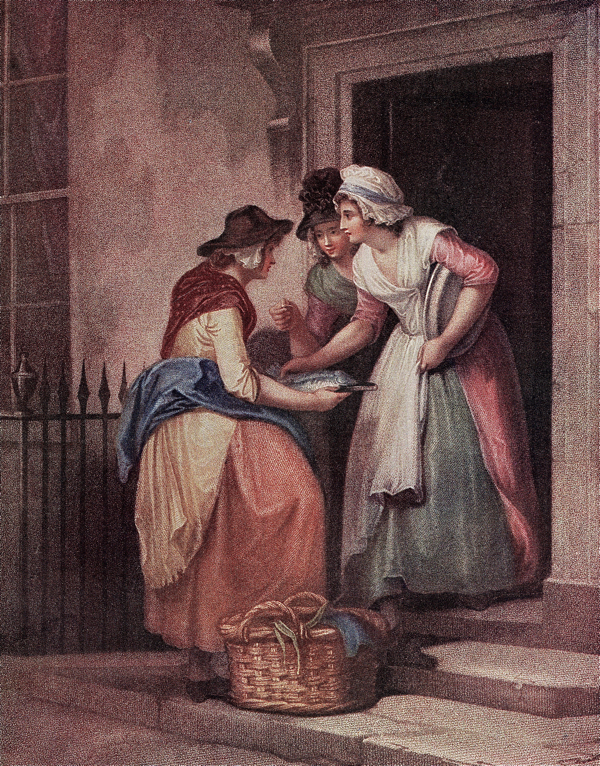
Francis Wheatley, Cries of London. New Mackerel, New Mackerel.

This print from a Wheatley (1792-1795) is useful, though he is such a genre painter and idealizes so much that I use him with caution. (Think of how much grittier–and funny–Sandby is: I trust Sandby more.) But, what can I learn from this? One thing is that I often think and dress more like the people in the street than the people in the houses. This will happen when you spend a lot of time outdoors, with soldiers: you are one of the people in the street. It can be a bit of a trap, historically speaking, and it’s good to challenge yourself to think about another class from time to time.

Back to the doorstep: what I learn here is that I need a white apron that I haven’t spilled on, a white kerchief, and a fancier cap. That cap will tie under my chin, because that’s the cap I see in Providence most often, and that’s the cap that will stay on. I’m not sure if these are maids–I think they are– but they’re women in a brownstone city house. And I can see from the clothes around me that they’ve been made for a woman who sells milk in the street, or works on a farm, or cooks over a fire. They’re not what the richest man in Providence would want his maid to wear answering the door.

You’ll have noticed, too, the different waistlines. The drawing from the National Library of Ireland and the Benjamin West have higher waistlines than the women in the Wheatley. Some of this will depend upon the available corsetry: I have stays that will work for the higher waistline, and I have stays for 1770.  I have a not-quite-right 1790s pair that need revision, but that’s not likely to happen: I have a brown and sea-green coat to make.

Share this:

  • Share on Facebook (Opens in new window) Facebook
  • Share on Pinterest (Opens in new window) Pinterest
  • Email a link to a friend (Opens in new window) Email
  • Share on X (Opens in new window) X
Like Loading...
← Older posts
Newer posts →

Archives

wordpress statistics

Creative Commons License
Kitty Calash blog by Kirsten Hammerstrom is licensed under a Creative Commons Attribution-NonCommercial-ShareAlike 4.0 International License.

Website Built with WordPress.com.

  • Subscribe Subscribed
    • Kitty Calash
    • Join 621 other subscribers
    • Already have a WordPress.com account? Log in now.
    • Kitty Calash
    • Subscribe Subscribed
    • Sign up
    • Log in
    • Report this content
    • View site in Reader
    • Manage subscriptions
    • Collapse this bar
 

Loading Comments...
 

    %d