• Home
  • Completed Costumes/Impressions
  • Emma and Her Dresses
  • Free Patterns and Instructions

Kitty Calash

~ Confessions of a Known Bonnet-Wearer

Kitty Calash

Category Archives: Living History

Wrap it up, I’ll take it

20 Tuesday Feb 2018

Posted by kittycalash in Clothing, Living History, Making Things, Museums, Research

≈ 7 Comments

Tags

Anna Maria Garthwaite, banyan, handsewn, I sew for money, museum replica, Robert Feke, sewing, silk, wrapping gown

To be honest, I would love to wrap my self up and take this silk, but it is for a museum to display, so instead the box is wrapped and ready to ship.

I was lucky to be included in a message group started by a friend asking if any of us had a banyan or wrapping gown to loan. Well, no… but I can make one!

So I did.

Banyan or wrapping gown
in silk designed by Anna Maria Garthwaite

My version is based on this 1750-1760 example at the Victoria and Albert Museum, of silk designed by Anna Maria Garthwaite ca. 1740-1750. To be honest, this is one of my favorite gowns, despite the fact that it bears no practical relationship to any part of my daily or living history life. A girl can dream, though…

Just a little bit scary, despite being able to get more silk if I really messed up.

In particular, I like the way the style combines the t-shape of a basic banyan with the pleats used to shape European women’s gowns. Tricky, right?

Ann Shippen Willing, oil on canvas by Robert Feke, 1746. Winterthur Museum Museum purchase with funds provided by Alfred E. Bissell in memory of Henry Francis du Pont. 1969.0134 A

I made a pattern in muslin (it took two) primarily by draping, reading the V&A description, and looking at the original images as large as I could get them. By the time I had a pattern, I was mostly convinced, but still intimidated by the silk. I’ve had my eye on this ever since I saw at the local store, for it reminded me strongly of the Anna Maria Garthwaite silk worn by Ann Shippen Willing (Mrs. Charles Willing) of Philadelphia in this portrait by Robert Feke.

In the interest of economy, I machine sewed the long seams and the interior (lining) pleats, though I would not if I wear to make this for myself. Once the main seams were done, I pleated and pinned again.

IMG_3400
IMG_3409

Then it was time for my one of my favorite activities, hand-stitching pleats. It’s impressive how the look of a garment changes (and improves) as you continue to work on it. The fullness of the gown with the inserted pleats is pretty impressive and very satisfying to wear. It sounds fabulous as it moves with your body.

Front...
Front…
back, and side...
back, and side…
just before packing.

Once the gown is fully dressed on a mannequin (that is, over a shift and petticoat), I know it will assume the more correct shape of the green gown at the V&A– it looks better even on me, although it is too small, being made for a mannequin representing an 18th century woman.

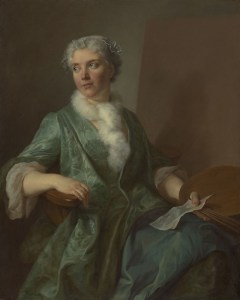
Portrait of a Woman Artist, c. 1735
Oil on canvas
40 x 32 5/16 in. (101.7 x 82 cm)
Restricted gift of Mrs. Harold T. Martin in honor of Patrice Marandel, 1981.66
Art Institute of Chicago

Along the way, I found another green silk wrapping gown or banyan, this time worn by a French artist.I can guarantee you I would never wear silk to paint in, but your mileage may vary, and if I had a maidservant and unlimited cash in 1760, perhaps I would emulate the Mademoiselle at left.

Share this:

  • Share on Facebook (Opens in new window) Facebook
  • Share on Pinterest (Opens in new window) Pinterest
  • Email a link to a friend (Opens in new window) Email
  • Share on X (Opens in new window) X
Like Loading...

Same as it Never Was

18 Sunday Feb 2018

Posted by kittycalash in Living History

≈ Comments Off on Same as it Never Was

I wrote this two years ago and never published it (I was still looking for a job at the time). It’s still relevant. 

Every time I go to a museum, I see a lost or wasted opportunity: galleries where connections aren’t made to collections I know an institution owns, changing galleries featuring a seemingly endless rotation of amateur local artists instead of meaningful interpretation of local objects– or, better yet, a show challenging those same artists to react to a museum’s collection. The same is true of many reenactment events.

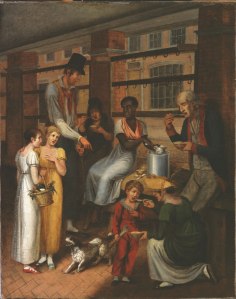
Pepper-Pot: A Scene in the Philadelphia Market
John Lewis Krimmel, American (born Germany), 1786 – 1821. Oil on canvas, 1811. Philadelphia Museum of Art, 2001-196-1. 125th Anniversary Acquisition. Gift of Mr. and Mrs. Edward B. Leisenring, Jr., 2001

I remain deeply frustrated with the way reenacting can use documentary evidence– which rarely includes women– as a means to perpetuate 18th century misogyny in a 21st century setting. The same evidence means events often lack enough children, African Americans, American Indians, and other non-white people to create an accurate vision of the past. We know this because the demographic evidence exists, even when a manuscript fails to mention a mixed group of people in a specific place and time. (When an 18th century newspaper account uses the word “people,” you can bet that the group described included women and non-white men; if the account is about “men,” then it’s white men. Language is always coded.) The changes in the past years to include more accurate working class impressions go a long way towards creating a more nuanced vision of the past, but we’re still stuck with scenes that lack the complexity of the past.

My discomfort with this bothers me greatly. To what degree is my dissatisfaction also grounded in the understanding that recreating events in small, stagey spaces and times can de-contextualize a historical event, ultimately rendering the experience shallow and ritualistic, leaching it of meaning?

To what degree does our fixation on the appearance of participants (clothing standards) over interpretive standards or research materials serve to perpetuate shallow, surface-only events? And does the smallness of events create a zero-sum game in which someone’s talents will always be wasted, unused, and unrecognized, further feeding resentment of the “progressive” reenacting culture, sometimes even by its adherents?

All of that seems so over-thought, but in the midst of overthinking, and while deeply admiring Not Your Momma’s History on Racked, I thought about the critiques I read on @twitter, especially the part of #blacktwitter I follow, and I had a more important thought: Lead, Follow or Get Out of the Way.

Maybe it’s time for the white women to get out of the way, and to expend our energy supporting the people who aren’t included at all. Maybe I need to STFU and invest my energy where it matters more: helping ensure the really unheard voices are heard. Cheney McKnight, Dread Scott, and Michael Twitty all have important things to say about history- American history, African American history- that, at this moment in time, matter far more than what I have to say. Go follow them. Make a difference.

Share this:

  • Share on Facebook (Opens in new window) Facebook
  • Share on Pinterest (Opens in new window) Pinterest
  • Email a link to a friend (Opens in new window) Email
  • Share on X (Opens in new window) X
Like Loading...

Night Clubbing

16 Friday Feb 2018

Posted by kittycalash in Events, Fail, Living History, personal

≈ 3 Comments

Tags

bow out gracefully, Events, find another gig, new wave, nightclubs, punk

Mountebanks at night. watercolor by Paul Sandby, 1758 Royal Collection Trust/© Her Majesty Queen Elizabeth II 2014

Mountebanks and miscreants: how we love them. I have found myself in a situation of late that feels altogether too much like high school, and as a means of understanding it, I have a story to tell. It will, sadly, confirm what my parents thought was happening, but hoped was not.

Let’s step back to the time when I was known as the Rat, when I spoke truth to adolescents and paid the price of ostracism and harassment. I was already largely outside whatever cliques there were in high school, for I’m not certain you can call an assemblage of despised literary hopefuls in a hallway window seat a clique, so the harassment hurt more than the exclusion. Harassment these days comes not in the form of people chanting at you in person, but rather in online trolling, which can be deleted, unless people take the energy to rise to doxing or swatting, and few in the living history world seem to– and that’s not a challenge, kids.

So, operating within a loose-knit band of misfits more Donnie Darko than Ferris Bueller, I began breaking the rules, taking films back to the public library for my teachers and spending the rest of the day at the art museum or bookstore, or combing thrift shops for my nearly-all-vintage wardrobe. I could not find a place to be, so I stepped out.

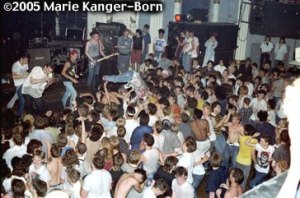
Naked Raygun at the Metro (not the club in question)

Along the way, I met some very interesting people: punk musicians, artists, dancers, and students who introduced me to a very different world than the one my classmates lived in. It was a kind of mid-western Desperately Seeking Susan, or perhaps Something Wild, only I suppose I was Susan seeking myself. I saw great bands and terrible bands, and continued my forays even after I’d left the city for college, which leads me to a moment that resonates fiercely with me in light of the past few days of highly localized re-enactor drama.

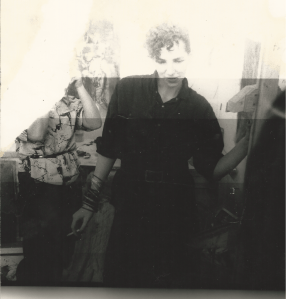
portrait of a wanna-be-artist

I had a sometime-boyfriend who was ahead of me in college, at a different university, who worked as a DJ in northside night clubs. On one summer trip to the city, I found myself walking out of a nightclub where I’d been dancing, eager for some fresh air. At the door were two of my former classmates– too much acquaintances to be called frenemies– trying, and failing, to get in. I caught their eyes, agog, as I walked out.

“You come here?” one asked. “How’d you get in?“
“I know a guy,” I said. “I’ve been coming here all summer,” and walked up the street to catch the bus to the next party.

Share this:

  • Share on Facebook (Opens in new window) Facebook
  • Share on Pinterest (Opens in new window) Pinterest
  • Email a link to a friend (Opens in new window) Email
  • Share on X (Opens in new window) X
Like Loading...

Compare and Contrast

28 Sunday Jan 2018

Posted by kittycalash in Clothing, Events, Living History, Reenacting

≈ Comments Off on Compare and Contrast

Tags

18th century clothes, 18th century clothing, Boston Massacre, Bostonian Society, Events, living history, women's history, women's work

2016's 1770
2016’s 1770
2018's 1770
2018’s 1770

Boston Massacre planning is underway for everyone involved at every level, including me.

I’ve made changes to what I plan to wear, in part because I have a newer gown that fits better and keeps me warmer, and because I have learned more, and looked at more, in the intervening time. Since 2016, I’ve made/upgraded a quilted petticoat (in a bronze silk, a color documented to Rhode Island quilted ‘coats), settled in to wearing my cap tied under my chin, and made both a new apron and a new bonnet.

2017's 1777
2017’s 1777
2018's 1770
2018’s 1770

Cap and bonnet shape and shoes help make time period distinctions between 1777 and 1770; if I could find the wool I made the gown from, I would add the cuffs it desperately needs. The heeled shoes skew earlier than 1770, but they are the only heeled shoes I have….if the weather is wretched, I will wear the flats for safety and comfort.

2016's Bonnet
2016’s Bonnet
2018's Bonnet
2018’s Bonnet

The bonnet, which I affectionately call “Lampshade,” is meant to have the shape of pre-1770 bonnets as seen in Sandby’s illustrations, and which I have been working on for a while.

Martha Collins, Thomas Sandby’s Cook. watercolor on paper by Paul Sandby, 1770-1780. RCIN 914339

I know from reading the standards that the understanding of mitt material has evolved, and my time this morning looking for an elusive apron shape raises questions for me as well. Here’s Martha Collins, painted by Paul Sandby. What’s that black thing on her arm? A mitt? An arm warmer? Is it knit, or woven? There’s always more to figure out, and more to make.

Cuffs on my gown don’t seem like a big enough deal to warrant buying wool for a whole new gown (with only six weeks to go), so my choices are live with no cuffs, alter the red gown of 2016’s event to fit properly, or initiate an extensive search for the scraps left over from the green gown…which may or may not be buried in storage. Tick tock.

Share this:

  • Share on Facebook (Opens in new window) Facebook
  • Share on Pinterest (Opens in new window) Pinterest
  • Email a link to a friend (Opens in new window) Email
  • Share on X (Opens in new window) X
Like Loading...

There is Power in a Union

29 Wednesday Nov 2017

Posted by kittycalash in Living History

≈ 7 Comments

Most readers know that I have a fairly extensive museum background: my entire working life has been spent in museums. Over twenty-six years (right outta school, folks–this is the only life I’ve ever known), I worked my way up from Curatorial Assistant to Director of Collections. I’ve seen a fair number of museum directors and museum crises (deaccessioning, anyone? financial retrenchment? sexual harassment suits and countersuits?), I’ve hired and fired people, managed some large and rewarding projects, and met some amazing donors, researchers, and colleagues.

I still remember when I was front-line staff in the research collection, when you were on the phone 75 times a day, when patrons would walk in, stamp their feet and declare, “My taxes pay your salary! You have to do what I want!” Guess what? We didn’t, and that four cents didn’t go as far as you think.

When I see commentary on FB about the unionization at Plimoth Plantation, and read comments by people stating that until someone can PROVE that the director is making six figures and that the workers are TRULY in danger, they cannot support the unionization of workers because, well, the workers signed up for the poor pay; they knew what they were getting into; and it’s a MUSEUM, so it’s special, I wonder what those commenters are thinking, and what their work lives have been like.

Organizing a union is not an easy thing, so do not imagine that the workers at Plimoth rushed into this willy-nilly like they were voting for prom king and queen. It takes months of effort to canvas employees– work that must be done off-site and after working hours– to talk to them about working conditions and the benefit of union protection. Union reps go with employees who act as the ambassador, and on-site relationships can be testy when the person you thought was your friend and ally resists or resents your unionization effort. I know, because I’ve done it. In 1993-1995, the Missouri Historical Society went through an attempt to form a union that ultimately failed at the ballot box.

One moment that will always stick with me came after the union drive failed.  During the drive, an employee in Development argued with me that she didn’t need a union to protect her; her boss was nice. I pointed out that her boss wasn’t always going to be there; staff changes, and to have happy employment at the whim of one person was risky: a union offered protection from change at the whim of the director or your immediate supervisor. She was one of the “No” votes. Some months later, after her boss had been let go suddenly, and replaced by a more demanding woman with far less tolerance and far more quirks (and the original boss had been no peach), she approached me at a staff meeting. “You were right,” she said. “I see that now.”

There are two lessons in that experience: one, that it’s hard to imagine another person’s situation unless you’ve lived it, and two, that humans are bad at imagining, anticipating, or preparing for change (except those of us with anxiety disorders, who plan multiple responses to any situation). Unions help workers by setting rules that protect them from change, and by having input into things like, oh, HR manuals, where the worst case is that every policy statement ends with, “Or at the discretion of the director.” As much as museums need directors’ “vision” and leadership, museum employees often need protection as they try to implement those visions.**

Here’s the thing: on the 2015 Form 990 filed by Plimoth Plantation, the Executive Director’s salary is listed as $142,896*. Costumed interpreters are seasonal, often paid minimum wage ($11 in MA right now), and contribute directly to the museum visitors’ experience. Yes, the Director is responsible for raising funds, maintaining happy donors, and has overall responsibility for the museum’s success. Let’s say, realistically, the Director works 60 hours a week. For the 2015 tax year, that was $45 an hour. (For a 40 hour week, the base “wage” would be $68/hour.) Should  a director earn 4 or 6 times what front line staff earn? I suppose it’s better than the difference that exists in for-profit entities, but why are the interpreters paid so little? What about Colonial Williamsburg, another place where wages are low and expectations high? What about at the New-York Historical Society, where an archivist can make less annually than in a similar position in a similar organization in much lower cost-of-living Rhode Island?
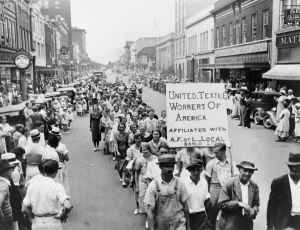
When a museum pays its director six times what front line staff are paid, what does that tell us about its priorities? Does that imply that the director is more valuable to visitor experience than the interpreters, maintenance workers, and craftspeople? When was the last time the director spent a day over a fire, graciously fielding “gotcha” questions and recreating the past to inform the public? I’ll grant you the director probably does have days when she can’t pee for hours because she’s stuck in a meeting with droning donors, or on endless, useless, frustrating conference calls. And I further understand that the director bears the final responsibility for the museum’s financial health and visitor experience, but when was the last time a director got canned when a guest complained (reasonably or not)?

Why have we decided that museums get a pass? Why have we decided that the work is worth our (or others’) personal sacrifice? Why do we persist in making those excuses, even though we know MPA and MBAs are running museums using the tools and precepts of peak capitalism?

*You need an account, but I highly recommend searching Guidestar before you apply for a job with any 501(c)3. Form 990s (the non-profit annual filing form with the IRS) give you great snapshots of financial health– and an idea of what the top dogs make, and how an organization’s finances have changed over time. I never apply for a job without checking the financials.

** More on this another time– both HR policies and the “visions” of various directors.

Share this:

  • Share on Facebook (Opens in new window) Facebook
  • Share on Pinterest (Opens in new window) Pinterest
  • Email a link to a friend (Opens in new window) Email
  • Share on X (Opens in new window) X
Like Loading...
← Older posts
Newer posts →

Archives

wordpress statistics

Creative Commons License
Kitty Calash blog by Kirsten Hammerstrom is licensed under a Creative Commons Attribution-NonCommercial-ShareAlike 4.0 International License.

Website Built with WordPress.com.

  • Subscribe Subscribed
    • Kitty Calash
    • Join 621 other subscribers
    • Already have a WordPress.com account? Log in now.
    • Kitty Calash
    • Subscribe Subscribed
    • Sign up
    • Log in
    • Report this content
    • View site in Reader
    • Manage subscriptions
    • Collapse this bar
 

Loading Comments...
 

    %d