• Home
  • Completed Costumes/Impressions
  • Emma and Her Dresses
  • Free Patterns and Instructions

Kitty Calash

~ Confessions of a Known Bonnet-Wearer

Kitty Calash

Category Archives: Museums

Wrap it up, I’ll take it

20 Tuesday Feb 2018

Posted by kittycalash in Clothing, Living History, Making Things, Museums, Research

≈ 7 Comments

Tags

Anna Maria Garthwaite, banyan, handsewn, I sew for money, museum replica, Robert Feke, sewing, silk, wrapping gown

To be honest, I would love to wrap my self up and take this silk, but it is for a museum to display, so instead the box is wrapped and ready to ship.

I was lucky to be included in a message group started by a friend asking if any of us had a banyan or wrapping gown to loan. Well, no… but I can make one!

So I did.

Banyan or wrapping gown
in silk designed by Anna Maria Garthwaite

My version is based on this 1750-1760 example at the Victoria and Albert Museum, of silk designed by Anna Maria Garthwaite ca. 1740-1750. To be honest, this is one of my favorite gowns, despite the fact that it bears no practical relationship to any part of my daily or living history life. A girl can dream, though…

Just a little bit scary, despite being able to get more silk if I really messed up.

In particular, I like the way the style combines the t-shape of a basic banyan with the pleats used to shape European women’s gowns. Tricky, right?

Ann Shippen Willing, oil on canvas by Robert Feke, 1746. Winterthur Museum Museum purchase with funds provided by Alfred E. Bissell in memory of Henry Francis du Pont. 1969.0134 A

I made a pattern in muslin (it took two) primarily by draping, reading the V&A description, and looking at the original images as large as I could get them. By the time I had a pattern, I was mostly convinced, but still intimidated by the silk. I’ve had my eye on this ever since I saw at the local store, for it reminded me strongly of the Anna Maria Garthwaite silk worn by Ann Shippen Willing (Mrs. Charles Willing) of Philadelphia in this portrait by Robert Feke.

In the interest of economy, I machine sewed the long seams and the interior (lining) pleats, though I would not if I wear to make this for myself. Once the main seams were done, I pleated and pinned again.

IMG_3400
IMG_3409

Then it was time for my one of my favorite activities, hand-stitching pleats. It’s impressive how the look of a garment changes (and improves) as you continue to work on it. The fullness of the gown with the inserted pleats is pretty impressive and very satisfying to wear. It sounds fabulous as it moves with your body.

Front...
Front…
back, and side...
back, and side…
just before packing.

Once the gown is fully dressed on a mannequin (that is, over a shift and petticoat), I know it will assume the more correct shape of the green gown at the V&A– it looks better even on me, although it is too small, being made for a mannequin representing an 18th century woman.

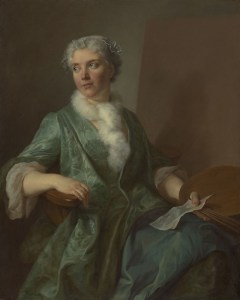
Portrait of a Woman Artist, c. 1735
Oil on canvas
40 x 32 5/16 in. (101.7 x 82 cm)
Restricted gift of Mrs. Harold T. Martin in honor of Patrice Marandel, 1981.66
Art Institute of Chicago

Along the way, I found another green silk wrapping gown or banyan, this time worn by a French artist.I can guarantee you I would never wear silk to paint in, but your mileage may vary, and if I had a maidservant and unlimited cash in 1760, perhaps I would emulate the Mademoiselle at left.

Share this:

  • Share on Facebook (Opens in new window) Facebook
  • Share on Pinterest (Opens in new window) Pinterest
  • Email a link to a friend (Opens in new window) Email
  • Share on X (Opens in new window) X
Like Loading...

Pulling Back the Curtain

06 Wednesday Dec 2017

Posted by kittycalash in Museums

≈ 2 Comments

Tags

employment, hours, museum work, Museums, No Quarter Given, working conditions

The Artist in His Museum by Charles Wilson Peale. 1822. Coutesy Pennsylvania Academy of Fine Arts.

I read this blog post hoping to find some insights that might help me as I figure out what comes next. I found myself irked instead.

Be Prepared to Struggle.

3. Be prepared to struggle.
The museum education field is not for the faint of heart, or people who want a 9-5 job. One of my mentors advised me that the days are long, but the years are short. The hours will hurt, you will get tired of the near-constant balancing act, and you might even question if you’re making an impact. Hang in there. Find your network (local, regional, or national). Share your vulnerabilities with people you trust. Delegate if you can. Most of all, document your successes and create a portfolio that illustrates why your efforts matter.

What is hidden between those lines? Be prepared for your life to be subservient to the needs of the museum? Be prepared to give everything– but document all you do because you’ll need to prove your value, no matter how much you sacrifice?

Saint Catherine, by Bernardino Luini. State Museum of Azerbaijan. (c) Stourhead; Supplied by The Public Catalogue Foundation. You will not achieve sainthood by sacrificing your sanity to a job.

Why would you put your work ahead of your life? (YES, I KNOW that’s not exactly what that post is suggesting, but that’s how it often ends up.) Encouraging people to work hard is good, but telling them they should expect to, and will, suffer isn’t good. That feeds the beast that chews up and spits out eager, idealistic young people on a routine basis. The museum is definitely not going to tell you it loves you, or visit you in the hospital. You need the time to build your own life, a circle of friends or family, interests of your own to feed your soul. And that means you will need boundaries, and need to have some “evenings, weekends, and holidays” when work is not required or expected– though I know that those hours are required and that people have to work them because they need the money.

Sculpture Hall, after 1913 installation of ceiling lights and before 1928 installation of fountain, c.1920. St. Louis Art Museum

Museum education staff are on the front lines– certainly more so than the curatorial, research, or exhibition design staff– and their work is immediately recognized and experienced by visitors. Museum education staff include a wide range of folks, depending on the organization. Costumed interpreters, gallery guides, program managers and assistants to develop and run fun but educational activities for all ages, curriculum developers who work with teachers to ensure that museu visits and activities for school groups meet the local or common core standards, and lots more. Sometimes the education staff are paid less than the curatorial and collections staff– and they’re pretty underpaid to begin with. Education staff are, to a larger degree than collections staff, expected to work evenings, weekends, and holidays, often without holiday differential pay, and receiving “comp” time instead of overtime.

Now, all that said, the blog post also contains these points

1. Gain skills outside of your intended field.  Learn how to budget. Like, really budget. What would you do with $2,000? How about $250,000? Know the numbers, and know how to speak business. If this isn’t your comfort zone, join the club. Take free online courses (edX is my go-to), and expand your skillset to include some productive surprises.

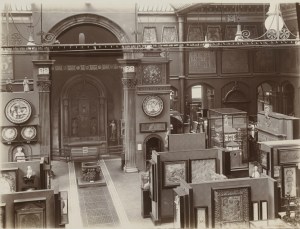
Victoria and Albert Museum, interior view (South Court), late 19th century (V&A PH.1156-1905)

Guess what? Budgeting IS part of your intended field. Sure, educational methods for reaching kids is directly related, but there is hardly a museum job in the world that doesn’t need to deal with money to some degree. The better you understand the way a budget works, the way grant budgets work and what you need to account for, the better you will understand the place you work and why things are the way they are. (Translation: the better you will understand how you are being rewarded– or not.


2. Work hard, be nice.  One of the best things to do when you’re starting out (or moving up) is to do excellent work and share it with your peers, supervisors, friends, and anyone who can provide constructive feedback. The museum world is a teeny-tiny place, so be nice to everyone you meet.

Be nice. As a woman, I often hate hearing that. I’d rephrase this one to “Do the best work you can without killing or compromising yourself, and be generous to the people who help you.” Develop the radar that lets you know when your colleague is using you– and someone will, trust me. Eventually someone will take credit for your work (ask me how I know), or betray a confidence, or a boss will keep moving the goalposts for a promotion, raise, or title change.

The North Court in the late 19th century. Museum no. E.1101-1989. © Victoria and Albert Museum, London

Museums aren’t easy to work in– there’s no field that’s always easy to work in– but we accept far too much because we love what we do. We are charmed, seduced, by the beauty of the objects, the mystery of the concepts, the scale of reach. But like a bad lover, museum administrators and boards can exploit our passion and use it against us. Don’t think they won’t.

If you don’t work in a museum, substitute your position title and/or field for the museum-specific words in this post. I believe everyone should be paid a fair wage, have decent working conditions, and the ability to have a robust and satisfying personal life as well as a job they find meaningful.

Share this:

  • Share on Facebook (Opens in new window) Facebook
  • Share on Pinterest (Opens in new window) Pinterest
  • Email a link to a friend (Opens in new window) Email
  • Share on X (Opens in new window) X
Like Loading...

Safe as Houses

01 Friday Dec 2017

Posted by kittycalash in Museums

≈ 2 Comments

Tags

historic house museums, management, morale, museum practice, work

Collections staff climb wobbly ladders all too often

Someone brought up the Plimoth Plantation workers concerns for safety, and how those outweighed the low wages in their drive to unionize. Uneven streets, low staffing levels and safety requirements placed on them– watching open fires– meant that they were unable to leave the houses even for “nature breaks.” These are all legitimate concerns and the expectation that workers will tolerate unforgiving, dangerous, or humiliating conditions because “it’s all for a good cause” is ridiculous (and, apparently, a darned good way to inspire a union).

The union effort I was part of was not driven solely by low wages. There were other factors, including an executive director with a large but fragile ego, who was inclined to operate rather whimsically. When the drive failed, the need for union was by no means diminished, especially given the retaliations that followed, including the case of a woman who went on maternity leave, only to find on her return that her job had not been saved for her, despite the museum’s need to comply with the FMLA and assurances made before she went on maternity leave.
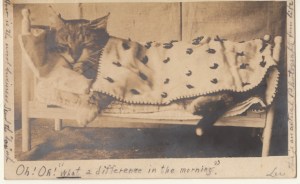
Bad management makes it hard to get out of bed.

Do not think that cannot happen today, because changes to the terms of employment happen all the time in museums, even when the leave alternate work schedules have been negotiated and put in writing. Museums and their directors are, in general, no more benevolent than any other employer.

But safety seems basic, right? Well….would you like to be the sole person working in a 16,000SF historic house? Granted, no open fires, but you are still expected to answer the door and you will find that people will force their way into the house, even when you tell them the museum is closed. Lucky for you, none of them were threatening.

Some are more equal than others

Except of course the one who was. When the concerns were brought to the executive director, there was a surprising lack of support– It’s one incident. He’s crazy, so what? You’re overreacting. That’s the best neighborhood in [small town redacted]. House staff asked for mirrors at the door and minimum staffing levels of two. Someone suggested maybe Boy Scouts would be good to have come in on the weekend afternoons when the staff person is alone– Boy Scouts need service hours for college applications, after all. In less than a year, the house manager resigned. The exterior lights around the house were not fixed or replaced, and it was pitch dark and empty on the walk to the parking lot. Only when the executive director’s husband said, “Gosh, the parking lot seems kinda rapey when so it’s so dark” did the parking lot lights get replaced– but only the lot, because she used it to park in when she went out to dinner with board members.

The same employer expected staff to come to work even when the water had been shut off at the site all day for repair work; fortunately, they could be convinced to close sites to the public on those occasions. I have worked in modern museum and research facilities without heat, light, or water because no quarter was given, and no exceptions were made for you to work at a different, functioning site.

Toodles might as well have been on security

For years, I was the on-call person for all alarms at the collections facilities. This meant that in the middle of the night, I had to go to the sites if the alarms were tripped. I had to go in alone, and was expected to sweep the facility and site for intruders. Eventually, I talked the police into a policy of staying with me until the sweep was complete, but I can assure you that a 16,000SF facility is creepy AF at 3:00 in the morning when the security alarm has gone off and you don’t know if someone has broken in or not.

Employers send very clear signals about how much they value employees and they punish employees in ways both small and large. Punishing an entire division, and putting the director put on six months probation because the director and division staff tried to follow the employee handbook and procedures to deal with a new hire who turned out to be incompetent and unwilling to work? Not great. The new hire was transferred to another division where the same behaviour played out, and caused great frustration to her new supervisor and colleagues. Eventually, she quit when it became clear that she was going to be let go and could no longer manipulate the system. For a division director to be told, in a meeting with the executive director, that “This isn’t your fault, and this isn’t about you– you’re here because of what other people did,” is not reassuring in the least. Punishing people for trying to follow the rules when the HR staff won’t will not generate good morale, or retention.

Because I said so, that’s why

Employee leaves are another serious pressure point in museums. Often no one extra is hired and no tasks are reduced, but are instead spread across a variety of people. Sadly, when someone like a registrar takes an extended leave, and the museum refuses to reduce collecting or loans, someone has to process all the paperwork. Asking people who are already doing two jobs to take on a third is not uncommon. Directors reveal a great deal about themselves in the response they have when they’re approached with a request to reduce some of the workload because the person covering is burning out. Dismissing the request with “It’s just a few more weeks,” 10 weeks into a 16 week leave with major program planning starting on top of all the other tasks is not helpful, supportive, or collaborative.

Directors who say, “I’m the director, I always win,” when direct reports disagree with them, may find their direct reports seeking work elsewhere. I’ve heard directors complain about having to “seek consensus,” and chafe at having to convince boards to support changes to staff structure. Directors who chastise front line staff in front of the public and shake their fingers in the staff member’s face– and then turn out to be wrong about what they’re upset about, but refuse to apologize– are not as uncommon as you might hope.

Safety. Consistency. Respect. That’s all employees want, no matter where they work. They want policies that are applied equitably, and workplaces that do not place them in danger either by condition of the site or the attitude of the management. When any employer fails to provide those conditions, the result will be low morale and high turnover. The cost of those is significant, both in declining visitor experience and increased training.
Share this:

  • Share on Facebook (Opens in new window) Facebook
  • Share on Pinterest (Opens in new window) Pinterest
  • Email a link to a friend (Opens in new window) Email
  • Share on X (Opens in new window) X
Like Loading...

Objectivity

06 Wednesday Sep 2017

Posted by kittycalash in Collecting, material culture, Museums

≈ Comments Off on Objectivity

Tags

cataloging, collections management, data, material culture, museum collections, Yale Furniture Archive

Recently I’ve had more than my share of time to think about museums and objects, and what they mean to me and why I love them, and have dedicated my life to them, albeit a bit accidentally.

Transferware in open storage, Metropolitan Museum of Art, May 2013.

In the hours I spent alone in a curatorial office, listening to the murmur of school tours on the other side of the door, I began to see that curation and registration are means of managing the evidence locker of the future. We collect, tag, and maintain the means by which the future will understand the past, and it’s our job to be a neutral as we can—to refrain from laying the thumb of our prejudices on the scale—as we collect objects, images, and documents. It’s a game of forecasting, trying to guess what will best explain us and our time to the future, as well as Monday morning quarterbacking as we both weed and augment what was collected in the past to better reflect how we understand history now.

I was always a stickler for good data and record editing (and have raccoon-eyed photos of a catalog launch to prove it), and I make unkind sport of museum databases on a regular basis when I see misidentified and misdated objects. Good data matters—it’s everything, really—because if you don’t know what you have, and where it is, you might as well not have it. But more than that, compendia of data can show you things you didn’t expect to find.

RIFA Record 4925

Yale’s Rhode Island Furniture Archive is a good example of how a massive amount of data can be used. Take this record of side chair possibly made by John Carlile and Sons, and scroll down. That’s a lot of associated chairs. And they all look very similar. Examining the materials, especially secondary woods, of a labeled chair and comparing the style, make, and materials with other very similar chairs can help identify chairs, associate them with a maker, and provide a sense of Carlile’s production volume.

And Carlile’s easy! Looking at hundreds of pieces of furniture with some location provenance, reading probate inventories and other documents helped untangle James Halyburton or “Ally Burton” as a maker.


James Halyburton in the RIFA

When you can see enough things at once, you can discern patterns and better understand exactly what it is you’re seeing. Good data makes that possible, makes concrete what was once solely seen as connoisseurship, and helps bring unknown stories, unrecognized people, to light. Data analysis is a powerful tool for better understanding the past: that’s why museum collections matter, and why I think it’s so important for museums to make their data accessible. It’s one of the ways we understand our collective past.

Share this:

  • Share on Facebook (Opens in new window) Facebook
  • Share on Pinterest (Opens in new window) Pinterest
  • Email a link to a friend (Opens in new window) Email
  • Share on X (Opens in new window) X
Like Loading...

Milliner’s Shop Redux: A big, visual project

10 Thursday Aug 2017

Posted by kittycalash in Clothing, History, Living History, Museums, Reenacting

≈ 1 Comment

Tags

bonnets, canezou, CoBloWriMo, Federal New England Fashion, Federal style, living history, millinery, millinery shop, Salem Maritime Festival

The complete ensemble, under supervision.

When I first moved to Providence, I lived in Fox Point, a slightly fringy-dingy neighborhood of Portuguese and Cape Verdean immigrants and their descendants that was cheap enough for students (and even today remains imperfectly gentrified: Providence, I love you dearly). As my then-boyfriend and I walked my dog, we passed a man whom I later came to know as the Block Captain, who remarked to my boyfriend, “Beeg wooman.” Any project I take on is, therefore, big, since I am nearly six feet tall.

Although I have schemes for a Big New Century Project (a complete 1585 ensemble), I’ll take a shortcut instead to my current enthusiasm and write about last weekend and the 1811 fashion plate reconstruction, which happily includes one of my favorite visual sources, early 19th century fashion plates — thanks to Scene in the Past’s albums and Ackemann’s Repository on the Internet Archive.

Display window
Display window
and counter
and counter

I’ve written about the canezou plate before, but not since I (mostly) completed it on the trip up to Salem. This 1811 plate appealed to me first because of the bonnet (checks!) and the necklace (lapis!), but then realized that the canezou and its petticoat were within my ability to complete.

The ensemble also seemed suitable for a summer day in Salem, which, while usually more humid than hot, calls for cool, lightweight, clothing that can withstand a potentially sweat-drenched day without melting.

Gentlemen lounging on the street
20727717_10154869339193527_2136485927_o

From start to finish was three weeks: canezou, bodiced petticoat, necklace, bonnet, and shoe trims, all a vernacular rendition of a high-fashion image, adapted to the materials at hand– though I did have to order bonnet taffeta from India, which arrived just in time– much faster than I could have expected in 1811 Salem!

Setting up the shop for the fourth time was as much fun as the first time, and a little easier, given the practice I’ve had. I shared the shop with a tailor, Mr. B, of hat-making renown which made for a nice contrast interpreting men’s and women’s fashions and purchasing habits.

Packing up hat stands, bonnets, accessories, and furniture and driving them 470 miles is a kind of madness, but interpreting women in business and early shopping is one of my favorite historical enterprises.

Share this:

  • Share on Facebook (Opens in new window) Facebook
  • Share on Pinterest (Opens in new window) Pinterest
  • Email a link to a friend (Opens in new window) Email
  • Share on X (Opens in new window) X
Like Loading...
← Older posts
Newer posts →

Archives

wordpress statistics

Creative Commons License
Kitty Calash blog by Kirsten Hammerstrom is licensed under a Creative Commons Attribution-NonCommercial-ShareAlike 4.0 International License.

Website Built with WordPress.com.

  • Subscribe Subscribed
    • Kitty Calash
    • Join 621 other subscribers
    • Already have a WordPress.com account? Log in now.
    • Kitty Calash
    • Subscribe Subscribed
    • Sign up
    • Log in
    • Report this content
    • View site in Reader
    • Manage subscriptions
    • Collapse this bar
 

Loading Comments...
 

    %d