• Home
  • Completed Costumes/Impressions
  • Emma and Her Dresses
  • Free Patterns and Instructions

Kitty Calash

~ Confessions of a Known Bonnet-Wearer

Kitty Calash

Tag Archives: 18th century clothing

Frivolous Friday: A Feather Kerfluffle

22 Friday May 2015

Posted by kittycalash in Clothing, Events, Fail, Frivolous Friday, History, Living History, Reenacting, Research, Snark

≈ 3 Comments

Tags

18th century clothing, Costume, interpretation, millinery, Research, some snark

Miss Caroline Vernon by François-Xavier Vispré (c.1730 – London 1790). pastel on paper. ©National Trust Images/John Hammond.

I troll the interwebs in the fishing and not the under-the-bridge sense: there’s a lot to read out there. Still, I’ve kept one eye on the feather-and-flower kerfluffle that erupted in certain circles this week, but have been much more interested in documentation of one kind and another.

Miss Vernon is really my favorite image of feathers on hats, and I wish I could say that a) I have replicated this fabulous creation or b) that I have seen such a thing, but alas! I have not.

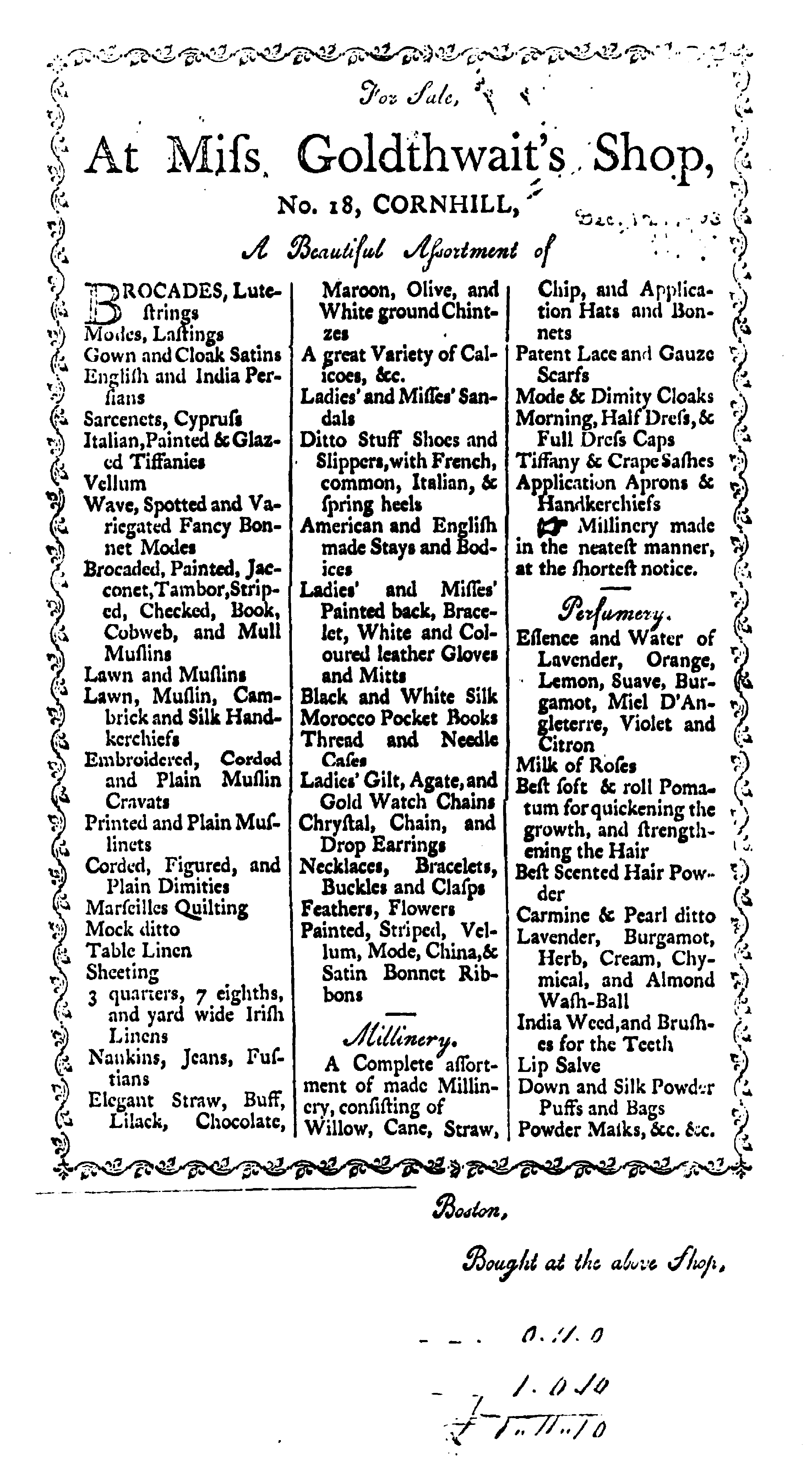
Still, scouring sundry repositories for tayloring manuals (more on that another time), I found this delightful broadside. We can’t use 1782 to document 1780, and no means of using any of these items is mentioned or implied. Still, there they are, those inflammatory terms: Feathers, Flowers.

1782 Broadside. Early American Imprints, Series 1, no. 45771  (filmed)

1782 Broadside. Early American Imprints, Series 1, no. 45771 (filmed)

To paraphrase Max, Let the wild rumpus continue.

Share this:

  • Share on Facebook (Opens in new window) Facebook
  • Share on Pinterest (Opens in new window) Pinterest
  • Email a link to a friend (Opens in new window) Email
  • Share on X (Opens in new window) X
Like Loading...

Shark Tank

12 Tuesday May 2015

Posted by kittycalash in Clothing, Living History, Making Things, Research

≈ 3 Comments

Tags

18th century, 18th century clothes, 18th century clothing, authenticity, common dress, common people, fashion, living history, Making Things, menswear, Reenacting, Research, resources, style, Watson and the Shark

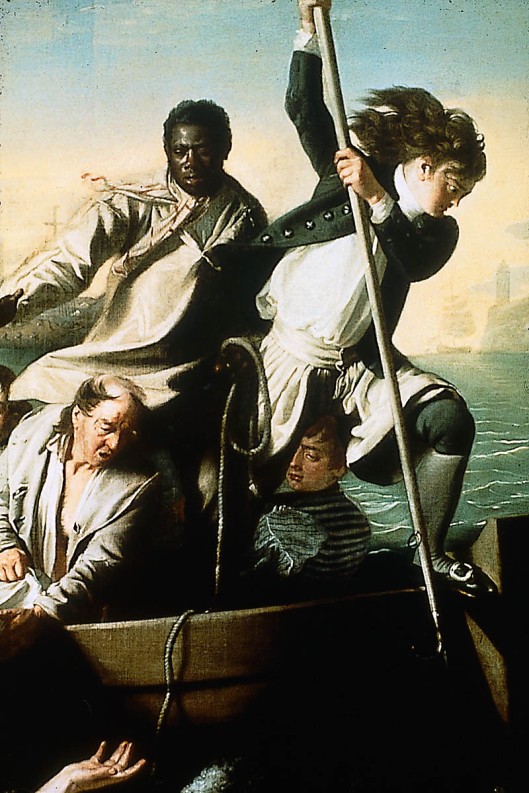
I’ve been thinking a lot about Watson and the Shark, at least when I am not thinking about the Raft of the Medusa, make of that what you will.

Here’s why: Waistcoats. Shirts. Open Jackets.

Detail, Watson and the Shark. MFA Boston 89.481

Detail, Watson and the Shark. MFA Boston 89.481

As you would expect from recent reports, the Young Mr has outgrown almost everything he owns, with the exception of his shirt. I put a lot of time into that blue wool jacket, so I’m not ready to sell it on Etsy yet, but I do have to replace it. Sewing new things means I get a chance to look again at sources for inspiration, and to do better this time around.

Since we’re in summer, I’m thinking blue linen, since I have access to very local inspiration in the form of Oliver Hazard Perry’s short jacket. But for earlier ideas, there’s Copley. I particularly like the horizontal stripe on the waistcoat, and what seems to be a striped shirt. Striped shirt! How exciting is that?

I’m thinking striped trousers, based on a Massachusetts letter, but we’ll see how far I get with that. The final deciding factor in wearing, of course, could be striped trousers are better than no trousers.

Share this:

  • Share on Facebook (Opens in new window) Facebook
  • Share on Pinterest (Opens in new window) Pinterest
  • Email a link to a friend (Opens in new window) Email
  • Share on X (Opens in new window) X
Like Loading...

Battle Road Made a Man 

22 Wednesday Apr 2015

Posted by kittycalash in Events, Living History, personal, Reenacting

≈ 9 Comments

Tags

10th Massachusetts, 18th century, 18th century clothing, authenticity, Battle Road 2015, common people, fashion, menswear, Revolutionary War, style

(with apologies for the child-centered content.)

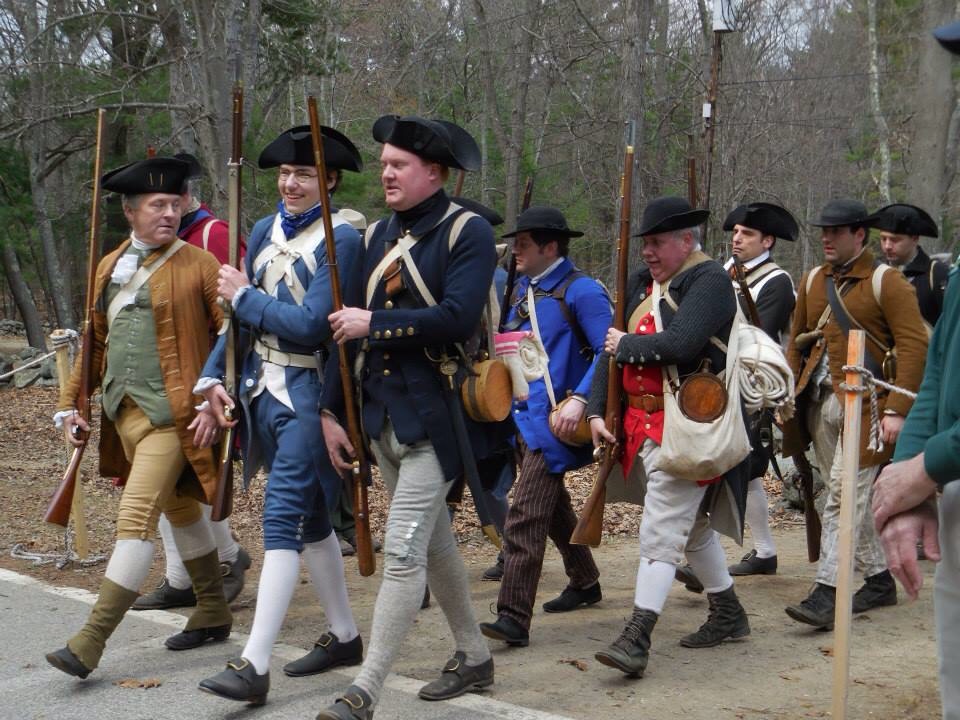
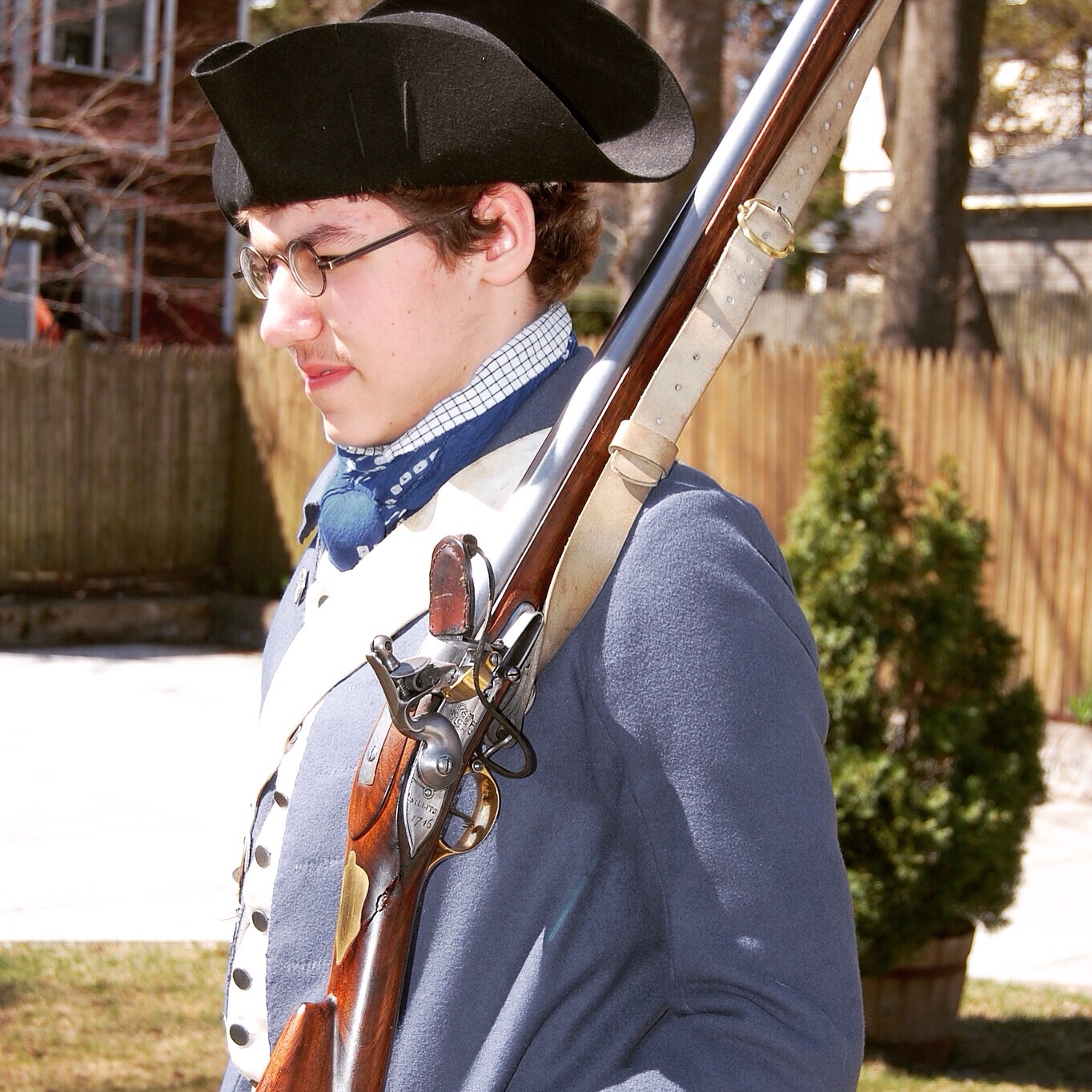
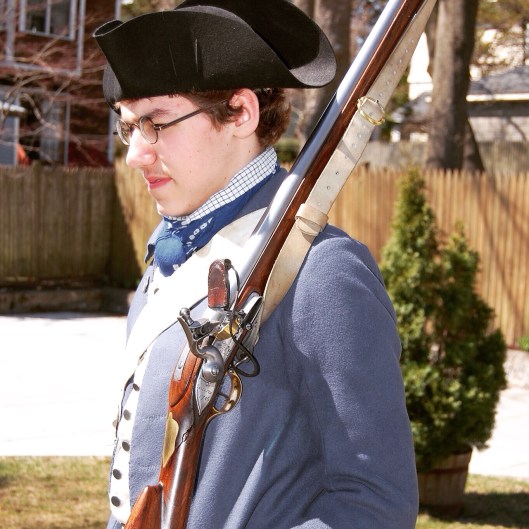
Well, sort of.  The Young Mr sported a brand-new, all-hand-sewn frock coat and breeches, as well as brand new size 15 shoes (thank you, USPS Priority  Mail and Robert Land’s stock of the rara avis size 15.)  He was spotted in photos that were shared with me later, and there he is, front and center, in his new, blue wool broadcloth suit. (I do like the side eye Mr C is giving as he checks on the second row.)

When he was dressed on Saturday, the Young Mr had a real presence. There is something about a suit that changes a man– well, in this case, a boy into a man. On the ride home, he told his father, “Now that I’m growing up, it feels weird to call you mom and dad. I think I should call you by your first names.” (I’ll wait here while you finish laughing. Yes, it is funny. No, we did not laugh at him.)

It’s a curious idea to us now, marking transitions with clothes. For some, coming of age is marked with a car or at least a driver’s license. For others, it may be a first job, or apartment. But once, stages were marked in clothing, as boys moved from gowns to breeches, and later from dresses to short pants to long pants.
 Our clothing is so much less formal, that we are less accustomed in most cases to seeing men in suits. Even as young as I was in those last “Mad Men” years, I remember more formal times, and shopping with my parents, seeing coats marked up in chalk and thread for my father, and the ranks of shirts and heavy-hangered trousers and coats at Brooks Brothers downtown in Chicago.  (I went there once as a teenager with a friend to buy a present for her father; we were not warmly welcomed in our punk clothes, but the glass cases were unforgettable.)

For the Young Mr, that kind of formality is lost. There’s not much point in buying him a modern suit: he’s all t-shirts and hoodies and hand-me-downs from a friend at work he’s rapidly growing past. He’d never wear a suit, except as he steps into the past, and his fittings happen in private homes or workshops, and not in front of a three-panel mirror.

The Young Mr steps into the past to step into adulthood, and comes back to a present where he has many more years and rites of passage before he will truly be an adult.

Share this:

  • Share on Facebook (Opens in new window) Facebook
  • Share on Pinterest (Opens in new window) Pinterest
  • Email a link to a friend (Opens in new window) Email
  • Share on X (Opens in new window) X
Like Loading...

“The Young Philosopher”

27 Friday Feb 2015

Posted by kittycalash in Clothing, Frivolous Friday, Research

≈ 4 Comments

Tags

18th century clothing, 19th century clothing, authenticity, British Museum, Charlotte Smith, common dress, common people, early novels, maids, Research, watercolors

Madora [sic] water color by Maria Caroline Temple ca 1800. Inscribed Maria C. Temple. delt.' and 'Vide "Young Philosopher." British Museum 1869,0612.599

Madora [sic] water color by Maria Caroline Temple ca 1800. Inscribed Maria C. Temple. delt.’ and ‘Vide “Young Philosopher.” British Museum 1869,0612.599

I was looking for images of maids in 1800, and came across this in the British Museum. Having no idea what Maria Temple meant by Vide Young Philosopher, I went searching. Turns out the answer is surprisingly easy: It’s a novel published in 1798 by Charlotte Smith. So it seems that what Maria Caroline Temple did was to draw a scene from a novel she’d read. I was delighted by this, as something I used to do a long time ago was to draw scenes from books I had read and loved.

With a publication date of 1798, I think we can feel pretty confident in the British Museum’s ca. 1800 date; what I was looking for was a non-satirical illustration of a maid in 1800: what did she wear, how did she comport herself? not because I haven’t been a maid in 1800 before, but because I need to be a better maid in 1800.

The things to love in this image, aside from the clothes, are the checked slipcover and window drape, the brass lock on the heavy wooden door, and the view through those wavy panes of glass. I don’t love the wallpaper, but I appreciate the evidence of it– but not as much as I appreciate the hint of drape matching that raucous slipcover.

Now I just need to hunt down an affordable copy of this clearly dramatic and romantic work of early fiction, and to find out exactly what books were being read in 1800 Rhode Island.

Share this:

  • Share on Facebook (Opens in new window) Facebook
  • Share on Pinterest (Opens in new window) Pinterest
  • Email a link to a friend (Opens in new window) Email
  • Share on X (Opens in new window) X
Like Loading...

Winter Amusement

11 Wednesday Feb 2015

Posted by kittycalash in Clothing, History, Making Things

≈ 2 Comments

Tags

18th century, 18th century clothes, 18th century clothing, Amusement, Clothing, common dress, Costume, fashion, James Tookey, New England, snow, style, weather, winter, winter coat, Yale Center for British Art

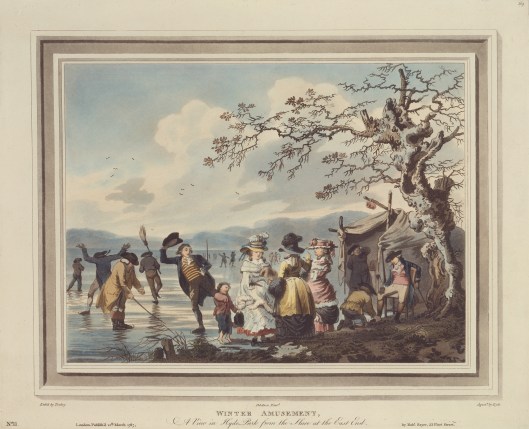
Winter Amusement: A View in Hyde Park from the Sluice at the East End.Aquatint, printed in color and colored by hand, 1787.Print made by James Tookey. YCBA  B1985.36.609

Winter Amusement: A View in Hyde Park from the Sluice at the East End.Aquatint, printed in color and colored by hand, 1787.Print made by James Tookey. YCBA B1985.36.609

I count myself among the people sick of winter in New England, but the piles of snow and wretched driving have prompted some comments from the Young Mr, including “Well, it would be worse in the 18th century, right?”

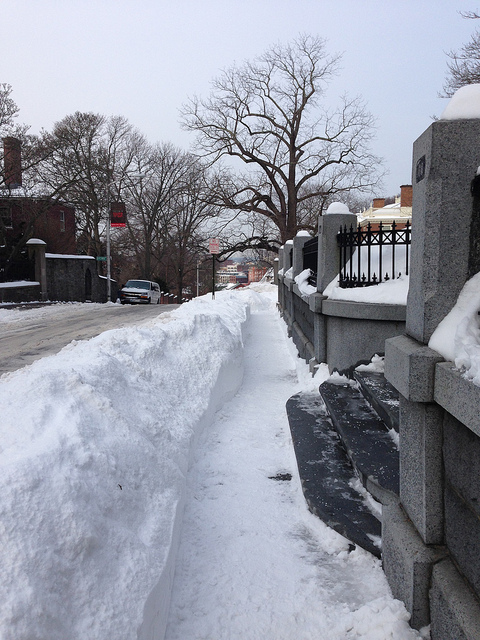
16314413949_fca9e1de44_zHaving recently walked on a combination of cleared, partially cleared, and uncleared walks, I’m not so sure…but I was in modern boots, and not my leather-soled repro shoes, which I prefer not to expose to the variety of modern snow-melting chemicals, though they can be cleaned.

Still: the partially cleared and unsalted walk was easier to walk on than you might imagine, and I suspect that the 18th century tasks of clearing steps and paths to make room to walk or drive carts, wagons and carriages was probably reasonably effective– though the melting must have been more annoying and messy when mud season arrived.

In all this cold and snow, how did people keep warm and stay fashionable? For gents, of course, greatcoats were an option, and cloaks or mantles for women, both in the last quarter of the 18th century and into the 19th. I found documentation for women’s Spencers and greatcoats in the first decade of the 19th century, but what about earlier?

detail,  Winter Amusement, 1787

detail, Winter Amusement, 1787

While I cannot (yet) place the coat at right in New England, you know I covet one.

Tail pleats with back buttons, a possible shoulder cape? I love the menswear styling of this coat, and the drab-and-black color combination of coat, gown and accessories. I don’t have much call for 1787 clothing in my life (actually none whatsoever) but by the time I’ve patterned and made this coat (after many other things to finish), perhaps I will also have created a reason.

Winter frolics, New Year’s Eve party, 1788? Anything is possible, and time is better spent imagining fun than complaining about snow.

Share this:

  • Share on Facebook (Opens in new window) Facebook
  • Share on Pinterest (Opens in new window) Pinterest
  • Email a link to a friend (Opens in new window) Email
  • Share on X (Opens in new window) X
Like Loading...
← Older posts
Newer posts →

Archives

wordpress statistics

Creative Commons License
Kitty Calash blog by Kirsten Hammerstrom is licensed under a Creative Commons Attribution-NonCommercial-ShareAlike 4.0 International License.

Website Built with WordPress.com.

  • Subscribe Subscribed
    • Kitty Calash
    • Join 621 other subscribers
    • Already have a WordPress.com account? Log in now.
    • Kitty Calash
    • Subscribe Subscribed
    • Sign up
    • Log in
    • Report this content
    • View site in Reader
    • Manage subscriptions
    • Collapse this bar
 

Loading Comments...
 

    %d