• Home
  • Completed Costumes/Impressions
  • Emma and Her Dresses
  • Free Patterns and Instructions

Kitty Calash

~ Confessions of a Known Bonnet-Wearer

Kitty Calash

Tag Archives: Events

Peddling a Myth

23 Tuesday Feb 2016

Posted by kittycalash in Events, Fail, History, Living History, Reenacting, Research

≈ 13 Comments

Tags

18th century, Boston, common people, Events, fail, interpretation, Research, Revolutionary War

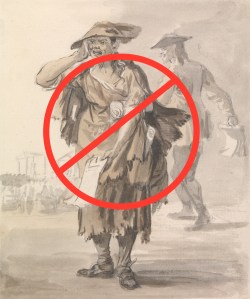
Paul Sandby RA, 1731–1809, British, London Cries: Last Dying Speech and Confession, ca. 1759, Watercolor over graphite on medium, cream, slightly textured wove paper, Yale Center for British Art, Paul Mellon Collection

Paul Sandby RA, 1731–1809, British, London Cries: Last Dying Speech and Confession, ca. 1759, Watercolor over graphite on medium, cream, slightly textured wove paper, Yale Center for British Art, Paul Mellon Collection

Every now and then, I reach the dammit! point of my research, where I am forced to realize that Everything I Assumed Was Wrong. I try to make those moments a cause for celebration, even though they’re often deeply frustrating. Do not pass GO, Do not collect $200, Go directly to the Library.

What now?

Well… Boston ain’t London. And the North American colonies ain’t Great Britain. The business structure, the size of the cities, is different. Distribution of goods is different, thanks to tariffs and non-import/export laws. Which means?

Peddling. It’s not a thing. Or it’s a very difficult thing to document.
Which means that all the things I’d thought about doing for the Massacre (day or night) are probably wrong. (Remember, this is when we celebrate!)

Hey, I’m not the only one rethinking my approach.

But there it is: I’ve looked in the Boston Selectmen’s Minutes for 1768-1771, and while there is plenty of small pox (yay!) and many lemons being imported (yay! punch!) and there are licenses being granted for selling strong drink in inns and houses, there are no peddlers licenses. There are no licenses for street vendors of any kind. Hmmmm….

I’ve also read the Dublin Seminar publications Itinerancy in New England and New York (1984) and Life on the Streets and Commons, 1600 to the Present (2005). Not looking good here for street vendors and hawkers pre-1800.

While I never particularly trust early 20th century monographs and articles without footnotes, the somewhat entertaining Hawkers & walkers in early America : strolling peddlers, preachers, lawyers, doctors, players, and others, from the beginning to the Civil War informed me that street vending was not common in North American British Colonies, and in fact, was not commonly seen until after 1800.

What the ever-loving heckers?

I found peddlers’ licenses in Philadelphia for 1770: all men. But so far, nothing in Providence, Boston, or Newport (or Connecticut). The theory is that itinerant sales people didn’t pay taxes the way merchants did, and that merchants therefore lobbied against them. In Providence, the earliest mention I’ve found thus far is a lobster and fish man at the Great Bridge in 1818.

Just as the watch of Boston differed from the watch in London, so too, it seems, did the petty retailers. I still can’t quite believe there were no street peddlers and hawkers in colonial cities, but I’ll need a new way to approach this question.

Share this:

  • Click to share on Facebook (Opens in new window) Facebook
  • Click to share on Pinterest (Opens in new window) Pinterest
  • Click to email a link to a friend (Opens in new window) Email
  • Click to share on X (Opens in new window) X
Like Loading...

On the Street Corner

10 Wednesday Feb 2016

Posted by kittycalash in History, Living History, Reenacting, Research

≈ 2 Comments

Tags

18th century, cats, common people, Events, history, interpretation, living history, Paul Sandby, Research

Paul Sandby RA, 1731–1809, British, London Cries: "Turn your Copper into Silver Now before Your Eyes" (Title Page Design), 1760, Watercolor, pen and gray and brown ink over graphite on medium, cream, slightly textured laid paper, Yale Center for British Art, Paul Mellon Collection

Paul Sandby RA, 1731–1809, British, London Cries: “Turn your Copper into Silver Now before Your Eyes” (Title Page Design), 1760, Watercolor, pen and gray and brown ink over graphite on medium, cream, slightly textured laid paper, Yale Center for British Art, Paul Mellon Collection

Not everyone who’s standing on the corner is up to no good. Some have legitimate business.

In the London of the past, just as in, say, the Manhattan of today, street vendors hawked a variety of goods. Having gone through multiple versions of Cries of London, I’ve come up with a basic list of the items sold on the street.

Love songs
Stationery
Oranges
Boot laces
Reeds for chair mending
Saloop See also salop.
Gingerbread
Muffins
Hot cross buns
Doormats
Cats’ and dogs’ meat
Coal
Lavender
Ribbons

Paul Sandby RA, 1731–1809, British, London Cries: A Girl with a Basket on Her Head ("Lights for the Cats, Liver for the Dogs"), ca. 1759, Watercolor, pen and brown ink, and graphite on medium, cream, slightly textured laid paper, Yale Center for British Art, Paul Mellon Collection

Paul Sandby RA, 1731–1809, British, London Cries: A Girl with a Basket on Her Head (“Lights for the Cats, Liver for the Dogs”), ca. 1759, Watercolor, pen and brown ink, and graphite on medium, cream, slightly textured laid paper, Yale Center for British Art, Paul Mellon Collection

Boot black
Brushes
Flounders
Rhubarb
Walnuts to pickle
Cucumbers
Bandboxes
Baskets
Brooms
Rabbits
Pins
Mops
Wash balls (soap)
Strawberries
New peas
Rosemary and bay
Strings of onions
Turnips and carrots

There’s seasonality to this, of course. Strawberries and cucumbers are not being hawked on the streets of London, Boston, Newport or New York in February. I’ll tell you: being a Cat’s-meat-[wo]Man is practically a childhood dream, since I knew I could never really learn to speak to the animals, and as it happens, Sandby depicts one. It seems there was gender equity in supplying food for pets and stinking of meat.

Paul Sandby RA, 1731–1809, British, London Cries: A Milkmaid, ca. 1759, Watercolor, pen and brown ink with graphite on medium, cream, slightly textured wove paper, Yale Center for British Art, Paul Mellon Collection

Paul Sandby RA, 1731–1809, British, London Cries: A Milkmaid, ca. 1759, Watercolor, pen and brown ink with graphite on medium, cream, slightly textured wove paper, Yale Center for British Art, Paul Mellon Collection

I’ve long been fond of the milkmaid, probably because she’s relatively clean, has a cloak for warmth, and I can understand what she does. As much as I love “Turn your copper into silver,” I lack real skill at charlatanry. And gambling. I don’t play poker: my face is too easy to read. Still, if you’re doing this right, there’s a lot to invest in being a milkmaid: kettles (likely pewter), measuring cups (tin? or possibly pewter), and a yoke. It’s a commitment. Cat’s meat– if you’re good with stank and have the right basket*, you’re pretty okay.

If not stank or drank, then gaming. It looks like the object of the game is to knock down the three balls at left in the background by hitting another ball, or perhaps a stone, with the stick. Ha’penny a throw? Maybe you just throw the stick.

Paul Sandby RA, 1731–1809, British, London Cries: Throws for a Ha'penny Have You a Ha'penny, undated, Brown wash, gray wash, graphite, and black chalk on medium, cream, slightly textured laid paper, Yale Center for British Art, Paul Mellon Collection

Paul Sandby RA, 1731–1809, British, London Cries: Throws for a Ha’penny Have You a Ha’penny, undated, Brown wash, gray wash, graphite, and black chalk on medium, cream, slightly textured laid paper, Yale Center for British Art, Paul Mellon Collection

This is another instance wherein I am faced with historical things I don’t know nearly enough about: gambling and street games, pet care and keeping. Cat boxes: when we were they invented? We know cat litter is a 1947 invention, and that sand or ashes were used in cat boxes when cats were kept inside, but for the most part, they went in and out, and mostly out, until cat boxes and neutering became common, though an 1895 manual recommended that “the cat in civilization must be fed, looked after, and guarded in its moments of freedom.“**

cat care

Yes, I went there. I looked it up.

It’s more than 100 years after the time I’m investigating, but I don’t want to fall too far down this cat’s meat rabbit hole– but this does tell me that the historical images of indoor cats come with oat or straw filled baskets in sunny corners, and recommendations for galvanized pans filled with sand, clean earth, or sawdust, which may be ideal, as it can be burned.

Right, I need to focus and not entertain myself with children’s books about Old Dame Trot and her cat…dressed up. In 1810.

My point is, there’s a lot to sell on the streets of any town, images to support the material culture and reference books from which we can derive contextual clues to the impression of something as random as a cat’s meat man or woman. I don’t know that I’m leaping to be a Cat’s-meat-Woman, but it leads to a lot of interesting interpretive points about domestic life, pets, and families that visitors can relate to much more easily than street sales. Of course, if you choose to be the Cats-meat-Man, I won’t stop you from calling yourself Mr Friskies.

*See that flat do-da? I have a similar basket. It does appear one could hawk oysters from a basket like the one I have. Mmmm good.

**Huidekoper, Rush Shippen, 1854-1901. The cat, a guide to the classification and varieties of cats and a short treaties upon their care, diseases, and treatment. 1895: New York, D. Appleton and company

Share this:

  • Click to share on Facebook (Opens in new window) Facebook
  • Click to share on Pinterest (Opens in new window) Pinterest
  • Click to email a link to a friend (Opens in new window) Email
  • Click to share on X (Opens in new window) X
Like Loading...

Undocumented but Not Alien

07 Sunday Feb 2016

Posted by kittycalash in Events, Living History, personal, Philosophy, Reenacting, Research

≈ 1 Comment

Tags

18th century, authenticity, common people, Events, interpretation, living history, Reenacting, Research

Cherries. The Itinerant Traders of London in their Ordinary Costume, from Modern London; being the history and present state of the British Metropolis. Illustrated with numerous copper plates - British Library

Cherries. The Itinerant Traders of London in their Ordinary Costume, from Modern London; being the history and present state of the British Metropolis. Illustrated with numerous copper plates – British Library

Sometimes it’s hard to know how a riot gets started; other times, the cause is pretty clear. I’ve started one or two myself. The latest stems from Our Girl History’s musings on the Massacre.

There’s a lot to unpack, and it’s been happening online and in private conversations. Yes, children, Aunt Kitty pays attention, even if she’s silent. This is a tough topic: how can modern feminists represent historical women in a patriarchal culture without losing their minds? How can events better reflect the actual past? The population has, historically, always been about 50-50 male-female. We understand why there aren’t women on battlefields. We get that traditional events (by which I mean the ritualized commemorations of battles) have ridiculously gender-segregated and inauthentic roles. We get that it’s hard to adapt to new ideas, even free, documented ones.

The irritation and anxiety I feel as I expand the kinds of events I attend is actually reassuring: that’s how I know I’m learning. The frustration we feel means we’re banging up against a wall that we can break down with research.

Paul Sandby, London Cries: Black Heart cherries... ca. 1759. YCBA, B1975.3.206

Paul Sandby, London Cries: Black Heart cherries… ca. 1759. YCBA, B1975.3.206

It’s not easy research: women not married to or otherwise affiliated with prominent men are poorly documented. We may never know their names– or we may have a name from a census, newspaper ad, or city directory, and nothing more. But we can fill in the gaps with interpretation. (As it happens, I’ll be talking about this very idea in just a few weeks. Come taunt me in person.)

There’s a lot to think about in recreating the past, in particular at this event. The organizers have done a phenomenal amount of research, gathered the details, sorted them out, assigned roles, scripted and timed an event, and recruited a chorus of characters that reflects the texture of a tense city in 1770.

Building an event, even one that recreates an actual moment in the past, is as much as work of theatre or fiction as it is of fact: character development, motivations, costuming, setting, all of those combine with the documented words to create a scene that conveys an interpretive point for the public. It’s similar to a museum exhibition– it’s interpreted.

Traditionally, living history has interpreted the past with a bias to men’s roles (that’s the nature of our society, folks) and with a tendency to assign roles and activities by gender (again, the nature of our society for centuries). Our task in breaking that pattern is not to right the injustices of the past, for we cannot, but to interpret them.

Playing the game at quadrille : from an original painting in Vauxhall Gardens. London : Robert Sayer, ca. 1750. Lewis Walpole Library, 750.00.00.14

What about the people in the background? Playing the game at quadrille : from an original painting in Vauxhall Gardens. London : Robert Sayer, ca. 1750. Lewis Walpole Library, 750.00.00.14

One way to do that is to bring the undocumented, or poorly documented, people of the past to light. I tried to do that in exploring Bridget Connor. I’ve tried to do that by interpreting a late 18th/early 19th century servant. It’s a long and frustrating process, reading letters and diaries for scraps of information, usually casual references to servants and cooks.  But in the frustration lies the promise: we will find the people on the margins, and bring them in to clearer focus.

Share this:

  • Click to share on Facebook (Opens in new window) Facebook
  • Click to share on Pinterest (Opens in new window) Pinterest
  • Click to email a link to a friend (Opens in new window) Email
  • Click to share on X (Opens in new window) X
Like Loading...

Frivolous Friday: Flip your Lid

05 Friday Feb 2016

Posted by kittycalash in Clothing, Frivolous Friday, History, Research

≈ 4 Comments

Tags

18th century, 18th century clothing, authenticity, bonnets, Events, fashion, hats, Research, style, women

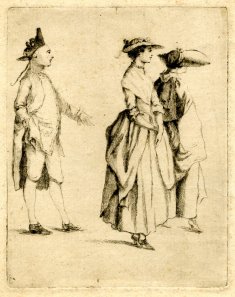
Print. Drypoint by John Theodore Heins, Jr. 1747-1771. British Museum 1858,0417.362

Drypoint by John Theodore Heins, Jr. British Museum 1858,0417.362

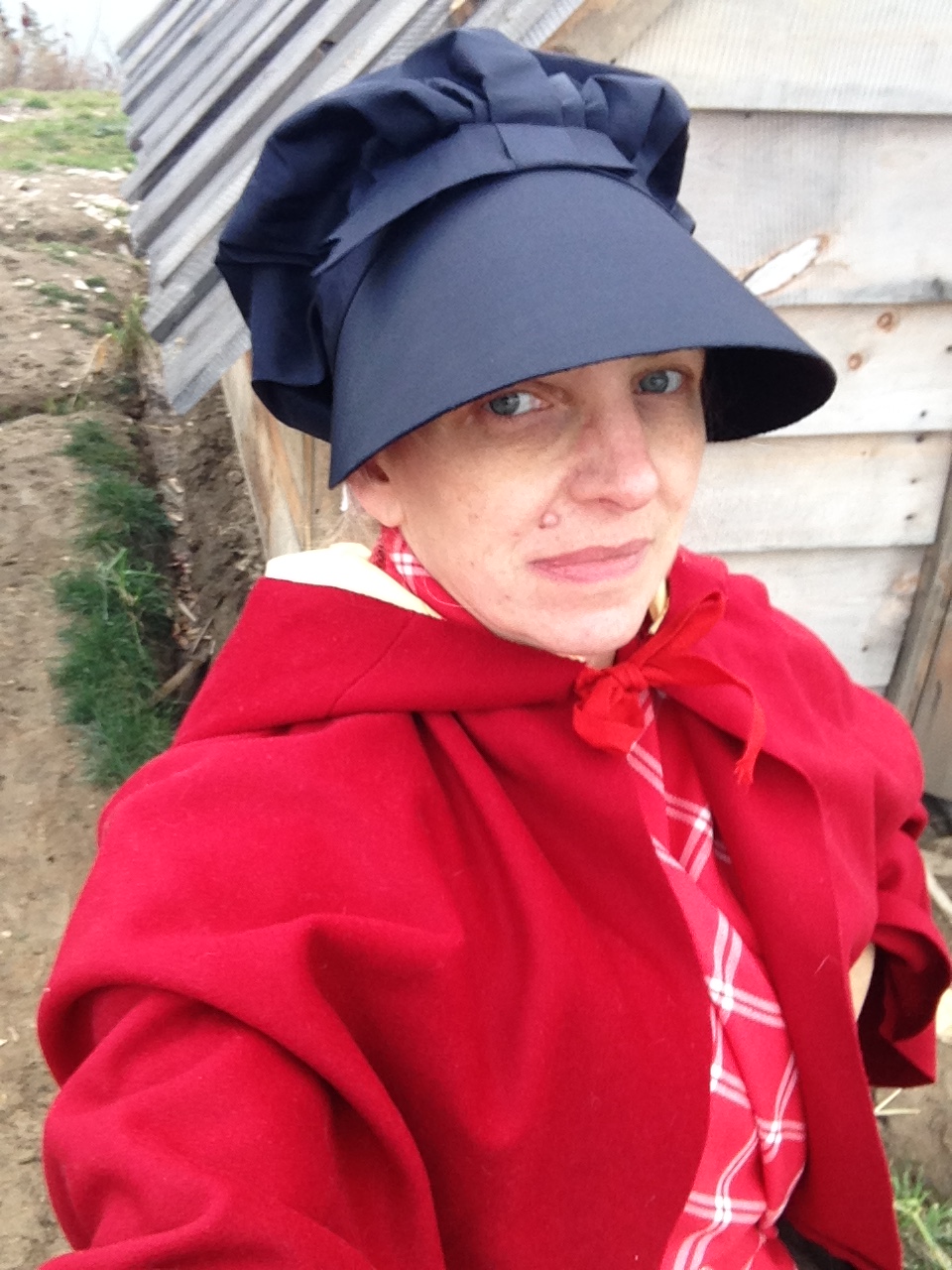
Bonnets. Who doesn’t like them? They’re the cupcake of costuming, just enough sugar to be delicious, not enough trouble to count. I know I have far too many, they fall from the hall shelf nearly every time I get my coat.

But I started asking myself questions about bonnets when a friend asked me questions about bonnets: shape, color, and how they’re worn (rakish angle? pulled down low?).

We’re planning on going to an event in March, and I’ve been thinking about head wear, especially bonnets. Now that the question’s been asked, I don’t want to randomly cram black silk taffeta on my head and call it a day: I’m back to “don’t know mind.” Time to start looking. So far, I’ve searched the Tate, the British Museum, the National Portrait Gallery UK, the Lewis Walpole Library, the Yale Center for British Art, the Met,  the V&A, and the BBC’s Your Paintings site.

I started at the British Museum. Here are the results for a collections search using the term bonnet and the production dates 1765-1772.  Hmm. No classic black bonnet. Dammit, actually, because I really like mine.

Print made by James Caldwall, A Ladies Maid Purchasing a Leek, 1772, Line engraving and etching Yale Center for British Art, Paul Mellon Collection. B1977.14.11105

James Caldwall, A Ladies Maid Purchasing a Leek, 1772, YCBA, B1977.14.11105

Yale Center for British Art, same search parameters. I know you know this print.

Man, this is a pain, right? Where are the bonnets? 1772 is actually too late for my purposes in this instance.

The Lewis Walpole Library Digital Collections lack a feature for limiting or sorting by date, but they tag bonnets in their prints. Still: no big black bonnets in early prints.

I’m starting to think it’s lampshade or saucer for the 1765-1770 period. You remember lampshade, don’t you? One of my post-operative slightly narcotized creations based in part on the Marquis of Granby (Relieving a Sick Soldier).

The Marquis of Granby (Relieving A Sick Soldier) Oil on canvas by Edward Penny after 1765 (c) Royal Academy of Arts

The Marquis of Granby (Relieving A Sick Soldier) Oil on canvas by Edward Penny after 1765 (c) Royal Academy of Arts

Lampshade seems pretty fashionable in 1760. There are more portraits at the National Portrait Gallery (UK), but bonnets are scarce in them, primarily, I suppose, because they are not indoor wear.

Anne (née Day), Lady Fenoulhet by Richard Purcell (Charles or Philip Corbutt), after Sir Joshua Reynolds, mezzotint, (1760) National Portrait Gallery UK D1939
Nelly O'Brien by Samuel Okey, after Sir Joshua Reynolds, mezzotint, circa 1765-1780 (circa 1762-1764) National Portrait Gallery UK D19911
Nelly O’Brien by Samuel Okey, after Sir Joshua Reynolds, mezzotint, circa 1765-1780 (circa 1762-1764) National Portrait Gallery UK D19911

Lady Fenoulhet is wearing a lampshade. Nelly O’Brien is wearing an interesting, more hat-like device. Her imprint is ca. 1765-1780, but other impressions are dated ca. 1760. The 1762-1764 seems plausible. But that’s still early for my purposes. The lampshade really is, too; Mrs Mary Smith of Portsmouth may be wearing one, but considering that the artist who drew this plate died in 1766, I think we can place this form in the 1750s to early 1760s. Lampshade is too early. The”Lady’s Maid buying a Leek” is too late.

Next, please.

Share this:

  • Click to share on Facebook (Opens in new window) Facebook
  • Click to share on Pinterest (Opens in new window) Pinterest
  • Click to email a link to a friend (Opens in new window) Email
  • Click to share on X (Opens in new window) X
Like Loading...

Fort Moonrise Kingdom

06 Sunday Dec 2015

Posted by kittycalash in Events, History, Living History, Reenacting

≈ 2 Comments

Tags

#nobletrain, 18th century, authenticity, common people, common soldier, Costume, Events, feminism, Fort Ticonderoga, history, interpretation, living history, progressive reenacting, women's history, women's work

Fort Ti was described to me as “Disney World for Re-enactors,” but my vote is for Living History’s Moonrise Kingdom.

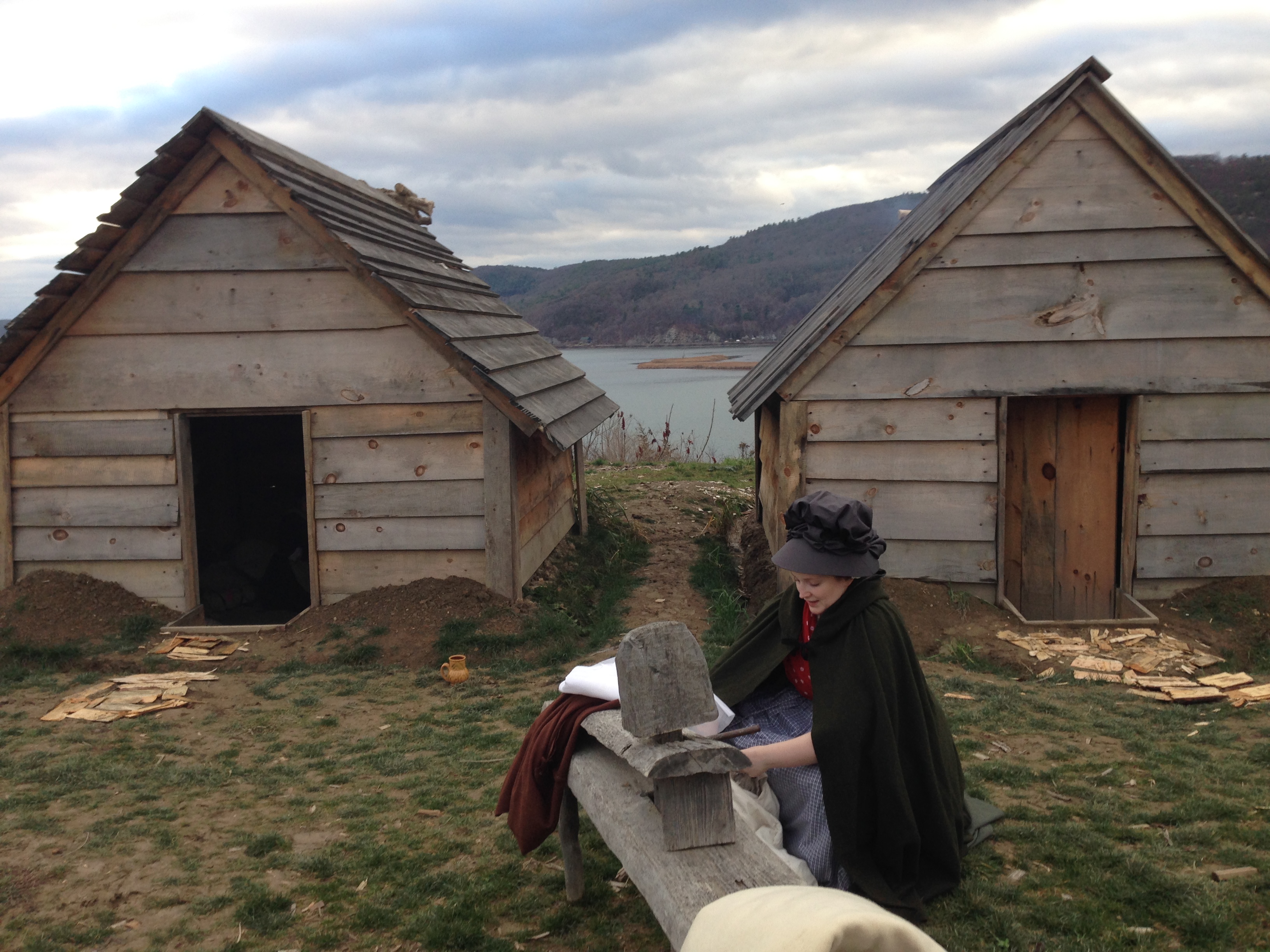
Idyllic, ain't it?

Idyllic, ain’t it?

I almost didn’t go when my Saturday night roomshare cancelled on Monday and then I developed an ear ache on Wednesday, but on Thursday, Low Spark , Mlle Modiste and I arranged a carpool, so on Friday morning, a Carload of Rhode Islanders (a thing to behold and to be wary of) set off for points north.

Our initial plan was to to sleep in the soldiers’ huts, but they proved extremely crowded and smokey, so when Mlle Modiste and I were offered a bunk in the barracks, we took it… unfortunately, only one of the blankets I’d brought for us did not make it back up to the fort or into the car heading home.

Mlle Modiste at the huts

Mlle Modiste at the huts

Before supper, we stuffed bed ticks, started a fire, startled a bat (I was not the source of the shriek that brought officers, women, and soldiers running), and stuffed straw in the hole we thought it flew into (thank goodness I’m tall, I guess).

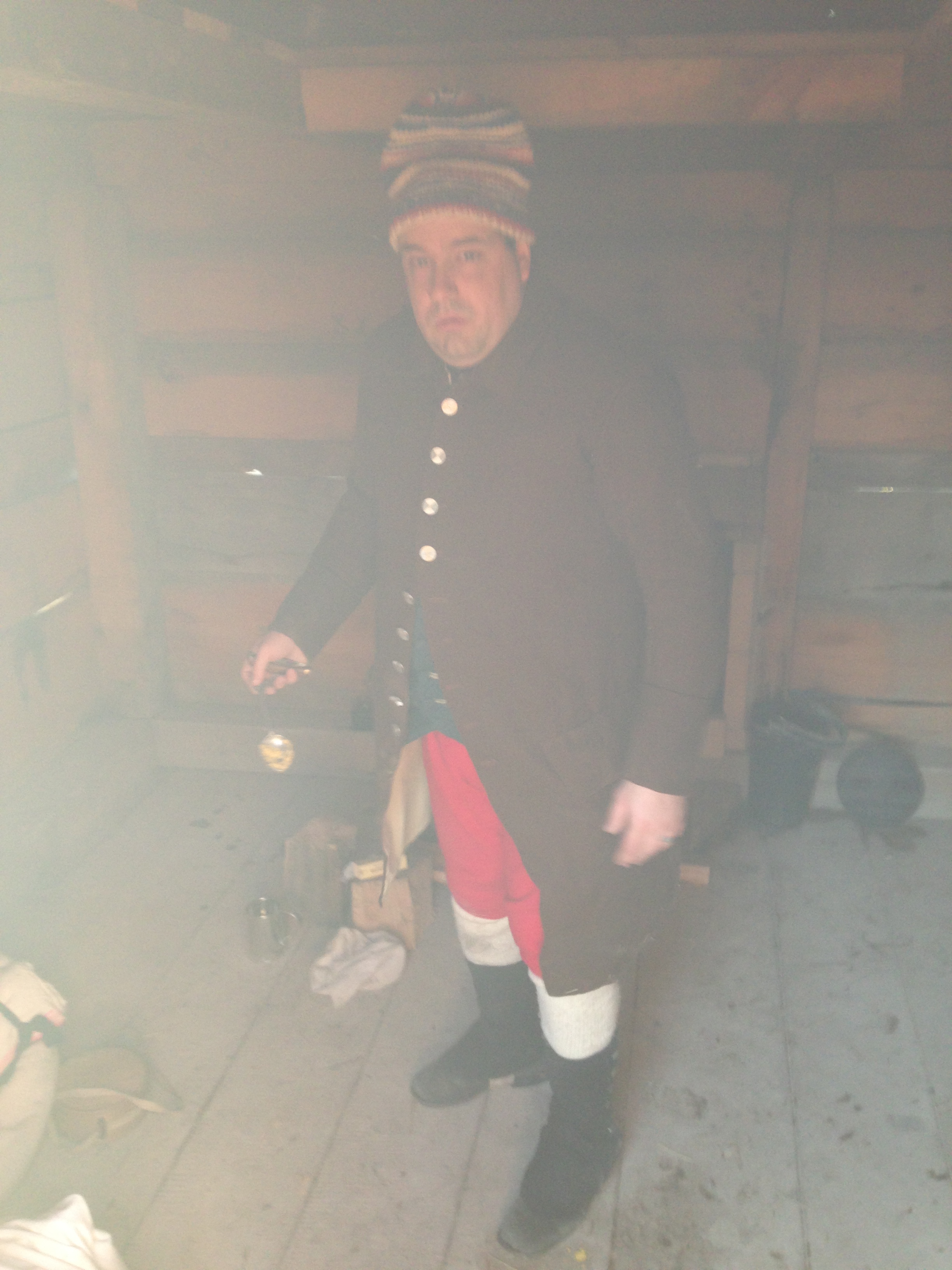
Smoke didn't just get in your eyes...

Smoke didn’t just get in your eyes…

The tavern moved up to the would-be armory at the barracks, though I’m certain multiple political deals and presidential candidacies could have been plotted and bought down at the smoke-filled huts. Instead, it was reenactor politics as usual: parallel experiences for men and women (not ladies, thank you, and if I hear you use “distaff” about me, expect to find one has become part of your anatomy). Just because I’m used to it doesn’t mean I don’t notice it, understand it, and still dislike it.

We’d expected to attend to “sick” soldiers in the hospital, but Saturday was such a lovely day that we spent most of it outdoors, starting and tending a fire to boil laundry and make dinner for the women’s mess. This pleased me mightily, even as I may have distracted troops despite my advanced age as I crouched at the fire being a human bellows. You try getting low in stays and see how you do: immodesty, thy name is fashion.

While I kept the fire going, much credit should go to Rory, a bad-ass woman in men’s clothing who split wood a-plenty for us.  Rory made me want badly to make myself a suit and wield an axe. I find myself wanting to do the same work as the men (I have always been this way), and I was intrigued by the debate that was reported to me: should a woman do men’s work in women’s clothes, or in men’s clothes? In the end, they chose men’s clothes, and Rory wore them well. Reader: I was jealous. I was also covetous of an axe, having realized all the cutting and hewing tools are no longer domiciled with me.

Aunt Kitty's coming' for you. boys.

Aunt Kitty’s comin’ for you, boys.

Saturday really revolved around three things for me: food, free agency, and feminism:

  • I ate some interesting things, including a smoked chocolate cake (left overnight in a hut, I can describe its flavor best as sucking diesel exhaust through a chocolate cupcake).
  • Now that I’m a free agent attending events sans unit, I have much more fun.
  • I am determined and dedicated to effecting well-researched roles for women in living history events of all kinds.

Share this:

  • Click to share on Facebook (Opens in new window) Facebook
  • Click to share on Pinterest (Opens in new window) Pinterest
  • Click to email a link to a friend (Opens in new window) Email
  • Click to share on X (Opens in new window) X
Like Loading...
← Older posts
Newer posts →

Archives

wordpress statistics

Creative Commons License
Kitty Calash blog by Kirsten Hammerstrom is licensed under a Creative Commons Attribution-NonCommercial-ShareAlike 4.0 International License.

Website Built with WordPress.com.

  • Subscribe Subscribed
    • Kitty Calash
    • Join 621 other subscribers
    • Already have a WordPress.com account? Log in now.
    • Kitty Calash
    • Subscribe Subscribed
    • Sign up
    • Log in
    • Report this content
    • View site in Reader
    • Manage subscriptions
    • Collapse this bar
 

Loading Comments...
 

    %d