• Home
  • Completed Costumes/Impressions
  • Emma and Her Dresses
  • Free Patterns and Instructions

Kitty Calash

~ Confessions of a Known Bonnet-Wearer

Kitty Calash

Tag Archives: living history

Maintain an Even Strain

27 Wednesday Apr 2016

Posted by kittycalash in Art Rant, Events, History, Living History, personal

≈ 5 Comments

Tags

common people, feminism, first person interpretation, interpretation, living history, women's history, women's work
IMG_6471

Dude: I am conflicted. There are folks out there doing excellent work, but after reading some recent posts around the interwebs, I kept thinking, “Stockholm Syndrome much?”

I’m as much of a narcissist as the next person, and I think I recognize some of the folks being called out in various places for being critical of women’s roles in living history events. So, organize my own events? Come up with my own things to do?

Cool: challenge accepted.

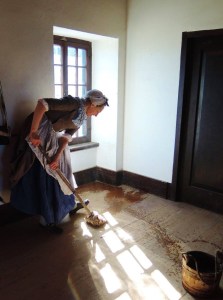
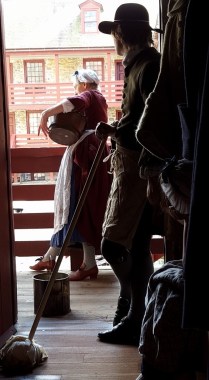
I am, in fact, throwing down for the pleasure and pain of running a farm in late June. No, I didn’t organize it, but I was asked to take on a challenge and I have accepted, roping my favorite tailor into the effort as well. It’ll mean a bunch of studying, but in a pinch, I can always clean the house. We can rake, make refugees stay in the yard, and try as hard as we can to keep Quakers from putting radical ideas in the slaves’ heads. I think it will be hard, unpleasant, and uncomfortable—and that’s what I don’t like about the suggestions in the otherwise honestly well-intended and meant-to-inspire posts.
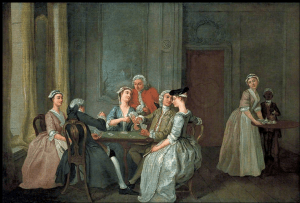
Playing at Quadrille. Oil on canvas by Francis Hayman. Birmingham Museums and Art Gallery

Playing at Quadrille. Oil on canvas by Francis Hayman. Birmingham Museums and Art Gallery

They’re so nice. They reinforce women’s subordinate roles in the past and present. Children’s activities? I might die, really, I might. If that’s your bag, go for it, please! We need it. It’s simply not something I can do.

No more can I talk about What People Wore. It’s not that I don’t care (y’all know I do) but that I want to move past the surface.

It’s not enough just to look great.
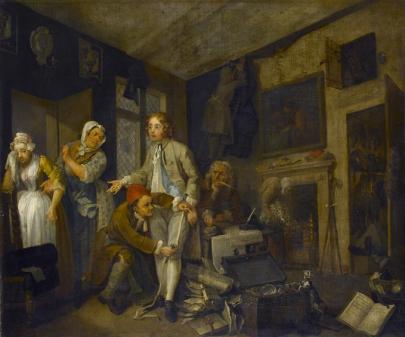
The Heir: Tom Finds New Wealth. William Hogarth.

The Heir: Tom Finds New Wealth. William Hogarth.

Dive deep: find the dirt. Find the hard stuff. You don’t have to be nice. That’s my personal problem with what I’ve been reading: between the lines I keep hearing a voice suggesting that we be nice girls, that we simmer down. No, I’m sorry. I can’t. Reader, if you can, go for it.

But if you can’t, I want to tell you: Keep pushing. Keep asking. Keep speaking up. Challenge the status quo. Our Girl History did a great post on Well Behaved Women, and I fully support the work people are doing to represent the Well Behaved and the marginalized (shout out to the veteran with the knife-grinding cart: well imagined, sir!).

Russell, John; The Blind Beggar and His Granddaughter; The Bowes Museum;

John Russell. The Blind Beggar and His Granddaughter, oil on canvas, 18th century. The Bowes Museum UK.

Bring it. Bring the ordinary.

But if you can’t be ordinary or run the children’s games or be subservient or show how women dressed, that’s okay. For the love of god, someone, be desperate.

Be hungry, be angry, be resentful, be religious.

Whatever you do, don’t be afraid to speak your mind.
Share this:

  • Share on Facebook (Opens in new window) Facebook
  • Share on Pinterest (Opens in new window) Pinterest
  • Email a link to a friend (Opens in new window) Email
  • Share on X (Opens in new window) X
Like Loading...

After Dark: Bedtime for Kitty

14 Thursday Apr 2016

Posted by kittycalash in Events, History, Living History, Museums, Research

≈ 6 Comments

Tags

19th century, After Dark, candles, chamber pots, experimental archaeology, hygiene, interpretation, John Brown House Museum, lighting, living history, Rhode Island history, sleep patterns

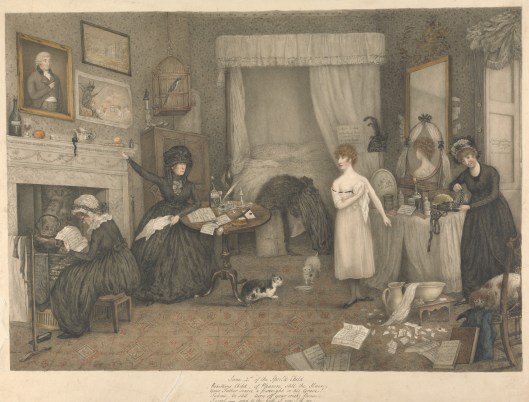
Lewis Vaslet, 1742–1808, The Spoiled Child, Scene II, ca. 1802, Watercolor with black ink and gray wash over graphite on moderately thick, slightly textured, cream wove paper, Yale Center for British Art, Paul Mellon Collection. B1977.14.4342

Lewis Vaslet, 1742–1808, The Spoiled Child, Scene II, ca. 1802, Watercolor with black ink and gray wash over graphite on moderately thick, slightly textured, cream wove paper, Yale Center for British Art, Paul Mellon Collection. B1977.14.4342

In just about a week, we’re running a pilot program in the historic house where I work (tickets available here). After Dark, or What Cheer Night, are programs we’ve wanted to do for a couple of years, but all good things take time.

Error
This video doesn’t exist

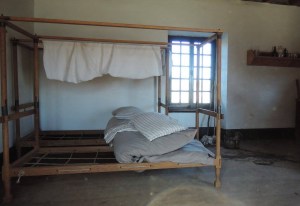
I’ve drawn the lot chosen to talk about getting ready for bed and sleeping: lighting devices, bedding, washing, chamber pots* and what people wore to bed. While already in possession of candles and candlesticks, and the proud new owner of exhibition and interpretation grant-funded LED candles, there are things I needed to make. Of course.

Print made by Guillaume Philippe Benoist, 1725–ca. 1770, French, Pamela Swooning, after having discovered Mr. B. in the closet, He (frighted) endeavouring to recover her, Mrs. Jervis wringing her hands, and screaming, 1745, Etching with stipple engraving on medium, slightly textured, cream laid paper, Yale Center for British Art, Yale Art Gallery Collection, Gift of the Library Associates.

Print made by Guillaume Philippe Benoist, 1725–ca. 1770, French, Pamela Swooning, after having discovered Mr. B. in the closet, He (frighted) endeavouring to recover her, Mrs. Jervis wringing her hands, and screaming, 1745, Etching with stipple engraving on medium, slightly textured, cream laid paper, Yale Center for British Art, Yale Art Gallery Collection, Gift of the Library Associates.

A banyan, for one thing. And you know that will (one hopes) be followed in short order by a night cap. After all, you can’t talk about Pamela if you haven’t got a banyan and a cap in the house. That’s a simple and relatively fun project to tackle when brain capacity is somewhat limited: some piecing, straight seams, setting in facings and sleeve linings can all happen before I must assault the collar.

IMG_6554
Piecing it together, as the eventual wearer is taller than available fabric.

Collars are devilishly tricky for me sometimes– oddly, a pad-stitched collar set onto a tailored jacket seems easier to me than a bedgown collar– but I suspect the eventual recipient will manage to enjoy the garment no matter what minor construction errors a tipsy milliner or half-seas over housemaid might make (not, of course, that I am either of those things).

It’s been a fascinating exercise in having a staff-and-docent study group that has taken a decidedly feminist bent (calling Our Girl History!) as we explore what happened in Providence After Dark. Brothel riots in 1782. Warnings by the Baptist Church not to visit the “theatre, circus, or Green Cottage” on pain of punishment. No, I do not yet know what or where the Green Cottage is, but the best researchers I know are working on it. Is this the 18th century answer to the Green Door? We can but hope.

Reading The Coquette? Thomson’s The Seasons? Come experience an 18th century house on a night when people will know what you’re talking about! Or you can watch  that questionable housekeeper prepare a room for the night while she talks about sleep patterns and shares tips for 18th century pest control.


*Pro tip: put it on a chair. I fully expect to run an intimate workshop some evening called “Will Humiliate Self for History, or, Everything you ever wanted to know about the 18th century, but were too well brought up to ask.”

Share this:

  • Share on Facebook (Opens in new window) Facebook
  • Share on Pinterest (Opens in new window) Pinterest
  • Email a link to a friend (Opens in new window) Email
  • Share on X (Opens in new window) X
Like Loading...

Bustin’ Out

06 Wednesday Apr 2016

Posted by kittycalash in Clothing, Living History

≈ 3 Comments

Tags

18th century, 18th century clothes, 18th century clothing, authenticity, fail, interpretation, living history, stays

tightlacing_lg

Tight Lacing, or, Fashion before Ease

Grand weekend, right? Spent a happy day cleaning, missed any hints of the reported near-fracas, inappropriate hostility, or snide commentary, and thus had a perfect weekend, you think.

Almost…except of course the whole thing nearly derailed into a visit to the Princeton Art Museum. Why, you ask? The Great April Stay Failure.

Confessions of a Known  Bonnet Wearer are what we’re all about, so here you go: Despite a quick stay alteration that appeared to solve the too-big shimmy, the Stays of Yore continue to chafe and annoy.

Bent and Broken Bones
Seemed okay at the time

Turns out that lacing yourself up the back is nowhere near as effective as having someone else lace you up. Leverage: you don’t has it the way another person standing behind you does. And if that person naturally possesses greater upper-body strength than you, well, there you are. You will find yourself experiencing a great deal more containment than you might find desirable. Actually, the stays were more like nipple guillotines, as the fault shown here made itself all too well known.

Yes: the fool things were not made properly in the first place, exacerbating any fit issues that can be ascribed to weight loss, fabric stretch, or general high-level-of-activity use. Reader, I am up against it.

Not only do I have a pair of 1800 stays on the table needing to be finished, I have a banyan to make up and a bedgown to finish, all by April 21 for a program at work. A mere two weeks later, I will need really serviceable and decently-fitting stays if I plan to go back up to Fort Ti. Quickie torso measurements, anyone?

It tried, and did well, considering the circs.

It tried, and did well, considering the circs.

Of course, the thing is that these ought not to be done quickly, but correctly. I recognize that after four years of wear, these imperfect stays made of modern (linen and caning instead of wool and baleen) materials could legitimately be wearing out. But the really important thing is this: They turned out to be so (literally) painfully wrong that turning them around and wearing them backwards was better. No, that was not an ideal solution. I have a sizable bruise on my left underarm area and a red wear spot on the right and my poor handmade (just finished!) sketchbook is bent from use as a stomacher/busk.

Granted, I do have the materials I need to make new stays, but what I lack is more critical: time and a second pair of hands to help me measure torso length. I suspect that even a new pair (of wool and linen, thank you for reducing stretch) will take more alterations than I currently credit. Hilariously, while these pattern pieces may require some lengthening, the 1800 stays needed shortening to fit properly. So on my table sit one pair, shortened, and another pair, seemingly in need of an opposite alteration. Get fit or die tryin’, right?

Share this:

  • Share on Facebook (Opens in new window) Facebook
  • Share on Pinterest (Opens in new window) Pinterest
  • Email a link to a friend (Opens in new window) Email
  • Share on X (Opens in new window) X
Like Loading...

Mopping Up Action

05 Tuesday Apr 2016

Posted by kittycalash in Events, History, Living History, Museums, Reenacting

≈ 4 Comments

Tags

18th century, authenticity, barracks, cleaning, common people, common soldier, interpretation, living history, women's history, women's work, work

Photo by Asher Lurie

Photo by Asher Lurie

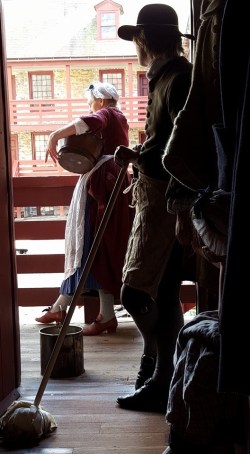
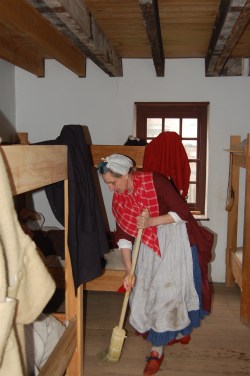
This past weekend, I took my show on the road down 95 to Trenton’s Old Barracks Museum, where once again, soldiers’ rooms needed cleaning. Hannah Glasse exhorts servants (housemaids and housekeepers) to clean household rooms daily, and I can tell you this: if you’re cleaning 18th century spaces using period techniques, daily is the way to go.

Unpaved streets and sidewalks meant people tracked significantly more mud and grit indoors, and soldiers would have brought the parade ground indoors every time they crossed a threshold. Not a pretty thing– and then there’s the straw mattresses (to be changed monthly at a minimum), wool uniforms, skin, hair, and vermin that could accumulate as well. Filth: a major contribution to ill health if not managed properly.

DSC_0348

Brandy-new broom sweeps clean. Photo by Drunk Tailor

Being possessed of a particularly detail-oriented mind, I went in search of a more 18th-century correct broom at an affordable price and found a broom enthusiast on Etsy who agreed to make and priority mail custom brooms just in time for the trip to New Jersey. On the whole, I’m very pleased with these. They make a satisfying sound as they move across the floor, and draw a fair quantity of dirt. Turns out that strewing wet sand on the floor before you sweep is remarkably effective and absolutely the way to go. The damp sand keeps the dust down and is swept out the door with the filth without harming the floor.

Mop making: surprisingly contemplative.

Mop making: surprisingly contemplative. Photo by Drunk Tailor

After sweeping, mopping. Once again, I used the lavender-infused vinegar in the mop water (though I forgot to strain the solution this time). The mixture has a unique but not unpleasant smell, and as the floors dry, the room retains the odor, a sure indication of cleanliness.

This weekend was also the first run for a new wool scrap mop, which was proven the best mop yet. Many thanks to my secret source for the contribution to the effort. It’s clear that mops could easily have been made by binding rag strips to pole handles, and whether made by poor house inmates or soldiers, mop making is cheap, low-tech busy work.

Share this:

  • Share on Facebook (Opens in new window) Facebook
  • Share on Pinterest (Opens in new window) Pinterest
  • Email a link to a friend (Opens in new window) Email
  • Share on X (Opens in new window) X
Like Loading...

The Dirt on Ti

22 Tuesday Mar 2016

Posted by kittycalash in Events, History, Living History, Museums, Reenacting, Research

≈ 3 Comments

Tags

authenticity, common people, common soldier, domestic life, everyday, Fort Ticonderoga, history event, interpretation, living history, servants, women's history, women's work

On the road in: dirt.

Seen on the way in to Fort Ti: dirt. (Kitty Calash photo)

The dirt on Fort Ti came home on my shoes. And my petticoats. And my gown. And possibly my face, which could explain the reactions I got when I stopped for gas on the Pike Saturday evening.

It’s incredible how how dirty, dusty, and straw-filled a room can get– and that’s just the officer’s room. For all I know, a horse had been sleeping in the back corner of the barracks room we cleaned– who else would leave so much straw?

Regular readers know I have a thing about portraying women’s work in the past, as well as historical cleaning methods and what I like to call “experimental archaeology” and other people call “that crazy hobby- thing- where you get cold and dirty.” We started with mop making, of course, and when I loaded the car on Friday morning, I was pretty well pleased with my swag.

Cleaning swag. (Kitty Calash photo)
Supper time! (Kitty Calash photo)

So, what happened? How did it go? What did we do? Our Girl History provides a descriptive photo essay overview of the day. My experiences were more limited, as befits someone of my status: officer’s servant.

Every good experience begins with a meal. Friday night supper included bread, cheese, pork loin and apple, imported from Rhode Island. Yes, I also helped myself to bacon, to ensure none was wasted. Bedtime for officers’ servants comes early: I’m not a stranger to rope beds, but found this straw tick far more comfortable than a previous arrangement elsewhere. 

Ticks rolled back for cleaning
Start in one corner…don’t stop!

After formation, to tasks. I was ably assisted by Miss Sam, who was a better height for the brooms than I. The brooms are speculative on the one hand, and later on the other. The corn broom was markedly more effective than the broom straw, which disintegrated with use, though not for lack of care in making. We were up against some serious accumulation.

IMG_6361

Housekeeping and servants manuals from the period, like Hannah Glasse, tell you the cleaning must be done every day. It’s certainly something I heard within my own lifetime, though an ideal I continually struggle to achieve despite the advances of Mr Kenmore. The general rule is to begin at the top and work your way down: gravity is, at last, your friend. I use brushes– a large, soft round paint brush and a stiffer circular whisk– to remove dust and dirt from upper surfaces, and cobwebs from corners, and other wall-borne detritus. Gentlefolk: your cleaning ladies know much about you in any century.

After sweeping (yes, into the fireplace or out the door, it’s that simple), scrubbing. I scrubbed the baseboards first with vinegar and water (the vinegar infused with lavender for several years). Filth, my friends. Then we mopped. Again, filth.

IMG_6363

I would have preferred to do another dust collection on the floor– the water did pool a bit on the dry dust that remained, but swabbing seemed to work and I believe we left the floor cleaner than it had been. The three mops we tested (wool, cotton, and linen strips) each had benefits and deficits.

The cotton and wool caught on the rough floor boards, but did a good job spreading water around the floor and lifting dirt. The linen strips were better at not catching and at scrubbing.

No matter what, the water got filthy and took on the look and nearly the consistency of the chocolate we drank that day. Remember the iron museum rule: don’t lick it! That rule applies everywhere.

IMG_6364

Everyone and everything got cleaned Saturday. Miss V broached the laundry with vigor, but discovered that possibly untoward things had been done in her laundry tub. Things that might involve shoes, and blacking. Marks were left on shifts and shirts, so even the wash tub got a scrub this garrison weekend.

Some of the best comments came after the fact: I’ve never heard cleaning called “one of the coolest things” seen all day, but when someone says it helps them see a space in an entirely new way, I’m incredibly happy. There’s so much about the everyday use– and maintenance– of space and objects and each other that we take for granted in our own lives. Surely the people of the past who had servants took all that work for granted.

But for me, enamored as I am of details and of the quotidian, transforming a space through the everyday work of women is a job with doing. Thanks to Fort Ti’s staff for giving me the chance to step back in time and enjoy (really, I mean it) a day of hard work bringing the mundane back to life.

Unless otherwise noted, all photos by Eliza West, courtesy of  Fort Ticonderoga.

Share this:

  • Share on Facebook (Opens in new window) Facebook
  • Share on Pinterest (Opens in new window) Pinterest
  • Email a link to a friend (Opens in new window) Email
  • Share on X (Opens in new window) X
Like Loading...
← Older posts
Newer posts →

Archives

wordpress statistics

Creative Commons License
Kitty Calash blog by Kirsten Hammerstrom is licensed under a Creative Commons Attribution-NonCommercial-ShareAlike 4.0 International License.

Website Built with WordPress.com.

  • Subscribe Subscribed
    • Kitty Calash
    • Join 621 other subscribers
    • Already have a WordPress.com account? Log in now.
    • Kitty Calash
    • Subscribe Subscribed
    • Sign up
    • Log in
    • Report this content
    • View site in Reader
    • Manage subscriptions
    • Collapse this bar
 

Loading Comments...
 

    %d