• Home
  • Completed Costumes/Impressions
  • Emma and Her Dresses
  • Free Patterns and Instructions

Kitty Calash

~ Confessions of a Known Bonnet-Wearer

Kitty Calash

Tag Archives: philosophy

Change

20 Tuesday Dec 2016

Posted by kittycalash in personal, Philosophy

≈ Comments Off on Change

Tags

authenticity, Hamilton, interpretation, personal, philosophy

my-obama-me_20-12-16-1

Changing seasons, change we can believe in, be the change you want to see in the world.

This dumpster fire of a year is nearly over, and the commonplace is to note how much has changed: that’s our human instinct. But much does not change, most often within ourselves.

It’s our perception or understanding that changes, and, if we are lucky, causes us to act. That’s the mechanism behind the progressive movement in enacting/reenacting/living history. It’s the mechanism behind organizational change, and personal change. Sometimes it’s the sole inspiration to get me to clean my house. Holy cats, that’s a lot of kitty fur! As the sun finally shines in on the rug.

Sometimes we push as hard as we can to make change happen, but lack access to all the levers: then we have to wait. I am waiting now: I have pushed every lever and turned every knob within my reach, and the waiting is agony.

High school seniors applying to college know this feeling: when will I know? People starting new habits wonder, when will I see a difference? As a species, we have trouble with time. But tiny changes and tweaks aggregate, accrue over time like compound interest. We’ll get there.

Think about what you used to know, and what you know now, how you’ve learned more about what (or who) you love, how the way you approach a problem from collar stands to coat names. All those little changes make a difference– all the difference, the only difference.


Share this:

  • Click to share on Facebook (Opens in new window) Facebook
  • Click to share on Pinterest (Opens in new window) Pinterest
  • Click to email a link to a friend (Opens in new window) Email
  • Click to share on X (Opens in new window) X
Like Loading...

[Re-en]Activism

18 Thursday Feb 2016

Posted by kittycalash in History, Living History, Philosophy, Reenacting

≈ 5 Comments

Tags

interpretation, living history, philosophy

Dread Scott performing “On the Impossibility of Freedom in a County Founded on Slavery and Genocide” under the Manhattan Bridge (photo by Hrag Vartanian for Hyperallergic)

Dread Scott performing “On the Impossibility of Freedom in a County Founded on Slavery and Genocide” under the Manhattan Bridge (photo by Hrag Vartanian for Hyperallergic)

So I know a guy. Where I live, everybody knows a guy, but this guy I went to high school with, and stayed in touch with off and on over the years– we’re both art school refugees, looking at “America” in very different ways.

The work he’s done over the years has been controversial. But it’s his latest stuff that I’m thinking about– yeah, I know, I missed it: he’s always scheduled for when I’m at Fort Moonrise Kingdom, or, you know, tearing my life apart and rebuilding it.

Dread Scott. Images of Oppression. After a whirling dervish of a weekend that culminated in some fancy early-morning driving in Boston, I’ve almost forgotten why I was thinking of Dread Scott and living history, but here’s the short version:

Why do we choose to reenact or enact the moments or events we do? We are, by default in our selections, limiting our characters because of the script we choose. In the main, we continue to choose to re-tell and enact the dominant stories that align with common myths about the founding and history of the United States. Until we choose to enact other stories about our collective past, we will continue to enact the same arguments that Our Girl History and I have made in the past. That’s too meta even for me.

As a friend asked a few weeks ago, “Why do we commemorate massacres and not Mondays?” Let’s commemorate some Mondays, shine a light on some moments, and reimagine what enacting history can mean.

Share this:

  • Click to share on Facebook (Opens in new window) Facebook
  • Click to share on Pinterest (Opens in new window) Pinterest
  • Click to email a link to a friend (Opens in new window) Email
  • Click to share on X (Opens in new window) X
Like Loading...

That Belongs in a Museum

11 Thursday Feb 2016

Posted by kittycalash in Art Rant, Collecting, Museums, personal

≈ 7 Comments

Tags

art history, collections, historic house museums, museum collections, museum practice, personal, philosophy

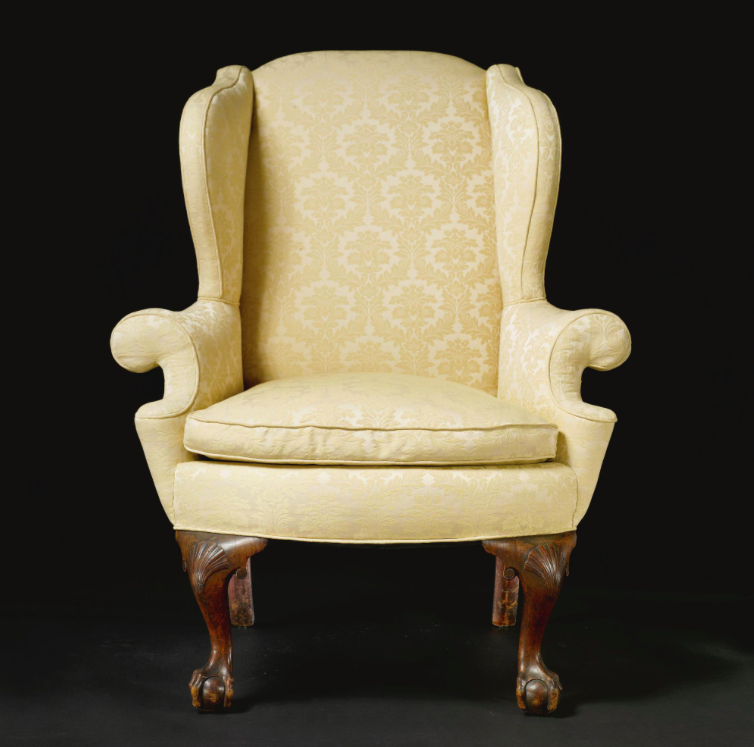
Sotheby's Sale 8278, Lot 586. Easy Chair, Philadelphia ca 1770

Sotheby’s Sale 8446, Lot 20. Easy Chair, Philadelphia ca 1770

We’re taking a brief break from this week’s nightlife programming to bring you this special report. Regular snark resumes with the next post.

It’s not a secret that I work in a museum. I operate in a world of objects that cannot be touched, sat upon, slept in, worn– you get the idea. Well, sometimes things that I believe belong in a museum don’t end up in one. Sometimes beautiful objects with great stories and deep resonance with the museum I think they belong in don’t make it there. Sometimes museum professionals take phone calls from irate family members who are incensed that you’re even talking to someone in the family about how to organize their materials. Sometimes objects do make it,  but then, before the paperwork is executed, the gift is rescinded. People get weird about stuff.

Sometimes they get weird about stuff because of what it’s worth. Eleven years ago, a family chose not to fight over objects, but instead sold their family furniture. They grossed nearly $13 million. Thirteen Million Dollars: Enough for a baker’s dozen of Dr. Evils. With chairs that sell for $204,000 (Sale 8278, lot 586), it’s no wonder people get weird about stuff because of money.

Lot 586. It’s a pity the catalog is no longer available online, but even Sotheby’s has to conserve server space. It was a beautiful chair: a 1763 upholstered easy chair– upholstered by Plunket Fleeson of Philadelphia.* I pored over that catalog page in the Important Americana sale catalog. It would have come in just before Christmas, or just after, slick clay-coated pages printed with fine ink. When the auction catalogs arrive at work, we stand in the kitchen-mail room and bury our noses deep in the gutter: smells like money.**

Staircase Group (Portrait of Raphaelle Peale and Titian Ramsay Peale I) Charles Willson Peale. Philadelphia Museum of Art, E1945-1-1

Staircase Group (Portrait of Raphaelle Peale and Titian Ramsay Peale I)
Charles Willson Peale. Philadelphia Museum of Art, E1945-1-1

I wanted that chair, Lot 586, that walnut easy chair made in Philadelphia. Wrong town, you say? Mais non, Philadelphia was the place to buy fancy goods– especially upholstered goods– in the 18th century. Providence merchants were trading with Philadelphia, the town that set the style for the colonies.*** It was sophisticated, urbane, refined. So, when Sarah Brown was pregnant with their first child, John Brown sent to Philadelphia for an easy chair. It would be the best.

He’d already ordered a tea table and roundabout chairs from Newport at the time of his marriage in 1760. These objects were about more than function: they were signifiers of taste and sensibility as much as wealth. So, as the time came closer for Sarah’s confinement, John Brown became increasingly agitated with Plunket Fleeson, who was delaying the delivery of the chair. John Brown was concerned for Sarah’s comfort postpartum, and said so in a letter. I can’t quote or link to it, because it’s in private hands, quoted in the catalog entry for lot 586.****

So what about that chair? Well… I got permission from the Authorities (a Board-level committee, with the support of the Executive Director) and we bid on the chair by phone. You know already we were not the winning bid. We were willing to bid a lot– really, a lot of money for us– for this chair.

Why?

Not because it’s worth so much. Not because of Plunket Fleeson, or the quality of the carvings, or the craftsmanship, really.

Because Sarah Brown sat in that chair cradling her son, James Brown, in 1763. She sat in that chair with the children who came after him, the babies who lived, and the babies who died.

Because that chair told a story about a family, about a relationship between a husband and wife, a man and a woman, at its most basic level.

That chair told a story about love.

Even I am a sucker for love.

Love is why people get weird about stuff, about the chairs, the family photos, the workbaskets, heck– the drill presses. We imbue objects with meaning, with memories, that substitute for the people we love when they’re gone. Sometimes it’s a t-shirt that smells of a lover. Sometimes it’s sewing basket used by three generations of women. And sometimes it’s a chair.

In the case of the easy chair, imagining the cradling comfort of the chair and the memories it recalls is simple. In the case of, say, shield back side chairs, the leap is a little harder. But perhaps– just perhaps– arranged around a festively set table, those chairs conjure memories of holiday meals, birthday dinners, graduation parties. Maybe those chairs take you back to the people and times when you felt loved.

Or maybe they’re worth $100,000, and you consign them to auction.

But if you value the story as much as the object, here’s the funny thing: you can keep that memory forever, and share the story with everyone, if you give that object to a museum.*****

When people really love an object and are fighting with their families over who gets to keep the things, I don’t play Solomon. I tell them a story about memory, and preservation, and about endurance. Sometimes I can convince them. Sometimes I can’t.

When I can’t, I tell them I understand, and that my priority– and my institution’s priority– is not things, but people. They can keep their object: we’ll be here when they’re ready. It’s all true, and I do mean it.

But inside, I feel like Indiana Jones, soaking wet on the deck of a pitching ship.

That belongs in a museum.
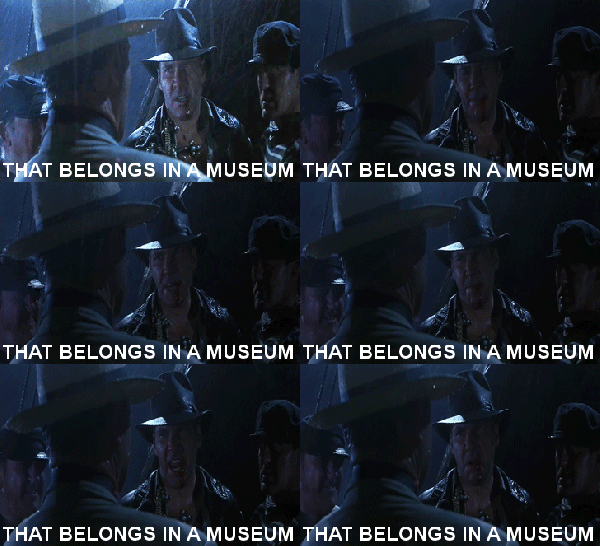
When-you-visit-home-and-see-your-parents-outdated-computer

*If money were no object, I’d buy it for that name alone.

**The quality decreased in 2008, when the financial crisis hit everybody hard, but the paper weight and ink have been creeping back up in quality of late.

***I know, it sounds crazy now, but it was true. At the time of the American Revolution, it was the second largest English speaking city in the world, after London.

****You are correct, sir: I’d like the letter book it’s in, too.

*****Subject to acceptance. Some rules and regulations apply. Leaning is touching. Don’t lick it.

Share this:

  • Click to share on Facebook (Opens in new window) Facebook
  • Click to share on Pinterest (Opens in new window) Pinterest
  • Click to email a link to a friend (Opens in new window) Email
  • Click to share on X (Opens in new window) X
Like Loading...

Mind the Gap, or, The Basket Case

22 Wednesday Jul 2015

Posted by kittycalash in Clothing, Events, History, Living History, Philosophy, Reenacting, Research

≈ 5 Comments

Tags

18th century, authenticity, common people, fashion, historical reenactors, interpretation, living history, lower, philosophy, Reenacting, style

I was in the midst of planning yet another maid’s dress (some of us have all the luck) when a friend alerted me to an online discussion that drew from my recent post on baskets. The comments — which I skimmed but twice– made me think about philosophy and intent.

Engraved by John Raphael Smith, 1752–1812, British, A Lady and Her Children Relieving a Cottager, 1784, Mezzotint and line engraving on medium, slightly textured, cream laid paper, Yale Center for British Art, Paul Mellon Collection

Engraved by John Raphael Smith, 1752–1812, British, A Lady and Her Children Relieving a Cottager, 1784, Mezzotint and line engraving on medium, slightly textured, cream laid paper, Yale Center for British Art, Paul Mellon Collection

There are two approaches to developing a living history persona and appearance I’ll consider here: one prescriptive, and one not. The prescriptive, didactic approach tells you what to wear and carry. Some folks like that. It is completely correct in some cases: soldiers, for example. You want to fall in with a unit of Light Infantry in 1777, it’s generally more convincing if you don’t wear the 1781 coat. Not everyone cares: some people will keep on wearing the Brighty Whitey Hunting Frocks and 1780 coats at reenactments commemorating events of 1776. Those folks can no longer be reached by prescriptive standards, and my preferred approach probably won’t reach them either.

Joshua Cristall, 1768–1847, British, Young Woodcutter, 1818, Watercolor with scraping over graphite on moderately thick, slightly textured, beige wove paper, laid on thick, slightly textured, beige card, Yale Center for British Art, Paul Mellon Collection

Joshua Cristall, 1768–1847, British, Young Woodcutter, 1818, Watercolor with scraping over graphite on moderately thick, slightly textured, beige wove paper, laid on thick, slightly textured, beige card, Yale Center for British Art, Paul Mellon Collection

Mindful reenacting or living history sounds pretty nutty, but that’s what I would encourage. Thoughtfulness. Consideration. Not just the what, but the why. Why you wear or carry something can be as important and interesting as what you’re wearing and you’ll be all the more convincing for thinking it through. Thinking, not rationalizing. How appropriate is it to be in your best clothes carrying a basket also used to carry fire wood? You have to answer that for yourself, and if you’re doing it right, the answer will not always be the same– nor will the question!

Print made by James Bretherton, ca. 1730–1806, British, A Maid, 1774, Etching on moderately thick, rough, blued white laid paper, Yale Center for British Art, Paul Mellon Collection

Print made by James Bretherton, ca. 1730–1806, British, A Maid, 1774, Etching on moderately thick, rough, blued white laid paper, Yale Center for British Art, Paul Mellon Collection

This isn’t the easiest way to go about anything, asking all these questions, but for some of us, the experiences make it worthwhile. You won’t always be able to do, carry, or wear what you want.* But the picture you create of the past will be more accurate and more engaging if you think more and justify less.

Look, I threw down about that floppy bird basket, but I have to provide food to troops this Saturday in Cambridge. What the heck will I carry it in? What will I take my sewing in?**

Probably a wallet and a bag, unless I can pack that floppy basket convincingly– it is entirely suitable to my lower sorts-stained gown impression– but if I can’t, I won’t take it. And that’s just one less thing to carry.

*I’m pretty much always the maid to make scenarios work, and while it doesn’t come naturally, art imitates life.

**Prays no one gets the bright idea to bring (shhh) tents to work on.

Share this:

  • Click to share on Facebook (Opens in new window) Facebook
  • Click to share on Pinterest (Opens in new window) Pinterest
  • Click to email a link to a friend (Opens in new window) Email
  • Click to share on X (Opens in new window) X
Like Loading...

Rude Boys and Reenactors

06 Friday Feb 2015

Posted by cyclokitty in Frivolous Friday, History, Living History, personal

≈ 7 Comments

Tags

authenticity, Frivolous Friday, London Calling, music, personal, philosophy, punk, the Clash

This morning, the Twitterz provided me with a link I’d missed back in November, to a piece about the Clash’s Vanilla Tapes. I listened to the cut of London Calling, and heard the ways in which it was not the final cut, and thought of authenticity. What a fabled state of grace: authenticity.

You think, if I just get this one thing right, I’ll be done.

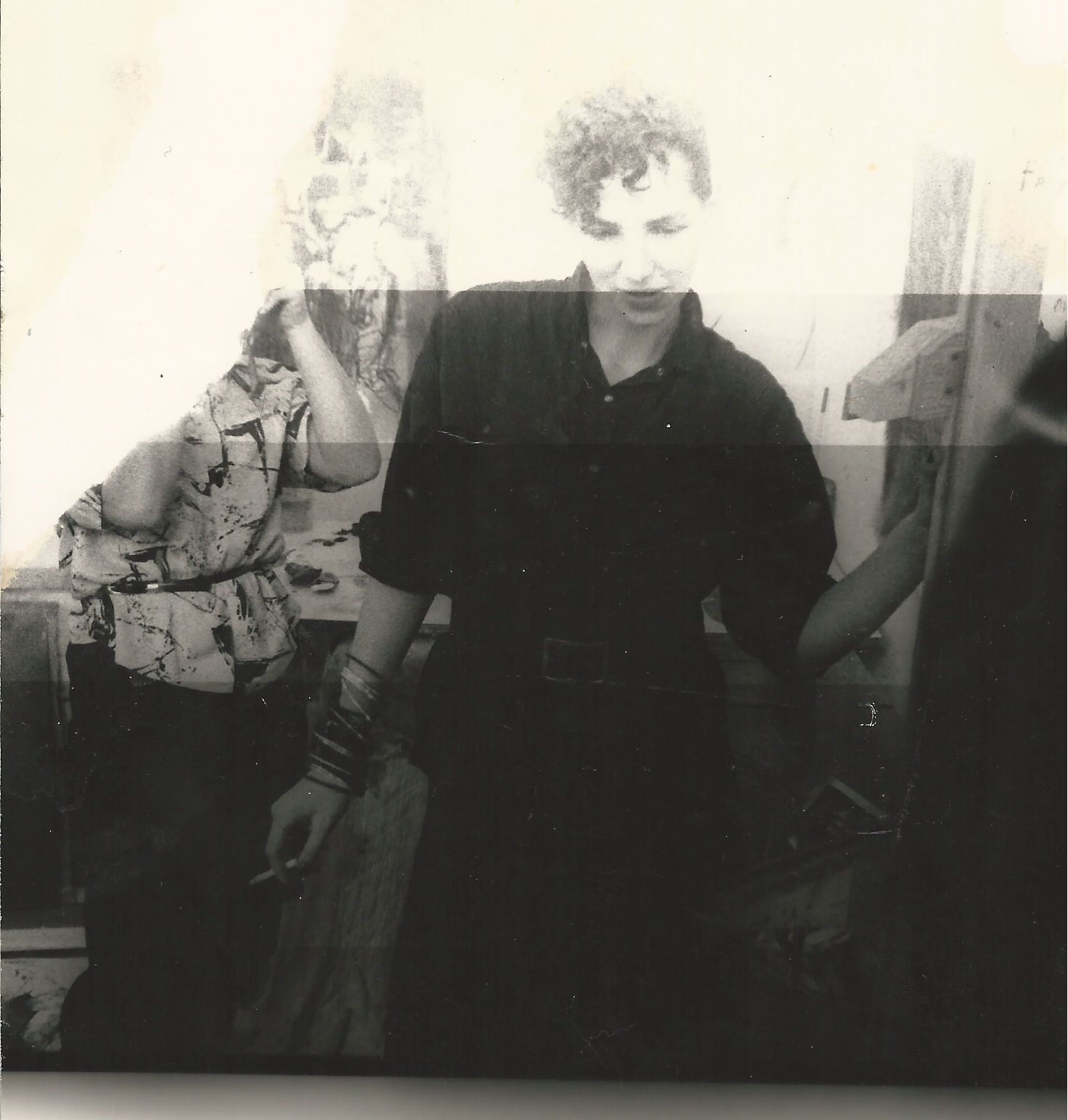
portrait as a process test

process test poser portrait

But you won’t. And that’s okay. You’re still not a poser. (That’s an old Chicago punk term that got thrown around the way farb gets thrown around now.)

I’m pretty familiar with the album version of London Calling, but the Vanilla Tape version really reminded me: it’s not a destination, it’s a process.

It can mean taking coats apart and making them over till our eyes bleed. It can mean thinking and rethinking a character.

What matters is the process. I know, how tiresome: it’s the journey not the snow leopard.  But it’s true: what makes history in any expression fun are the questions, the new things to learn.

Yes, I have always like to dress up, and to get my friends to join me.

Yes, I have always liked to dress up, and to get my friends to join me.

I realized, too, that the joy I felt seeing the Clash at the Aragon ballroom none-of-your-business years ago was not unlike the pleasure I get from living history– and that’s not just because of the funny clothes and loud noises, though both sub-cultures share a taste for natty dressing and unusual music.

I find joy in the physicality of living history*, for although a milliners’ shop is no mosh pit, when your  clothes, shoes, and accessories are as right as they can be, you will move and feel differently than you do in your office or workout clothes.

There’s joy for me in the difficulties, too: from Saratoga to cooking, I like a problem to solve, a process to learn.

I’ll never get everything just right: I’ll get closer to right, and the fun is in figuring out how.


Share this:

  • Click to share on Facebook (Opens in new window) Facebook
  • Click to share on Pinterest (Opens in new window) Pinterest
  • Click to email a link to a friend (Opens in new window) Email
  • Click to share on X (Opens in new window) X
Like Loading...
← Older posts
Newer posts →

Archives

wordpress statistics

Creative Commons License
Kitty Calash blog by Kirsten Hammerstrom is licensed under a Creative Commons Attribution-NonCommercial-ShareAlike 4.0 International License.

Website Built with WordPress.com.

  • Subscribe Subscribed
    • Kitty Calash
    • Join 621 other subscribers
    • Already have a WordPress.com account? Log in now.
    • Kitty Calash
    • Subscribe Subscribed
    • Sign up
    • Log in
    • Report this content
    • View site in Reader
    • Manage subscriptions
    • Collapse this bar
 

Loading Comments...
 

    %d