• Home
  • Completed Costumes/Impressions
  • Emma and Her Dresses
  • Free Patterns and Instructions

Kitty Calash

~ Confessions of a Known Bonnet-Wearer

Kitty Calash

Tag Archives: Reenacting

Pushing Interpretation Forward

18 Tuesday Nov 2014

Posted by kittycalash in Events, History, Living History, Museums, Philosophy, Reenacting

≈ 7 Comments

Tags

18th century clothes, anarchist guide to historic house museums, authenticity, common people, common soldier, exhibits, first person interpretation, historic interiors, history, interpretation, living history, Reenacting, Revolutionary War

Dare I say progressing?
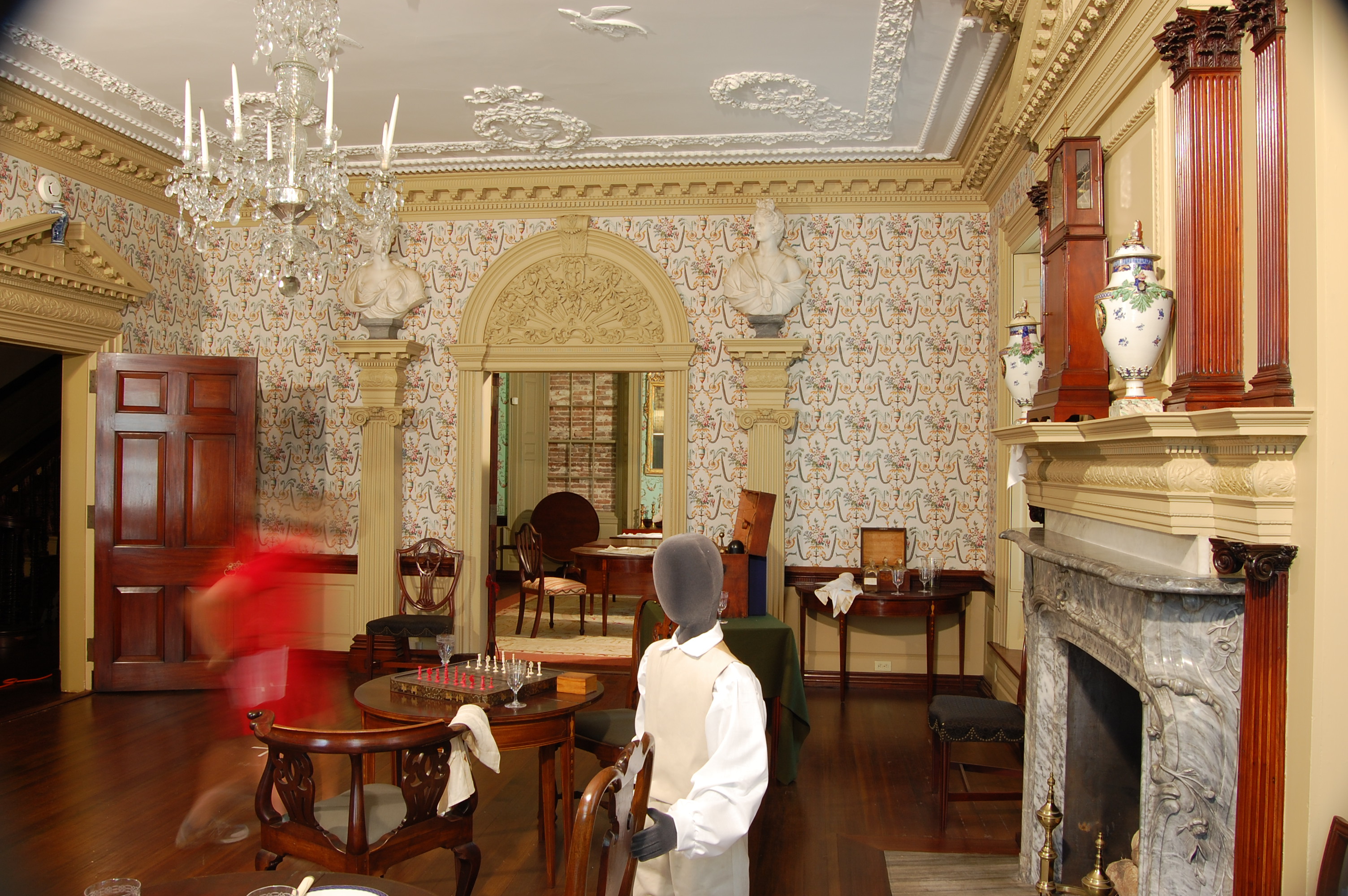
servant mannequin in 18th century room

That’s no ghost, that’s my kid

In the past decade, museums, particularly historic house museums, have been challenged to refresh and reinvent their interpretations and presentations. The most notable challenge has come from the Anarchist Guide to Historic House Museums (AGHHM), and the Historic House Trust of New York’s executive director, Franklin Vagnone.

I re-read a number of Vagnone and Deborah Ryan’s papers recently (including this one), thinking not just about What Cheer Day in a historic house, but about reenacting, living history, and costumed interpretation.

To make a historic house museum (HHM) seem more inhabited and real takes a lot of stuff: clothes, dishes, shoes, stockings, toys— all the stuff that surrounds us now, but correct for the time of the HHM, and arranged in a plausible manner, not like a sitcom set, where chairs before a fireplace face the visitor and not the hearth.
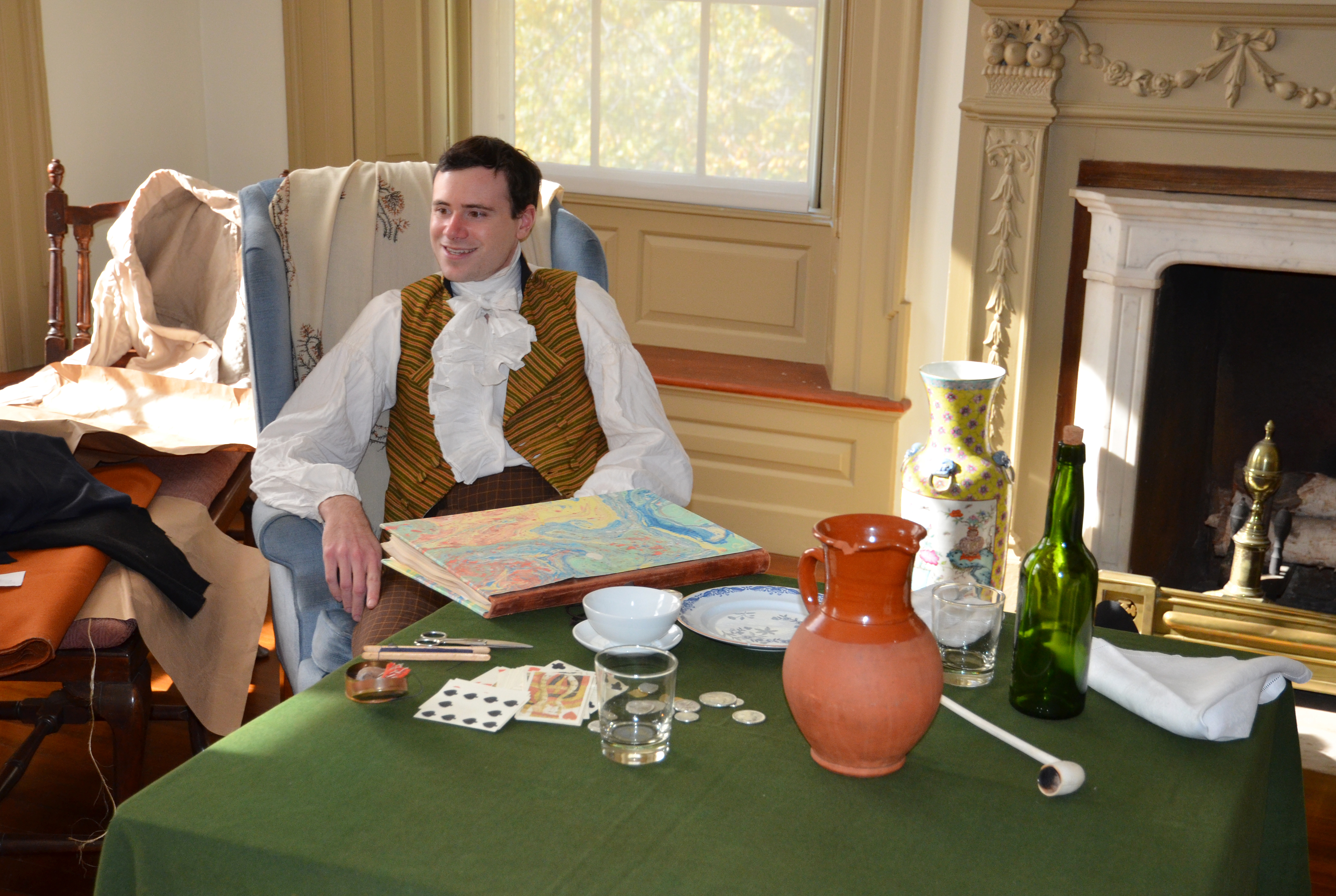
Man with cards, glasses and pipe in 18th century room

Stuff makes a house

To a degree, this is set-dressing, but set-dressing for a still-life, or real life, if the habitation will be by costumed interpreters. It has to be accurate to be authentic, whether it’s a HHM or a living history event that is striving to create a moment, or series of moments, in time– immersive moments.

We cannot step into the past unless we believe the representation we’re seeing, and that’s true no matter where we are: that’s why fabric matters, sewing techniques matter, tent pins and kettles and canteens matter. The world is made up of tiny details that we do actually notice without even knowing it: we see more than we realize, faster than we think. We’ll trip on the different, and stop.
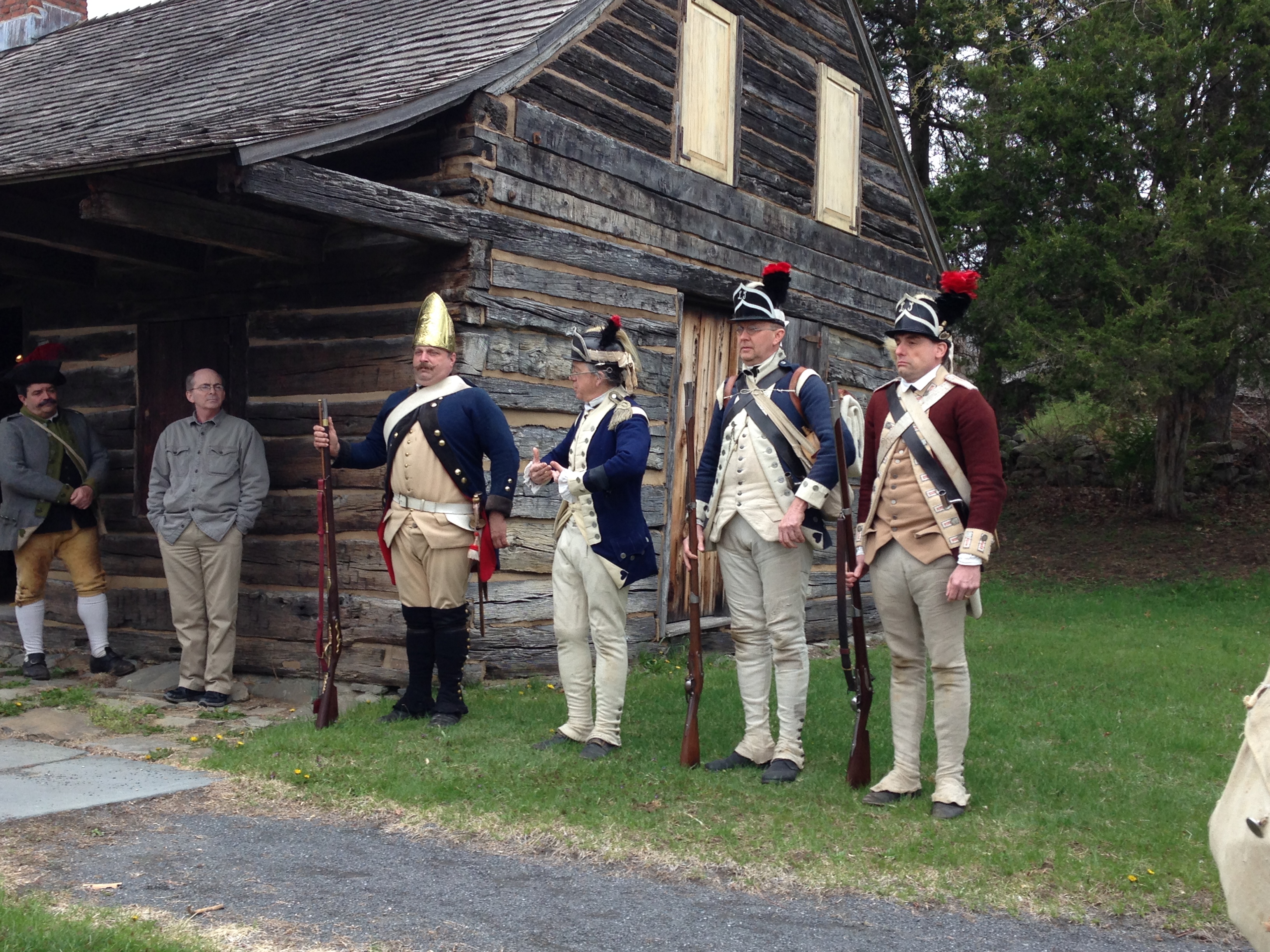
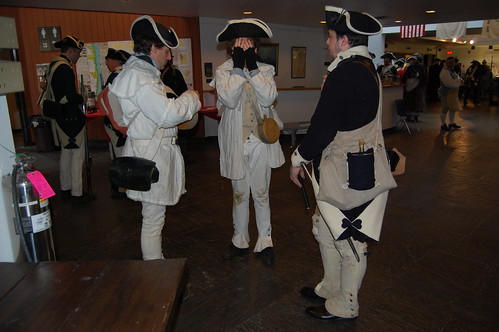
A variety of coats can tell a variety of stories

A variety of coats can tell a variety of stories

But what we want to do, as interpreters, is to have the visitor catch the right difference: not the one about which canteen and why, but the larger interpretive point. In one hypothetical example, wooden canteens are a way to talk about defense contracting and supplying the American army, just as over-dyed captured coats are a way to talk about the American Revolution as an international, and not just a civil, war.

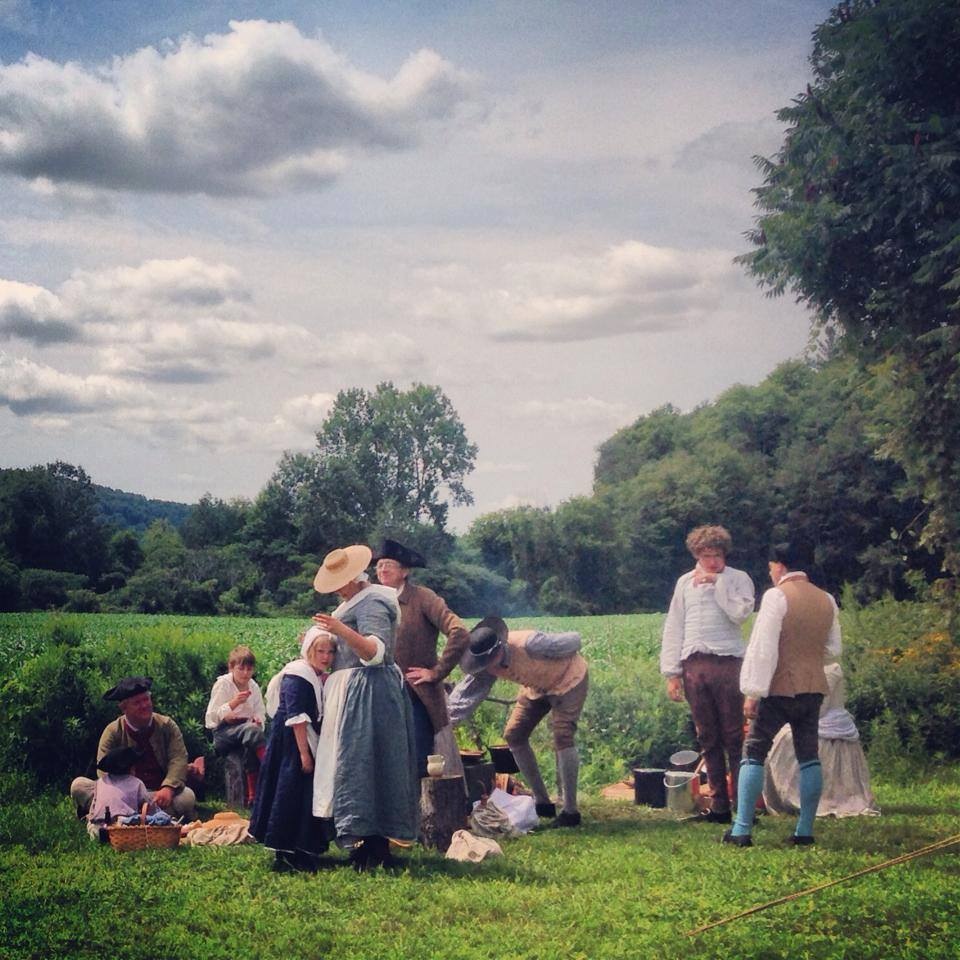
An encampment is, in a way, a neighborhood of HHMs turned inside out, with each regiment a separate family within the larger neighborhood. Each regiment tells a story about itself and its history, and is a lens through which visitors see the larger story.
14999323655_5d9dcf2259_o

That’s why accuracy matters: you don’t want to debunk Ye Olde Colonial craft in camp, or cotton-poly polonaises (poly-naises?) worn by purported women on the ration: you want to focus on the larger interpretive point. When not everyone plays by the same rules, it is better to focus on your own accuracy and authenticity and to ignore Ye Olde Annoyances.

Tell the larger story, the story of your own regiment’s people: that’s your interpretive goal.

Share this:

  • Click to share on Facebook (Opens in new window) Facebook
  • Click to share on Pinterest (Opens in new window) Pinterest
  • Click to email a link to a friend (Opens in new window) Email
  • Click to share on X (Opens in new window) X
Like Loading...

A Matter of Interpretation

17 Monday Nov 2014

Posted by kittycalash in Events, History, Living History, Museums, personal, Philosophy, Reenacting

≈ Comments Off on A Matter of Interpretation

Tags

18th century, common soldier, interpretation, living history, Reenacting, Revolutionary War

On the way to Southbridge, Mr S and I were discussing the last “big” event for the year, and whether or not we wanted to go. It’s an annual event grounded in ceremony, and somewhat repetitive.

The landing of the British forces in the Jerseys on the 20th of November 1776 under the command of the Rt. Honl. Lieut. Genl. Earl Cornwallis. Watercolor, attributed to Thomas Davies. NYPL

Mr S would like to go if he had the proper wool coat– it will be easy enough to make, once he gets a kit– but which he does not now have. I find it’s usually a day alone wishing I was across the river in a museum or fabric shop. In the end, it’s a long drive to a day spent in the cold and wind followed by a dash home in the dark, with Sunday spent catching up on chores and cleaning muskets, and now with an added measure of homework stress.

I have painted this as a grimmer day than it usually is, but considering that it’s been 7 months since we had any non-medical time off from work, squeezing this into a busy and stressful schedule is not as appealing as it once was. In part, I think it is because there is a lost opportunity in the interpretation, which is surely limited by the size and nature of the site, and by the loss of the historic fabric of the area.

Nestled in a densely settled and very urban area, the park site has a block house, hut, and fortification as well as a museum. Sutlers and others set up in the museum for the day, including some demonstrations of women’s work…like spinning. Spending the day inside spinning is not for me: not only can I not spin, I cannot imagine fleeing the British with a spinning wheel, which is an annoying contraption to move even with assistance, plenty of time, and a Subaru.

The Young Mr hides

But more than my impatience with Ye Olde Colonial Spinning Wheel at too many military camps this past year, I think what stops me from wanting to go is the repetitive formality of the interpretation, with the the march to the monument and the post-prandial “battle” for the blockhouse, with the Americans sometimes winning, despite the fact that the fall of this site marked the beginning of Washington’s retreat to Pennsylvania, and despite the fact that three days earlier, when the companion fort across the river fell to the British and Hessian troops, nearly 3,000 Americans were taken prisoner in 1776, and of those, only 800 survived. In what way is this ritualistic commemorative event remotely authentic? And if the only way people get the actual history and importance of the event is through the event narration or museum exhibit, hasn’t the reenactment or living history portion then failed?

Ritualistic, commemorative.

The more I think about interpretation and presentation, the more Ye Olde Colonial things annoy me and the more important I think it is to be accurate and correct.

Forcing a passage of the Hudson River, 9 October 1776. oil on canvas by Thomas Mitchell from an original by Dominic Serres the Elder. Royal Museums Greenwich

That does not mean that I expect a naval engagement (though a girl can dream) or a cross-Hudson rowing affair, but I do think it could be interesting to see troops at a fort packing up and evacuating the site, with the confusion that could result. But it’s not my circus, and not my monkeys, and in any event, I shall probably stay home to make sure that homework and housework alike are done in this current century.

Share this:

  • Click to share on Facebook (Opens in new window) Facebook
  • Click to share on Pinterest (Opens in new window) Pinterest
  • Click to email a link to a friend (Opens in new window) Email
  • Click to share on X (Opens in new window) X
Like Loading...

What Cheer! Wednesday

22 Wednesday Oct 2014

Posted by kittycalash in Living History, Museums, Uncategorized

≈ Comments Off on What Cheer! Wednesday

Tags

18th century clothes, 18th century clothing, 19th century clothing, interpretation, John Brown House Museum, living history, Museums, Reenacting, Rhode Island, Rhode Island Historical Society, weekend, What Cheer Day, work

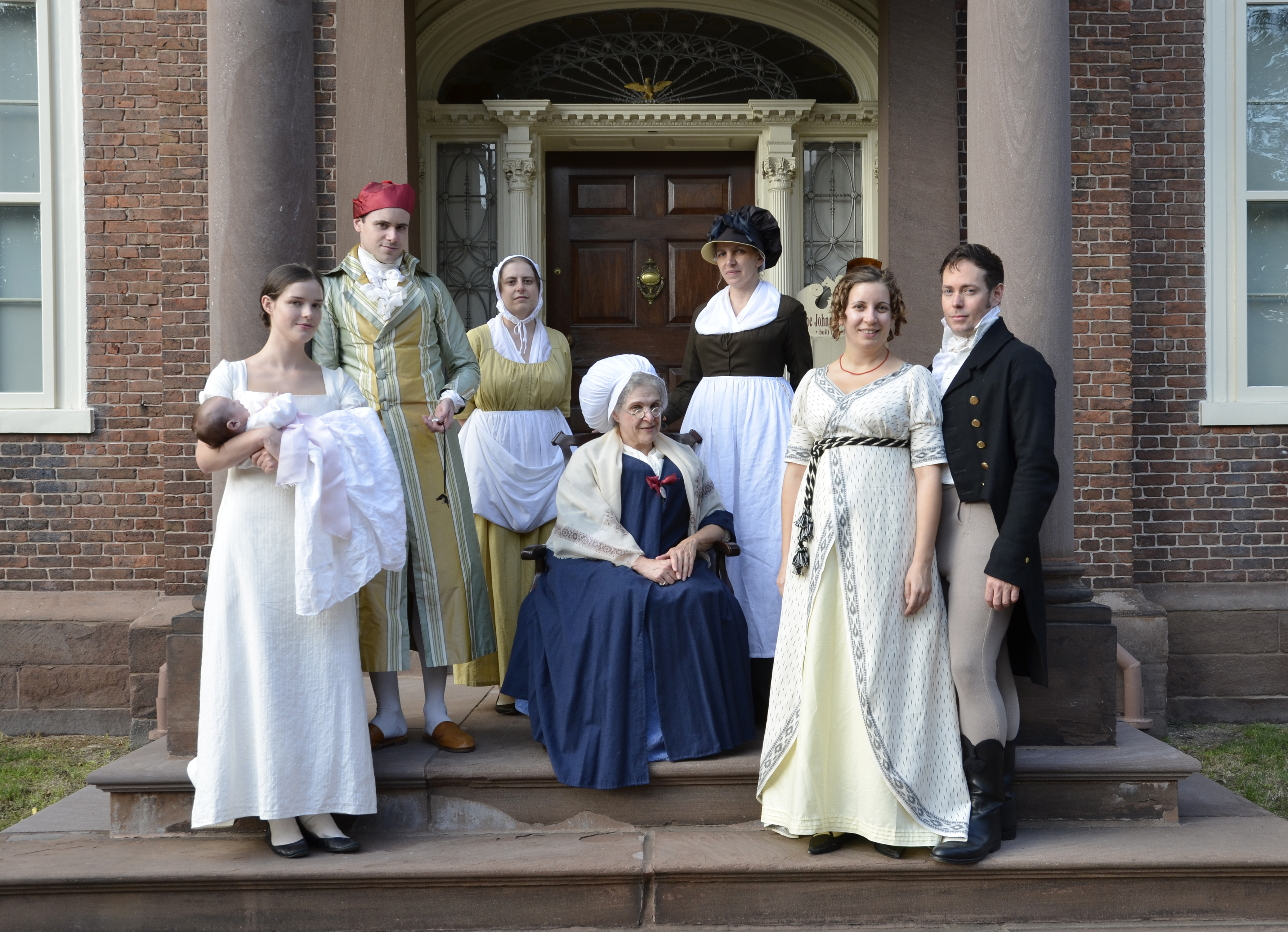
The cast at the end of the day

The cast at the end of the day

Where are you going this weekend? I’m going to Providence in 1800, along with my family and friends.

The mantua maker is coming, and writes a very pretty letter about the new fashions she has found for the young ladies.

Mr Herreshoff and Miss Brown hope soon to be married

Mr Herreshoff and Miss Brown hope soon to be married

Mrs Brown will be in, and receiving guests, and we hear that Mr Herreshoff will come to call as well. While he may decry the state of the roads, we expect him to have news of business conditions in New York, and his prospects for the future.

Miss Alice– Mrs Mason, now– will be at home with her sister, Miss Brown, and Mr Mason is living here now as well. I do not know how I shall keep their room in order, since he is hardly outside of it!

There are other visitors I expect as well; there is a man (I cannot call him a gentleman) who has been doing jobs for us, though he does not live here at the house. He seems extraordinarily interested in the house, and will not stay away. Whatever can be his interest? There may also be a tailor and his apprentice– though the apprentice tends to daydreaming, and looks above his station, studying Latin at all hours. I think he will not be long in his apprenticeship if he will not pay attention.

If you have not visited us before, you can find directions here.


Share this:

  • Click to share on Facebook (Opens in new window) Facebook
  • Click to share on Pinterest (Opens in new window) Pinterest
  • Click to email a link to a friend (Opens in new window) Email
  • Click to share on X (Opens in new window) X
Like Loading...

When in Doubt, Bake

14 Thursday Aug 2014

Posted by kittycalash in Food, History, Living History, Reenacting

≈ 3 Comments

Tags

10th Massachusetts, Amelia Simmons, authenticity, Diet Bread, food, history, living history, Making Things, Reenacting, Research, resources

There was a Very Bad Summer when much was awry at work, the flat we were living in was for sale, my father was moving far away, and the Howling Assistant was sick. In response, I baked.

Things are roiling in the world of late, both at work and in the wider world (I am from St. Louis, and cannot ignore the news from Ferguson), and so again, I turned to baking. Eggs, flour, sugar: what could be sweeter?

A friend tried Amelia Simmons‘ Diet bread a few years ago, with limited success, but the simplicity of the receipt has always appealed to me.

recipe for diet bread

Diet Bread

Once again, I risked early morning baking, but I think this has turned out OK. I had to leave for work before it was cool enough to really eat, but a corner was delicious! The intense amount of sugar– a full pound!– was intimidating, the rose water curious when tested, but combined with the cinnamon, seems to have a pleasant and slightly exotic flavour.*

The simplicity of the ingredients was encouraging, but I probably would not have jumped into this had I not found someone else had leaped before me.

Kathleen Gudmundsson on the Historical Cooking Project blog tackled diet bread in May. From her work, I took the tip to use only six eggs.

Following Gudmundsson thoughts at the end of her entry, I beat the egg yolks separately, intending to add the stiff-peaked whites at the end. Half way through adding the flour, the batter became extremely stiff and sticky, and nearly unmanageable, so I beat a whole seventh egg and added that, followed by a little flour and 1/4 of the beaten whites. I alternated flour and egg whites, finishing with egg whites, and found the mixture retained pliability and texture.

Like Gudmundsson, I also lined a glass pan with parchment paper, but my (electric, rental-quality) oven runs a little slow, so baked for 30 minutes at 400F.

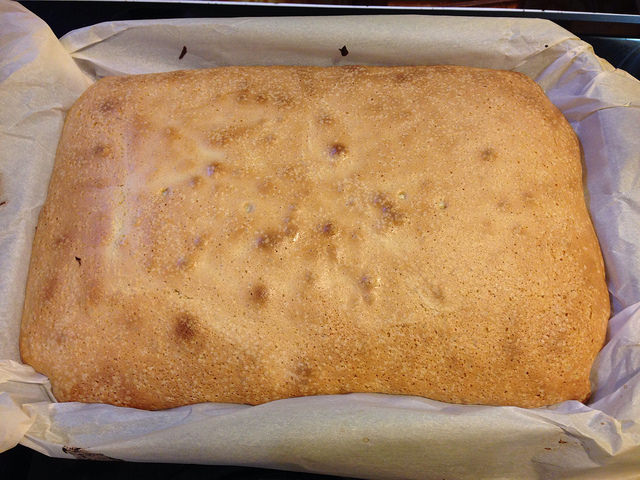
diet cake made of sugar, flour and eggs

Diet Cake, from American Cookery by Amelia Simmons.

The results look like hers, and since she thought the cake was as good or better three days after she’d made it, my hopes for an interesting dessert remain intact.

The other, less distracting, project I’ve taken on this week is a set of bags for coffee and food stuffs.

handsewn linen bags in white and check

Linen bags for foodstuffs

After all, there are no ziplock bags or plastic tubs in 1777, and full complement of graduated tin canisters seems unlikely to plummet into my lap anytime soon. The two slender bags are for coffee: tied at the neck, they’ll hold enough for cold coffee and fit the slender tin coffee pot we have, sparing the larger cloths, wrangling grounds, and giving us clear, cold, caffeine. Another is for flour, one could be for oatmeal, another for sugar. In any case, things to eat are getting wrangled in a way that can remain visible in camp.

I know: a trifle mad, but the time I spend now makes living in public so much easier when there’s less to hide. And yes, before you ask: that will be a real fire.

*Fellow eaters, you’ve been warned.

Share this:

  • Click to share on Facebook (Opens in new window) Facebook
  • Click to share on Pinterest (Opens in new window) Pinterest
  • Click to email a link to a friend (Opens in new window) Email
  • Click to share on X (Opens in new window) X
Like Loading...

Coats and Cooking

11 Monday Aug 2014

Posted by kittycalash in Clothing, Events, Food, History, Living History, Making Things

≈ Comments Off on Coats and Cooking

Tags

10th Massachusetts, 18th century clothes, 18th century clothing, authenticity, Bennington, Brigade of the American Revolution, Clothing, common dress, common soldier, cooking, Costume, dress, Events, food, living history, menswear, Reenacting, Revolutionary War, style

And happy not to be walking to Walloomsac, since we can’t leave till Friday.

Before we leave, there’s plenty to done, of course, and most of it in men’s wear.*

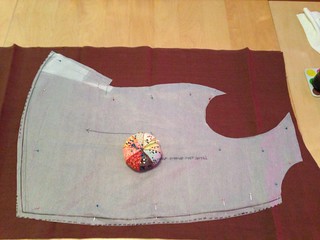
The first piece on brown linen

The Young Mr needed a new jacket, a proper one, with pockets and everything, correct for a scalawag. So that meant patterns and muslins and fittings and questions, until neither of us could really stand the other and his father called me an ambush predator of fittings. The only way to fit these wily creatures is, as they amble through the room, to leap out and toile someone.

With the pattern more-or-less fitted to the wiggly Young Mr, I cast about for fabric: there was not enough of a striped piece for both waistcoat and jacket; waistcoat won, because matching stripes on a jacket seemed too risky in this great a hurry. Instead, I sacrificed the last yardage once meant for a gown.

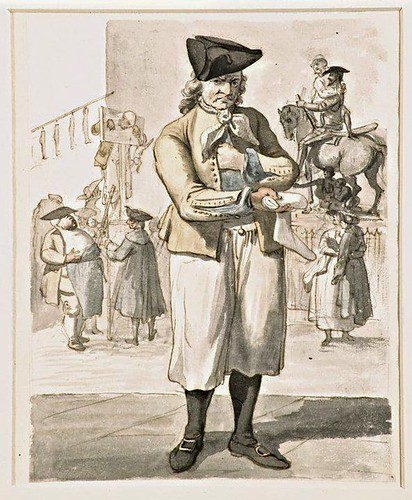
The Stocking Seller, by Paul Sandby, 1759

The Stocking Seller, by Paul Sandby, 1759

This is the inspiration for the kid’s new garment, along with Sandby’s fish monger. It seems a plausible garment to work from, and the brown linen is in keeping with the brown linen jacket at Connecticut Historical Society and the unlined linen frock coat recently sold at auction. It will also match his trousers, but this is what happens when you sew from the stash.

One pair of breeches altered, one waistcoat wanting the last seven newly-made buttons, one waistcoat in production, one jacket in production: you’d think that would be enough to get done. But I’m also working to expand my cooking repertoire, as bread and cheese gets tiresome and scrounging broken ginger cakes from the Sugar Loafe Baking Co.— while potentially good theatre–is not a solid plan for sustenance.

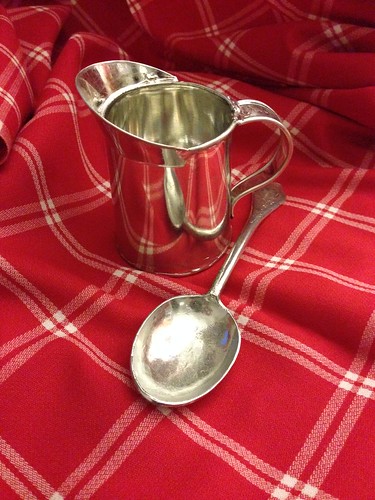
half pint and spoon measures

Half-pint and spoon

Boiling food in summer- sounds awful, right? But it’s an easy and correct way to cook,once you translate recipe measures and control the amount you’re making. I like to use Amelia Simmons’ cookbook, because it is specifically American, and my more skillful friends cooked from it at the farm.

From Enos Hitchcock’s diary, I know that he ate a boiled flour pudding with some venison stew (near the Saratoga campaign, I think) so I consider this a plausible recipe for the field, pending eggs, of course.

A boiled Flour Pudding.

One quart milk, 9 eggs, 7 spoons flour, a little salt, put into a strong cloth and boiled three quarters of an hour.

Simple enough, though Simmons later corrected the receipt to 9 spoons of flour, and boil for an hour and a half. I got out the spoon, and looked online at modern boiled pudding recipes, and will give a modified version a whirl sometime this week (always better to fail at home than in the field). Boiling the pudding in a linen cloth in a stew would make a savory bread substitute…and I really liked the one we had at the farm. Will the gentlemen at Bennington like it? Perhaps we’ll find out. If we’re not cooking with hosewater, almost anything should be edible.

*Yes, it’s a terrible and terribly dated show, but I always hear  this in Mr Humphries‘ voice from Are You Being Served?

Share this:

  • Click to share on Facebook (Opens in new window) Facebook
  • Click to share on Pinterest (Opens in new window) Pinterest
  • Click to email a link to a friend (Opens in new window) Email
  • Click to share on X (Opens in new window) X
Like Loading...
← Older posts
Newer posts →

Archives

wordpress statistics

Creative Commons License
Kitty Calash blog by Kirsten Hammerstrom is licensed under a Creative Commons Attribution-NonCommercial-ShareAlike 4.0 International License.

Website Built with WordPress.com.

  • Subscribe Subscribed
    • Kitty Calash
    • Join 621 other subscribers
    • Already have a WordPress.com account? Log in now.
    • Kitty Calash
    • Subscribe Subscribed
    • Sign up
    • Log in
    • Report this content
    • View site in Reader
    • Manage subscriptions
    • Collapse this bar
 

Loading Comments...
 

    %d