• Home
  • Completed Costumes/Impressions
  • Emma and Her Dresses
  • Free Patterns and Instructions

Kitty Calash

~ Confessions of a Known Bonnet-Wearer

Kitty Calash

Tag Archives: 18th century clothes

Winter Amusement

11 Wednesday Feb 2015

Posted by kittycalash in Clothing, History, Making Things

≈ 2 Comments

Tags

18th century, 18th century clothes, 18th century clothing, Amusement, Clothing, common dress, Costume, fashion, James Tookey, New England, snow, style, weather, winter, winter coat, Yale Center for British Art
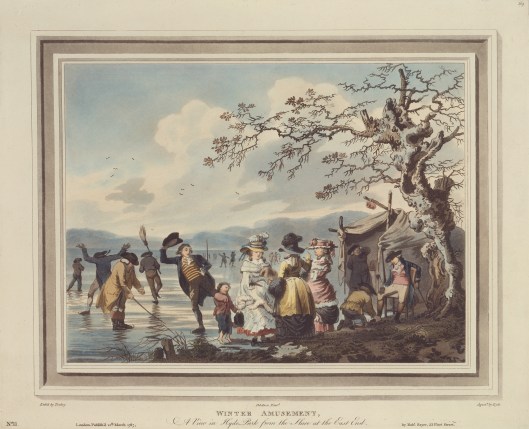
Winter Amusement: A View in Hyde Park from the Sluice at the East End.Aquatint, printed in color and colored by hand, 1787.Print made by James Tookey. YCBA  B1985.36.609

Winter Amusement: A View in Hyde Park from the Sluice at the East End.Aquatint, printed in color and colored by hand, 1787.Print made by James Tookey. YCBA B1985.36.609

I count myself among the people sick of winter in New England, but the piles of snow and wretched driving have prompted some comments from the Young Mr, including “Well, it would be worse in the 18th century, right?”
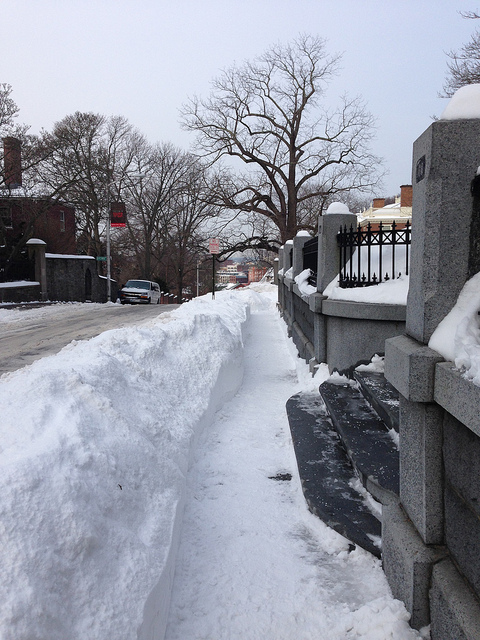
16314413949_fca9e1de44_zHaving recently walked on a combination of cleared, partially cleared, and uncleared walks, I’m not so sure…but I was in modern boots, and not my leather-soled repro shoes, which I prefer not to expose to the variety of modern snow-melting chemicals, though they can be cleaned.

Still: the partially cleared and unsalted walk was easier to walk on than you might imagine, and I suspect that the 18th century tasks of clearing steps and paths to make room to walk or drive carts, wagons and carriages was probably reasonably effective– though the melting must have been more annoying and messy when mud season arrived.

In all this cold and snow, how did people keep warm and stay fashionable? For gents, of course, greatcoats were an option, and cloaks or mantles for women, both in the last quarter of the 18th century and into the 19th. I found documentation for women’s Spencers and greatcoats in the first decade of the 19th century, but what about earlier?

detail,  Winter Amusement, 1787

detail, Winter Amusement, 1787

While I cannot (yet) place the coat at right in New England, you know I covet one.

Tail pleats with back buttons, a possible shoulder cape? I love the menswear styling of this coat, and the drab-and-black color combination of coat, gown and accessories. I don’t have much call for 1787 clothing in my life (actually none whatsoever) but by the time I’ve patterned and made this coat (after many other things to finish), perhaps I will also have created a reason.

Winter frolics, New Year’s Eve party, 1788? Anything is possible, and time is better spent imagining fun than complaining about snow.
Share this:

  • Share on Facebook (Opens in new window) Facebook
  • Share on Pinterest (Opens in new window) Pinterest
  • Email a link to a friend (Opens in new window) Email
  • Share on X (Opens in new window) X
Like Loading...

Frocks Coats in Providence

21 Wednesday Jan 2015

Posted by kittycalash in Clothing, History, History Space, Living History, Making Things, Museums, Reenacting

≈ 1 Comment

Tags

18th century clothes, 18th century clothing, authenticity, common dress, common people, fashion, Henry Cooke, History Space, living history, Making Things, menswear, sewing

Saturday last saw the launch of History Space, the collaborative project of the Rhode Island Historical Society and the Newport Historical Society designed to help living history practitioners and reenactors acquire the clothing and skills needed to bring the past to life.

Many parts to a frock coat.

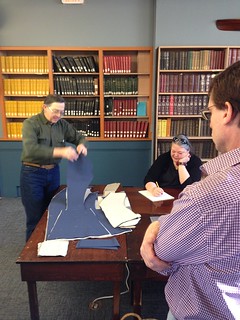
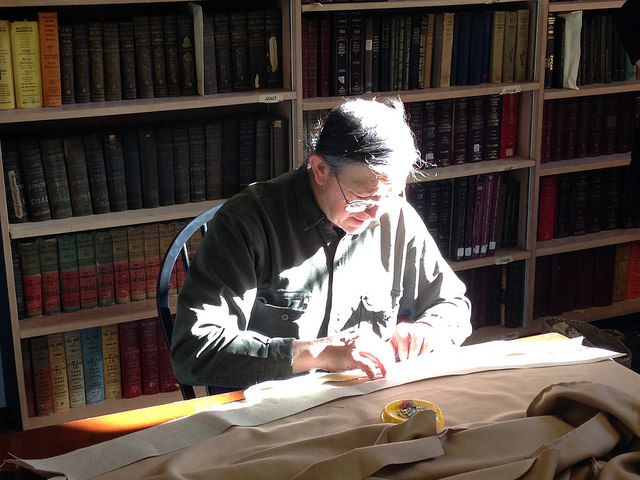
Scheduling being what it is, we plunged right in to hands-on work with Easy Grace and Comfort, a two-day man’s frock coat workshop with Henry Cooke. We saved enormous amounts of time in the workshop by having Mr Cooke cut coat kits for participants, and I know it was well worth every penny.

There is much less on-body fitting when Mr Cooke cuts a coat for the kid than when I do. (I think the Young Mr grows while I am trying to figure it out, but Henry cuts fast enough to head him off.)

Buckram and button stands

Buckram and button stands

The most painful part of the whole thing (if fitting is largely done) is stitching on the buckram interfacing and the button stand. The zig-zag stitch as demonstrated by Henry was fairly easy to get the hang of when you caught the rhythm, but the tightness of the Red Edge stand tested my needle and even my fingertips.

There were some complaints at one table, largely voiced by the Fifer Formerly Known as Lambchop, who awaits his 10th Mass name.

Sleevils!

We made it all the way to sleeves, which is impressive, considering that some of the gentleman had not made more than a haversack or knapsack before. But if you can backstitch, and have some help with your fitting, you can make a coat.

I happen to like sleeves, myself, stitching them up and setting them in the garment. I think it’s the three-dimensionality of them that appeals to me– and I like a good challenge.

And here we are: sleevil one.

It’s critical to pay attention, though, so you make one left and one right sleeve, and to keep track of them as you set them to the garment body. I sometimes mark mine with chalk, and have even pinned notes to the pieces when feeling especially daft.

I’ve made it to an assembled coat body and sleeves, with one sleeve basted on. Before Saturday, I plan to baste on the second sleeve and test fit sleeve set on the boy. I’ll also try to get pocket flaps made. Since I have a talk to write and a bedgown to finish as well, I’m probably dreamin’ big.

When this suit is done, the Young Mr will have a very nice blue ensemble that includes breeches (join in the fun here) and a waistcoat. I think he’ll look rather nice, and better than he has previously. I still want to make lower-class* clothes for him, but first he does need a nice suit.

*I said urchin, but Mr Cooke said urchins can’t be over 6 feet tall. Basking sharks are big, but in this blue-grey suit, perhaps the Young Mr will finally be a grey reef shark.

Share this:

  • Share on Facebook (Opens in new window) Facebook
  • Share on Pinterest (Opens in new window) Pinterest
  • Email a link to a friend (Opens in new window) Email
  • Share on X (Opens in new window) X
Like Loading...

Winter Workshops

05 Friday Dec 2014

Posted by kittycalash in Clothing, Events, Living History, Museums

≈ Comments Off on Winter Workshops

Tags

18th century clothes, 18th century clothing, 19th century clothing, common dress, Costume, Events, Henry Cooke, interpretation, living history, Newport Historical Society, resources, Rhode Island Historical Society, Stamp Act Protest, What Cheer Day

Interior of a Tailor's Shop, Museum of London

Interior of a Tailor’s Shop, Museum of London

Come sew with me! Well, you’ll be sewing with Henry Cooke, but I’ll be there, too.

Check the Newport Historical Society’s website for more information about workshops and conversations this winter designed to for anyone with an interest in early American history who wants to expand their understanding of material culture interpretation.


Share this:

  • Share on Facebook (Opens in new window) Facebook
  • Share on Pinterest (Opens in new window) Pinterest
  • Email a link to a friend (Opens in new window) Email
  • Share on X (Opens in new window) X
Like Loading...

Pushing Interpretation Forward

18 Tuesday Nov 2014

Posted by kittycalash in Events, History, Living History, Museums, Philosophy, Reenacting

≈ 7 Comments

Tags

18th century clothes, anarchist guide to historic house museums, authenticity, common people, common soldier, exhibits, first person interpretation, historic interiors, history, interpretation, living history, Reenacting, Revolutionary War

Dare I say progressing?

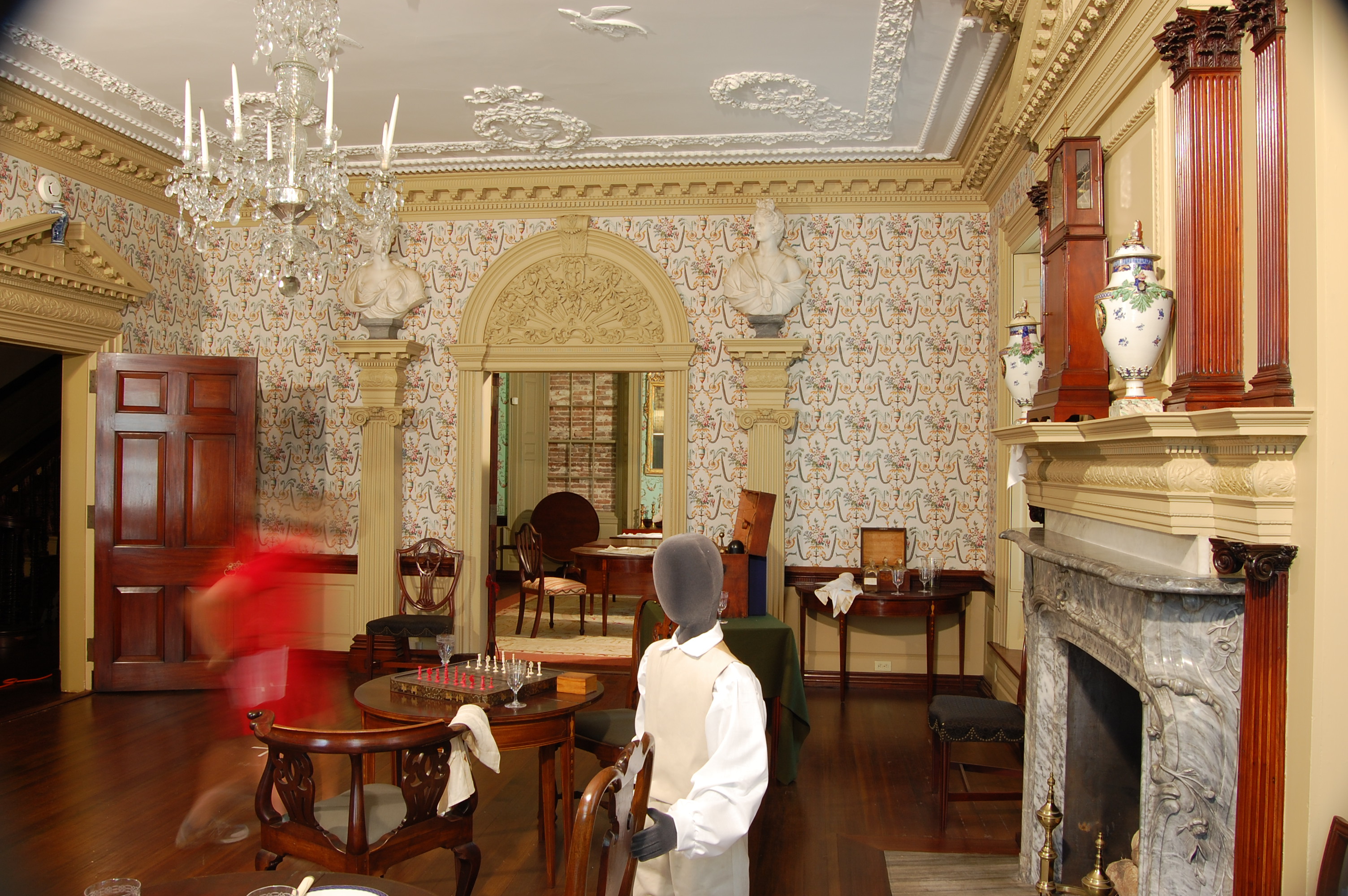
servant mannequin in 18th century room

That’s no ghost, that’s my kid

In the past decade, museums, particularly historic house museums, have been challenged to refresh and reinvent their interpretations and presentations. The most notable challenge has come from the Anarchist Guide to Historic House Museums (AGHHM), and the Historic House Trust of New York’s executive director, Franklin Vagnone.

I re-read a number of Vagnone and Deborah Ryan’s papers recently (including this one), thinking not just about What Cheer Day in a historic house, but about reenacting, living history, and costumed interpretation.

To make a historic house museum (HHM) seem more inhabited and real takes a lot of stuff: clothes, dishes, shoes, stockings, toys— all the stuff that surrounds us now, but correct for the time of the HHM, and arranged in a plausible manner, not like a sitcom set, where chairs before a fireplace face the visitor and not the hearth.

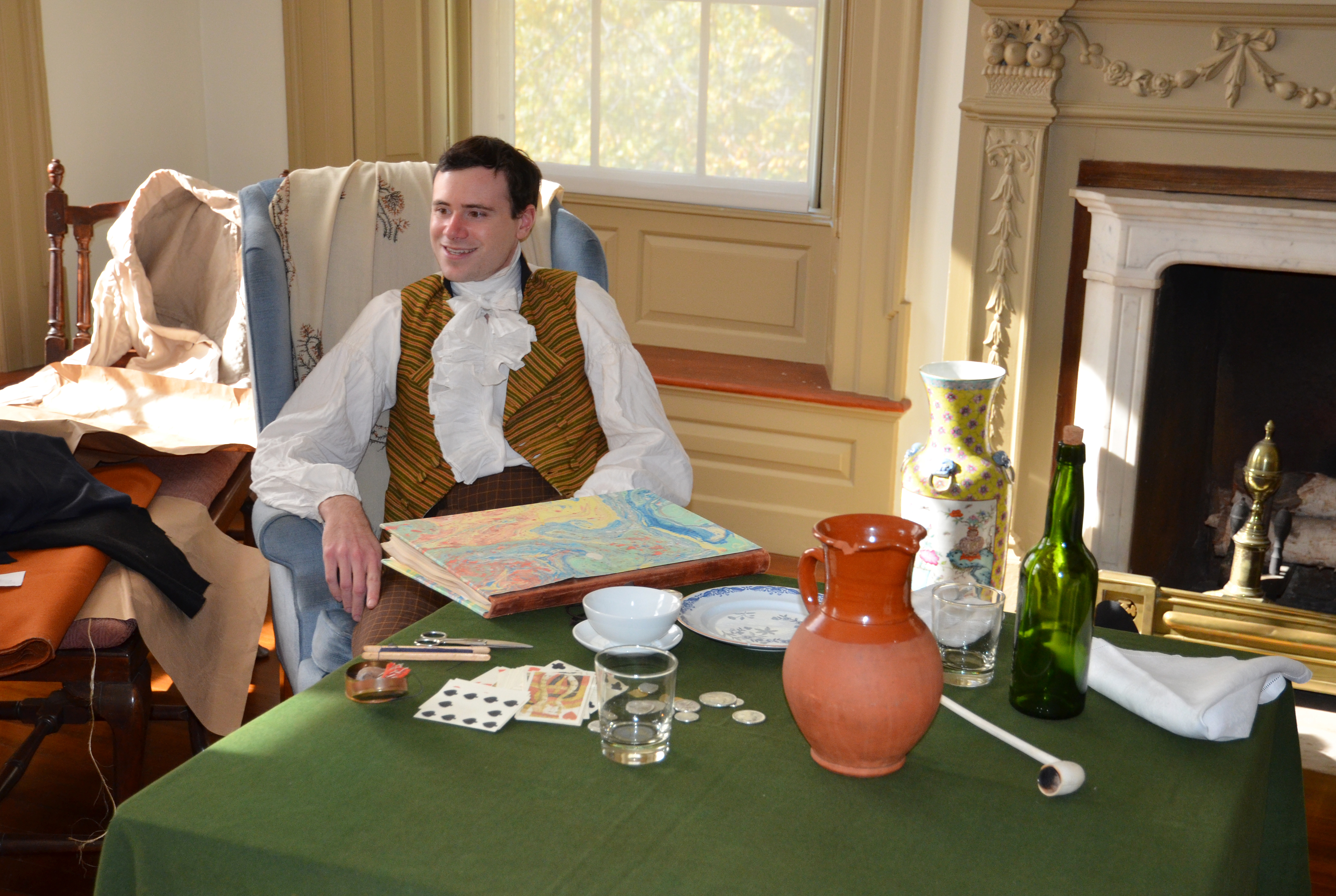
Man with cards, glasses and pipe in 18th century room

Stuff makes a house

To a degree, this is set-dressing, but set-dressing for a still-life, or real life, if the habitation will be by costumed interpreters. It has to be accurate to be authentic, whether it’s a HHM or a living history event that is striving to create a moment, or series of moments, in time– immersive moments.

We cannot step into the past unless we believe the representation we’re seeing, and that’s true no matter where we are: that’s why fabric matters, sewing techniques matter, tent pins and kettles and canteens matter. The world is made up of tiny details that we do actually notice without even knowing it: we see more than we realize, faster than we think. We’ll trip on the different, and stop.

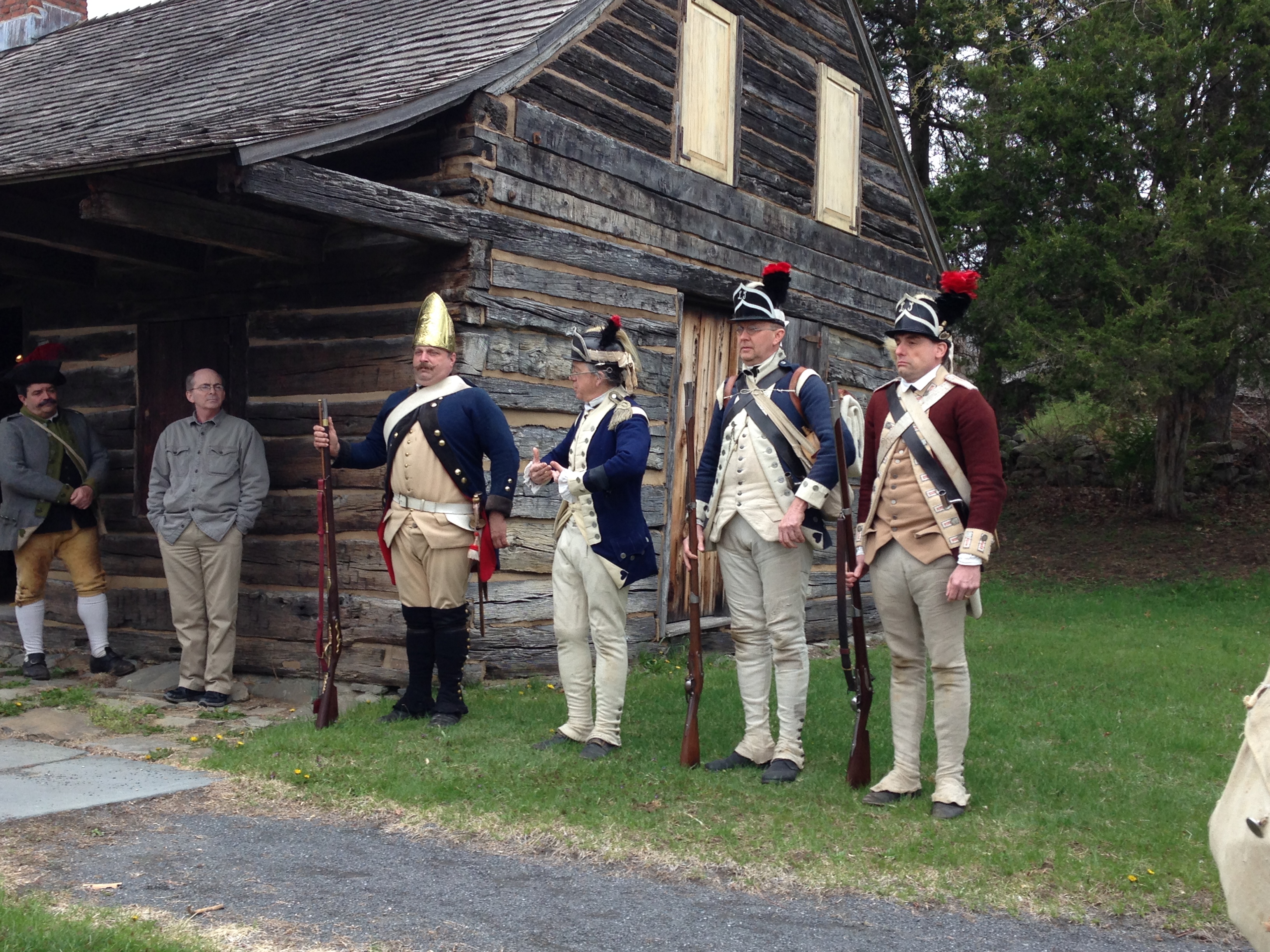
A variety of coats can tell a variety of stories

A variety of coats can tell a variety of stories

But what we want to do, as interpreters, is to have the visitor catch the right difference: not the one about which canteen and why, but the larger interpretive point. In one hypothetical example, wooden canteens are a way to talk about defense contracting and supplying the American army, just as over-dyed captured coats are a way to talk about the American Revolution as an international, and not just a civil, war.

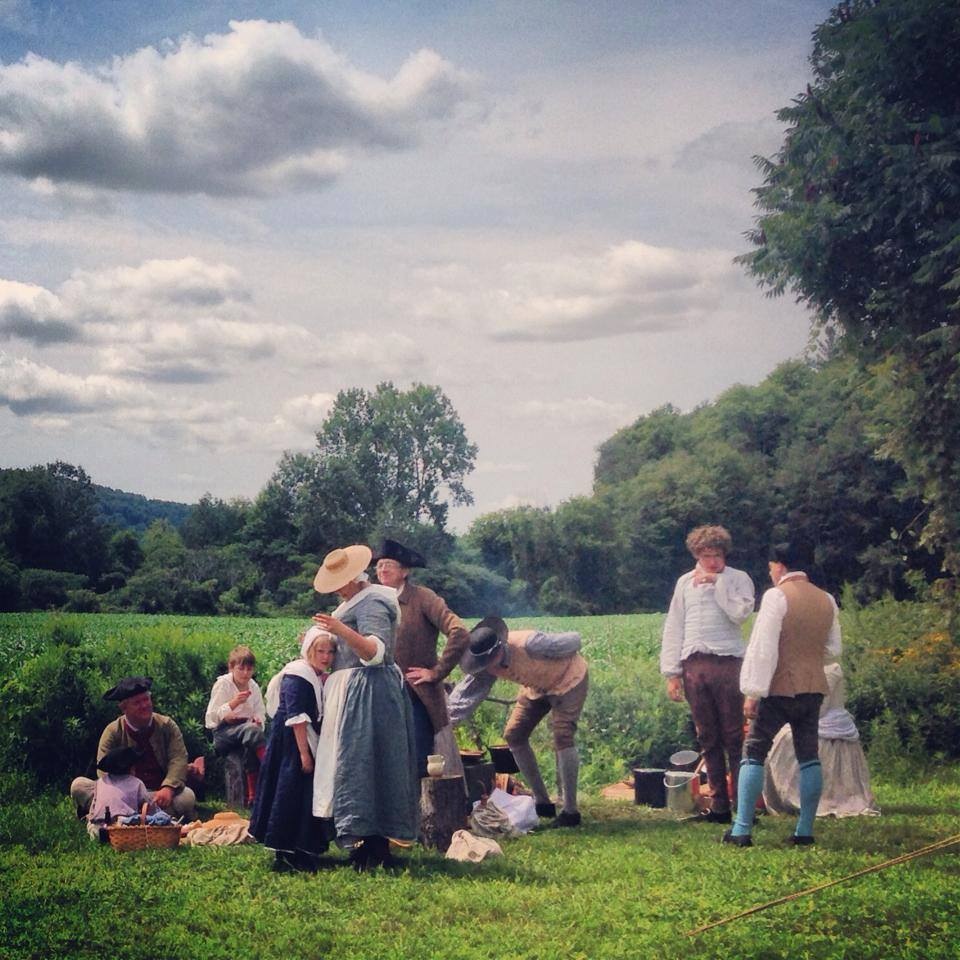
An encampment is, in a way, a neighborhood of HHMs turned inside out, with each regiment a separate family within the larger neighborhood. Each regiment tells a story about itself and its history, and is a lens through which visitors see the larger story.

14999323655_5d9dcf2259_o

That’s why accuracy matters: you don’t want to debunk Ye Olde Colonial craft in camp, or cotton-poly polonaises (poly-naises?) worn by purported women on the ration: you want to focus on the larger interpretive point. When not everyone plays by the same rules, it is better to focus on your own accuracy and authenticity and to ignore Ye Olde Annoyances.

Tell the larger story, the story of your own regiment’s people: that’s your interpretive goal.

Share this:

  • Share on Facebook (Opens in new window) Facebook
  • Share on Pinterest (Opens in new window) Pinterest
  • Email a link to a friend (Opens in new window) Email
  • Share on X (Opens in new window) X
Like Loading...

The Very Specific Spencer, Finished!

11 Tuesday Nov 2014

Posted by kittycalash in Clothing, Fail, Living History, Making Things, Reenacting

≈ 2 Comments

Tags

1790s, 1797, 18th century clothes, 18th century clothing, fashion, Federal style, sewing, sewing project, Spencer, Spencers, style, What Cheer Day, wool

Ta da!
JDK_8197_1

Yes, finished! And just in time, too! The braid arrived in the mail three days before the Spencer was wanted, and fortunately I had finished the garment by then, and the baking could take care of itself after a while, and I managed not to get eggs beaten with sugar on any lovely wool or mohair.

JDK_8210_1

I think it looks well enough with the gown and bonnet, though I am fairly certain the darts are too far to the sides in this iteration. How that happens when you use the same pattern twice I do not know.

You may recall that this is the Spencer where I demonstrated an uncanny ability to sew a collar on upside down. The braid went on pretty quickly, again proving that good materials make good sewing.

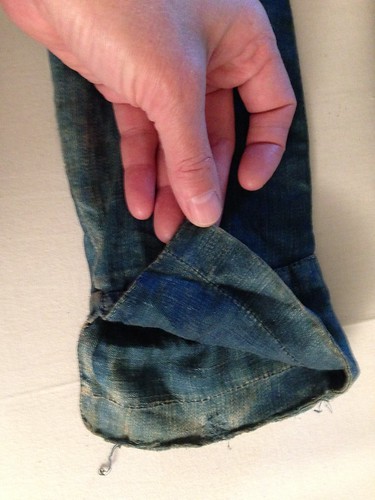
As mentioned previously, the cuffs are pieced, but this is a perfectly accurate way to deal with a shortage of material and/or cuffs.

I’m fairly pleased with how it turned out, and very pleased with how warm it is.  Over the cotton gown, the Spencer was plenty warm– and I certainly wished I had it after we left the house and went down to the river!

On the whole, I suppose I’m pleased…as pleased as I ever am …which means you can expect pattern revisions in the future!


Share this:

  • Share on Facebook (Opens in new window) Facebook
  • Share on Pinterest (Opens in new window) Pinterest
  • Email a link to a friend (Opens in new window) Email
  • Share on X (Opens in new window) X
Like Loading...
← Older posts
Newer posts →

Archives

wordpress statistics

Creative Commons License
Kitty Calash blog by Kirsten Hammerstrom is licensed under a Creative Commons Attribution-NonCommercial-ShareAlike 4.0 International License.

Website Built with WordPress.com.

  • Subscribe Subscribed
    • Kitty Calash
    • Join 621 other subscribers
    • Already have a WordPress.com account? Log in now.
    • Kitty Calash
    • Subscribe Subscribed
    • Sign up
    • Log in
    • Report this content
    • View site in Reader
    • Manage subscriptions
    • Collapse this bar
 

Loading Comments...
 

    %d