• Home
  • Completed Costumes/Impressions
  • Emma and Her Dresses
  • Free Patterns and Instructions

Kitty Calash

~ Confessions of a Known Bonnet-Wearer

Kitty Calash

Tag Archives: auctions

At the sales this month…

14 Tuesday Jan 2014

Posted by kittycalash in Art Rant, History, Research

≈ 4 Comments

Tags

18th century clothes, 18th century clothing, art history, auctions, fashion, jewelry, portraits, Sotheby's, style

It’s auction season in antiques land, and the catalogs arrived at work smelling of money and expensive ink. Sotheby’s Folk Art and Americana sales offer some lovely pieces  at the end of this month.

From the Folk Art sale, Mr and Mrs (maybe) Fitzhugh Greene of (maybe) Newport, RI.

Lot 606 from Sotheby's sale N09106 "Esmerian"

Lot 606 from Sotheby’s sale N09106 “Esmerian”

Pretty sweet stuff, right? With an estimate of $400,000-600,000, chances are good that these aren’t headed for public display, so enjoy them now.

Mrs (maybe) Fitzhugh Greene

Mrs (maybe) Fitzhugh Greene

Mrs (maybe) Greene is a pretty fantastic painting, even if John Durand lacked the grace and skill of Copley or Feke. There is an airless quality to these paintings, though the details are fine and the contrast between the husband and wife in presentation is delightful. My favorite line of the catalogue entry is the final one: “When juxtaposed to the drab coloring of her husband’s portrait, Mrs. Greene can clearly be perceived as his adornment, a fertile beauty in the flush of womanhood.”

Egads, right? I suppose she could be, but I also suppose she could be a fine way to flaunt his wealth and success while he projects fiscal and mercantile stability and restraint. Without a solid link to actual people (and there isn’t) it could be that more is happening in these paintings than the woman serving as the man’s adornment. If you read the footnotes, you’ll see that the attribution to Newport is slim (it’s a story without a real source). If a Mr and Mrs Fitzhugh Greene lived in Newport in the 1760s and 1770s, they’re not buried in RI. They could be Loyalists who fled– auction catalogs are a fiction writers dream of inspiration– but so far, no solid evidence links these portraits to Rhode Island.

In terms of documenting a man and a woman of substance in 18th century America, or the material aspirations of those men and women, these portraits are interesting whether the clothes and jewelry Mrs (maybe) Greene is wearing are real or not. Because they could be fabrications.

Mr (maybe) Greene

Mr (maybe) Greene

Mr (maybe) Greene is firmly real. The frock coat, waistcoat and breeches are all presumably made of the same fine brown wool broadcloth, worn with a fine white linen shirt and stock adorned with lace. The buttons are interesting, and neither the zoom nor my nose pressed to the catalog page clearly reveal the pattern. They look like pretty standard issue death’s head buttons, except when one looks like it might be more like a dorset pattern, or the one that looks floral. These will be on display in New York if one has the chance, which I will not.

There are pendant portraits like these in museum collections that show a man and his sister. It is possible that what Sotheby’s is offering for sale is a pair like that: a man and his highly eligible sister, not a man and his wife.

Share this:

  • Click to share on Facebook (Opens in new window) Facebook
  • Click to share on Pinterest (Opens in new window) Pinterest
  • Click to email a link to a friend (Opens in new window) Email
  • Click to share on X (Opens in new window) X
Like Loading...

How deep were my pockets?

15 Friday Nov 2013

Posted by kittycalash in Art Rant, Museums

≈ 4 Comments

Tags

auctions, common dress, common people, fashion, history, museum collections, Museums, Rhode Island

Warning: Museum-related Digression

Not deep enough, not by half.

Lot 194, hammer price: $22,500. Estimate:$4,000-$5,000

Lot 194, hammer price: $22,500. Estimate:$4,000-$5,000

On November 13, Augusta Auctions held a sale in New York that included some really wonderful things, and chances are good that if you read this blog, you know about some of the items, like the British consul’s coat, some very lovely leather trousers, and my personal favorite, the Rhode Island man’s day suit.

That suit! I’ve heard about that suit from a couple of people, but I’ve never seen it in person. I’ve made a jacket from a pattern taken from the coat, but until the photos turned up on the auction site, I didn’t know what the original looked like. It’s not flashy. You think, it’s a plain brown linen suit, no big deal, until you start to look at the simple, direct construction methods (which I have seen in other Rhode Island garments), and the rather elegant lines. This seems, from the distance at which I have to observe it, very like the boy’s jacket at Connecticut Historical Society. They share similar lines, are similar in color, and probably represent the most common everyday wear of the middling sorts of southeastern New England.

Historians and curators increasingly recognize the importance of the “common everyday” people and their material world, whether it’s Jill Lepore on Jane Franklin Mecom or whoever bought this suit. There are and were more of the 99% than the 1%, and to really understand the past, we have to collect what we can to document the daily lives of the majority of the people.

So of course I wanted this suit very badly. I looked up previous auction results, I poked around in other museum’s catalogs, and looked at our own collections. I prepared a case statement and took it to the Board committee that oversees Collections– when we spend large sums, we have to get approval. The Board committee authorized me to bid, but set a limit based on our acquisitions budget, which is funded from prior sales of duplicate or unrelated material in our collection. (Things like 20th century oriental rugs and mid-Atlantic corner cupboards– we can’t use them, they weren’t made or used in Rhode Island, but were acquired to furnish our house museum, until it was over-furnished. Then we went through a lengthy and formal deaccession process.)

Watching the online bidding, I could tell the sale was hot: there were folks with deep, deep pockets bidding, and I knew early on I would not get the suit. By the time it was all over, the hammer price was $22,500 (it’ll be $27,000 with the buyer’s premium) for a suit with a $4,000 – $5,000 estimate. I should say that it did rawther well, considering, but even in a different budget year, I would not in my wildest dreams have gone as high as the winning bidder did. Every result in this sale felt new, and dangerous, the way the Betty Ring sampler sale prices felt new and dangerous.

These prices feel dangerous because they skew the market and the past in a curious way: when the objects of the everyday become this valuable, this expensive, how can a museum with a mission to interpret the past of a specific people ever hope to compete? I can’t, not even with a concerted effort to develop a donor base that would support an acquisition at more than four times an estimate. What does that do to the market? It puts it squarely in the realm of the 1%.

That 1% is not just oil barons, it’s museums with enormous endowments and revenue streams, like the Met. I’ve posted before about the difference in museum revenue streams and endowments, and how a place like the Met can gross over a billion dollars in revenue in a fiscal year. With money like that, $22,500 is nothing. Museums like the Met and the MFA and the PEM and LACMA can out-bid smaller museums, vacuum up collections, and amass great hoards of material. What the little people have to do is to build relationships, and hope that they can get some of the material before it ever gets to auction. I didn’t have that chance, but it’s the only one I’ll ever have in what seems to be a new market for old things.

This sale also made me think that the museum world is increasingly a winner-take-all world much like politics or business, or even education. There are the haves, with large endowments and major gifts, attracting more gifts and endowments, and then there are the have-nots, with very limited funds and volunteer staffs. Those of us in the middle are feeling the same squeeze that the ever-smaller middle class is feeling, with similar income erosion as what our endowments earn buys us less, and as grant funds are ever harder to get. Programs are more competitive, and there’s less money for the big national endowments (NEA, NEH, IMLS) to give away.

Capitalism and market forces are at work, changing collections and changing how museums can and will operate. We have to radically and rapidly rethink how museums function both in acquiring collections (if we can continue to acquire them at all– there’s a cost not only to acquiring but to keeping) and in making them accessible. The smaller museums have to make better cases for mattering more to their audiences, or culture will be increasingly sequestered in larger, richer places.

Share this:

  • Click to share on Facebook (Opens in new window) Facebook
  • Click to share on Pinterest (Opens in new window) Pinterest
  • Click to email a link to a friend (Opens in new window) Email
  • Click to share on X (Opens in new window) X
Like Loading...

The Business

16 Thursday May 2013

Posted by kittycalash in Art Rant, Literature, Museums

≈ 1 Comment

Tags

arts, auctions, authenticity, endowments, fine art, Museums, sales, Sotheby's

Sotheby's sale June 11 2013

Fine Books & Manuscripts, June 11, 2013

I’m in this business, so I shouldn’t be bothered. I have been a seller and a buyer, and I’m a card-carrying member of Team Hoarder, AKA the Curators. So why does this bother me?

This sale features a strong selection of modern authors highlighted by Property from the Descendants of William Faulkner, including the manuscript of his Nobel Prize speech with the gold Nobel medal and diploma (1950), autograph letters written to his mother from Paris in 1925, the typescript book of his poem sequence “Vision in Spring” in a handmade binding by the author, drawings, corrected typescripts and other items.

You’d think I’d know better by now: Life isn’t an Indiana Jones movie, and no amount of saying “It belongs in a museum!” will help matters along.

More and more I see the cultural economy–and the disposition of cultural goods–following the “winner takes all” pattern of the larger economy. I give you Walmart, and Walmart gives you the Crystal Bridges Museum of Art. The FAQ’s deny any tie to Walmart stores, but Alice Walton founded the museum. For a lot of people, that’s a connection to Walmart. The claim that there is no connection seems even more disingenuous when you visit the homepage and read “General admission to Crystal Bridges is sponsored by Walmart. There is no cost to view the Museum’s permanent collection, which is on view year-round.”

The people of Arkansas deserve a nice museum; everyone does–that’s not my point. My point is that private collectors can buy, and keep from public hands, important pieces of material cultural and cultural heritage. Faulkner’s work post-Nobel may have paled compared to earlier work, but he won the Nobel–score one for Southern Literature and the power of Faulkner’s words, the sway he held over American letters.

Also in what is shaping up to be a very wordy sale: “[O]ne of possibly as few as three intact 1924 recordings of Joyce reading Ulysses.” Joyce reading Ulysses. That’s pretty damn cool. Lucky for you and me, if we’re word fans, you can listen to another recording here, thanks to The Public Domain Review.

Would an online photo, or a magazine photo, of Faulkner’s medal ever be as good as the online version of Joyce’s reading? No,  I don’t think so.  Because there is a power in the authentic, in the real. And the medal is material, three-dimensional: sound waves over an internet speaker wouldn’t be as frisson-inducing as listening to a recording in a darkened library, but they’re still sound waves.

Authenticity will be the subject of an upcoming session at AAM’s Annual Meeting in Baltimore, and though I can’t be there, I’m following as best I can.

Authenticity is something reenactors strive for in their work. Museums present authentic– real– objects and experiences. I sit the gallery and one of the most common questions people ask is, “Is it real?” and when told, “Yes, it is,” they gasp a little.

So when museums and libraries are priced out of the auction or private sale market, what does that mean? It means less public access to authentic items, to the “real,” three-dimensional evidence of the past.

We’re choosy, of course: it could well be that the University of Virginia did not want these items. Perhaps they did not contribute materially to Faulkner scholarship–the medal wouldn’t, really, would it? But the additional papers and letters might, but would be hard to justify at $250,000-$350,000.

Private collectors, people who can afford a $286,000 watch, drive up prices. Museums that can attract major donors attract more major donors.

MET MFA RIHS NHS
2011 Income $470,048,040 $157,082,067 $3,440,281 $615,008

That’s a chart of the 2011 income for the Met, the MFA, the RIHS, and the Newport Historical Society. All four have decorative art, art, and textile collections. All four would be interested in pieces of Newport furniture. Two are art museums, two are historical societies. Only one has the financial power to bid for major pieces.

And then there’s Crystal Bridges: 2011 revenue? $625,995,749. Sorry Met, you were just outdone by $155,947,709. Over one hundred and fifty-five million dollars. Dr. Evil is beyond impressed. The Crystal Bridges Form 990 includes a donor list with $700,000 from Cisco Systems. Nicely done. With endowment return of just a little more than $16 million, and  $37 million for “museum procurement expenses,”  they need those donations to stay healthy financially. But that $37 million buys a lot of art.  And where does that leave smaller museums and collecting organizations?

Pretty much where Walmart left small businesses: highly specialized but small.

And what does that mean for Faulkner’s papers, or a Plunket Fleeson chair?

Chances are they’ll be in private hands, accumulating value.

Share this:

  • Click to share on Facebook (Opens in new window) Facebook
  • Click to share on Pinterest (Opens in new window) Pinterest
  • Click to email a link to a friend (Opens in new window) Email
  • Click to share on X (Opens in new window) X
Like Loading...

Sampler Resources

08 Wednesday May 2013

Posted by kittycalash in History, Research

≈ 2 Comments

Tags

18th century, auctions, embroidery, Museums, Research, resources, Rhode Island, Sampler Archive Project, Sampler Consortium, samplers, Sotheby's

Sew 18th Century had a fun post recently about “Which State House is it?”

Sotheby's Sale N08832, Lot 563: The Sarah Waterman sampler

Sotheby’s Sale N08832, Lot 563: The Sarah Waterman sampler

I’m not usually a sampler fan (you know this is not an area in which I shine), but I have learned a lot more about samplers through work than I ever expected to. And what do you know? Some of it stuck!

I thought I would pass along some helpful resources for sampler fans. Last year, one of the (if not THE) premier sampler collections was sold at auction by Sotheby’s. Through the magic of the interwebs, you can see the catalog online:

Important American Schoolgirl Embroideries: The Landmark Collection of Betty Ring 

Even I say “Yum!” to all those pictures. I like color and texture, but sometimes samplers make me feel like all the air has been sucked out of the room. Walker Evans has the same effect. But when you look at them like this–or arrayed on a worktable–they turn into pictures, and those I enjoy. You page through the catalog and see what Betty Ring had, and whimper a little about these going in to private and not public hands. I know we whimpered…how I covet a green-background sampler!

But wait–there’s more! Be sure to check out  American Needlework Treasures, and Girlhood Embroidery Volumes I & Volume II which are available as full-text PDFs with images. In Girlhood Embroidery, you can read more about the Mary Balch School.

If you like samplers, and want to learn more or support sampler work, visit The Sampler Consortium website. You can become a lifetime member free of charge, and enjoy email updates with sampler news. The Consortium is connected to The Sampler Archive Project, which is funded by the NEH. We’re pleased to be part of the SAP’s first phase, and I am pleased to have learned so much just by cataloging.

Share this:

  • Click to share on Facebook (Opens in new window) Facebook
  • Click to share on Pinterest (Opens in new window) Pinterest
  • Click to email a link to a friend (Opens in new window) Email
  • Click to share on X (Opens in new window) X
Like Loading...

Holy time piece, Batman!

27 Saturday Apr 2013

Posted by kittycalash in Art Rant

≈ 2 Comments

Tags

advertising, auctions, Chanel, commodities, copy writing, fashion, Museums, rant, Sotheby's, watches

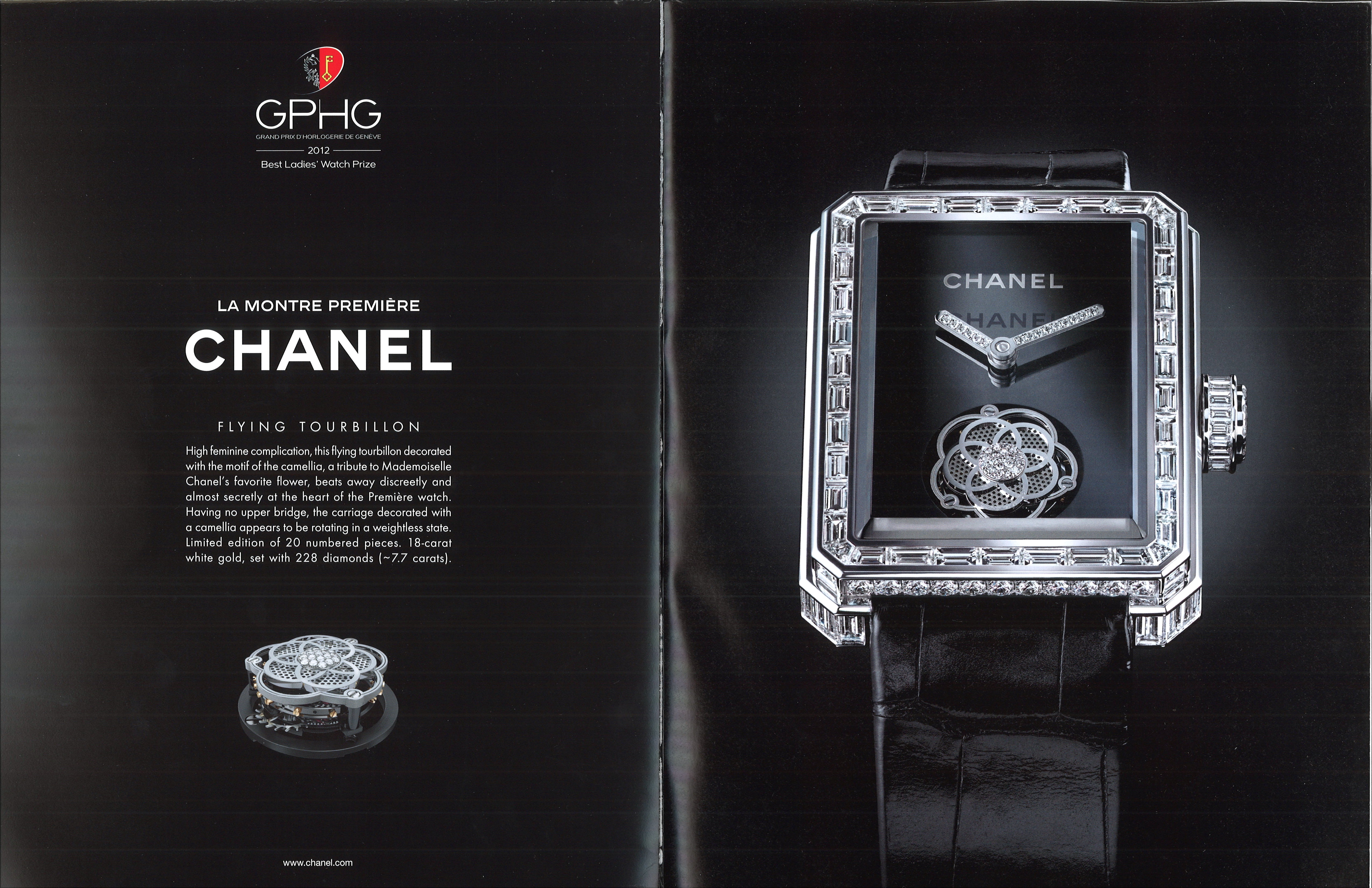
From Sotheby's Preview magazine

From Sotheby’s Preview magazine

We had some fun with this at work on Thursday. The slightly awful truth is that these catalogs and publications for the super-rich and fabulously fat-walleted arrive with regularity at the historical-cultural complexes that comprise the workplaces of under-paid and over-educated aesthetes, fueling their impotent rage about the eroding American dream. We had several performances of the Reading of the Watch Ad, appreciating the high craft and art of the copy and design.

I’m a Mad Men addict for all the wrong reasons (management tips! vicarious vices!) but long-time fan of advertising, copy writing, and graphic design. As a child, I launched, wrote and self-published F.U.S.S., the members’ newsletter of the Felix Unger Sympatico Society, for which my mother served as managing editor and my father the sole subscriber. This was really direct marketing, or taunting, as the case may be.

But we made a kind of cult of design in my household, so I knew as a kid what Y&R stood for, or DMBB. Mad Men sucked me right in, so when this turned up, I was ready.

This ad is the inside front cover and first page of the Sotheby’s Preview magazine which features Jeff Koons’ vacuum cleaner sculpture for $15M or so. This is serious walking around money, and if you are going to recline in your Manhattan penthouse (hope it’s pre-war) admiring the Koons while your maid vacuums before a party, this is the watch to time her with.

Copy Writer's dream, or nightmare?

The copy combines naughtiness with auction catalog sentence structure, like a sexed-up museum label.

High feminine complication, this flying tourbillon decorated with the motif of the camellia, a tribute to Mademoiselle Chanel’s favorite flower, beats away discreetly and almost secretly at the heart of the Première watch.

That last clause screams affair. When I read, all I can think of is Roger Sterling in a hotel room with his mistress. A colleague said this kind of watch was only given to rapper’s girlfriends—the serious ones—but at $286,814 (last year’s price), perhaps it’s a “don’t divorce me and take half my empire” celebrity wife present. Tisch and the Winklevoss twins were in the event pictures of this Preview, and this watch does scream nouveau riche, not Astor money (that was a fur trade fortune, originally).

Where it gets really fun, I think, is when the text takes on the style of an auction catalog lot description:

Having no upper bridge, the carriage decorated with a camellia appears to be rotating in a weightless state. Limited edition of 20 numbered pieces. 18-carat white gold, set with 228 diamonds (~7.7 carats).

“Having no upper bridge” is a technical description that reminds me of the dentally challenged with poor memories and no mirrors. Note that camellia is repeated here—perhaps to help you recognize the motif, because I’m not sure it reads very clearly.

There it is, the quarter-of-a-million-dollar watch, advertised in a magazine promoting artwork for tens of millions of dollars, pieces that a colleague noted would be displayed in the penthouse for a party and then put into storage as an investment until the art advisor said it was time to sell for a profit. Art as commodity, produced like commodities now, from Warhol to Koons to Hirst.

Share this:

  • Click to share on Facebook (Opens in new window) Facebook
  • Click to share on Pinterest (Opens in new window) Pinterest
  • Click to email a link to a friend (Opens in new window) Email
  • Click to share on X (Opens in new window) X
Like Loading...
Newer posts →

Archives

wordpress statistics

Creative Commons License
Kitty Calash blog by Kirsten Hammerstrom is licensed under a Creative Commons Attribution-NonCommercial-ShareAlike 4.0 International License.

Website Built with WordPress.com.

  • Subscribe Subscribed
    • Kitty Calash
    • Join 621 other subscribers
    • Already have a WordPress.com account? Log in now.
    • Kitty Calash
    • Subscribe Subscribed
    • Sign up
    • Log in
    • Report this content
    • View site in Reader
    • Manage subscriptions
    • Collapse this bar
 

Loading Comments...
 

    %d