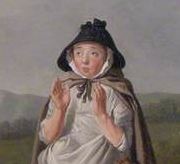
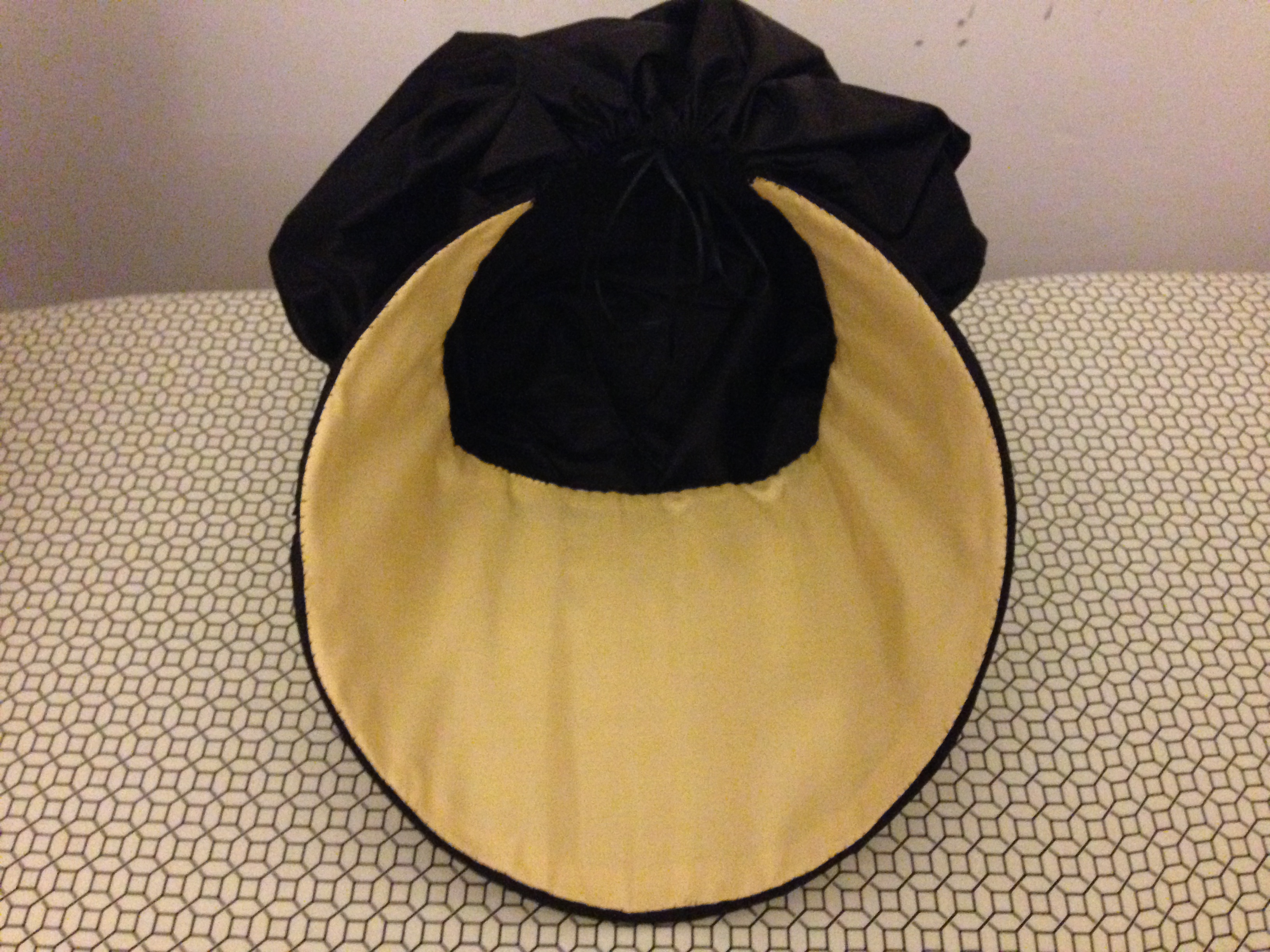
• Home
  • Completed Costumes/Impressions
  • Emma and Her Dresses
  • Free Patterns and Instructions

Kitty Calash

~ Confessions of a Known Bonnet-Wearer

Kitty Calash

Tag Archives: bonnets

Half Robe or Jacket: How Do You Wear One?

10 Wednesday Sep 2014

Posted by kittycalash in Clothing, Events, History, Making Things, Reenacting, Research

≈ 3 Comments

Tags

18th century clothing, 19th century clothing, bonnets, Costume in Detail, Costumes, costuming, Federal style, frock coats, half robes, Isaac Cruikshank, living history, National Trust Collections UK, Regency, Research, resources, tailcoat, What Cheer Day, Yale Center for British Art

Half robe, 1790-1800. National Trust Inventory Number 1348749,

Half robe, 1790-1800.
National Trust Inventory Number 1348749,

What Cheer Day is coming, and I hate to miss an opportunity to make a new gown (despite having just made one, and despite needing to make some waistcoats and trousers for the event). While I lay awake last night, I pondered my options, and whether a half gown would be suitable.

Although I have concluded it probably is not, I was curious about how these should be worn. Where can you wear such a garment? Is it only suitable for at-home use?

This is the robe from Nancy Bradfield’s Costume in Detail, replicated by Koshka the Cat here, and approximately by me, here.

CostumeinDetail_p84
CostumeinDetail_page83

Since I will be a housekeeper again, I think a gown is more correct for me, but that doesn’t stop me thinking about half robes, and whilst scrolling images by year at the Yale Center for British Art, I found this by Cruikshank:

ladies in a lending library

Isaac Cruikshank, 1756–1810, British, The Lending Library, between 1800 and 1811, Watercolor, black ink and brown ink on medium, lightly textured, beige wove paper, Yale Center for British Art, Paul Mellon Collection

There’s a lot to love in this image, even with its fuzzy “between 1800 and 1811” date. Not only do we get an array of reading material (Novels, Romance, Sermons, Tales, Voyages & Travels, Plays), we get costume tips and– special bonus– a dog gnawing its leg.

(If you are curious about some of the books in the Library at the John Brown House, check out this tumblr bibliography. I’ve been using it of late, and the representative genres are quite similar to what we see in the Cruikshank.)

We also get a chemisette on the lady at the counter, along with a very dashing hat, a fancy tiered necklace on the lady in pink, who also carries a green…umbrella? Parasol? With just a veil, that seems likelier than the longest reticule ever.

I like our Lady in a Half-Robe and her deep-brimmed bonnet showing curls at her brow. She and her companions show the range of white and not-white clothing seen in early 19th century fashion plates, and the range of head wear, too.
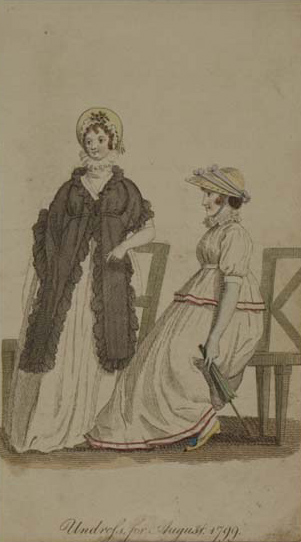
Undress for August, 1799. Museum of London

Undress for August, 1799. Museum of London

The last question I’m asking myself, though, is whether the yellow garment is a half-robe or a short pelisse or a jacket. And can you wear a half robe out of doors? And what did the ladies of the period call that garment?

In this fashion plate (featured by Bradfield on page 84, found by me at the Museum of London), the lady on the right is certainly wearing a short upper body garment, and I’d wager that she’s out of doors or headed that way, since she’s carrying a (green) parasol. Bradfield calls her garment a “jacket,” and until I can find the text of the Ladies’ Monthly Museum for August 1799, perhaps that is the term we should use instead.

While two images aren’t a lot of evidence, it does appear possible to wear a half-robe or jacket out of doors for informal visits in clement weather, and finding two is as good a reason as any to look for more.
Share this:

  • Share on Facebook (Opens in new window) Facebook
  • Share on Pinterest (Opens in new window) Pinterest
  • Email a link to a friend (Opens in new window) Email
  • Share on X (Opens in new window) X
Like Loading...

The Milliners’ Shop

03 Sunday Aug 2014

Posted by kittycalash in Clothing, Events, Living History, Reenacting

≈ 10 Comments

Tags

1812, bonnets, fashion, Federal style, living history, milliner, millinery, millinery shop, Salem event, Salem Maritime Festival, style

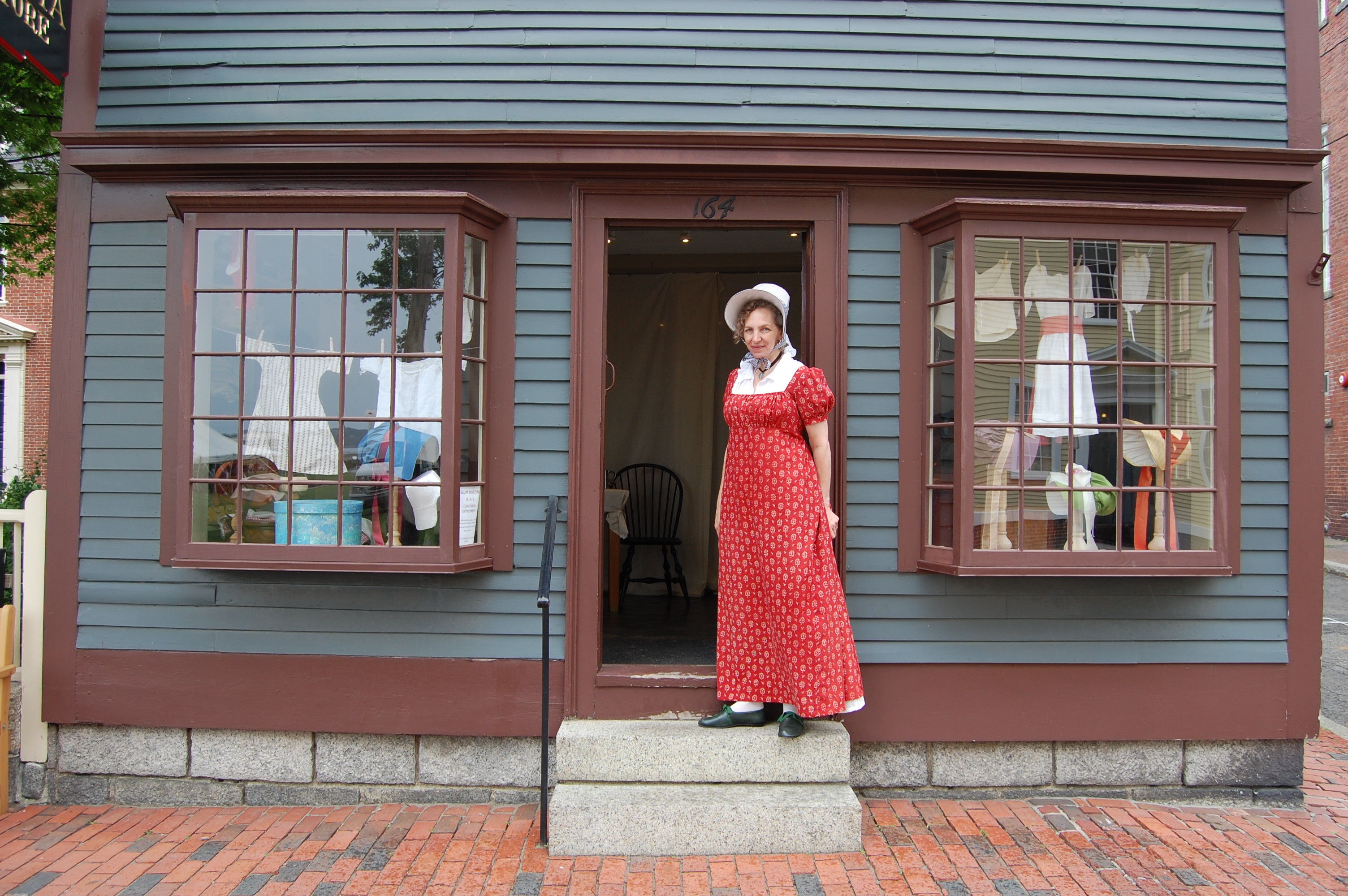
One of the Milliners Stands in the Doorway

One of the Milliners Stands in the Doorway

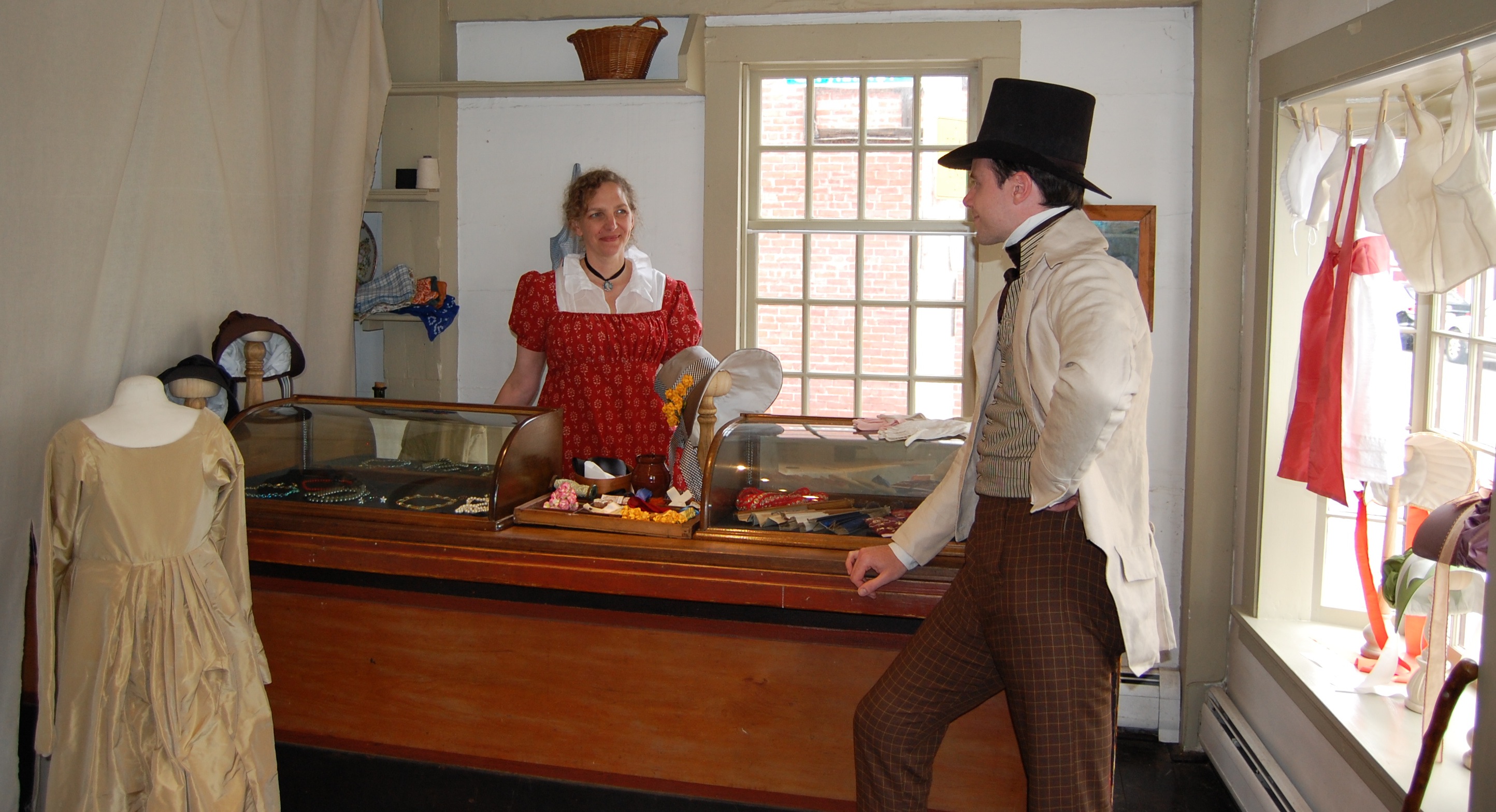
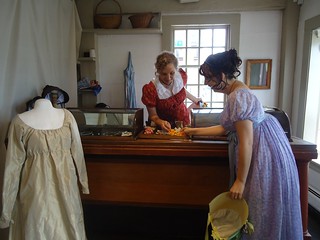
On Saturday last, Sew 18th Century and I set up a milliners’ shop for the Salem Maritime Festival. This was a fun event made even better by the opportunity to set up shop in an actual shop!

We started working on this project in the Spring, and kept working on it almost until it was time to pack for the trip.

Some of our goods, with the delightful Miss A

Some of our goods, with the delightful Miss A

Milliners carried a wide range of goods designed to entice customers into the shop where they might purchase a new trim, ribbon or sash while admiring newer bonnet styles or fresh yard goods. Even in the 18th and 19th century, retailers new the value of repeat customers and impulse purchasing.

DSC_0238

Customers of all kinds came to our shop, some for retail trade, and some for wholesale. Mr JS is a weaver, and has offered plain and check linens by subscription– and I think our shop can do well referring custom to him. He was far more genteel than the sailors who came in– three times they visited, offering us money, but not for our bonnets!

Fresh from a privateer, Mr G and his crew mate stomped up the steps and made several untoward propositions, even daring to shake a bag of coin! Later they tried to entice a studious apprentice to join them, but fortunately he is a dutiful and serious lad with a thought for his future, and he declined their offer. At last Mr S was forced to confront these sailors on the waterfront– I think we shall soon require a committee of safety to patrol our streets and regulate the ruffians.

Mrs B examines some of our trims

Other customers shopped for trims and accessories. Mrs B is always fashionable, and one of our best customers. She sets a standard for refinement and style in our town that few can match.

cropped_Matt

Her husband is an officer in the Navy, and I fear sometimes he is startled by the bills– though he always pays, I think he may be surprised to see how fashionable we have become in Salem.

The bandbox maker, Ms M, set up in our shop as well. I do highly recommend her boxes as the finest made and best decorated that can be had. Bonnets and hats do not come cheap, and you do well to protect them.

In the late morning, I paid a call to Mrs B, and took tea. The coffee jelly was exquisite, molded in the shape of fish– very clever indeed– with marzipan fish and a rice pudding. It was a delight to all the senses, though sadly I had to hurry back to the shop. It is a great responsibility to keep a shop.

Shop window at the West India Goods Store

Shop window at the West India Goods Store

Thank you so much for visiting and for trading with us! Do come back soon, as we are certain to have new goods of interest to delight you.

Share this:

  • Share on Facebook (Opens in new window) Facebook
  • Share on Pinterest (Opens in new window) Pinterest
  • Email a link to a friend (Opens in new window) Email
  • Share on X (Opens in new window) X
Like Loading...

Six Toiles, a Coat and a Bonnet

07 Monday Jul 2014

Posted by kittycalash in Clothing, Events, Living History, Making Things, Reenacting

≈ 2 Comments

Tags

1812, 19th century clothing, bonnets, frock coat, living history, menswear, Salem event, sewing, tailcoat

14557116394_73c2d5ea9f_zYes, six toiles.
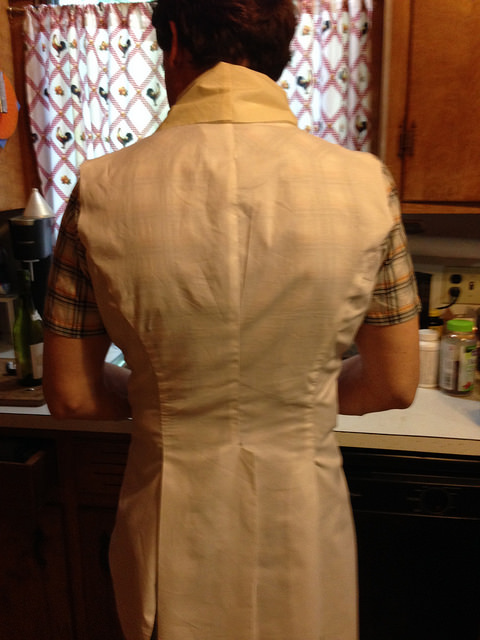
That’s how many it took to get a coat pattern to fit Mr S the way I thought it should. I finally built the pattern around a sleeve and arm scye that I knew worked and suited the period. From there, I built out the back, altering the center back seam curve to suit Mr S’s figure. Arm scyes are still hard for me to figure out, although sleeves are often my favorite part of a garment. I like how flat pieces become three dimensional in a sleeve, and I enjoy setting sleeves– go figure.

Thanks to the three-day holiday weekend and sitting out a parade to pad stitch, I have a coat body.

IMG_1725
IMG_1727

I’m not thrilled about the size of the lapels, though I have found extant examples and fashion plates showing lapels this size, and sleeves, too. While I’ve pinned up the sleeves in the back, thinking there’s too much fabric there, I can also see from the images that the subject’s posture was not the best– and that was the moment when I realized that I really did want a mannequin for menswear as the subjects are hard to catch at any age, and variable in posture and wiggliness. They also object to being pinned accidentally.

But there is at least a coat body on the way to being done, so I took a break and made a bonnet, which is really the point here <ahem> milliner’s, not tailor’s, shop, after all.

IMG_1738

Pasteboard brim, blue silk taffeta lined with white silk taffeta (they had new things at the fabric store, very exciting!), trimmed with silk ribbon from Wm Booth and paper flowers from the V&A.

Now, more bonnets, two waistcoats, a gown, an exhibition, a lecture, and Stony Point are all that stand between me and the milliners’ shop in Salem…

Share this:

  • Share on Facebook (Opens in new window) Facebook
  • Share on Pinterest (Opens in new window) Pinterest
  • Email a link to a friend (Opens in new window) Email
  • Share on X (Opens in new window) X
Like Loading...

Frivolous Friday: Just a Pretty Bonnet

06 Friday Jun 2014

Posted by kittycalash in Clothing, Frivolous Friday, Living History, Making Things, Reenacting

≈ 2 Comments

Tags

1812, 19th century, 19th century clothing, bonnets, fashion, fashion plate, Frivolous Friday, millinery, millinery shop, Regency, Salem event, style

DSC_0134
DSC_0136

Like Sew 18th Century, I’ve been enjoying preparing for the August 2nd event in Salem.

I’ve not ventured too much into Regency bonnets, or into straw, but I did flirt with a 1794 bonnet. Now I’ve got hats on the brain, and the time to fully indulge my whimsy (though it runs out Sunday).

1812_CostumesParisiens_2
1812_CostumesParisiens_1

From the fashion plates, one would almost say, Anything Goes.  Of course it doesn’t, really, but you can get a sense of the exuberance of bonnet trimmings in the illustrations, and the lavish use of ribbons, bows, feathers and flowers.

DSC_0138
DSC_0140

Not all straw bonnets were lined– in fact, they often weren’t– but the lining protects the straw and the wearer’s face, and finishes this off in a way I like. Pleating in my condition was, ah, challenging, but I figure it was good for my brain to have the exercise. The lining in the brim is white taffeta, but I used white linen in the main crown or tip portion of the bonnet. Instead of bagging the lining, or trying to fit it, I mimicked what Mr B does in the hats he’s made for us. The gathered linen closes with a drawstring and required slightly less effort to fit into the hat.

The velvet ribbons came from Lunarain Designs on Etsy, the ties are taffeta ribbon from Taylor’s Etsy shop, and the straw bonnet form came from Regency Austentation. While the finish work takes time and concentration, I do enjoy both making up and trimming bonnets, and look forward to several more.

Share this:

  • Share on Facebook (Opens in new window) Facebook
  • Share on Pinterest (Opens in new window) Pinterest
  • Email a link to a friend (Opens in new window) Email
  • Share on X (Opens in new window) X
Like Loading...

A Whale-Safe Bonnet

23 Friday May 2014

Posted by kittycalash in Clothing, History, Living History, Making Things, Reenacting, Research

≈ 6 Comments

Tags

18th century, 18th century clothing, bonnets, common dress, common people, engravings, fashion, Marquis of Grandby, millinery, Research, Revolutionary War, sewing, style

Complete with my interpretation of "Hat Face"

Complete with my interpretation of “Hat Face”

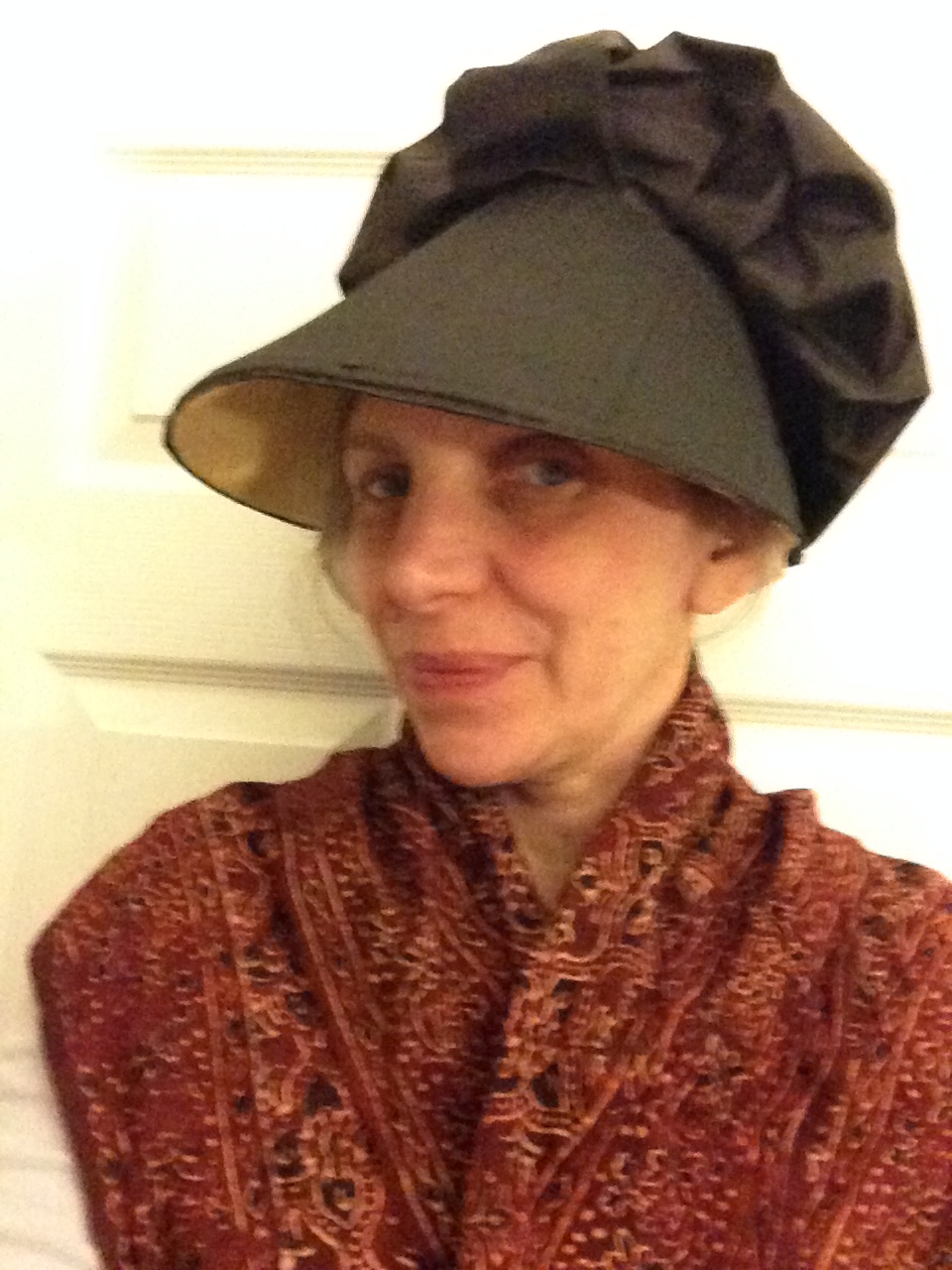
As promised, my interpretation of the ribbed bonnet in the 1789 engraving. There are a few problems with this beyond the model. (Which is not to say that I don’t like this bonnet– I do!)

I used the Kannik’s Korner bonnet pattern (view F, I think) as the basis for this because I already had a brim, lining, and caul cut and in a drawer. Given my current medicated state, using something pre-cut seemed advisable. That means I didn’t play with the brim to create the line of the Williamsburg bonnet, or the curve of the brim in the “Fortune Teller” engraving.

Detail, The Marquis of Grandby

Detail, The Marquis of Grandby

Is this style acceptable for the period I typically interpret (1775-1783)? Well… there are other examples of the lampshade-style bonnet, as in the Edward Penny painting of the Marquis of Granby. This painting is dated “after 1765” so there’s some room for interpretation there…too much room. But if that’s 1765-1770, and the “Fortune Teller” is 1789, I think we have comfortably covered the 1775-1783 time frame, even if it is a bit like a queen-sized blanket on a twin bed.

Front view: more lamp-shade like.

Front view: more lamp-shade like.

As you can see, the bonnet does have some lamp-shade-like tendencies on my head, which I consider a benefit. I like the way the ribs are visible, even if I remain unconvinced by the caning. I think it’s a little too wide, and lacks resiliency, though to be honest, I have only felt baleen at the New Bedford Whaling Museum, where there is a large sample on the second floor.

To compensate for the disappointing cane in the brim, I slipped a piece of millinery wire into the pocket underneath the cane. The layers in the brim are:

  • black taffeta
  • horsehair canvas
  • linen buckram
  • yellow taffeta

The channels are all hand-sewn, and then the cane was slipped in. I stitched the black taffeta caul to the first three layers, and then lapped the yellow taffeta over the raw edges and stitched it down to finish the brim/caul seam.

No, I didn’t take any in-process pictures…probably because this took considerable snake-eyed concentration last weekend. IMG_1477 IMG_1476

Usually, I line the cauls of my bonnets, but through shear laziness or distraction, I opted not to this time, and I think I’ll leave it this way for a while. You will also note that I have not trimmed this: I have some black silk ribbon coming, and I may try that. I don’t have enough black taffeta left to cut self-fabric ties, and there do seem to be some plain examples. A plainer, lamp-shade-like bonnet may be just the ticket for Bridget.

What would I do differently? Next time I would definitely play with the brim shape using a paper template. I’d like a lower, curvier, brim. Once I had the shape worked out in paper, I would use that as a template to cut the taffeta and horsehair or light buckram layers.

The Edenton Tea Party

The Edenton Tea Party

I’d also try zip ties. I know: not period correct! But short of risking federal prosecution resulting from a trip to New Bedford with some shears, I’m not sure that anything other than plastic will have the resiliency and spring that baleen has, and that made these bonnets so special. I thought of them while making this bonnet, but I think Mr S used them all at work in the past two months. A Facebook friend has been thinking of zip ties, though, and has a hankering for one of these bonnets. I can’t say that I blame her– and honestly, I think I might join her.

Share this:

  • Share on Facebook (Opens in new window) Facebook
  • Share on Pinterest (Opens in new window) Pinterest
  • Email a link to a friend (Opens in new window) Email
  • Share on X (Opens in new window) X
Like Loading...
← Older posts
Newer posts →

Archives

wordpress statistics

Creative Commons License
Kitty Calash blog by Kirsten Hammerstrom is licensed under a Creative Commons Attribution-NonCommercial-ShareAlike 4.0 International License.

Website Built with WordPress.com.

  • Subscribe Subscribed
    • Kitty Calash
    • Join 621 other subscribers
    • Already have a WordPress.com account? Log in now.
    • Kitty Calash
    • Subscribe Subscribed
    • Sign up
    • Log in
    • Report this content
    • View site in Reader
    • Manage subscriptions
    • Collapse this bar
 

Loading Comments...
 

    %d