• Home
  • Completed Costumes/Impressions
  • Emma and Her Dresses
  • Free Patterns and Instructions

Kitty Calash

~ Confessions of a Known Bonnet-Wearer

Kitty Calash

Tag Archives: common people

Mountebanks, Watchmen, and Questionable Women

09 Tuesday Feb 2016

Posted by kittycalash in History, Living History, Research

≈ 6 Comments

Tags

18th century clothing, common dress, common people, interpretation, living history, Paul Sandby, Research, resources
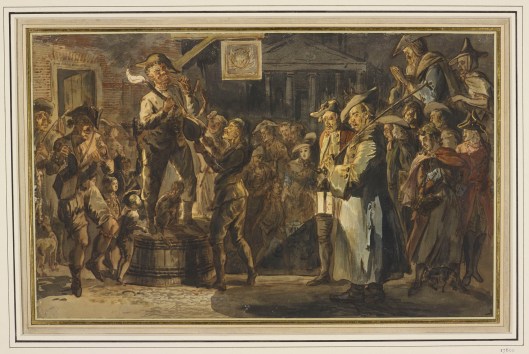
Mountebanks at night. watercolor by Paul Sandby, 1758 Royal Collection Trust/© Her Majesty Queen Elizabeth II 2014

Mountebanks at night. watercolor by Paul Sandby, 1758 Royal Collection Trust/© Her Majesty Queen Elizabeth II 2014

Sometimes I think I’ll forgo the dressing up and going out in public, and just do the research; the world that exists in my mind is pretty satisfactory, and within it, Boston doesn’t have the GPS-killing skyscrapers of the financial district or the motor-powered vehicles that seem bent on killing pedestrians. Instead, it has horse-drawn vehicles, equally ready to run you down.

But: in thinking about the people on the margins, the people in the backgrounds of images, the people casually mentioned– “so hard to find a cook when you need one”–in letters, I’ve been looking at even more images. Here, a mountebank, illuminated by a torch, performs on a washtub outside a tavern (Good eating every Day) for a crowd of men, women, and children. Much texture here, and many people one could aspire to be.*

Mountebanks at night. watercolor by Paul Sandby, 1758 Royal Collection Trust/© Her Majesty Queen Elizabeth II 2014

Mountebanks at night. watercolor by Paul Sandby, 1758 Royal Collection Trust/© Her Majesty Queen Elizabeth II 2014

Let’s get the watchman out of the way.

Is that a snarl or he is just happy to see the mountebank he can bash over the head with his prodigious stick? He’s carrying the obligatory lantern, here apparently made of tin with horn, glass, or mica windows. It looks like he’s slung it over the stick, where it is caught by by the knob to keep it from sliding.

It’s a Great Coat, really: the button-embellished flap (pocket slit?), the deep sleeve cuffs, the taped buttonholes all serve to make this coat impressive and intimidating.

On his head, a rakishly angled black wool hat worn over…a cap? Help me out here, gents. It looks like a linen cap that covers the very crest of his ear. Is that possible? Or he is tonsured? If so, you’d think he’d want a cap for the cold…

Mountebanks at night. watercolor by Paul Sandby, 1758 Royal Collection Trust/© Her Majesty Queen Elizabeth II 2014

Mountebanks at night. watercolor by Paul Sandby, 1758 Royal Collection Trust/© Her Majesty Queen Elizabeth II 2014

Next up: the girl with a basket. She raises a lot of questions for me when I zoom in close. Yes, Virginia, she really is wearing a cast-off regimental under a short red cloak. I’ve never understood how women came to possess these coats, but look closely and you’ll see the blue cuffs and plackets on the sleeves, the pocket flap sticking up just below her basket, and the long skirt of the red coat. (That’s a dog, not a killer shrew, between her feet.)

Her hair is a mess, too; we can speculate on reasons for that, but let’s go with a long, busy  day as a servant, and not freelance corner-based activities.

What’s in the basket? A bottle? A decanter? A funnel? Hard to tell. Is she someone’s serving girl, sent out to the liquor dealer? If she is, why that coat? Is the man in red next to her grasping her elbow? Possibly…(and doesn’t he have a nice red double-breasted coat?)…and if that’s a uniform he’s wearing, is that her connection to the coat she is wearing? So many questions.

In the center background, there’s a young woman escorting a male child; she may be an older sister, but I think it’s also likely she’s a nursemaid. In the background at the left, two ladies are seen from the back, clearly wearing neat caps and jaunty hats. They’re moving away from the mountebank and the crowd, probably on their way home, respectability leaving the dangerous streets.

It’s as much a mix of people as you might find outside the Pret a Manger on State Street today. Somewhere in that crowd, there is someone to be.

*In a nod to riots recent, let us note there are 5 or 6 women shown here, 14 men, 5 children, 2 dogs and 1 monkey. That’s a 40:60 ratio of women to men. Children are, in general, grossly underrepresented in living history. Let’s talk about that someday.
Share this:

  • Share on Facebook (Opens in new window) Facebook
  • Share on Pinterest (Opens in new window) Pinterest
  • Email a link to a friend (Opens in new window) Email
  • Share on X (Opens in new window) X
Like Loading...

Illuminating Lampshades

08 Monday Feb 2016

Posted by kittycalash in Clothing, History, Living History, Reenacting, Research

≈ 8 Comments

Tags

18th century, 18th century clothing, authenticity, bonnets, common dress, common people, Costume, fashion, Paul Sandby, style

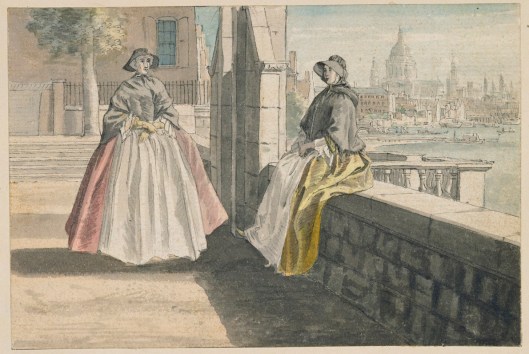
The more you look, the harder things get. That’s usually cause for celebration, but I’m starting to feel the pressure of more ideas and commitments than time. Here’s a question: in these undated Sandby watercolors, are the women wearing the bonnet colloquially called lampshade? What does lampshade look like from the side? My guess is that it looks a great deal like the headwear of the woman sitting on the wall. (Click the images to go to the Royal Collection site where you can enlarge them.)

Somerset House Gardens. Watercolor by Paul Sandby, 1750-1760. Royal Collection Trust/© Her Majesty Queen Elizabeth II 2014

Somerset House Gardens. Watercolor by Paul Sandby, 1750-1760. Royal Collection Trust/© Her Majesty Queen Elizabeth II 2014

So much good stuff in this image: the woman sitting on the wall, swinging her foot (take that, decorum); the black silk mantles; sleeve ruffles; gloves; pointy shoes; big skirts.

About those pointy shoes and big skirts….much as I would love for this image to be really relevant to my quest, we are looking at the 1750s. At least lampshade comes in to greater focus, both in date and in construction. Ooh, look! More lampshade.

The Ladies Waldegrave, 1760-1770. Watercolor by Paul Sandby Royal Collection Trust/© Her Majesty Queen Elizabeth II 2014

The Ladies Waldegrave, 1760-1770. Watercolor by Paul Sandby Royal Collection Trust/© Her Majesty Queen Elizabeth II 2014

The eldest of these young ladies was born in 1760 and the youngest in 1762, so we’re really close to 1770 here. They’re not only incredibly adorable (I know a quite darling and very young lady for whom I want to make one of these pretty much immediately), but they’re in the right time period. Most of the bonnet images in the Royal Collection seemed to be of young women or girls, until I happened upon this image, from 1768.

A carriage, with man and lady 1768. Watercolor by Paul Sandby. Royal Collection Trust/© Her Majesty Queen Elizabeth II 2014

A carriage, with man and lady 1768. Watercolor by Paul Sandby. Royal Collection Trust/© Her Majesty Queen Elizabeth II 2014

Well, “lady” might be pushing it where I’m concerned, but that image feels like the best solid evidence of bonnetness close to 1770.

The ascent to the Round Tower c.1770. Paul Sandby. Royal Collection Trust/© Her Majesty Queen Elizabeth II 2014
Detail, The ascent to the Round Tower c.1770. Paul Sandby, Royal Collection Trust/© Her Majesty Queen Elizabeth II 2014

Here’s another ca. 1770 image. Way in the back, there’s a bonnet.

Can’t get enough of that black taffety? Have another.

A young girl, standing 1760-1780. Paul Sandby, Royal Collection Trust/© Her Majesty Queen Elizabeth II 2014

A young girl, standing 1760-1780. Paul Sandby, Royal Collection Trust/© Her Majesty Queen Elizabeth II 2014

Wonder what that might look like from the back? Voila.

A girl in a sunhat, seen from behind, 1760-1770. Paul Sandby, Royal Collection Trust/© Her Majesty Queen Elizabeth II 2014

A girl in a sunhat, seen from behind, 1760-1770. Paul Sandby, Royal Collection Trust/© Her Majesty Queen Elizabeth II 2014

This is by no means an exhaustive search, but thanks to a Facebook commenter, I’ve rediscovered the Royal Collection, and found later images of the peculiarly lamp-shade like headwear, and one image with a firm date of 1768.

In Book of Ages, Jill Lepore quotes a February 27, 1766 letter from Jane Franklin Mecom in Boston to Deborah Read Franklin in Philadelphia, regarding the clothing her brother Benjamin had shipped to her. “For ‘Each of us a Printed coten Gownd a quilted coat a bonnet.’ She continues about her bonnet, “is very suteable for me to were now being black and a Purple coten.” (Lepore, Book of Ages, p. 144)

What do you suppose that 1766 bonnet looks like? Do you think it looks more like lampshade, or these transitional forms? Probably lampshade, but the materials are intriguing: Purple cotton. Is that the brim lining? Jane Mecom is in mourning, so I’d expect the main body (brim and caul) of the bonnet to be black, and most likely taffeta, which turns up as a descriptor in the runaway ads.

Wide-brimmed, black taffeta bonnet, possibly lined in cotton, 1766-1768. But how long did bonnets last?*  What went into them– Buckram? Pasteboard? Coated pasteboard? Baleen? A combination of pasteboard and baleen?

I’ve got some ideas, and if the next winter storm doesn’t delay the mail too long, I might have experiments to conduct this weekend.

*Or any clothing? But that’s a post for another day.

Share this:

  • Share on Facebook (Opens in new window) Facebook
  • Share on Pinterest (Opens in new window) Pinterest
  • Email a link to a friend (Opens in new window) Email
  • Share on X (Opens in new window) X
Like Loading...

Undocumented but Not Alien

07 Sunday Feb 2016

Posted by kittycalash in Events, Living History, personal, Philosophy, Reenacting, Research

≈ 1 Comment

Tags

18th century, authenticity, common people, Events, interpretation, living history, Reenacting, Research

Cherries. The Itinerant Traders of London in their Ordinary Costume, from Modern London; being the history and present state of the British Metropolis. Illustrated with numerous copper plates - British Library

Cherries. The Itinerant Traders of London in their Ordinary Costume, from Modern London; being the history and present state of the British Metropolis. Illustrated with numerous copper plates – British Library

Sometimes it’s hard to know how a riot gets started; other times, the cause is pretty clear. I’ve started one or two myself. The latest stems from Our Girl History’s musings on the Massacre.

There’s a lot to unpack, and it’s been happening online and in private conversations. Yes, children, Aunt Kitty pays attention, even if she’s silent. This is a tough topic: how can modern feminists represent historical women in a patriarchal culture without losing their minds? How can events better reflect the actual past? The population has, historically, always been about 50-50 male-female. We understand why there aren’t women on battlefields. We get that traditional events (by which I mean the ritualized commemorations of battles) have ridiculously gender-segregated and inauthentic roles. We get that it’s hard to adapt to new ideas, even free, documented ones.

The irritation and anxiety I feel as I expand the kinds of events I attend is actually reassuring: that’s how I know I’m learning. The frustration we feel means we’re banging up against a wall that we can break down with research.

Paul Sandby, London Cries: Black Heart cherries... ca. 1759. YCBA, B1975.3.206

Paul Sandby, London Cries: Black Heart cherries… ca. 1759. YCBA, B1975.3.206

It’s not easy research: women not married to or otherwise affiliated with prominent men are poorly documented. We may never know their names– or we may have a name from a census, newspaper ad, or city directory, and nothing more. But we can fill in the gaps with interpretation. (As it happens, I’ll be talking about this very idea in just a few weeks. Come taunt me in person.)

There’s a lot to think about in recreating the past, in particular at this event. The organizers have done a phenomenal amount of research, gathered the details, sorted them out, assigned roles, scripted and timed an event, and recruited a chorus of characters that reflects the texture of a tense city in 1770.

Building an event, even one that recreates an actual moment in the past, is as much as work of theatre or fiction as it is of fact: character development, motivations, costuming, setting, all of those combine with the documented words to create a scene that conveys an interpretive point for the public. It’s similar to a museum exhibition– it’s interpreted.

Traditionally, living history has interpreted the past with a bias to men’s roles (that’s the nature of our society, folks) and with a tendency to assign roles and activities by gender (again, the nature of our society for centuries). Our task in breaking that pattern is not to right the injustices of the past, for we cannot, but to interpret them.

Playing the game at quadrille : from an original painting in Vauxhall Gardens. London : Robert Sayer, ca. 1750. Lewis Walpole Library, 750.00.00.14

What about the people in the background? Playing the game at quadrille : from an original painting in Vauxhall Gardens. London : Robert Sayer, ca. 1750. Lewis Walpole Library, 750.00.00.14

One way to do that is to bring the undocumented, or poorly documented, people of the past to light. I tried to do that in exploring Bridget Connor. I’ve tried to do that by interpreting a late 18th/early 19th century servant. It’s a long and frustrating process, reading letters and diaries for scraps of information, usually casual references to servants and cooks.  But in the frustration lies the promise: we will find the people on the margins, and bring them in to clearer focus.

Share this:

  • Share on Facebook (Opens in new window) Facebook
  • Share on Pinterest (Opens in new window) Pinterest
  • Email a link to a friend (Opens in new window) Email
  • Share on X (Opens in new window) X
Like Loading...

Fort Moonrise Kingdom

06 Sunday Dec 2015

Posted by kittycalash in Events, History, Living History, Reenacting

≈ 2 Comments

Tags

#nobletrain, 18th century, authenticity, common people, common soldier, Costume, Events, feminism, Fort Ticonderoga, history, interpretation, living history, progressive reenacting, women's history, women's work

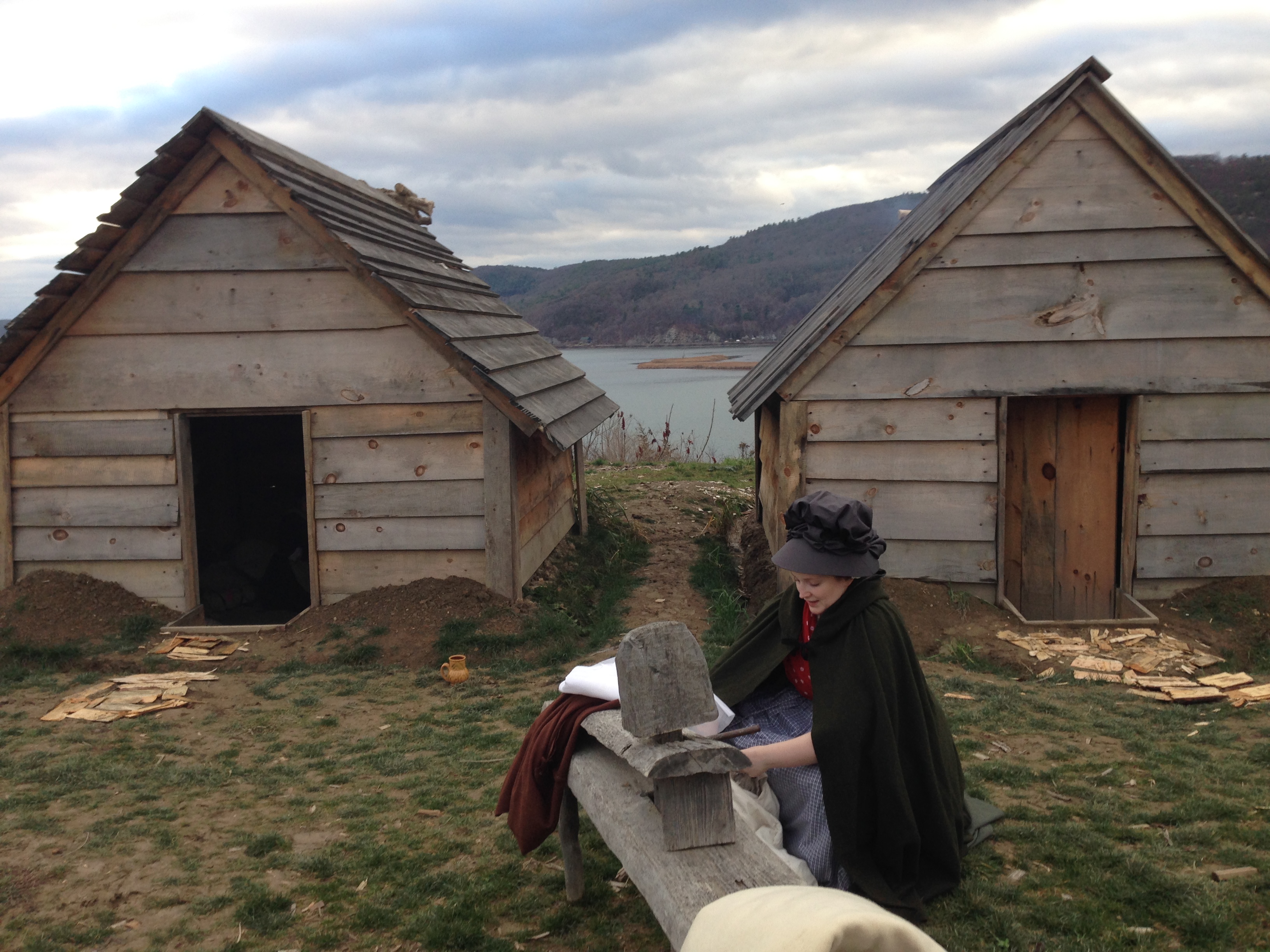
Fort Ti was described to me as “Disney World for Re-enactors,” but my vote is for Living History’s Moonrise Kingdom.

Idyllic, ain't it?

Idyllic, ain’t it?

I almost didn’t go when my Saturday night roomshare cancelled on Monday and then I developed an ear ache on Wednesday, but on Thursday, Low Spark , Mlle Modiste and I arranged a carpool, so on Friday morning, a Carload of Rhode Islanders (a thing to behold and to be wary of) set off for points north.

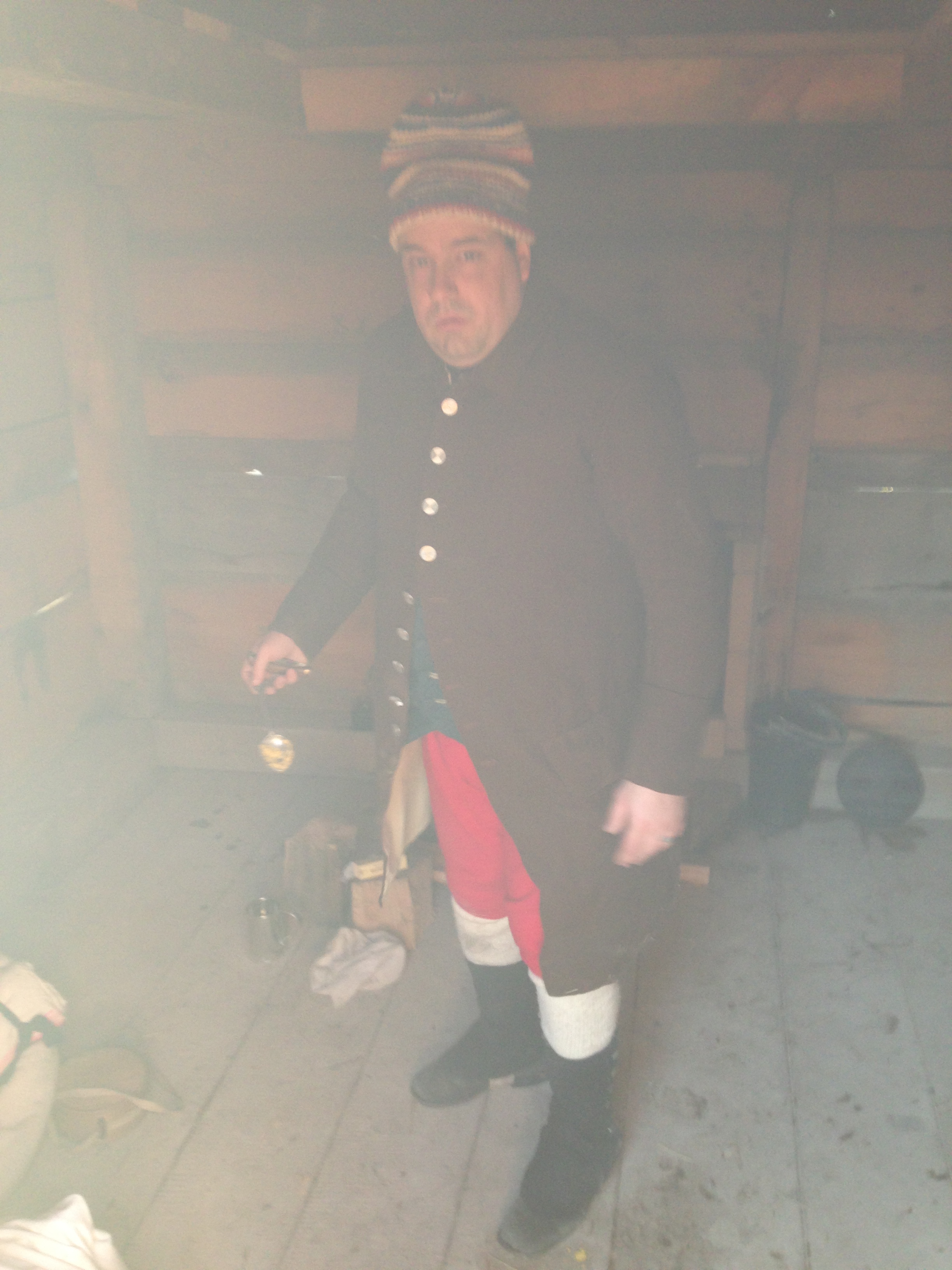
Our initial plan was to to sleep in the soldiers’ huts, but they proved extremely crowded and smokey, so when Mlle Modiste and I were offered a bunk in the barracks, we took it… unfortunately, only one of the blankets I’d brought for us did not make it back up to the fort or into the car heading home.

Mlle Modiste at the huts

Mlle Modiste at the huts

Before supper, we stuffed bed ticks, started a fire, startled a bat (I was not the source of the shriek that brought officers, women, and soldiers running), and stuffed straw in the hole we thought it flew into (thank goodness I’m tall, I guess).

Smoke didn't just get in your eyes...

Smoke didn’t just get in your eyes…

The tavern moved up to the would-be armory at the barracks, though I’m certain multiple political deals and presidential candidacies could have been plotted and bought down at the smoke-filled huts. Instead, it was reenactor politics as usual: parallel experiences for men and women (not ladies, thank you, and if I hear you use “distaff” about me, expect to find one has become part of your anatomy). Just because I’m used to it doesn’t mean I don’t notice it, understand it, and still dislike it.

We’d expected to attend to “sick” soldiers in the hospital, but Saturday was such a lovely day that we spent most of it outdoors, starting and tending a fire to boil laundry and make dinner for the women’s mess. This pleased me mightily, even as I may have distracted troops despite my advanced age as I crouched at the fire being a human bellows. You try getting low in stays and see how you do: immodesty, thy name is fashion.

While I kept the fire going, much credit should go to Rory, a bad-ass woman in men’s clothing who split wood a-plenty for us.  Rory made me want badly to make myself a suit and wield an axe. I find myself wanting to do the same work as the men (I have always been this way), and I was intrigued by the debate that was reported to me: should a woman do men’s work in women’s clothes, or in men’s clothes? In the end, they chose men’s clothes, and Rory wore them well. Reader: I was jealous. I was also covetous of an axe, having realized all the cutting and hewing tools are no longer domiciled with me.

Aunt Kitty's coming' for you. boys.

Aunt Kitty’s comin’ for you, boys.

Saturday really revolved around three things for me: food, free agency, and feminism:

  • I ate some interesting things, including a smoked chocolate cake (left overnight in a hut, I can describe its flavor best as sucking diesel exhaust through a chocolate cupcake).
  • Now that I’m a free agent attending events sans unit, I have much more fun.
  • I am determined and dedicated to effecting well-researched roles for women in living history events of all kinds.

Share this:

  • Share on Facebook (Opens in new window) Facebook
  • Share on Pinterest (Opens in new window) Pinterest
  • Email a link to a friend (Opens in new window) Email
  • Share on X (Opens in new window) X
Like Loading...

Contextualize This*

26 Thursday Nov 2015

Posted by kittycalash in Events, Fail, History, Living History, Reenacting, Research

≈ 6 Comments

Tags

authenticity, common people, history, interpretation, living history, Reenacting, Research, resources, Revolutionary War

Right on, Mr. Hiwell: The music of the Army being in general very bad is a post I could never write, because I lack the detailed knowledge, or the desire to acquire music-specific knowledge (just as Mr Hiwell could give two rats’ about stay-making details, or the subtleties of stew). But here’s the gist of his post, on which I wish to elaborate, and which has been touched on elsewhere: You’re Doing It Wrong.

Let’s take this:

I’m tired of going to events, knowing all the camp duties fifers and drummers played from sunrise to sunset and never playing a single one of them besides Drummer’s Call and Assembly.

One of my favorite hobby horses: lack of discipline and camps that look like that Infamous Catalog just puked on a field. Why on earth can we not see tents are set up properly, in rows, with appropriate numbers of kitchens instead of wobbly lines, marquee tents that disgorge giggling teenage girls in bodices, and enough iron to make the scrap man sing with joy? 

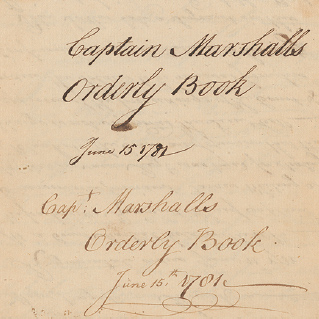
But even then, even if people are too lazy or stubborn to leave stuff at home, why can’t a camp run the way it would’ve? There’s ample documentation on which to draw. Quite aside from the voluminous papers of General Washington and General Greene, and the massive archives in Britain, every regiment had orderly books, of which many survive. They’re hilarious reading and full of things to do.

Most reenactments are boring. Well, so was army life. The 10th Massachusetts was constantly in trouble up on the Hudson late in war, and the Marshall book at the Society of the Cincinnati contains the proof.

Here’s something fun to do: inspection. Huts, cabins, tents: they all needed to be kept neat., and apparently weren’t.

Some part of the Camp and about the long Barracks in particular is relaxing into nastiness. Regimental QuarterMasters have been ordered to have them Clean and keep them so. An Officer of each Company has been ordered to visit the Barracks every day and to Confine & Report those who throw bones of meat Pot Liquor or filth of any kind near the Barracks. Yet all this has been done and no report has been made. it is hatefull to General Howe to Reitterate orders as it ought to be shamefull those who make it necessary.

Don’t like to clean, prefer cooking? Marching?

Regimnl Orders June 6th 1782

the Regiment will turn out to Morrow Morning at the Beating of the Revelee and to March By Six oClock they are to pack there clothing and kook there provisions this Evening when they have arivd on the Ground for Encamping the officer commanding on the Spot will order a partry if Forty men from the Regiment a Capt and two Sub’s to Command them to Return to the Encampment in order to asist in Bringin on the Baggage the Soldiers are to Carry there kittles in there hands and are to Leave there arms and pakes &c at the New Encampment any Soldier who is found Plundering another pack is to be tyd up and punished with out Trial..

Tyd up and punished without Trial. You know there’s a guy who’s up for that in every unit.

And lest you think that there’s nothing for women in these books, let me assure you, there is:

Regimental Orders, July 23rd 1782

At a Regimental Court Martial whereof Capt Francis is president, Briget Conner a Woman Belonging to the 10th Massachusetts Regiment was tried for purchesing a publick Shurt from a Soldier in Sd. Regiment found Guilty and Sentanced to Return the Shurt to the person from whom she purshest it and loos what She gav for the Shurt.

The Colo approves the opinion of the Court and orders it to take place Immediately

Regimental orders July 25th 1782

Bridget Conner a woman Belonging to the 10th Massachusetts Regiment is Directed to Leave Camp Between this and to Morrow Morning at Roal Call for her Insolence to the officers of sd Regiment on pane of Being Treated with Severity

This is easy, people. Authenticity, accuracy, and Stuff to Do increases exponentially if you use documentation to recreate a “normal” day in either army.  There’s Cuthbertson, for example.

cuthbertson.png

There’s Lochee, if you want to get in tents. And orderly book after orderly book. And if I, a mere woman, can find these things, there is no excuse for you men not to read, absorb, and use these sources well.

Inspections. Returns. Reports. There’s so much to do in a day, and running a camp or a barracks by the regulations would give everyone so much more to interpret, and begin to present real history instead of merely heritage. This is where the real splits are going to come, and sooner than you think. It won’t be about uniform details, or stitch and thread counts, but about actually engaging historical interpretation. If interpreters aren’t engaged, the public won’t be either.


*If you know me, you know what the next word is.

Share this:

  • Share on Facebook (Opens in new window) Facebook
  • Share on Pinterest (Opens in new window) Pinterest
  • Email a link to a friend (Opens in new window) Email
  • Share on X (Opens in new window) X
Like Loading...
← Older posts
Newer posts →

Archives

wordpress statistics

Creative Commons License
Kitty Calash blog by Kirsten Hammerstrom is licensed under a Creative Commons Attribution-NonCommercial-ShareAlike 4.0 International License.

Website Built with WordPress.com.

  • Subscribe Subscribed
    • Kitty Calash
    • Join 621 other subscribers
    • Already have a WordPress.com account? Log in now.
    • Kitty Calash
    • Subscribe Subscribed
    • Sign up
    • Log in
    • Report this content
    • View site in Reader
    • Manage subscriptions
    • Collapse this bar
 

Loading Comments...
 

    %d