• Home
  • Completed Costumes/Impressions
  • Emma and Her Dresses
  • Free Patterns and Instructions

Kitty Calash

~ Confessions of a Known Bonnet-Wearer

Kitty Calash

Tag Archives: interpretation

Pushing Interpretation Forward

18 Tuesday Nov 2014

Posted by kittycalash in Events, History, Living History, Museums, Philosophy, Reenacting

≈ 7 Comments

Tags

18th century clothes, anarchist guide to historic house museums, authenticity, common people, common soldier, exhibits, first person interpretation, historic interiors, history, interpretation, living history, Reenacting, Revolutionary War

Dare I say progressing?
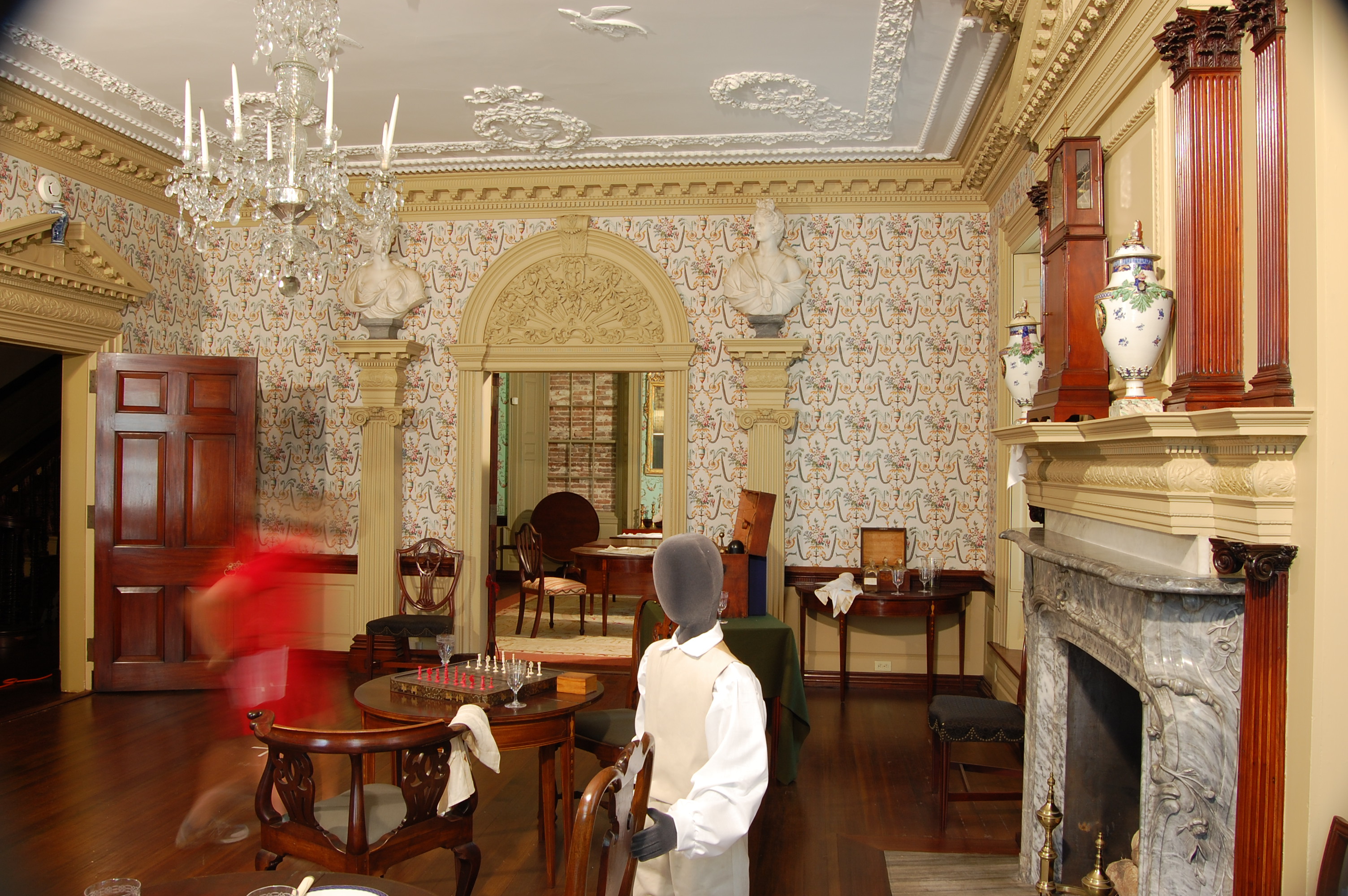
servant mannequin in 18th century room

That’s no ghost, that’s my kid

In the past decade, museums, particularly historic house museums, have been challenged to refresh and reinvent their interpretations and presentations. The most notable challenge has come from the Anarchist Guide to Historic House Museums (AGHHM), and the Historic House Trust of New York’s executive director, Franklin Vagnone.

I re-read a number of Vagnone and Deborah Ryan’s papers recently (including this one), thinking not just about What Cheer Day in a historic house, but about reenacting, living history, and costumed interpretation.

To make a historic house museum (HHM) seem more inhabited and real takes a lot of stuff: clothes, dishes, shoes, stockings, toys— all the stuff that surrounds us now, but correct for the time of the HHM, and arranged in a plausible manner, not like a sitcom set, where chairs before a fireplace face the visitor and not the hearth.
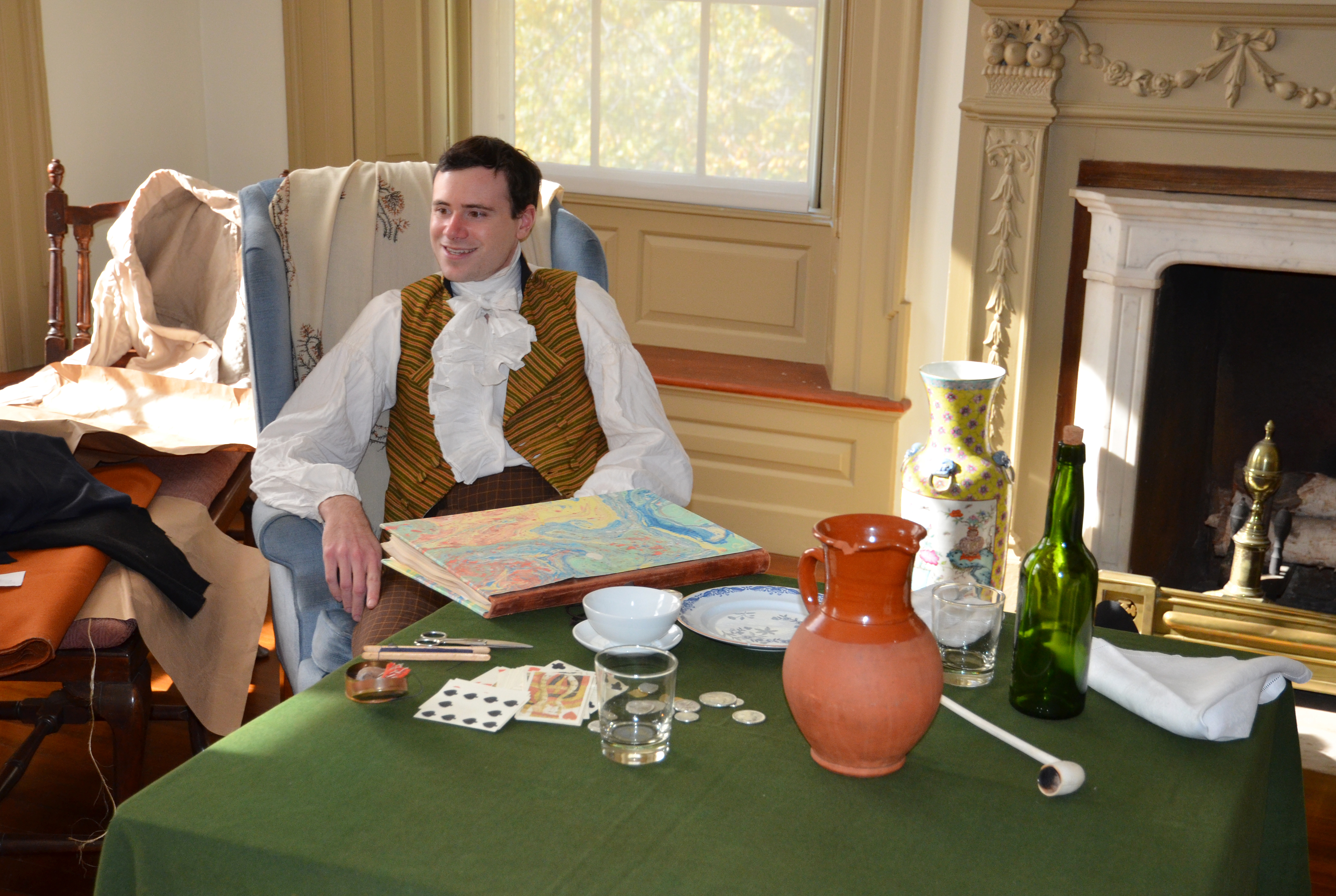
Man with cards, glasses and pipe in 18th century room

Stuff makes a house

To a degree, this is set-dressing, but set-dressing for a still-life, or real life, if the habitation will be by costumed interpreters. It has to be accurate to be authentic, whether it’s a HHM or a living history event that is striving to create a moment, or series of moments, in time– immersive moments.

We cannot step into the past unless we believe the representation we’re seeing, and that’s true no matter where we are: that’s why fabric matters, sewing techniques matter, tent pins and kettles and canteens matter. The world is made up of tiny details that we do actually notice without even knowing it: we see more than we realize, faster than we think. We’ll trip on the different, and stop.
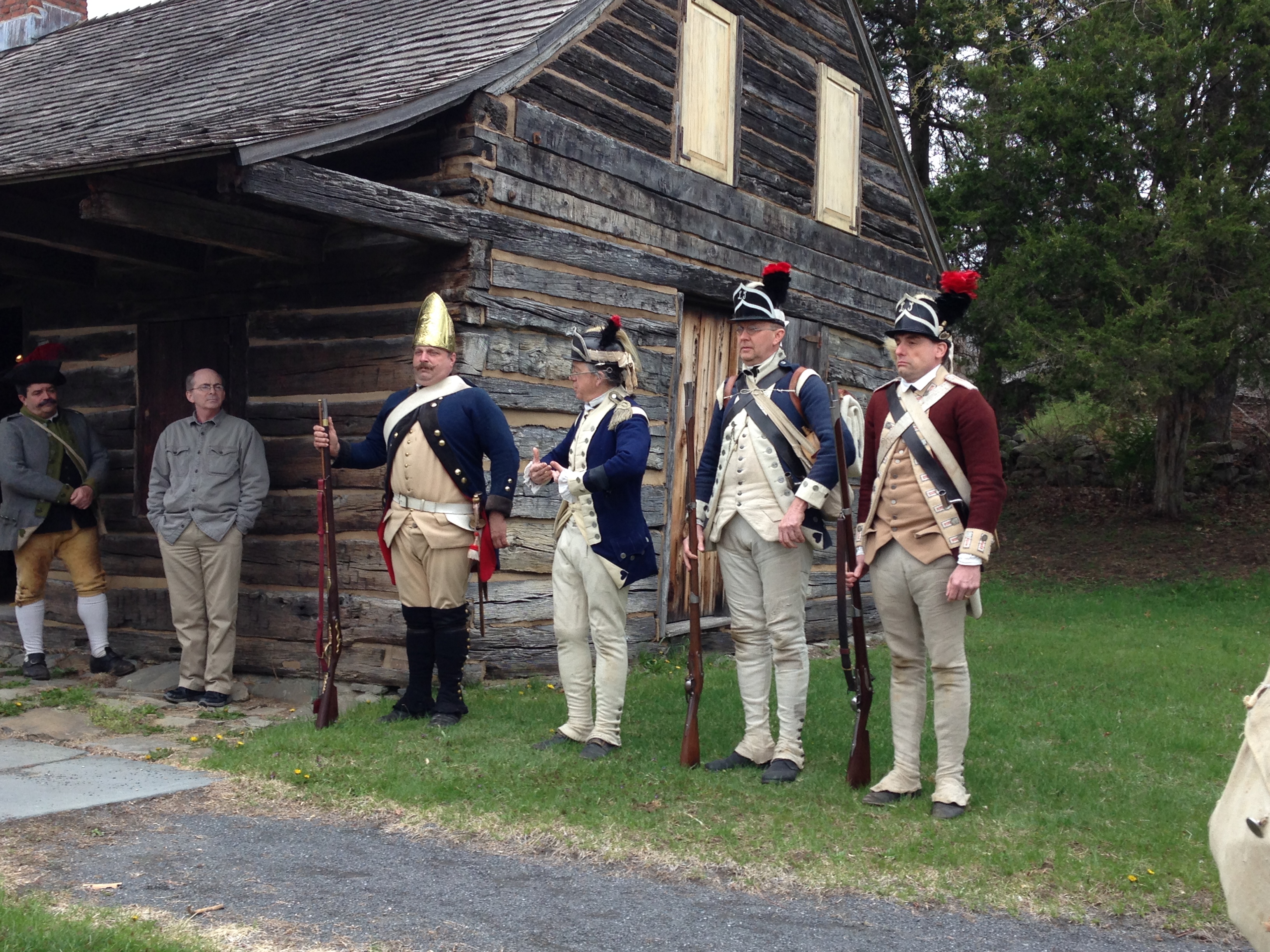
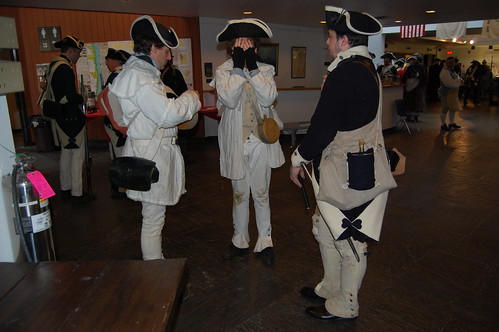
A variety of coats can tell a variety of stories

A variety of coats can tell a variety of stories

But what we want to do, as interpreters, is to have the visitor catch the right difference: not the one about which canteen and why, but the larger interpretive point. In one hypothetical example, wooden canteens are a way to talk about defense contracting and supplying the American army, just as over-dyed captured coats are a way to talk about the American Revolution as an international, and not just a civil, war.

An encampment is, in a way, a neighborhood of HHMs turned inside out, with each regiment a separate family within the larger neighborhood. Each regiment tells a story about itself and its history, and is a lens through which visitors see the larger story.
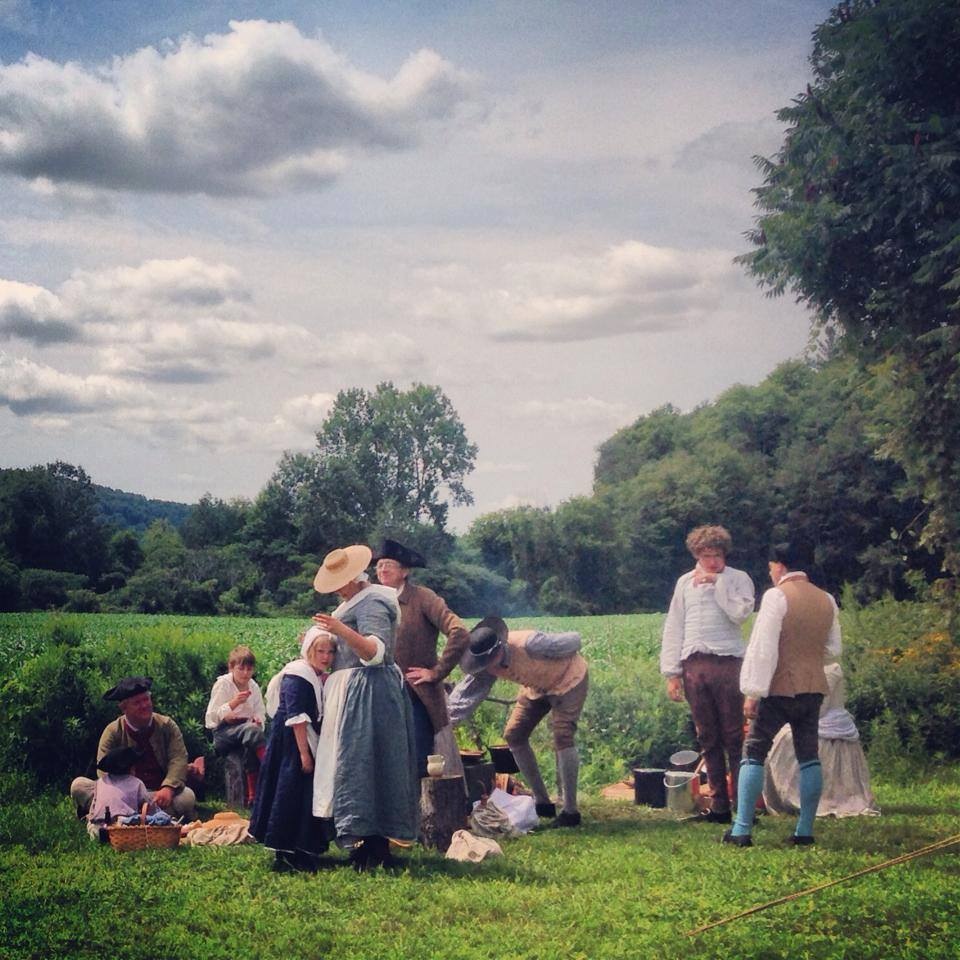
14999323655_5d9dcf2259_o

That’s why accuracy matters: you don’t want to debunk Ye Olde Colonial craft in camp, or cotton-poly polonaises (poly-naises?) worn by purported women on the ration: you want to focus on the larger interpretive point. When not everyone plays by the same rules, it is better to focus on your own accuracy and authenticity and to ignore Ye Olde Annoyances.

Tell the larger story, the story of your own regiment’s people: that’s your interpretive goal.

Share this:

  • Share on Facebook (Opens in new window) Facebook
  • Share on Pinterest (Opens in new window) Pinterest
  • Email a link to a friend (Opens in new window) Email
  • Share on X (Opens in new window) X
Like Loading...

A Matter of Interpretation

17 Monday Nov 2014

Posted by kittycalash in Events, History, Living History, Museums, personal, Philosophy, Reenacting

≈ Comments Off on A Matter of Interpretation

Tags

18th century, common soldier, interpretation, living history, Reenacting, Revolutionary War

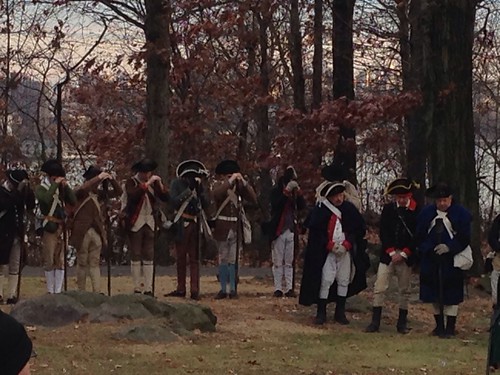
On the way to Southbridge, Mr S and I were discussing the last “big” event for the year, and whether or not we wanted to go. It’s an annual event grounded in ceremony, and somewhat repetitive.

The landing of the British forces in the Jerseys on the 20th of November 1776 under the command of the Rt. Honl. Lieut. Genl. Earl Cornwallis. Watercolor, attributed to Thomas Davies. NYPL

Mr S would like to go if he had the proper wool coat– it will be easy enough to make, once he gets a kit– but which he does not now have. I find it’s usually a day alone wishing I was across the river in a museum or fabric shop. In the end, it’s a long drive to a day spent in the cold and wind followed by a dash home in the dark, with Sunday spent catching up on chores and cleaning muskets, and now with an added measure of homework stress.

I have painted this as a grimmer day than it usually is, but considering that it’s been 7 months since we had any non-medical time off from work, squeezing this into a busy and stressful schedule is not as appealing as it once was. In part, I think it is because there is a lost opportunity in the interpretation, which is surely limited by the size and nature of the site, and by the loss of the historic fabric of the area.

Nestled in a densely settled and very urban area, the park site has a block house, hut, and fortification as well as a museum. Sutlers and others set up in the museum for the day, including some demonstrations of women’s work…like spinning. Spending the day inside spinning is not for me: not only can I not spin, I cannot imagine fleeing the British with a spinning wheel, which is an annoying contraption to move even with assistance, plenty of time, and a Subaru.

The Young Mr hides

But more than my impatience with Ye Olde Colonial Spinning Wheel at too many military camps this past year, I think what stops me from wanting to go is the repetitive formality of the interpretation, with the the march to the monument and the post-prandial “battle” for the blockhouse, with the Americans sometimes winning, despite the fact that the fall of this site marked the beginning of Washington’s retreat to Pennsylvania, and despite the fact that three days earlier, when the companion fort across the river fell to the British and Hessian troops, nearly 3,000 Americans were taken prisoner in 1776, and of those, only 800 survived. In what way is this ritualistic commemorative event remotely authentic? And if the only way people get the actual history and importance of the event is through the event narration or museum exhibit, hasn’t the reenactment or living history portion then failed?

Ritualistic, commemorative.

The more I think about interpretation and presentation, the more Ye Olde Colonial things annoy me and the more important I think it is to be accurate and correct.

Forcing a passage of the Hudson River, 9 October 1776. oil on canvas by Thomas Mitchell from an original by Dominic Serres the Elder. Royal Museums Greenwich

That does not mean that I expect a naval engagement (though a girl can dream) or a cross-Hudson rowing affair, but I do think it could be interesting to see troops at a fort packing up and evacuating the site, with the confusion that could result. But it’s not my circus, and not my monkeys, and in any event, I shall probably stay home to make sure that homework and housework alike are done in this current century.

Share this:

  • Share on Facebook (Opens in new window) Facebook
  • Share on Pinterest (Opens in new window) Pinterest
  • Email a link to a friend (Opens in new window) Email
  • Share on X (Opens in new window) X
Like Loading...

What Cheer! Wednesday

22 Wednesday Oct 2014

Posted by kittycalash in Living History, Museums, Uncategorized

≈ Comments Off on What Cheer! Wednesday

Tags

18th century clothes, 18th century clothing, 19th century clothing, interpretation, John Brown House Museum, living history, Museums, Reenacting, Rhode Island, Rhode Island Historical Society, weekend, What Cheer Day, work

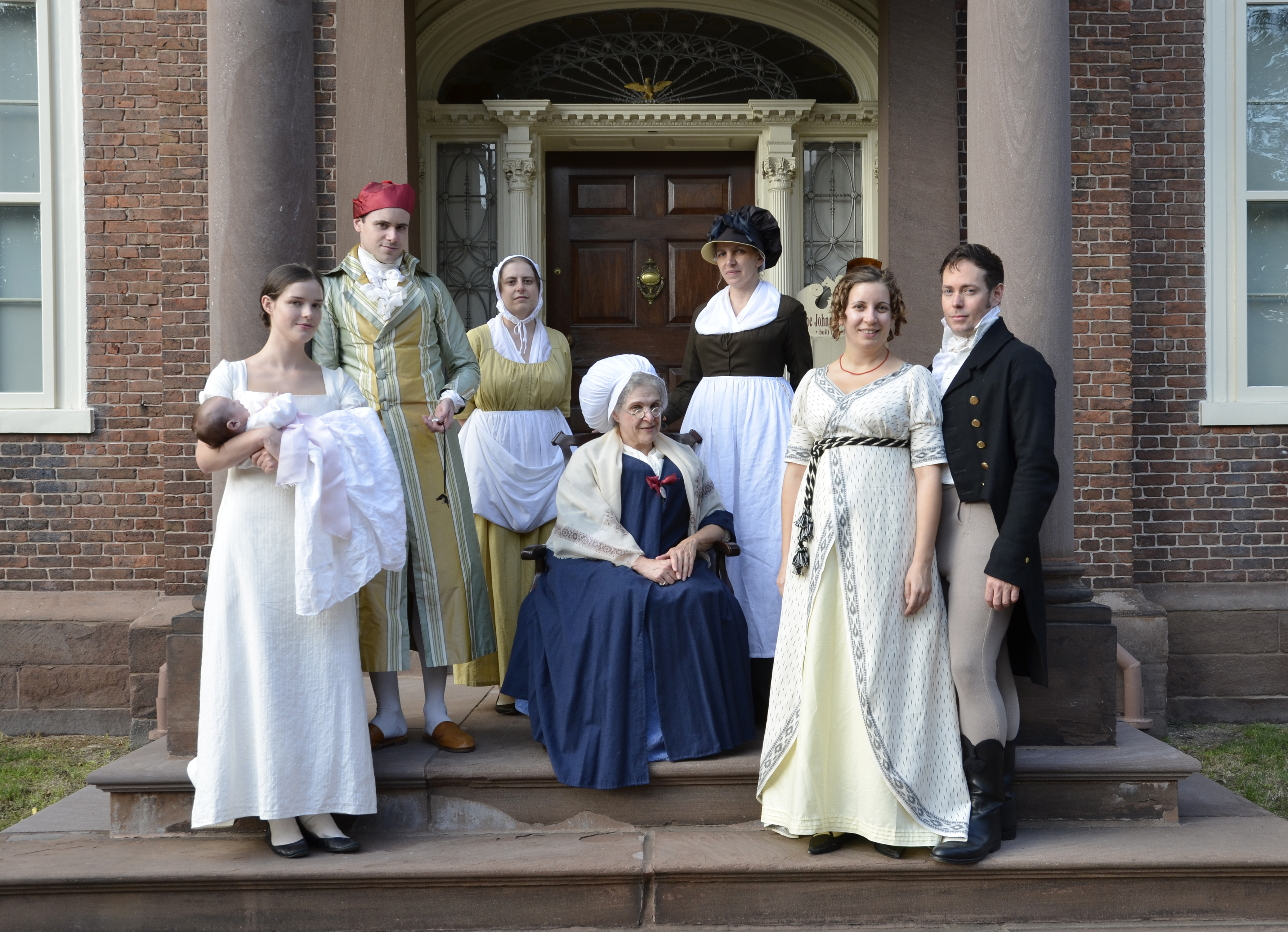
The cast at the end of the day

The cast at the end of the day

Where are you going this weekend? I’m going to Providence in 1800, along with my family and friends.

The mantua maker is coming, and writes a very pretty letter about the new fashions she has found for the young ladies.

Mr Herreshoff and Miss Brown hope soon to be married

Mr Herreshoff and Miss Brown hope soon to be married

Mrs Brown will be in, and receiving guests, and we hear that Mr Herreshoff will come to call as well. While he may decry the state of the roads, we expect him to have news of business conditions in New York, and his prospects for the future.

Miss Alice– Mrs Mason, now– will be at home with her sister, Miss Brown, and Mr Mason is living here now as well. I do not know how I shall keep their room in order, since he is hardly outside of it!

There are other visitors I expect as well; there is a man (I cannot call him a gentleman) who has been doing jobs for us, though he does not live here at the house. He seems extraordinarily interested in the house, and will not stay away. Whatever can be his interest? There may also be a tailor and his apprentice– though the apprentice tends to daydreaming, and looks above his station, studying Latin at all hours. I think he will not be long in his apprenticeship if he will not pay attention.

If you have not visited us before, you can find directions here.


Share this:

  • Share on Facebook (Opens in new window) Facebook
  • Share on Pinterest (Opens in new window) Pinterest
  • Email a link to a friend (Opens in new window) Email
  • Share on X (Opens in new window) X
Like Loading...

Frivolous Friday: Comforts of a Rumpford

10 Friday Oct 2014

Posted by kittycalash in Frivolous Friday, History, Research

≈ Comments Off on Frivolous Friday: Comforts of a Rumpford

Tags

cats, engravings, furniture, half robes, historic interiors, interpretation, satire, silly cat photos, slipcovers, sofas

A companion pl. to BMSat 9813. A pretty young woman wearing a décolleté négligé, stands with her back to the fire, her gown raised to leave her posterior naked. She holds a book: 'The Monk - a Novel by M' ['G. Lewis', cf. BMSat 9932]; another is open on the floor: 'Œconomy of Love by Dr Arm[strong', 1736]. A cat rolls on its back. On a table are a decanter of 'Creme de Noyau', and an open book: 'The Kisses'. On the mantelpiece are flowers and an ornate clock with embracing cupids. A picture partly covered by a curtain represents Danaë receiving the golden shower. The room, apparently that of a courtesan, is luxuriously furnished. 26 February 1801 Hand-coloured etching, British Museum, 1935,0522.7.12

A companion pl. to BMSat 9813. A pretty young woman wearing a décolleté négligé, stands with her back to the fire, her gown raised to leave her posterior naked. She holds a book: ‘The Monk – a Novel by M’ [‘G. Lewis’, cf. BMSat 9932]; another is open on the floor: ‘Œconomy of Love by Dr Arm[strong’, 1736]. A cat rolls on its back. On a table are a decanter of ‘Creme de Noyau’, and an open book: ‘The Kisses’. On the mantelpiece are flowers and an ornate clock with embracing cupids. A picture partly covered by a curtain represents Danaë receiving the golden shower. The room, apparently that of a courtesan, is luxuriously furnished. 26 February 1801
Hand-coloured etching, British Museum, 1935,0522.7.12

I’ve left that caption intact, though it seems quite long enough for a blog post itself. This image turned up on Twitter (you can follow me there @kittycalash, expect randomness) and delighted me at the end of a long, tough week. I’m particularly taken with the cat, which resonates with an lolcat that floated about the interwebs last winter. The interwebs can be a strange place…

But aside from that silly cat, there are a wealth of details in this image, some of which are explicated in the caption.

What struck me- after the cat– was the slipcover on the sofa. How lame is that– but it’s true. Floral print, I suspect, but possibly woven, it’s loosely draped and long. I’m more familiar with the checked linen slipcovers seen in representation of New England interiors, so the floral really struck me. I suppose those linen checks symbolize all the puritanical uprightness and restraint of early Federal New England dons (if you believe in that kind of thing), while the loose floral print drapery tells you everything you need to know about our Rumpford friend.

We all see what we want to see…cats, slip covers, or courtesans.

Share this:

  • Share on Facebook (Opens in new window) Facebook
  • Share on Pinterest (Opens in new window) Pinterest
  • Email a link to a friend (Opens in new window) Email
  • Share on X (Opens in new window) X
Like Loading...

Malaise or Ennui?

09 Tuesday Sep 2014

Posted by kittycalash in Clothing, Events, Fail, Living History, Making Things, Philosophy, Reenacting

≈ 17 Comments

Tags

19th century, 19th century clothing, authenticity, Clothing, common dress, Costume, Events, fashion, history, interpretation, Newport, Newport Historical Society, Quaker, Quakers, Rhode Island, Rhode Island history, style

image Hard to say which, but I am ill at ease and dissatisfied with my costuming. You might even call it bratty. But I don’t wanna be like Bridget Connor!

It started the week of the Stamp Act protest, when I felt quite tired of being the shabby, unrefined woman of the regiment and street vendor, and wanted a nice cozy shop like the milliner had. I was also looking forward to being a housekeeper again, and several weeks of moving boxes and volumes with red rot at work had me feeling generally filthy and unappreciated. Bratty.

When in doubt, sew. A new dress can’t help but cheer you up, right?

Well… sort of…

Last Thursday, we did a reprise of the Williams family letters program at the Newport Historical Society. The Williams family were Quakers, and the letters were from the early part of the 19th century, so for the program in March, I made a green silk cross-front gown based on the Quaker gown in the back of Costume in Detail. (Check out the schematic on the 19thus.come page; I didn’t see this until I was mostly done with the dress, but thank goodness I got it right!)

But it’s September, and Thursday was expected to be quite warm, so I salved my bureaucratic wounds in the $1.99 loft at the local mill store, and made a new Quaker gown, also suitable for a maid.

I ask you! Even though it’s my very own pattern based on sketches of original drawings, even though it fits, even though it cost $10, even though every seam is overcast and the whole thing is made with period correct stitches, it still fails to make me happy and cheerful and delighted.

image

This brattiness has resulted in a reappraisal of my approach– and a trip to Sewfisticated in Framingham. What did I buy there? Yards and yards of pink taffeta? Gold taffeta? Blue taffeta?

No.

Because they didn’t have the right colors in the right weave– too slubby– or in enough yardage. Brace yourselves: I bought brown.

Many thanks to Sew 18th Century for taking the photos!

Many thanks to Sew 18th Century for taking the photos!

It appears I do not learn from my mistakes. When I think, “Gee, I’d like a pretty dress,” I end up buying fabric based on the texture as much as the color, and I have to tell you, that brown taffeta has the most wonderful l hand and sheen, and I will look much more like a Copley portrait than I ever have before, so that’s something.

It seems I have created a set of mental rules for myself, a mission, if you will, for the historic clothing I sew and the roles I take on, and I only play within those rules.

Share this:

  • Share on Facebook (Opens in new window) Facebook
  • Share on Pinterest (Opens in new window) Pinterest
  • Email a link to a friend (Opens in new window) Email
  • Share on X (Opens in new window) X
Like Loading...
← Older posts
Newer posts →

Archives

wordpress statistics

Creative Commons License
Kitty Calash blog by Kirsten Hammerstrom is licensed under a Creative Commons Attribution-NonCommercial-ShareAlike 4.0 International License.

Website Built with WordPress.com.

  • Subscribe Subscribed
    • Kitty Calash
    • Join 621 other subscribers
    • Already have a WordPress.com account? Log in now.
    • Kitty Calash
    • Subscribe Subscribed
    • Sign up
    • Log in
    • Report this content
    • View site in Reader
    • Manage subscriptions
    • Collapse this bar
 

Loading Comments...
 

    %d