• Home
  • Completed Costumes/Impressions
  • Emma and Her Dresses
  • Free Patterns and Instructions

Kitty Calash

~ Confessions of a Known Bonnet-Wearer

Kitty Calash

Tag Archives: Research

Frivolous Friday: Fashionable Reading

02 Friday May 2014

Posted by kittycalash in Clothing, History, Research

≈ Comments Off on Frivolous Friday: Fashionable Reading

Tags

19th century clothing, anna maria von Phul, drawings, fashion, fashion plates, Frivolous Friday, Reenacting, Research, style, watercolors

Portrait of a seated young lady, watercolor on paper by Anna Maria von Phul, 1818. Missouri History Museum, 1953 158 0013
Ladies' Monthly Museum, v. 5, plate 71. July 1, 1816. Casey Fashion Plate Collection, Los Angeles Public Library
Ladies’ Monthly Museum, v. 5, plate 71. July 1, 1816. Casey Fashion Plate Collection, Los Angeles Public Library

Anna Maria von Phul’s delicate watercolors of Saint Louis in 1818 (example at left) remind us that cities in the hinterland of America have never been as far behind the times as coastal dwellers might imagine. As a former resident of the Great Fly Over, I know how defensive people can be about their relative sophistication, and that could be why our Young Lady here appears slightly defensive in her posture.

The young lady is certainly fashionable in that white gown, and literate, too, though we cannot see what she is reading; perhaps Maria Edgeworth.

It took some doing to find a similarly posed and dated fashion plate with a book, for fashion has always been more fantasy than reality.

Share this:

  • Share on Facebook (Opens in new window) Facebook
  • Share on Pinterest (Opens in new window) Pinterest
  • Email a link to a friend (Opens in new window) Email
  • Share on X (Opens in new window) X
Like Loading...

The HFF: Historical Food Fortnightly

01 Thursday May 2014

Posted by kittycalash in Events, Food, History, Living History, Making Things, Reenacting, Research

≈ Comments Off on The HFF: Historical Food Fortnightly

Tags

18th century, Cambridge, Events, food, Historical Food Fortnightly, living history, Research

2f053ddd402318588e6c094c0ec0e6b4Every now and again Facebook proves itself useful: without following Dobyns & Martin Grocers, I would not have known about this interesting cook-along, the Historical Food Fortnightly.

The challenges look interesting, and I particularly like the seasonal fruit/vegetable one. This seems like a wonderful chance to cook historical recipes using seasonal, local ingredients, and I do like to remind people that historical eating is grounded in seasonal, local, eating. Plus pounds of raisins and sugar and gallons of alcohol.

Your local historical archive (or whichever one contains the works relevant to your interests) can be a great place to get started assembling documentation on local eating. Receipts for foodstuffs can be mixed into other accounts (cotton for your daughter, a parasol, a pair of shoes for your wife, 5/8 yard pink silk satin self) but you can still quantify tea, sugar, spices, Madeira, and flours. I find fresh produce somewhat harder to track–you won’t count what is growing behind your house– but fear not, New Englanders! Some of that hard work has been done for you.

A bill of fare for August

A bill of fare for August

J.L. Bell of the fantastic Boston 1775 blog wrote the book-length historic resource study General George Washington’s Headquarters and Home—Cambridge, Massachusetts, which I read before we went up to the “Washington Takes Command” event last July. (That sentence just seemed crazy, even to me…yes, I read 650 pages plus the event program to prepare for a 6-hour event…)

The report can be downloaded as a PDF, and if you’re looking for food, where you want to go is Chapter 6, Daily Life at Washington’s Headquarters (page 173 and following). On pages 195-197 the Steward’s Purchases are listed, sorted by Fruits, Vegetables and Grain, Spices and Flavorings, etc.

While Washington was maintaining (or causing to have maintained for him) a Genteel Household, the list of purchases is helpful in documenting the variety and types of foods available in Cambridge. I suspect that similar kinds of documentation exist in the historic resource reports or room use studies for places like Gunston Hall.

I cannot manage to keep up with the Historical Sew Fortnightly right now– things went pear-shaped in December— but we have to eat, historically or otherwise!

Share this:

  • Share on Facebook (Opens in new window) Facebook
  • Share on Pinterest (Opens in new window) Pinterest
  • Email a link to a friend (Opens in new window) Email
  • Share on X (Opens in new window) X
Like Loading...

Tactical Strategies

30 Wednesday Apr 2014

Posted by kittycalash in Events, Living History, Reenacting

≈ Comments Off on Tactical Strategies

Tags

10th Massachusetts, 18th century, authenticity, Brigade of the American Revolution, common soldier, interpretation, petite guerre, Research, Revolutionary War

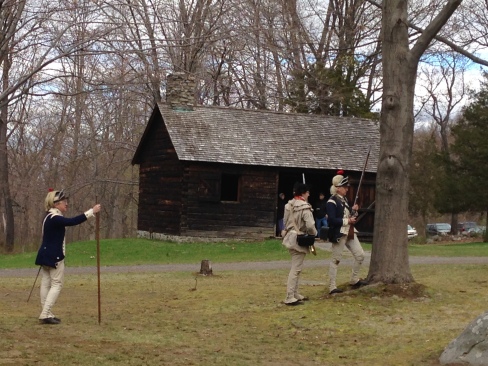
One of the things I liked best about this year’s School of Instruction was the Petite Guerre demonstration that followed a discussion of those tactics by Dr Stoltz of the 5th NY.
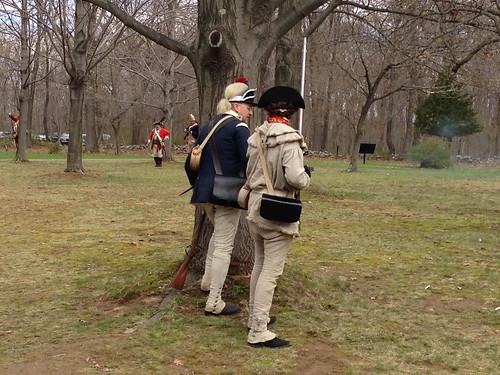
Mr McC & the Young Mr share a tree; note British officer and Hessian

Demonstrating skirmishes instead of linear warfare makes sense, given the numbers of men who take the field at events, and the smaller engagements will reflect exchanges common between the sides during the war.

What I like in particular is that using ‘petite guerre’ tactics requires the commanders and soldiers to tailor their actions to a site (site specific immersive experience: you cannot go wrong) and as the action unfolds, soldiers at all ranks are forced not only to move but also to think. Any action where the interpreters have to think is likely to create a better experience for visitors—and no great surprise, that usually makes a better experience for interpreters. It also flatters the site managers and visitors, who will appreciate that you’ve taken the time to explore and understand their place, and its place in history.

While you don’t necessarily want to fight the Battle of the Comfort Station, skirmishing around a site with buildings provides an objective, while multiple buildings and some woods or undergrowth provide cover for the Light Infantry troops and opportunities for deceit.

Of course, depending on troop size, it may be that each man needs his own tree. On Sunday, the Young Mr kept close to Mr McC, demonstrating troop [leg] length.
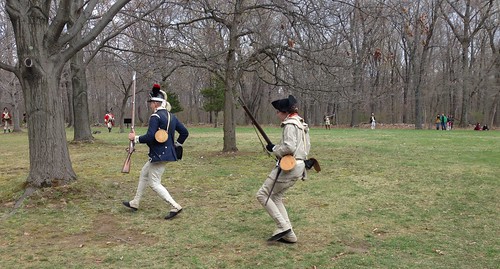
It’s hard to be invisible when you’re tall.

But I do mean this seriously: scaling events to available resources allows for a better interpretation.

That’s common sense, and sound museum practice, and that’s pretty much the business living history practioners (aka reenactors), are in: interpreting the past to visitors. Best practices for professionals and hobbyists are grounded in the same principles:

  • Primary source research
  • Material culture research
  • Site, resource, and audience- appropriate delivery
IMG_1386

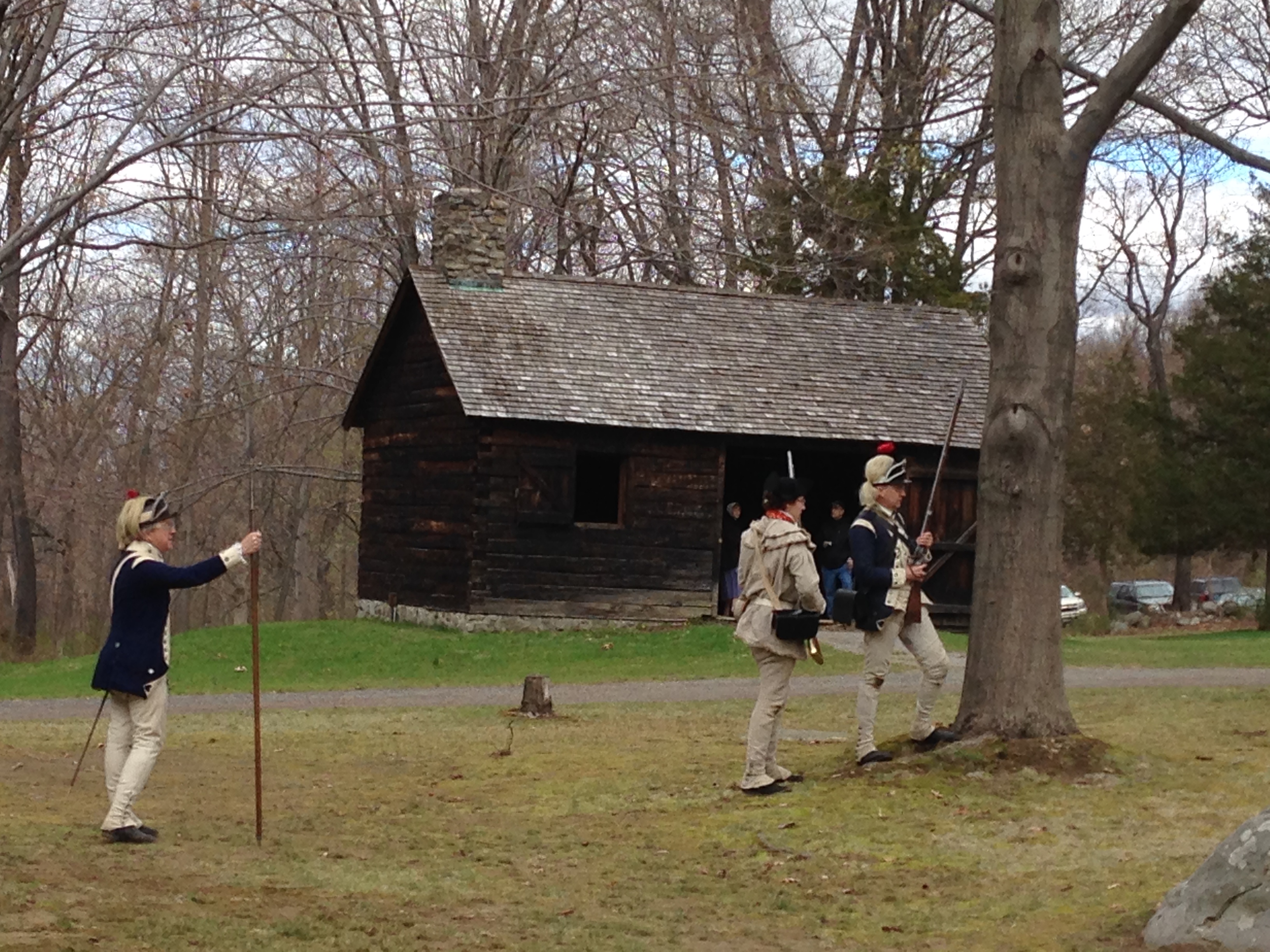
Direction provided by Mr C with spontoon.

Building an encampment and tactical demonstration on the first two principles grounds the event in in historical authenticity. Adding the third principle, and increasing the use of smaller group tactics, tailored to the participants and site, would be a subtle but strategic shift to build a more engaging experience that better educates visitors and might even attract new recruits.

Share this:

  • Share on Facebook (Opens in new window) Facebook
  • Share on Pinterest (Opens in new window) Pinterest
  • Email a link to a friend (Opens in new window) Email
  • Share on X (Opens in new window) X
Like Loading...

Interpretation 101

28 Monday Apr 2014

Posted by kittycalash in Events, History, Living History, Reenacting, Research

≈ 4 Comments

Tags

10th Massachusetts, 18th century, Bridget Connor, Brigade of the American Revolution, common dress, common people, common soldier, first person interpretation, interpretation, living history, museum practice, Museums, Reenacting, Research, resources, Revolutionary War

This slideshow requires JavaScript.

On Saturday morning, I gave a presentation at the BAR School of Instruction on Interpretation. The slides are above, and the presentation (with my notes) is here.

The handouts and bibliography I used in thinking about Bridget Connor an be found on the Interpretation 101 page.

Share this:

  • Share on Facebook (Opens in new window) Facebook
  • Share on Pinterest (Opens in new window) Pinterest
  • Email a link to a friend (Opens in new window) Email
  • Share on X (Opens in new window) X
Like Loading...

Research for Reenactors

26 Saturday Apr 2014

Posted by kittycalash in Living History, Reenacting, Research

≈ 2 Comments

Tags

interpretation, libraries, living history, Reenacting, Research, resources

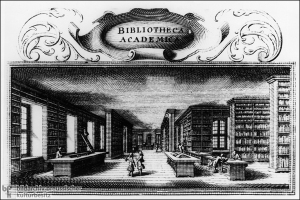
that's Old School. The Library at the University of Göttingen (18th Century)

that’s Old School. The Library at the University of Göttingen (18th Century)

I could not figure out where the hits were coming from, but looky here: Research for Reenactors links to some previous posts here (in the days before Frivolous Friday).

If you are a beginning reenactor, or someone who wants to refresh your presentation, I think this librarian’s guide is a good one. There’s excellent logic in the tabs and good suggestions. Thank you, Laura, for including me, and for such a wonderful resource.

Share this:

  • Share on Facebook (Opens in new window) Facebook
  • Share on Pinterest (Opens in new window) Pinterest
  • Email a link to a friend (Opens in new window) Email
  • Share on X (Opens in new window) X
Like Loading...
← Older posts
Newer posts →

Archives

wordpress statistics

Creative Commons License
Kitty Calash blog by Kirsten Hammerstrom is licensed under a Creative Commons Attribution-NonCommercial-ShareAlike 4.0 International License.

Website Built with WordPress.com.

  • Subscribe Subscribed
    • Kitty Calash
    • Join 621 other subscribers
    • Already have a WordPress.com account? Log in now.
    • Kitty Calash
    • Subscribe Subscribed
    • Sign up
    • Log in
    • Report this content
    • View site in Reader
    • Manage subscriptions
    • Collapse this bar
 

Loading Comments...
 

    %d