• Home
  • Completed Costumes/Impressions
  • Emma and Her Dresses
  • Free Patterns and Instructions

Kitty Calash

~ Confessions of a Known Bonnet-Wearer

Kitty Calash

Category Archives: Reenacting

Cold Comfort Compromises

09 Monday Nov 2015

Posted by kittycalash in Clothing, Events, History, Living History, Making Things, Reenacting, Snark

≈ 6 Comments

Tags

18th century clothes, 18th century clothing, authenticity, fashion, living history, sewing, style
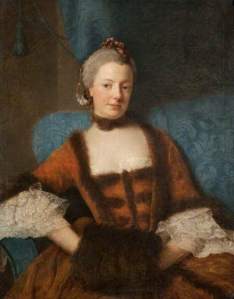
"Henrietta Diana, Dowager Countess of Stafford", Allan Ramsay, 1759; Glasgow Museums 3026 (c) Glasgow Museums; Supplied by The Public Catalogue Foundation

Henrietta Diana, Dowager Countess of Stafford, Allan Ramsay, 1759(c) Glasgow Museums. Fur: cozy, but not for me. Also too early.

Winter is bearing down upon us, and while I was not in Connecticut last weekend, nor will I be in New Jersey two weekends hence, I do have winter history plans, barring the proverbial 50 feet of snow, which even a Subaru cannot handle. The Noble Train: I could not resist, for, as regular readers know, I prefer my history to hurt.

Still, I try to avoid cold-related illness and extreme discomfort, so I’m making sensible preparations. Of course, I have not finished my quilted petticoat, and lack the time to make a proper hand-quilted silk under-waistcoat. Reader, I have done a terrible thing: I have compromised.

The saddest part of all of this is that the waistcoat I’m making is the most feminine and luxurious item, and the only item even close to lingerie (aside from shifts) that I have ever made myself, or even own, no matter its inaccuracies. There is a kind of irony built into this project, hence a post while the irony is hot.
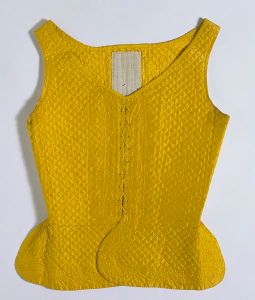
Waistcoat. Silk quilted and bound with silk grosgrain ribbon. ca. 1745. V&A Museum, T.87-1978

Waistcoat. Silk quilted and bound with silk grosgrain ribbon. ca. 1745. V&A Museum, T.87-1978

The waistcoat: an item of occasional debate, these are not the most common beast in museum collections. Fortunately, Sharon Burnston has a handy article and pattern posted on her website. To be clear, I am not recreating the Atwater-Kent waistcoat. I am cobbling together my own inappropriate but satisfying item. I am also using the absolutely inexcusable excuse that no one will see this garment, as well as previous bouts of pleurisy after long, cold events in stays when I had the merest hint of a cold. (My boss kindly offered to cup me for a cure when I had to take time off work, but I declined. The look on her face suggested a lack of appreciation for my historic ailment.)

But here we are, “confessions of a known bonnet-wearer” and all that, so onward to the project. I started with Sharon Burnston’s scaled diagram of the Atwater-Kent woman’s waistcoat. The shapes are very similar to a basic woman’s jacket of the period, bonus: loose fitting, no sleeves. It was easy enough to pattern up in an afternoon, with limited fitting (I did test it over stays, just in case.)

overview

The compromises I made are in the materials: pre-quilted silk (with a cotton backing), lined with wool-cashmere, and bound in silk grosgrain ribbon. The size of the diamonds and the machine quilting, plus the wool lining, make this an inauthentic, inaccurate garment. The shape, construction, and binding are at least correct, as far as they go. But the lusciousness of that remnant table cashmere and the soft colors please me immensely, and I do expect to be warm.

corner

This has been a quick project, with the majority of time spent on the binding. As in the Atwater-Kent waistcoat, I’m top stitching with a running stitch on the inside, folding the ribbon over, and hem stitching on the outside.

Will this feel like a hair shirt of shame under my gown, compromise as it is? Maybe, but at least it’s cashmere.

Share this:

  • Click to share on Facebook (Opens in new window) Facebook
  • Click to share on Pinterest (Opens in new window) Pinterest
  • Click to email a link to a friend (Opens in new window) Email
  • Click to share on X (Opens in new window) X
Like Loading...

Good Grief

25 Sunday Oct 2015

Posted by kittycalash in Events, History, Living History, Museums, Reenacting

≈ 4 Comments

Tags

19th century clothing, authenticity, Federal style, first person interpretation, funeral, historic house museums, interpretation, John Brown, John Brown House Museum, living history, memorials, mourning, Providence, Rhode Island Historical Society, Rhode Island history, What Cheer Day, women's work, work

1803 dress and hair

Pre-sweat melted hair

I had my doubts about this event, since we were interpreting the death and mourning of John Brown a full month after it actually happened, and initially resisted somewhat strenuously. But people change, and by the time I was operating a motor vehicle at high speed on I-90 six months later, I could be– and was– convinced. Knowing little, if anything, about early Federal mourning customs mattered not at all. There’s always time to learn, right? Well… if you read fast enough, you can do anything.

Esther and Kitty draping the mirrors

Esther and Kitty draping the mirrors

Despite the bustle, Esther and I found time to cover many of the mirrors with sheets, and the portraits with black crepe; this is a time of reflection, not vanity. It gave our rooms a gloomy mien, and reminded us of our short span on this earth.

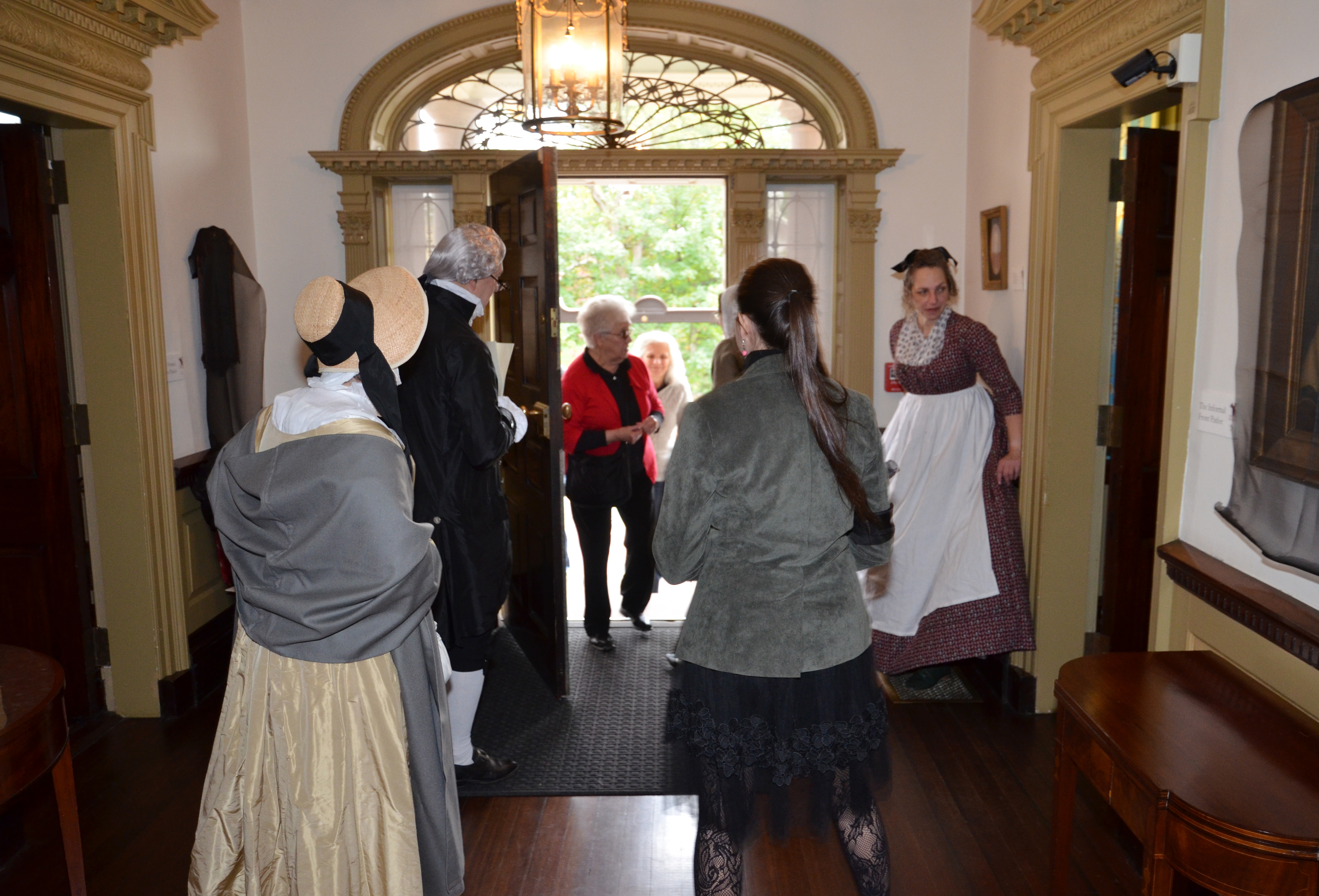
Visitors in the front hall of the John Brown House, Providence RI

We had many callers

We did have many callers Saturday afternoon, as John Brown was such a significant figure in Providence. He accumulated significant wealth, as Mr and Mrs Thurber attested when they came to inquire about the profits from the voyage Mr T had invested in– $30,000!

Callers pay respects to Mr Brown

Mr and Mrs Thurber pay their respects to Mr Brown

Thirty thousand is a fine sum indeed, though one wonders where Mrs Thurber might spend those proceeds. While a generally refined person, she made many inquiries about sherry, so I was relieved I’d had the foresight to lock away the decanters. So many people call during a time of grief that you cannot be too careful.

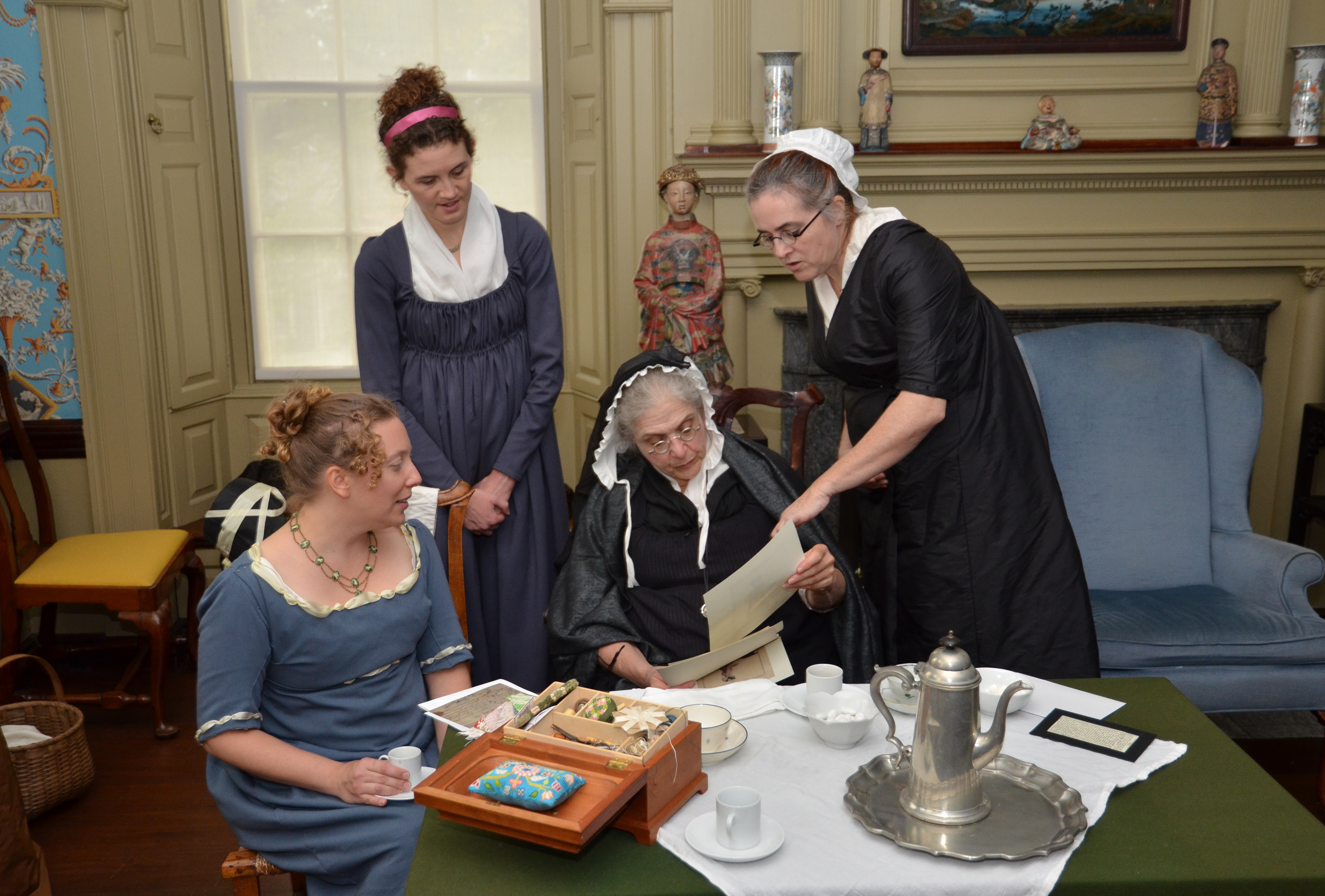
1803 ladies ponder fashion plates

Considering mourning dress options

The mantua maker came to call, bringing black silks and plates for the ladies to choose from. We have had a mix of joy and sorrow in this house, and it is only of late that Mrs Francis (on the left, in blue), has left behind her more matronly garb following the death of her beloved husband John Francis in 1796. It was a crushing blow for her, but she does seem to have recovered now.

1803 woman and baby

Mrs H and her darling daughter, Anna

Mrs Herreshoff was with us, visiting from Point Pleasant in Bristol, and her mother found baby Anna, now just more than five months old, a great consolation indeed. Anna was dressed in mourning for her grand-papa, though she will not remember him. Despite the many callers, baby Anna was truly an angel.

Historical minister and coffin

The Congregational minister called.

The ladies upstairs were a respite for us servants, though we were comforted by the visiting minister from the Congregational church. They cannot make up their minds to a new minister, now that their beloved Dr Hitchcock has left them for heaven. They try on new ones for size nearly every week, and while that is not my congregation, I do think the Reverend Cooke is an excellent choice, combining devotion with humor.

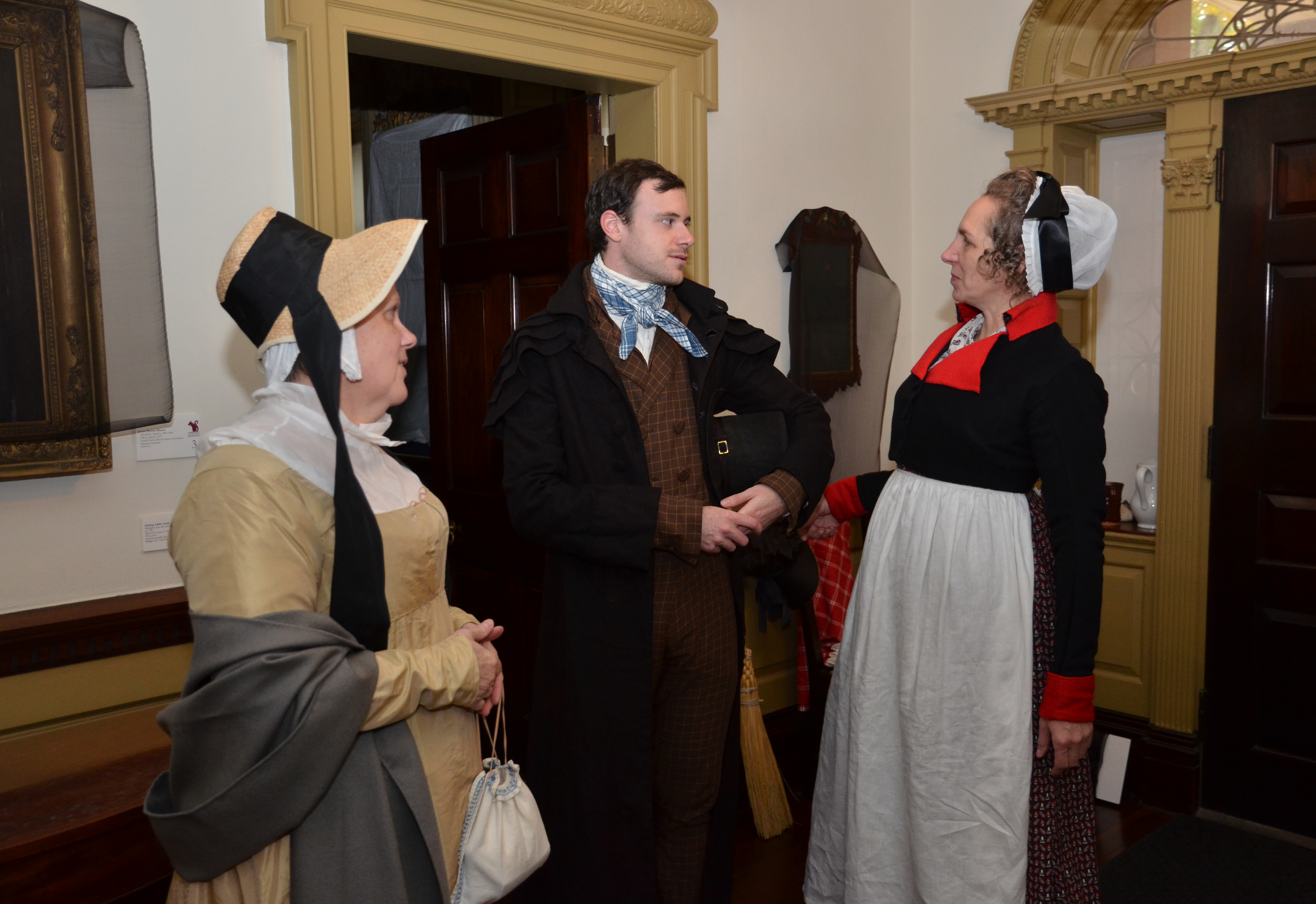
costumed interpreters

The sexton’s son came to inquire if Mrs B wished rent the hearse

A more troublesome caller was Mr Richard Hoppin, son of the sexton at First Baptist church. They do possess the sole hearse in our town, and kindly (for a fee) provide it in times of need. I’m not certain of Mr Hoppin’s stability, for he was inclined to– well, to hop!– in our hallway, a most inappropriate action. The widow did seem to cause him fright (she is a formidable personage, as one would be, after so many years married to Mr Brown), so perhaps he was merely addled by his encounter with her. She wisely inquired after the solidity and soundness of the hearse, for Mr Brown was a substantial figure.

1803 widow and coffin

The widow Mrs Brown reflects upon her late husband

Mr Brown was a great support to us all, and his absence will truly be noted in our household and in our town. I do expect the house will feel empty without his presence, and that Esther, Goody and I will much remark upon the quiet as we go about our tasks.

costumed interpreters on the steps of the John Brown House

The obligatory group photo finale.

From an administrative and managerial stance, this What Cheer Day was different: we cut the interpreted day in half, running the event from 1:00 till 4:00, but still saw about the same number of visitors as we had in a six-hour day. A shorter day meant interpreters were somewhat less exhausted by the close of the day (costumed staff who started their day at 5:00 AM excepted), and the schedule did not have to be as detailed as in previous years. We also reprised a “make your own miniature” activity from the August George Washington 1790 event, and brought in period musicians, who played in the Washington Wallpaper room while people colored miniatures. We also put out an exhibit of memorial art and mourning jewelry, to help contextualize the miniature activity. Since we’ll be leaving the coffin on display and the mirrors and portraits draped through next weekend, a small display (three cases, labels finally finished at 11 AM on the day of the event) seemed like a good idea and opportunity. Upsides: chance to show off the collection, engage people in a hands-on activity, multi-sensory experiences. Downsides: Slightly more to accomplish than hands to do the work, still short a servant, always a little rough the first time you change topics. Unexpected bonus: slightly bumpy transitions in personal life make a suitably sad housekeeper. Score!

Share this:

  • Click to share on Facebook (Opens in new window) Facebook
  • Click to share on Pinterest (Opens in new window) Pinterest
  • Click to email a link to a friend (Opens in new window) Email
  • Click to share on X (Opens in new window) X
Like Loading...

Experiencing Eastfield Village

20 Sunday Sep 2015

Posted by kittycalash in 1830s, Events, Living History, Reenacting

≈ 8 Comments

Tags

10th Massachusetts, 1830s, authenticity, common people, domestic life, Eastfield Village, Federal style, historic houses, historic interiors, interpretation, women's history, women's work

The Young Mr on site.

The Young Mr on site.

Mr Hiwell, the Young Mr and I ventured out to Nassau, New York this weekend to be part of Founders Day Celebration at Eastfield Village. The gents were part of the 1833 militia muster, while I traveled out intending to interpret tailoring with Mr JS, and to provide meals for the militia.

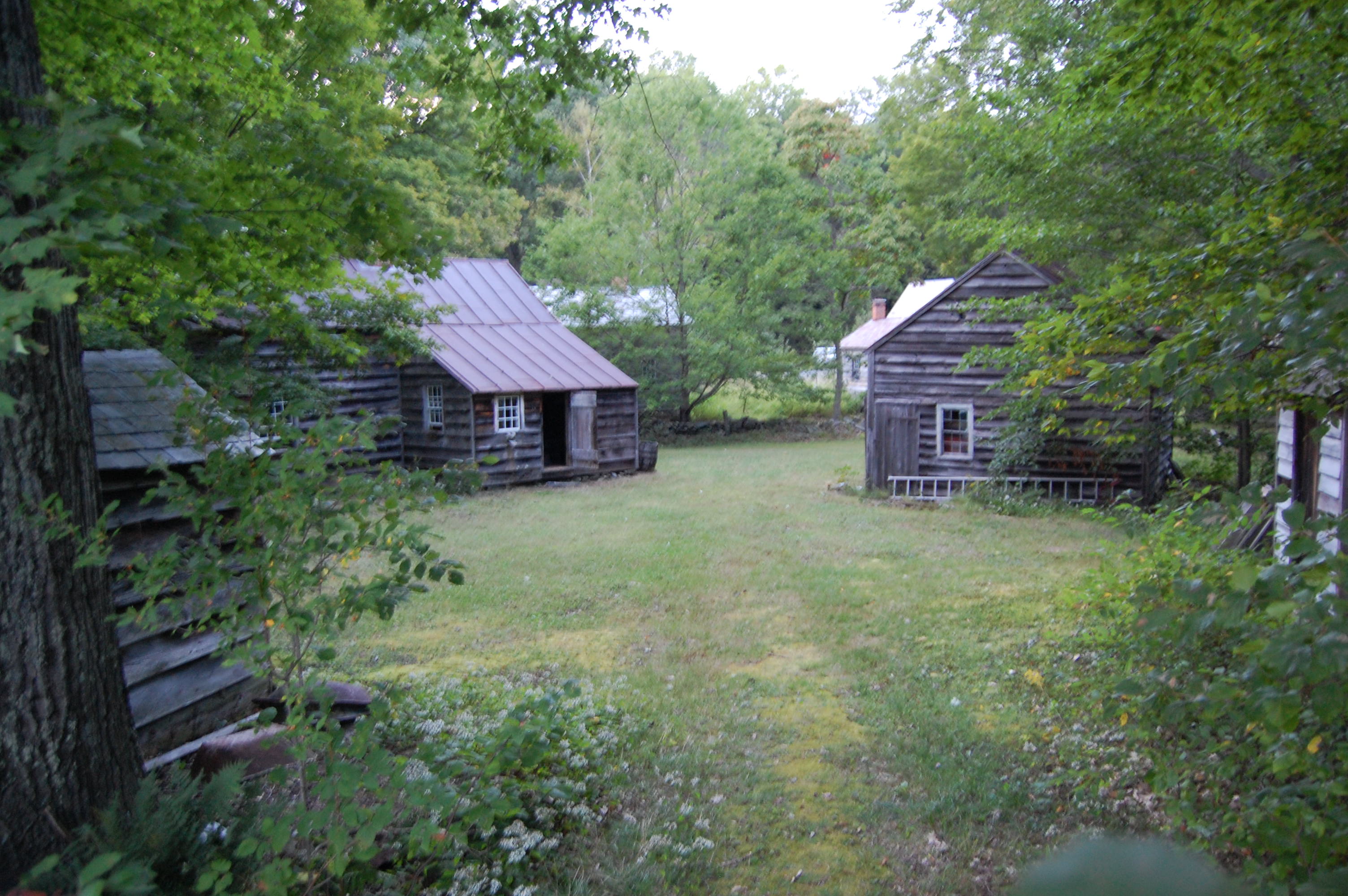
It’s an interesting assemblage of buildings, and we were pretty curious about what the site and the experience would be like. While OSV and Genesee are also assembled villages, they’re museums, with different missions and guidelines; they’re also larger, with electricity and flush toilets for visitors and volunteers alike. That means they’re lovely, but not nearly as immersive as the pitch-dark privy experience.

The back of the Benjamin Culver house, or, our dining room for dinner.

The back of the Benjamin Culver house, or, our dining room for dinner.

Wear all the patterns possible, please.

Wear all the patterns possible, please.

There was a lot to consider at Eastfield, but I’m tired from driving back and will stick to the simple things for now.

I was incredibly fortunate to have a bed—indeed, the entire 1787 Benjamin Culver house—to myself for sleeping. Friday night, after changing into period clothes, we went up to the Yellow Tavern to eat our supper (pasties brought from home, with hard cider for Mr JS and myself). The candle lit taproom was cozy, and I understand from Mr JS that the sleeping quarters upstairs were even cozier.

We cooked our meals in the Yellow Tavern kitchen, and ate sometimes in the taproom, and sometimes standing in the kitchen, except for dinner, which was served picnic style on the grass behind the Culver House. (Saturday supper was provided by Eastfield Village and prepared by Neil DiMarino with able help; that deserves a post all its own.)

Cozy is as cozy does.

Cozy is as cozy does.

Much of time was spent on women’s work, interpreting daily tasks to a stream of visitors travelling through the house from front door to back, and sometimes upstream. The scullery—for want of a better word—had a soapstone sink which drained through the wall, which made dish washing pretty plush, and provided entertainment for all who cared to witness it. No chickens were present, but from washing dishes at Coggeshall Farm, chickens would have enjoyed the ground beneath that window drain.

The view from the scullery: not bad, really.

The view from the scullery: not bad, really.

There are always curious questions, from “Is this a house?” in a tone of wonderment, to “Where did you get the water?”

Gentle reader: these stumped me, briefly, until I was able to gather my wits enough to reply, “Yes, it’s a house, built in 1787,” and to assure the visitor that people had, in fact, managed to live in it. The water question was somewhat more perplexing.

I started with, “Well, I got this from the hose, but they would have had a well,” when the visitor stopped me. “No, I mean, how did you get it hot?”

The kettle had been over the fire in what would be the kitchen room where Mr JS and I were set up to sew, and the fire was still producing heat, albeit from coals. Then I realized she had not been among the clump of people watching me remove the kettle from the crane so that I could pour hot water into my basins. I pointed to the kettle, and said, “Over the fire.”

Fire hot.

Fire hot.

It’s hard: there’s so much we take from granted in our own daily 21st-century lives, let alone what we become accustomed to when we inhabit the past. Interpreting between the two worlds, things can be lost in translation.

I’m always curious about what I’ll learn when I travel to a different century, and I think what I learned, again, was that I find it hard to find a way to interpret women’s lives and work in the past that does not reinforce stereotypes of “life was hard” and “roles were constrained.” Enough! I tried explaining the greater freedom some women enjoyed in the early Federal era, in contrast to the pre-Revolution and post- Great Awakening eras, but that wasn’t entirely successful, and would you believe that story from a woman washing dishes?

What I may really have learned is that I’ve done enough time in the kitchen and the scullery; I’d rather be the tavern keeper than the cook or scullery maid. Women were in business, and while never on the scale of partnerships like Brown & Francis, women as merchants, tavern keepers, landlords, and, yes, tailoresses, are underrepresented. It’s easier to talk down the scale than it is to talk up the scale from the washbasin to the shop or tavern, so it’s time to leave the wash basins aside for a bit.

Done with dishes for now, thank you.

Done with dishes for now, thank you.

Share this:

  • Click to share on Facebook (Opens in new window) Facebook
  • Click to share on Pinterest (Opens in new window) Pinterest
  • Click to email a link to a friend (Opens in new window) Email
  • Click to share on X (Opens in new window) X
Like Loading...

The Myth of Perfection

02 Wednesday Sep 2015

Posted by kittycalash in Art Rant, Clothing, History, Living History, Philosophy, Reenacting, Research

≈ 4 Comments

Tags

18th century, 18th century clothing, authenticity, Clothing, historical clothing, interpretation, paintings

Ain’t nothin’ perfect.

Jackie’s got good points, and although I think they are slightly tangential to where I thought I was going on Monday, let’s pick them up.

Completely 1819 to represent 1819? My standard reply to pretty much every question is: It depends. Who are you, where are you, what are you doing? Middle class or higher bride? You are so 1819 it’s scary, from your skin out, head to toe. Lower class? You’ve altered your best dress, if not made a new one, and refreshed your accessories.

The Kaunitz Sisters (Leopoldine, Caroline, and Ferdinandine), graphite on laid paper by Jean Auguste Dominique Ingres, 1818. Metropolitan Museum of Art, 1998.21
Costume Parisien, 1818.

Look, folks: part of our problem is that we forget that the people in the past had the same covetous, jealous hearts that we have. They had wants and yearnings, for each other, for new bonnets, for velocipedes and overcoats. They were just as interested in impressing each other as we are, even if they sublimated desire into poetic images of greater obscurity than James Brown ever used.

I thought about this notion of mixed up times for clothing as I stood on a landing at work yesterday. Skin out, here’s what I wore on 1 September 2015:

  • Black Natori sports bra, purchased in Boston on January 10, 2014 (I saw my surgeon so I remember.)
  • White cotton tank top, label gone, acquired ca. 2013, possibly from Target
  • Blue and white striped cotton 3/4 sleeve J. Crew blouse, 2006
  • Black Nike undershorts, 2010
  • Lucky brand jeans, August, 2015
  • Red suede belt with brass buckle, ca. 2004
  • Red suede Naya oxfords, late winter, 2014

The oldest thing was the belt, followed by the blouse. The most stylistically determinate item is probably the jeans, since waistline height and cut of the legs fix trouser/jeans style. So, what could this mean for us, when we dress for the past?

Let’s start with dressing for the American Revolutionary War period, 1775-1783. What you wear depends of course on who and where you are; here I am in New England, wishing I was middling sorts.

Detail, Mrs Richard Skinner, oil on canvas by John Singleton Copley, 1772. MFA Boston, 06.2428

Detail, Mrs Richard Skinner, oil on canvas by John Singleton Copley, 1772. MFA Boston, 06.242

If I wear an open-front stomacher gown in 1775, will I still feel comfortable in that in 1783, when the ladies of means around me have switched to closed-front gowns? Or will I feel like I’m wearing bell bottoms and a macrame vest to high school, while the cool girls are wearing pegged Guess jeans and Fair Isle sweaters? (Not what happened to me, but you follow my point). Think how much American fashion changed between 1975 and 1983, and while you will surely see pieces carried over– watches, headbands, socks, Tretorn sneakers– they will be primarily small pieces, accessories, and not main garments.

Lady Williams and Child, oil on canvas by Ralph Earl, 1783. Metropolitan Museum of Art, 06.179

Lady Williams and Child, oil on canvas by Ralph Earl, 1783. Metropolitan Museum of Art, 06.17

That’s really want I think we want to get at: Yes, people mixed up clothes, wore favorite things, wore things out. But then as now, they wanted to be stylish. The more care you put into imagining yourself in the past, really being that person, the more convincing you’ll be. You won’t be perfect, and authenticity is as unachievable as objective truth, but you will be closer to real, and yes, even the public will know.

Share this:

  • Click to share on Facebook (Opens in new window) Facebook
  • Click to share on Pinterest (Opens in new window) Pinterest
  • Click to email a link to a friend (Opens in new window) Email
  • Click to share on X (Opens in new window) X
Like Loading...

Hobby Misogyny

04 Tuesday Aug 2015

Posted by kittycalash in Living History, Reenacting, Research

≈ 29 Comments

Tags

18th century clothes, authenticity, Clothing, common dress, Costume, interpretation, Reenacting

What do you see and remember at events? At every event I go to, I see a range of impressions, or historic expressions.

unknown artist, 18th century, The Encampment in the Museum Garden, 1783, Aquatint, hand-colored, Yale Center for British Art, Paul Mellon Collection

unknown artist, 18th century, The Encampment in the Museum Garden, 1783, Aquatint, hand-colored, Yale Center for British Art, Paul Mellon Collection

There are Good things: a chintz bedgown that’s actually becoming; a checked suit I wish the kid would wear; the Ugly Dog Coat Mr S wants, the umbrella I want to make just for its lines.

The Bad and the Ugly are present, too.

Drawstring shift necks, makeup, infernal bodices, Birkenstocks, sofa-size prints… “light” troops with dining flies, tables, and tin roasters. Stores tents packed with plastic packaging. White “trews” baggy as painters pants, breeches reaching below the knee, haversacks as man-purses, tube socks, sneakers, peacock feathers on women’s hats, girls with undressed hair and no caps.

What is the meaning of these bodices and tube socks: are they the disease, or a symptom? I think they’re a symptom, telling us about a deeper problem.

If “authenticity” is a journey and not a destination, everyone starts this journey at a different point, and some people are more sophisticated consumers of knowledge than others. Hard as it is to fathom, some people—even with decades of time in this— don’t know any better. I’ve encountered half-correctly dressed wives of men who’ve been to Battle Road who didn’t even know workshops are available to help them with stays and gowns. The ignorance is not always willful, even if it seems that way.

Why are some women such a mish-mash of reasonably accurate jacket with acceptable petticoat worn without stays, a drawstring shift, an OK cap, modern glasses, and a purse?

Paul Sandby RA, 1731–1809, British, Washerwomen, between 1790 and 1805, Graphite and brown wash on moderately thick, cream, rough laid paper, Yale Center for British Art, Paul Mellon Collection

Paul Sandby RA, 1731–1809, British, Washerwomen, between 1790 and 1805, Graphite and brown wash on moderately thick, cream, rough laid paper, Yale Center for British Art, Paul Mellon Collection

Do they not see the return on investment for stays and a gown and shoes and a cap and glasses and no makeup? Perhaps they don’t feel pretty when they venture out of their normal realm, and they’re only visiting, anyway. Is this the reason for the half-baked costume approach?

Or could it be that the unit commanders have set no standards for the women? That they don’t consider the women to really be unit members? Or that the women don’t consider themselves members? That they don’t matter the way the muskets do?

Could some women’s lack of authenticity—and by “authenticity” here I mean “period appropriate clothing”—be rooted in the phallocentric/musket-centric culture of the hobby? In some units, men and women seem to engage in parallel play, like toddlers, where the men field in the foreground, and the women cook in the background (women on the field is an issue I will not take up here). The men are in charge, making the decisions: the women, and what they wear, appear not to matter, and are nearly invisible. I think this is rooted in basic misogyny and the riptide of the hobby’s boys-club attitude.

If misogyny is part of why women perpetuate inauthentic impressions, then having women invested in their units and roles, with more research and more care, might be threatening to men who want weekends for themselves and their ‘war games.’ But I believe that without a significant investment by women, and by units in women’s roles, this hobby won’t survive, and it’ll be a lot less fun and educational for everyone.

That means, of course, that I think units will have to allow women a voice, and develop standards for women as well as men. Those units with the farthest to “travel,” authenticity-wise, will need to build up stores of wearable, authentic women’s clothing to loan, or include women’s workshops in their schedules. If they don’t want women and/or families participating, then that has to be clear, too, and women who do want to participate will have create their own civilian units. (I don’t have solutions for all of these issues.)

attributed to Hubert-François Gravelot, 1699–1773, French, active in Britain (1733–1745), Matrimonial Fisticuffs, with a Portrait of the Pugilist John Broughton, in the Background, undated, Watercolor, pen and black ink and graphite on medium, slightly textured, beige laid paper, Yale Center for British Art, Paul Mellon Collection

attributed to Hubert-François Gravelot, 1699–1773, French, active in Britain (1733–1745), Matrimonial Fisticuffs, with a Portrait of the Pugilist John Broughton, in the Background, undated, Watercolor, pen and black ink and graphite on medium, slightly textured, beige laid paper, Yale Center for British Art, Paul Mellon Collection

When the men around them don’t value or encourage their participation, and when units do not have men and women as equal members with clear standards for both, I think you end up with poor impressions—particularly women—and camps full of crap. These are symptoms of a larger problem of misogyny and silence.

Anthony Highmore, 1719–1799, British, Group of Three Ladies, undated, Watercolor, pen and brown ink, and graphite on medium, blued white, moderately textured laid paper, Yale Center for British Art, Paul Mellon Collection

Anthony Highmore, 1719–1799, British, Group of Three Ladies, undated, Watercolor, pen and brown ink, and graphite on medium, blued white, moderately textured laid paper, Yale Center for British Art, Paul Mellon Collection

In recent years there have been calls for greater attention to standards for women by unit commanders. But I think that we should go further, and call for greater participation of women in real leadership roles in the hobby. That’s when you will see real change, not just in clothing, but in presentations.

And that is where I think the future of this hobby lies: in recognizing that living history events are mobile museums, not just mobile monuments.

To get more complete, inclusive and, I think, authentic, experiences will take more inclusive leadership structures, from unit memberships to the boards of umbrella organizations. That would be one small step towards bringing leadership and management into line with the modern world and current best practices in management for cultural and historic organizations. Because that is what the umbrella organizations have become. The boys’ historic shooting clubs have grown up, and it’s time to let the girls play for real, and to value women’s roles past and present.

Share this:

  • Click to share on Facebook (Opens in new window) Facebook
  • Click to share on Pinterest (Opens in new window) Pinterest
  • Click to email a link to a friend (Opens in new window) Email
  • Click to share on X (Opens in new window) X
Like Loading...
← Older posts
Newer posts →

Archives

wordpress statistics

Creative Commons License
Kitty Calash blog by Kirsten Hammerstrom is licensed under a Creative Commons Attribution-NonCommercial-ShareAlike 4.0 International License.

Website Built with WordPress.com.

  • Subscribe Subscribed
    • Kitty Calash
    • Join 621 other subscribers
    • Already have a WordPress.com account? Log in now.
    • Kitty Calash
    • Subscribe Subscribed
    • Sign up
    • Log in
    • Report this content
    • View site in Reader
    • Manage subscriptions
    • Collapse this bar
 

Loading Comments...
 

    %d