• Home
  • Completed Costumes/Impressions
  • Emma and Her Dresses
  • Free Patterns and Instructions

Kitty Calash

~ Confessions of a Known Bonnet-Wearer

Kitty Calash

Tag Archives: work

Mopping Up Action

05 Tuesday Apr 2016

Posted by kittycalash in Events, History, Living History, Museums, Reenacting

≈ 4 Comments

Tags

18th century, authenticity, barracks, cleaning, common people, common soldier, interpretation, living history, women's history, women's work, work

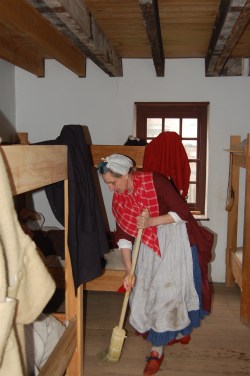
Photo by Asher Lurie

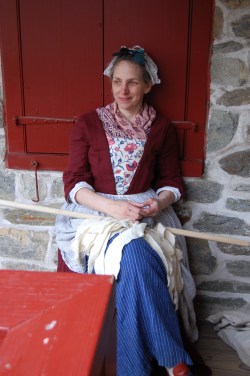
Photo by Asher Lurie

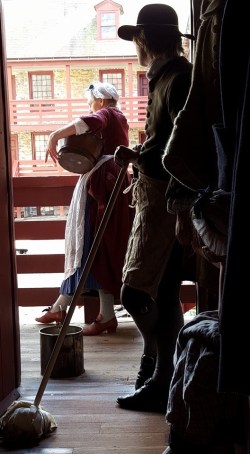
This past weekend, I took my show on the road down 95 to Trenton’s Old Barracks Museum, where once again, soldiers’ rooms needed cleaning. Hannah Glasse exhorts servants (housemaids and housekeepers) to clean household rooms daily, and I can tell you this: if you’re cleaning 18th century spaces using period techniques, daily is the way to go.

Unpaved streets and sidewalks meant people tracked significantly more mud and grit indoors, and soldiers would have brought the parade ground indoors every time they crossed a threshold. Not a pretty thing– and then there’s the straw mattresses (to be changed monthly at a minimum), wool uniforms, skin, hair, and vermin that could accumulate as well. Filth: a major contribution to ill health if not managed properly.

DSC_0348

Brandy-new broom sweeps clean. Photo by Drunk Tailor

Being possessed of a particularly detail-oriented mind, I went in search of a more 18th-century correct broom at an affordable price and found a broom enthusiast on Etsy who agreed to make and priority mail custom brooms just in time for the trip to New Jersey. On the whole, I’m very pleased with these. They make a satisfying sound as they move across the floor, and draw a fair quantity of dirt. Turns out that strewing wet sand on the floor before you sweep is remarkably effective and absolutely the way to go. The damp sand keeps the dust down and is swept out the door with the filth without harming the floor.

Mop making: surprisingly contemplative.

Mop making: surprisingly contemplative. Photo by Drunk Tailor

After sweeping, mopping. Once again, I used the lavender-infused vinegar in the mop water (though I forgot to strain the solution this time). The mixture has a unique but not unpleasant smell, and as the floors dry, the room retains the odor, a sure indication of cleanliness.

This weekend was also the first run for a new wool scrap mop, which was proven the best mop yet. Many thanks to my secret source for the contribution to the effort. It’s clear that mops could easily have been made by binding rag strips to pole handles, and whether made by poor house inmates or soldiers, mop making is cheap, low-tech busy work.

Share this:

  • Click to share on Facebook (Opens in new window) Facebook
  • Click to share on Pinterest (Opens in new window) Pinterest
  • Click to email a link to a friend (Opens in new window) Email
  • Click to share on X (Opens in new window) X
Like Loading...

A Side of Oysters

24 Tuesday Nov 2015

Posted by kittycalash in Art Rant, Events, Fail, History, Reenacting

≈ 2 Comments

Tags

authenticity, common people, history, interpretation, living history, Reenacting, women's history, women's work, work

Or, Fleshing Sexism into History

06512-2

Here’s a bitter blog post instead of the angry one someone expected after the Turkey Shoot. It started elsewhere with a discussion of this print: there’s more going on in this, and in many genre images of oyster girls and oyster sellers, than you notice at first glance. (First glance is that fab-u-lous bonnet.) There are clues, though, that she is selling more than just oysters. It’s a code, remember? The gaze is one clue, though it reminds me of a cholera victim’s languor.

Yes: this image suggests she is also selling herself.

It’s something I’ve thought about doing as part of my street vendor/Bridget impression. Transgressive, dangerous: true. As a milliner, I’ve had a money bag shaken in my face, coins rattling suggestively, a sailor eager to spend his pay. Milliners and seamstresses both had reputations as women of exploitable, if not overtly easy, virtue. They’re a classic trope in 19th century literature, though I suspect the real reason for the suggestion of looseness was economic independence. But women certainly were selling themselves in the past, so why not portray that reality with carefully selected, trusted role players?

circle_of_francis_wheatley_ra_the_oyster_girl_d5466162h

For one thing, it’s dangerous. You’d have to script it, and interact only with really trustworthy people. It’s not family friendly, though despite the strenuous efforts of some sites, actual history isn’t family friendly either. (I’m looking at you, CW .)

I ponder this role, and women’s lack of power historical, as I ponder Fort Ti and nurses’ reputations, carefully maintained in Army hospitals in later wars. (Not to fear, I will behave, honest.) And I also ponder it as I continue to struggle to understand the Gun Show, the misogyny in the hobby, and the general misogyny of American culture. Like many others, I’ve read this blog post,, and some of the more annoying comments. Yes, I, too, de-escalate now and have in the past. Some of the changes I’ve made in my life revolve back to this concept, and have to do with authenticity and stepping back from de-escalation, subsumation, and self-repression. So why would I not continue that process into my historical work and play?

philip_mercier_the_oyster_girl_d5714611h

As I wonder how to spin a feminist interpretation of women’s marginal roles and drudgery in the past, it occurs to me that forcing the women’s economic disparity and lack of agency to the foreground might provide an answer. Selling myself along with oysters, apples, or cherries might finally make the points I want to not just about women’s lives historically, but about women’s roles today.

(I’ve already made the jokes about hands-on demonstrations, so y’all can keep ‘em yourselves, okay?)

Share this:

  • Click to share on Facebook (Opens in new window) Facebook
  • Click to share on Pinterest (Opens in new window) Pinterest
  • Click to email a link to a friend (Opens in new window) Email
  • Click to share on X (Opens in new window) X
Like Loading...

Good Grief

25 Sunday Oct 2015

Posted by kittycalash in Events, History, Living History, Museums, Reenacting

≈ 4 Comments

Tags

19th century clothing, authenticity, Federal style, first person interpretation, funeral, historic house museums, interpretation, John Brown, John Brown House Museum, living history, memorials, mourning, Providence, Rhode Island Historical Society, Rhode Island history, What Cheer Day, women's work, work

1803 dress and hair

Pre-sweat melted hair

I had my doubts about this event, since we were interpreting the death and mourning of John Brown a full month after it actually happened, and initially resisted somewhat strenuously. But people change, and by the time I was operating a motor vehicle at high speed on I-90 six months later, I could be– and was– convinced. Knowing little, if anything, about early Federal mourning customs mattered not at all. There’s always time to learn, right? Well… if you read fast enough, you can do anything.

Esther and Kitty draping the mirrors

Esther and Kitty draping the mirrors

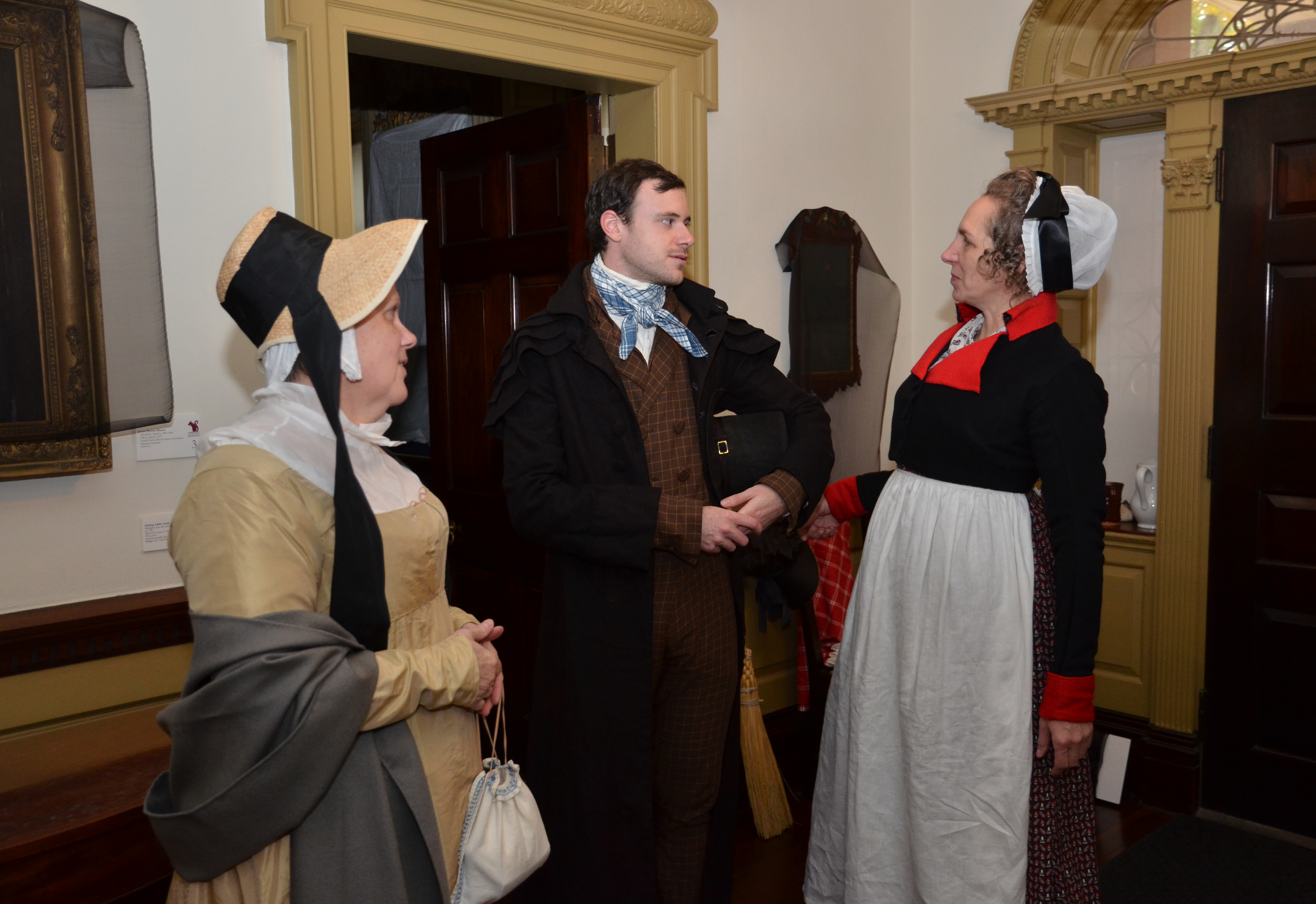
Despite the bustle, Esther and I found time to cover many of the mirrors with sheets, and the portraits with black crepe; this is a time of reflection, not vanity. It gave our rooms a gloomy mien, and reminded us of our short span on this earth.
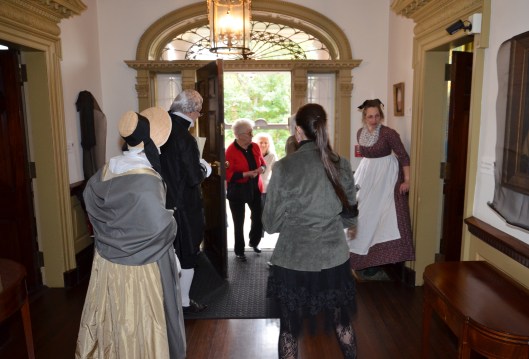
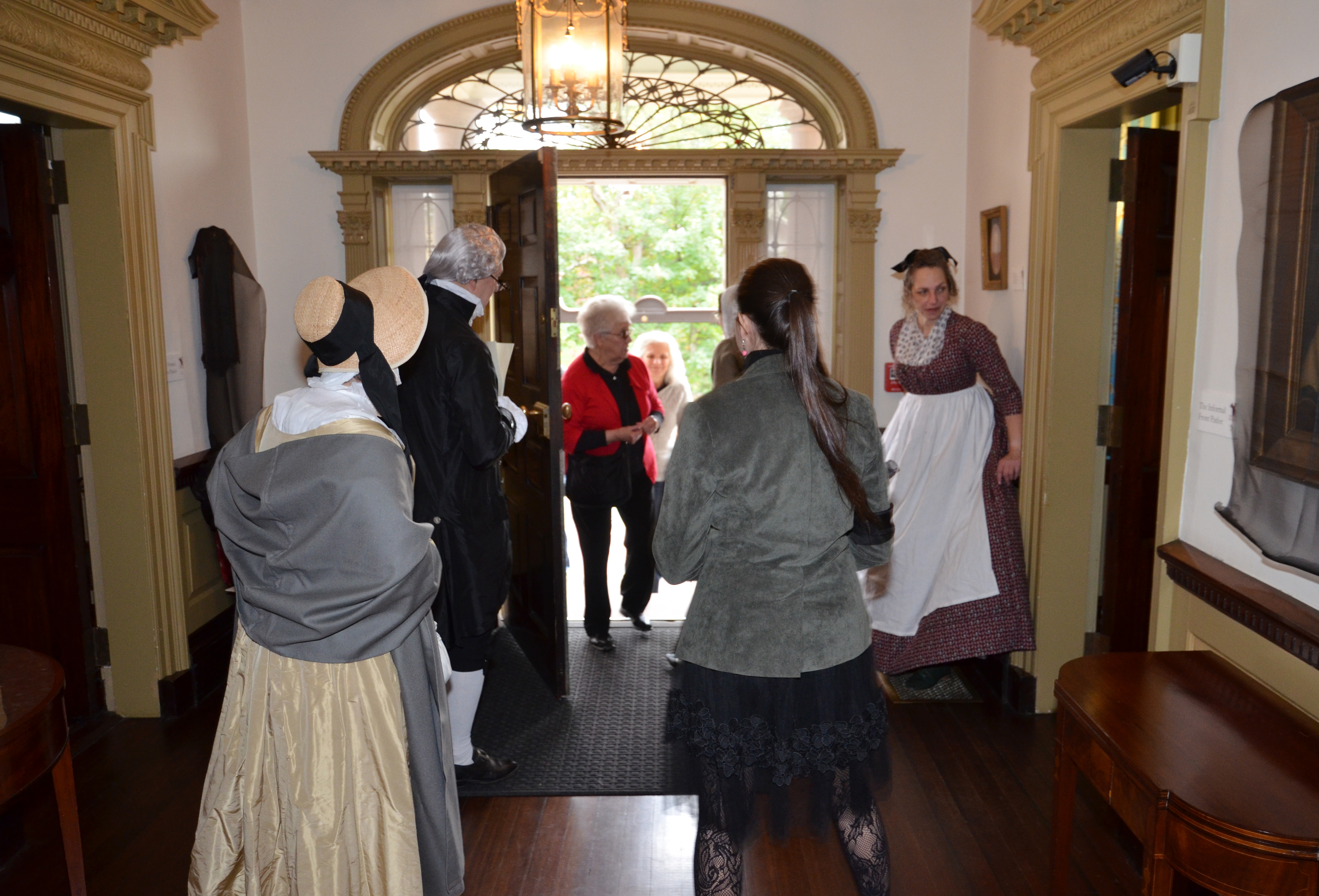
Visitors in the front hall of the John Brown House, Providence RI

We had many callers

We did have many callers Saturday afternoon, as John Brown was such a significant figure in Providence. He accumulated significant wealth, as Mr and Mrs Thurber attested when they came to inquire about the profits from the voyage Mr T had invested in– $30,000!

Callers pay respects to Mr Brown

Mr and Mrs Thurber pay their respects to Mr Brown

Thirty thousand is a fine sum indeed, though one wonders where Mrs Thurber might spend those proceeds. While a generally refined person, she made many inquiries about sherry, so I was relieved I’d had the foresight to lock away the decanters. So many people call during a time of grief that you cannot be too careful.

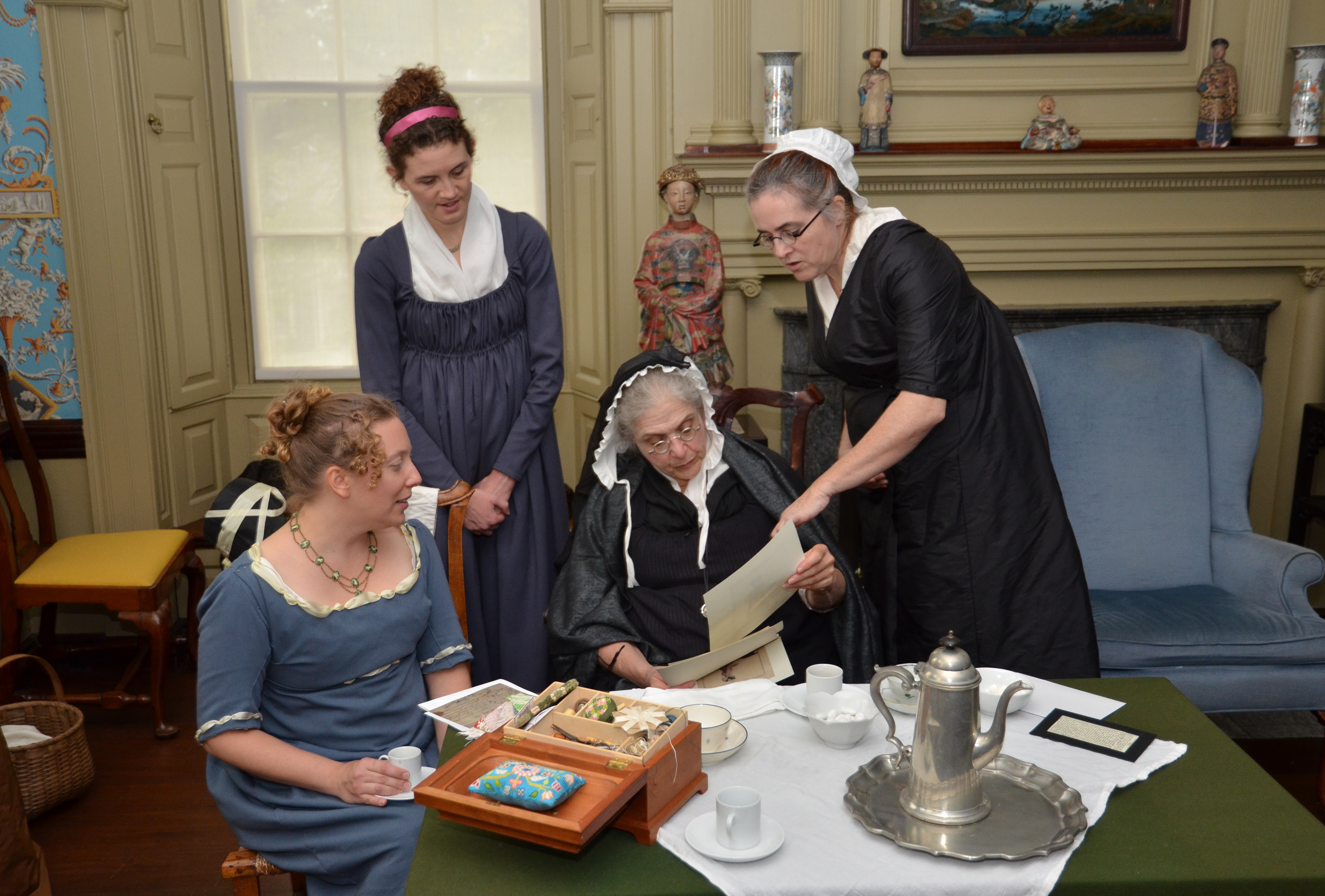
1803 ladies ponder fashion plates

Considering mourning dress options

The mantua maker came to call, bringing black silks and plates for the ladies to choose from. We have had a mix of joy and sorrow in this house, and it is only of late that Mrs Francis (on the left, in blue), has left behind her more matronly garb following the death of her beloved husband John Francis in 1796. It was a crushing blow for her, but she does seem to have recovered now.

1803 woman and baby

Mrs H and her darling daughter, Anna

Mrs Herreshoff was with us, visiting from Point Pleasant in Bristol, and her mother found baby Anna, now just more than five months old, a great consolation indeed. Anna was dressed in mourning for her grand-papa, though she will not remember him. Despite the many callers, baby Anna was truly an angel.

Historical minister and coffin

The Congregational minister called.

The ladies upstairs were a respite for us servants, though we were comforted by the visiting minister from the Congregational church. They cannot make up their minds to a new minister, now that their beloved Dr Hitchcock has left them for heaven. They try on new ones for size nearly every week, and while that is not my congregation, I do think the Reverend Cooke is an excellent choice, combining devotion with humor.

costumed interpreters

The sexton’s son came to inquire if Mrs B wished rent the hearse

A more troublesome caller was Mr Richard Hoppin, son of the sexton at First Baptist church. They do possess the sole hearse in our town, and kindly (for a fee) provide it in times of need. I’m not certain of Mr Hoppin’s stability, for he was inclined to– well, to hop!– in our hallway, a most inappropriate action. The widow did seem to cause him fright (she is a formidable personage, as one would be, after so many years married to Mr Brown), so perhaps he was merely addled by his encounter with her. She wisely inquired after the solidity and soundness of the hearse, for Mr Brown was a substantial figure.

1803 widow and coffin

The widow Mrs Brown reflects upon her late husband

Mr Brown was a great support to us all, and his absence will truly be noted in our household and in our town. I do expect the house will feel empty without his presence, and that Esther, Goody and I will much remark upon the quiet as we go about our tasks.

costumed interpreters on the steps of the John Brown House

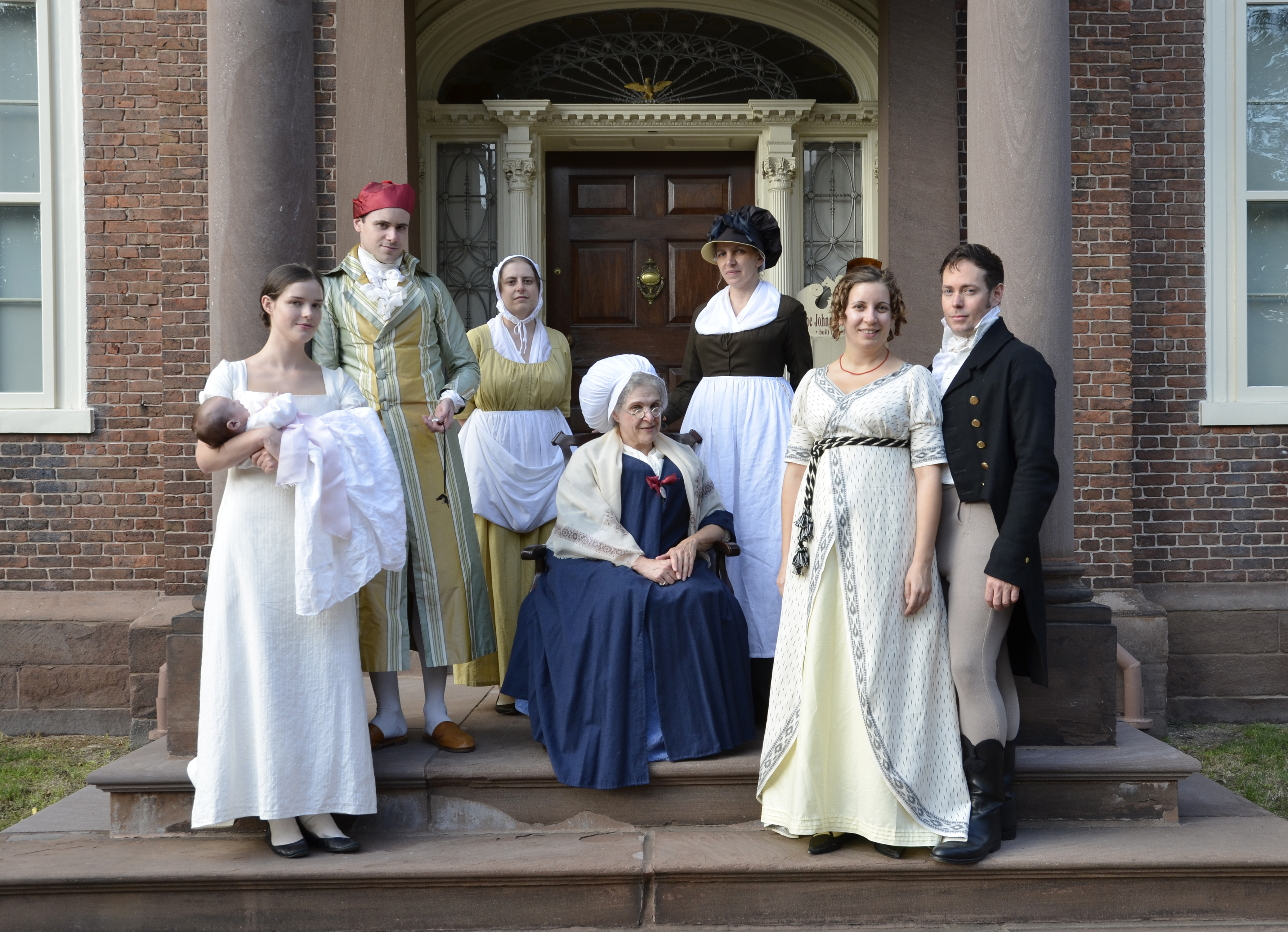
The obligatory group photo finale.

From an administrative and managerial stance, this What Cheer Day was different: we cut the interpreted day in half, running the event from 1:00 till 4:00, but still saw about the same number of visitors as we had in a six-hour day. A shorter day meant interpreters were somewhat less exhausted by the close of the day (costumed staff who started their day at 5:00 AM excepted), and the schedule did not have to be as detailed as in previous years. We also reprised a “make your own miniature” activity from the August George Washington 1790 event, and brought in period musicians, who played in the Washington Wallpaper room while people colored miniatures. We also put out an exhibit of memorial art and mourning jewelry, to help contextualize the miniature activity. Since we’ll be leaving the coffin on display and the mirrors and portraits draped through next weekend, a small display (three cases, labels finally finished at 11 AM on the day of the event) seemed like a good idea and opportunity. Upsides: chance to show off the collection, engage people in a hands-on activity, multi-sensory experiences. Downsides: Slightly more to accomplish than hands to do the work, still short a servant, always a little rough the first time you change topics. Unexpected bonus: slightly bumpy transitions in personal life make a suitably sad housekeeper. Score!

Share this:

  • Click to share on Facebook (Opens in new window) Facebook
  • Click to share on Pinterest (Opens in new window) Pinterest
  • Click to email a link to a friend (Opens in new window) Email
  • Click to share on X (Opens in new window) X
Like Loading...

What Cheer! Wednesday

22 Wednesday Oct 2014

Posted by kittycalash in Living History, Museums, Uncategorized

≈ Comments Off on What Cheer! Wednesday

Tags

18th century clothes, 18th century clothing, 19th century clothing, interpretation, John Brown House Museum, living history, Museums, Reenacting, Rhode Island, Rhode Island Historical Society, weekend, What Cheer Day, work

The cast at the end of the day

The cast at the end of the day

Where are you going this weekend? I’m going to Providence in 1800, along with my family and friends.

The mantua maker is coming, and writes a very pretty letter about the new fashions she has found for the young ladies.

Mr Herreshoff and Miss Brown hope soon to be married

Mr Herreshoff and Miss Brown hope soon to be married

Mrs Brown will be in, and receiving guests, and we hear that Mr Herreshoff will come to call as well. While he may decry the state of the roads, we expect him to have news of business conditions in New York, and his prospects for the future.

Miss Alice– Mrs Mason, now– will be at home with her sister, Miss Brown, and Mr Mason is living here now as well. I do not know how I shall keep their room in order, since he is hardly outside of it!

There are other visitors I expect as well; there is a man (I cannot call him a gentleman) who has been doing jobs for us, though he does not live here at the house. He seems extraordinarily interested in the house, and will not stay away. Whatever can be his interest? There may also be a tailor and his apprentice– though the apprentice tends to daydreaming, and looks above his station, studying Latin at all hours. I think he will not be long in his apprenticeship if he will not pay attention.

If you have not visited us before, you can find directions here.


Share this:

  • Click to share on Facebook (Opens in new window) Facebook
  • Click to share on Pinterest (Opens in new window) Pinterest
  • Click to email a link to a friend (Opens in new window) Email
  • Click to share on X (Opens in new window) X
Like Loading...

Overtaken by Events

18 Wednesday Dec 2013

Posted by kittycalash in Events, Fail, History, Museums

≈ Comments Off on Overtaken by Events

Tags

Events, planning, work

The Great Gale of 1815

The Great Gale of 1815

I had a plan for this week, but was overtaken by events. Eventually I’ll have a post for HSF # 25, along with thoughts about ways to estimate laundry tub diameters. Until then, make sure your emergency response plans are current and your sidewalks cleared of snow.

Share this:

  • Click to share on Facebook (Opens in new window) Facebook
  • Click to share on Pinterest (Opens in new window) Pinterest
  • Click to email a link to a friend (Opens in new window) Email
  • Click to share on X (Opens in new window) X
Like Loading...
← Older posts
Newer posts →

Archives

wordpress statistics

Creative Commons License
Kitty Calash blog by Kirsten Hammerstrom is licensed under a Creative Commons Attribution-NonCommercial-ShareAlike 4.0 International License.

Website Built with WordPress.com.

  • Subscribe Subscribed
    • Kitty Calash
    • Join 621 other subscribers
    • Already have a WordPress.com account? Log in now.
    • Kitty Calash
    • Subscribe Subscribed
    • Sign up
    • Log in
    • Report this content
    • View site in Reader
    • Manage subscriptions
    • Collapse this bar
 

Loading Comments...
 

    %d