• Home
  • Completed Costumes/Impressions
  • Emma and Her Dresses
  • Free Patterns and Instructions

Kitty Calash

~ Confessions of a Known Bonnet-Wearer

Kitty Calash

Tag Archives: 18th century clothing

Mrs Pabodie, I presume?

16 Wednesday Nov 2016

Posted by kittycalash in Clothing, History, Living History, Museums, Pabodie Project

≈ 1 Comment

Tags

18th century clothes, 18th century clothing, 19th century clothing, dress, fashion, Federal style, interpretation, Research, Rhode Island Historical Society
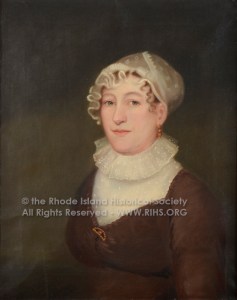
Mrs William (Jane) Pabodie. oil on canvas, 1813. RIHS 1970.60.2

Mrs William (Jane) Pabodie. oil on canvas, 1813. RIHS 1970.60.2

Remember Mrs Pabodie? She appeared a week ago today in Providence after an intense sewing effort left your author with numb fingers. The process was as straightforward as these things ever are, manipulating fabrics to do your bidding once you think you have the right materials.

It took more rounds of white muslins from Burnley and Trowbridge than I care to count, and a variety of book muslins from Wm Booth Draper, just for the chemisette and cap. The laces came from Farmhouse Fabrics in the most expensive small package I’ve yet ordered that did not contain antique jewelry.

Mrs Pabodie attempts to remember when she was born (1771). Photo by J. D. Kay

Mrs Pabodie attempts to remember when she was born (1771). Photo by J. D. Kay

The gown is a wool and silk blend remnant from Wm Booth Draper, just enough to make a gown (even at my height) though I admit the front hem will need some piecing or a ruffle to give it the proper length. Still, the thing more or less works, though as I compare the details to the original painting, I admit we’re still in beta.

Impressed from Newport-- or nearly so-- Low Spark makes his Providence debut. Photo by J.D. Kay
Impressed from Newport– or nearly so– Low Spark makes his Providence debut. Photo by J.D. Kay
Reverend Hitchcock, hoping against hope that the tailor will one day finish his fine silk waistcoat. Photo by J. D. Kay
Sissieretta Jones extols the beauties of Paris-- and pearls. Photo by J. D. Kay
Sissieretta Jones extols the beauties of Paris– and pearls. Photo by J. D. Kay

I was joined by three friends from different eras (because you know me: if it’s not didactic, we’re not doing it): a sailor who on the run from a Newport press gang in 1765; Reverend Enos Hitchcock of the Beneficient Congregational Church in 1785; and Sissieretta Jones, soprano of Providence, around 1880. Each of the characters described their lives and their clothing, and I will admit that the Annual Meeting audience may not have been fully prepared for some of what they heard– I’m not certain they had ever considered how apt “balancing a sheep on my head” might be in describing Reverend Hitchcock’s wig.

Mrs Pabodie points out East Side landmarks to a visitor examining the theatre curtain backdrop painted around 1810. Photo by J. D. Kay

Mrs Pabodie points out East Side landmarks to a visitor examining the theatre curtain backdrop painted around 1810. Photo by J. D. Kay

In the end, they were entertained, and may even have learned something, as we celebrated 2016’s interpretive theme, Fashioning Rhode Island.

Share this:

  • Share on Facebook (Opens in new window) Facebook
  • Share on Pinterest (Opens in new window) Pinterest
  • Email a link to a friend (Opens in new window) Email
  • Share on X (Opens in new window) X
Like Loading...

Filthy Friday: Rolling with a Purpose

09 Friday Sep 2016

Posted by kittycalash in Clothing, Laundry, Living History, Reenacting

≈ Comments Off on Filthy Friday: Rolling with a Purpose

Tags

18th century clothes, 18th century clothing, authenticity, common dress, common people, common soldier, interpretation, laundry, living history

“It looks like you rolled in dirt,” I said to the Young Giant when he dumped a gritty mess on my lap.
“I did,” he said, “but it was rolling with a purpose. We dug a fire pit, and then I had to keep the fire going. So I was on my belly in the dirt.”

file_000

This was followed by, “Mom, you need to mend my shirt.” But first, I needed to wash that shirt.

file_004

I’d like to wash that shirt right out of my hair, but there it is: it’s got to be attended to.

I did what mending I could before I washed it, since some areas seemed more likely to disintegrate further in the wash.

file_003
file_001

That’s clean linen verus dirty linen, the 18th century wrestling match. Patch secured, I very nearly packed this into a priority mailing container for delivery to the esteeméd Red Shoes Laundry, but I took a deep breath, and put the lobster pot back in the cupboard. (Yes, I considered boiling this on my stove top on a 95° day. Wouldn’t you?)

Instead, I trekked down to the cool of the basement and ran the water as hot as it gets and added Oxiclean (used by some of the finest weavers I know when they encounter dyes less fast than anticipated.)

file_005
file_006

The first tub achieved a kind of colloidal slurry of mud and sweat and soap. Delicious. Five rinses and an overnight soak later, dirty shirt became just a shirt again.

file_008

I took advantage of the clear weather to dry this outside on the grass, hoping the later sunlight would aid in whitening.

Wondering about that patch? Wonder no more, compare:

file_004
file_009

It’s another one of those “is it done? it’s perfect” situations. I’d love to wash my clothes with historically correct methods, but for now, the shirt’s clean enough for final mends and wearing in October. The winter should give me time to figure out stove top washing.

Share this:

  • Share on Facebook (Opens in new window) Facebook
  • Share on Pinterest (Opens in new window) Pinterest
  • Email a link to a friend (Opens in new window) Email
  • Share on X (Opens in new window) X
Like Loading...

Fashion, Fantasy, and Intention

13 Saturday Aug 2016

Posted by kittycalash in Art Rant, Clothing, Living History, material culture

≈ 2 Comments

Tags

18th century clothing, common dress, Costume, fashion, interpretation, living history, Reenacting

Fort-based: as military as I get.

Fort-based: as military as I get.

I am not a costumer, not really. But I’m not really a re-enactor in the classical sense: I no longer roll with a military unit and my military experiences are typically fort-based domestic activities. My favorite events have me representing women’s work in the past, the quotidian experiences of ordinary people. Documentation is my thing: what happened on a particular day, in a particular place. Who was there? What were typical clothes? The foods in season? The gossip of the day?

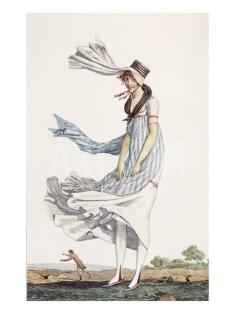
A Lady's Summer Promenade Dress, 1800.

A Lady’s Summer Promenade Dress, 1800.

And yet. Everything I do is really a fantasy, even when it’s work. We are not [yet, always] using the actual words people spoke or wrote. We typically inhabit characters who are grounded in fact but for whom we do not have full documentation. We are representations. We are playing, more than we are being.

I could easily be persuaded to take a walk along a sea wall  or coast to collect seaweed samples for pressing. This would inch me into Austen territory, especially if my friends will join me. I’ve even gone to the lengths of acquiring an appropriate hat, and to make another gown is but nothing in the pursuit of happiness.

Mary Gunning, Countess of Coventry. Jean-Étienne Liotard,.

Woman in a Turkish interior Pastel on vellum, Jean-Étienne Liotard, 1749. Museum of Art and History, Geneva.

If I could truly be a fabulist, I might be tempted to adopt a style a la Turque, for a portrait by Copley or for my paramour. This portrait by Liotard– who was known for his Ottoman works—  is a great temptation, with her patterned overdress and belt with golden clasps, though she is thirty-three years earlier than The Abduction from the Seraglio, Mozart’s comedic and trendy 1782 opera.

If I made myself a Turque (and Reader, it is tempting though useless), I will confess it would be for the multiple pleasures of wearing it, knowing why it had been worn in the past, and for the pleasure of having it taken off me. Because we forget what the European fascination with exoticism and Orientalism meant: they meant sex. The Abduction itself is, in essence, a tale of sex trafficking.

And that is something we do forget about the past, that the clothing we adopt as we portray the past had meaning– sometimes a meaning we miss, when we layer costume upon clothing. Wives and mistresses alike were portrayed a la Turque, and some theorize that this style of portraiture was chosen to portray the sitter in timeless, classic dress. For Copley’s sitters, it was a way to be at the height of London fashion; for Lady Mary Montagu, Turkish dress allowed her to travel freely in the Ottoman Empire. But portraits of women in Turkish dress situated in Turkish interiors were also allusions to polygamy and to sexuality, and there is no way of escaping the fact that paintings of women were largely made for men.

So what, then, of fantasy dressing in the past? What sense can we make of historical representations of “Oriental” fashion? How do we understand what our clothing and our appearance means? Every choice we make is layered with meaning, in the present and in the past.  For women, routinely objectified by society, the meaning of our clothing is particularly important, even when, or perhaps especially, when it is not what we want to focus on.


Share this:

  • Share on Facebook (Opens in new window) Facebook
  • Share on Pinterest (Opens in new window) Pinterest
  • Email a link to a friend (Opens in new window) Email
  • Share on X (Opens in new window) X
Like Loading...

Bloody, Bratty, Boning

27 Friday May 2016

Posted by kittycalash in Clothing, Fail, Living History, Making Things

≈ 1 Comment

Tags

18th century clothing, infrastructure, mistakes, sewing, stays, underwear

File_000Sometimes I am a terrible brat, as in this past weekend, when the autocorrect on my phone insisted that the proud four-letter Anglo-Saxon words I was typing were not what I meant to say. Darn tootin’ they were.

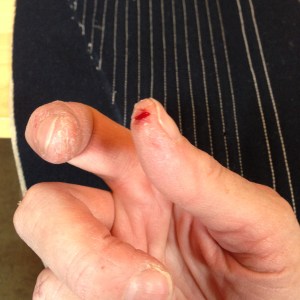
This is not my first rodeo with stays, but somehow I’d forgotten about the special stabby hell of boning the beasts. I’m machine sewing the channels for these, mostly because I calculated the time required to completely hand-sew them and realized I would not finish them before I needed them. I’ve rationalized this by acknowledging that I’m not using the hand-woven brown wool sateen I covet, but instead a dark blue wool twill.

A bloody, messy business
all around
all around

I know, I know: there’s a reason staymaking was a man’s trade. My hands are pretty strong, but it took some doing to figure out how to slide the pieces in neatly without jabbing the ends repeatedly into the freshly re-opened split on my thumb.

d'oh! surgical tape made this *much* better later.

d’oh! surgical tape made this *much* better later.

It takes discipline to keep doing this, the way it takes some discipline not to eat ice cream for breakfast just because you can (though I did, just this week). Spencers and dresses are so tempting, but there’s not point to making a new dress of wonder unless I have the stays to wear it over: infrastructure is required.

The stomacher and the two front pieces are boned… six more pieces plus whipping and eyelets and binding, oh, my! It’ll be a race to have them done by June 24th:  Discipline’s the thing.

Share this:

  • Share on Facebook (Opens in new window) Facebook
  • Share on Pinterest (Opens in new window) Pinterest
  • Email a link to a friend (Opens in new window) Email
  • Share on X (Opens in new window) X
Like Loading...

What’s it Worth Wednesday

25 Wednesday May 2016

Posted by kittycalash in Clothing, Living History, Making Things, personal, Reenacting

≈ 16 Comments

Tags

18th century, 18th century clothing, authenticity, sewing

Or, They’re Clothes, not Costumes.

This past weekend, I had a conversation with a friend about requests to borrow “costumes” we’ve made, sometimes for school children to wear, sometimes for movies, and sometimes for parties. We generally say no: these are hand-sewn clothes, and the replacement cost would be ridiculous– plus, we like them and wear them.

I hand sew because I get better control, but also because there were no sewing machines in the 18th and early 19th centuries. To get a garment right, you have to hand sew it, and that’s expensive. I took the time once to figure out what a set of clothes for the Young Giant cost– much to my dismay, and eventually, to his, as I became even more insistent that the garments be treated with respect.

IMG_3389

Last year, I sent the Young Mr off to Battle Road in a new suit, and the whole business of what he was wearing was quite expensive. Using $25/hour as a base for labor, here’s how the kid’s Battle Road suit breaks down:

Coat Labor: $1125 (estimated)
Coat fabric: $62.50
Buttons: $10.50
Coat lining & cutting: $90.00
Workshop: $125.00
Total: $1413

Let that one sink in for a while, will you? The 16-year-old boy ran around in a $1400 coat. Oh, and the breeches. Here they are.

Breeches labor: $300 (estimated)
Breeches fabric: $31.25
Buttons: $9.00
Total: $340.25

The blue suit is now up to $1753.25

Let’s add the shirt.

Labor:  $375.00 (estimated)
Fabric: $30.00
Buttons: $3.00
Total: $408

Shoes, hat and stockings:

Shoes: $119
Hat: $125
Stockings: $50
Neckcloth: $18
Glasses: $29.00
Lenses: $30.00
Total Accessories: $371

Grand total, with labor: $2532.25
Grand total without labor: $732.25

This wasn't cheap either.

This wasn’t cheap either.

So think about this the next time you attend an event with a lot of well-made garments: you are standing amid a lot of labor and love.

Sewing is a fairly simple enterprise (you’re pushing thread in and out of fabric, after all), but it takes practice to develop fine skills and speed. A well-made garment will never be cheap. The best investment you can make in your wardrobe is to invest in your skill set, and learn to sew.

Share this:

  • Share on Facebook (Opens in new window) Facebook
  • Share on Pinterest (Opens in new window) Pinterest
  • Email a link to a friend (Opens in new window) Email
  • Share on X (Opens in new window) X
Like Loading...
← Older posts
Newer posts →

Archives

wordpress statistics

Creative Commons License
Kitty Calash blog by Kirsten Hammerstrom is licensed under a Creative Commons Attribution-NonCommercial-ShareAlike 4.0 International License.

Website Built with WordPress.com.

  • Subscribe Subscribed
    • Kitty Calash
    • Join 621 other subscribers
    • Already have a WordPress.com account? Log in now.
    • Kitty Calash
    • Subscribe Subscribed
    • Sign up
    • Log in
    • Report this content
    • View site in Reader
    • Manage subscriptions
    • Collapse this bar
 

Loading Comments...
 

    %d